How to Make a Concrete Patio More Attractive: 10 Practical Ideas
- Disclosure: This post may include affiliate links. If you click a link and complete a purchase, I may earn a commission. Additionally, as an Amazon Associate, I earn from eligible purchases.
A concrete patio gives you a durable foundation for outdoor living, but a plain slab can sometimes feel dull or unfinished. The good news is that you do not always need to remove the existing concrete to create a more attractive outdoor area.
The ideas covered in the source material range from relatively simple changes, such as staining, painting, rugs, and furniture, to larger projects involving pavers, pergolas, walls, and fireplaces. The right approach depends on the condition of the concrete, your available space, your budget, and how you want to use the patio.
One source presents 10 main makeover ideas, while another organizes its recommendations into 5 simple design changes. A separate collection provides 9 concrete patio makeover approaches. Together, these ideas show that surface treatment, structure, landscaping, and decoration can all change the appearance of an ordinary slab.
1. Stain the Concrete
Staining is one of the simplest ways to change the appearance of an existing concrete patio. The cited material places the approximate staining cost at $3–$4 per square foot.
Two approaches are highlighted:
- Acid stain for a more permanent effect
- Water-based stain when you want a broader selection of colors
However, staining is not a substitute for preparing a damaged surface. Visible cracks and discoloration can remain noticeable and may even stand out more after staining.
Before applying the stain, the surface should therefore be cleaned and existing cracks addressed.
2. Paint the Patio
Paint gives you greater freedom when choosing a color. It can also cover stubborn stains and discoloration that may remain visible through a stain.
The trade-off is durability. The source material notes that paint does not last as long as staining.
Painting can therefore make sense when your main goal is a noticeable visual change, and you want more control over the patio’s color.
3. Create a Scored Pattern
A plain concrete surface can be given a completely different appearance by scoring a pattern into it.
A saw cutter can be used to create designs such as:
- Grids
- Diamonds
- Waves
- Asymmetric shapes
- Faux-tile layouts
One source describes scoring approximately ¼ inch into the concrete.
The advantage is flexibility. Instead of treating the patio as one large uninterrupted surface, a pattern can visually divide it into smaller sections.
4. Use Outdoor Rugs and Furniture
If the slab has a relatively small imperfection, an outdoor rug can provide a quick visual solution.
A rug can also establish the center of a seating area and make the patio feel more comfortable without requiring specialized tools or skills.
For furniture, choose pieces specifically designed for outdoor use. The source material also mentions larger additions such as a hot tub or outdoor cooking station, but these require considerably more space.
Before adding large furniture or equipment, make sure there is still enough leg room for people to move comfortably.
5. Try Stamped Concrete
Stamping is particularly relevant when installing new concrete or when you are willing to replace the existing slab.
Stamped concrete can reproduce patterns that resemble:
- Cobblestone
- Stone bricks
- Leaves
- Flowers
- Personalized designs such as initials
This approach can give the surface a more decorative and customized appearance than a plain concrete finish.
6. Polish and Wax the Surface
If the concrete is structurally sound but has simply lost its luster, polishing and waxing can provide another makeover option.
This approach is most relevant when there are no obvious cracks.
Before applying new wax, the surface should be cleaned and any previous wax layer removed. The source specifically mentions xylene for stripping an existing wax layer before applying a new coat.
The goal is not to cover major damage but to refresh a surface that has become visually tired over time.
7. Install Pavers or Tiles
Another way to completely change the appearance of a concrete patio is to place pavers or tiles over the existing surface.
However, this option requires careful attention to drainage. Adding another layer should not create drainage problems or an unsafe transition.
One source describes installing 1-inch pavers over a layer of thin-set mortar when the project is suitable for that approach.
Because installation affects levels, drainage, and the finished walking surface, this is one of the projects where professional assistance may be appropriate.
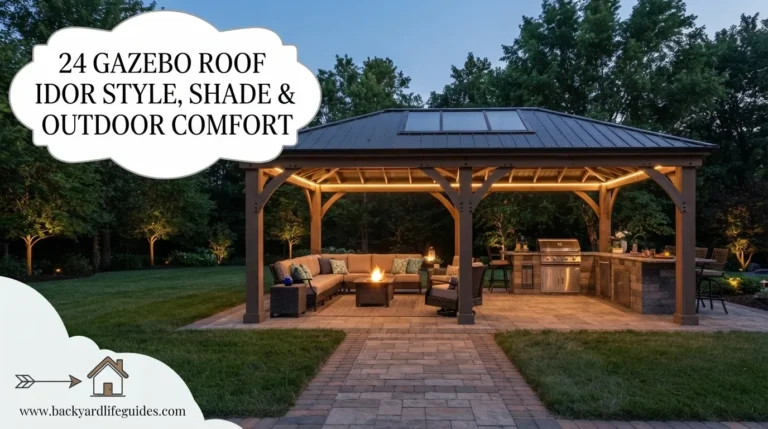
8. Add a Pergola
A pergola can change more than the appearance of a concrete patio. It can create a defined outdoor area with additional shade and privacy.
The cited material gives a professional pergola installation range of approximately $2,000–$6,000, depending on factors such as size, design, and materials.
A pergola can also provide a structure for:
- Outdoor gatherings
- Hanging out with family and friends
- Lighting
- Vines
- A ceiling fan
- Speakers
The Houzz material also presents overhead structures as a way to make an outdoor area feel more like an enclosed room.
9. Change the Patio’s Edges
Sometimes the concrete itself does not need to change much. Changing the edge can make the entire area look more intentional.
Ideas from the source material include:
- Creating a curved edge
- Adding pavers around the perimeter
- Using planting areas
- Creating a border with gravel
- Combining the slab with shrubs or trees
A curved edge can soften the rigid appearance of a rectangular slab, while a defined border separates the concrete visually from the surrounding yard.
10. Improve the Area Around the Patio
A patio makeover does not have to stop at the concrete surface. The surrounding area can have a major effect on how the finished space looks.
The source material identifies 5 useful surrounding additions:
| Addition | Main purpose |
|---|---|
| Gravel | Creates contrast and a defined border |
| Fences and walls | Adds privacy and enclosure |
| Shrubs and trees | Adds greenery, shade, and privacy |
| Outdoor lights | Improves nighttime appearance and visibility |
| Koi pond | Adds a distinctive landscape feature |
Gravel can create a clear visual separation between concrete and the surrounding yard. Low walls and fences can make the patio feel like a more independent outdoor room.
Shrubs and small trees can provide natural shelter from sunlight while also creating a softer border.
Create Better Lighting for Evening Use
A patio should not look attractive only during daylight hours. Lighting can change how the space feels after sunset.
Ideas mentioned in the source material include:
- Outdoor lights
- Lanterns
- Lights positioned around the patio
- Lighting incorporated around gravel
- Lighting attached to or supported by an overhead structure
The Houzz material also emphasizes using lighting to influence the atmosphere of the outdoor space.
The goal is not simply to add more lights. Instead, lighting can help define seating areas, highlight surrounding features, and make the patio more usable in the evening.
Add Plants Around the Concrete
Plants can soften the hard appearance of concrete.
Shrubs and small trees can create a natural border around the patio while providing additional privacy and shade. Large outdoor containers can also make plants easier to reposition when more open space is needed.
Plants work particularly well when the patio feels visually disconnected from the rest of the yard.
Consider a Low Wall or Fence
A low wall can make a patio feel more enclosed without completely separating it from the backyard.
A fence, wall, trellis, or similar structure can help create:
- Privacy
- Definition
- Comfort
- A stronger outdoor-room feeling
The wall or fence can also be coordinated with the home’s existing style.
Add a Fireplace or Fire Feature
A concrete fireplace can become a focal point as well as a functional addition.
It can be placed:
- At the center of the patio
- Along an edge
An edge placement can also help disguise an unattractive section of the slab.
The fireplace can create a gathering point for outdoor activities and make the patio more useful during colder months.
Use Pavers, Curves, and Planting Together
A patio does not have to rely on just one makeover technique.
For example, the source material describes using pavers to introduce borders and curves, including half-circle sections that can create a dedicated fire-pit area.
Combining hardscape and planting can make a large slab feel less rigid.
A simple arrangement could visually separate:
- Seating
- Dining
- Fire area
- Planting
- Walking space
This approach is especially useful when the concrete itself is still in reasonable condition.
Choose the Right Project for the Condition of the Concrete
The condition of the existing slab should influence the makeover method.
| Concrete condition | Suitable approach from the source material |
|---|---|
| Minor visual imperfection | Outdoor rug + furniture |
| Stains or discoloration | Paint or stain |
| Sound but dull surface | Polishing and waxing |
| Plain appearance | Scoring or decorative treatment |
| Suitable for covering | Pavers or tiles |
| New concrete project | Stamped concrete |
| Need for shade/privacy | Pergola, wall, or fence |
| Plain surrounding landscape | Plants, gravel, lighting, or pond |
This is an important planning step because a decorative treatment cannot solve every type of surface problem.
How Much Can a Concrete Patio Makeover Cost?
The available source material provides several specific figures rather than one universal makeover price.
| Project | Figure mentioned |
|---|---|
| Concrete staining | $3–$4 per sq. ft. |
| Pergola installation | $2,000–$6,000 |
| Pavers mentioned in one installation approach | 1 inch thick |
| Concrete scoring depth | Approximately ¼ inch |
| Faux-grout tape example | ½ inch |
| Suitable koi pond temperature range | 60–80°F |
These numbers apply to the particular examples described in the source material and should not be treated as a universal quote for every patio.
A Simple Patio Makeover Sequence
For homeowners who want a practical order of work, the ideas can be organized into a simple sequence.
1. Inspect the surface.
Look at the condition of the slab before choosing a decorative treatment.
2. Clean it.
Remove dirt and existing buildup before staining, painting, polishing, or adding another finish.
3. Deal with visible imperfections.
Cracks and discoloration can affect the final appearance, particularly when using stain.
4. Choose the surface treatment.
Consider stain, paint, scoring, stamping, polishing, or pavers.
5. Define the space.
Use furniture, rugs, a pergola, walls, or a border to establish the patio’s purpose.
6. Improve the surroundings.
Add gravel, plants, trees, shrubs, lighting, or other landscape elements.
7. Plan for evening use.
Outdoor lighting can make the finished space more useful after dark.
10 Ideas at a Glance
For quick reference, these are the 10 core makeover directions:
- Stain the concrete.
- Paint the surface.
- Score a decorative pattern.
- Add an outdoor rug and furniture.
- Use stamped concrete.
- Polish and wax the surface.
- Install pavers or tiles.
- Build a pergola.
- Add a fireplace.
- Improve the surrounding landscape and edges.
The broader design recommendations also include walls, fences, plants, gravel, special lighting, and a koi pond.
FAQs
How can I make a plain concrete patio look better?
You can stain, paint, score, stamp, polish, or cover the concrete with pavers. Outdoor rugs, furniture, plants, lighting, walls, and pergolas can further improve the space.
Is staining or painting better for a concrete patio?
Staining offers a more permanent effect, while paint provides more color choices and can cover stubborn discoloration. The choice depends on the desired appearance and surface condition.
How much does concrete patio staining cost?
The source material gives an approximate staining cost of $3–$4 per square foot.
Can I put pavers over an existing concrete patio?
Yes, the source material describes installing pavers over concrete, but drainage and finished surface height need to be considered carefully.
How deep is concrete scoring?
One source describes scoring patterns approximately ¼ inch into the concrete.
How much does a patio pergola cost?
The cited material gives a professional installation range of approximately $2,000–$6,000, depending on size, design, and materials.
Can an outdoor rug hide concrete imperfections?
An outdoor rug can help hide a small imperfection, particularly in the middle of a relatively small patio, while also creating a comfortable seating area.
What can I put around a concrete patio?
The source material suggests gravel, fences, walls, shrubs, trees, outdoor lighting, and a koi pond as ways to improve the surrounding area.
What temperature is mentioned for an outdoor koi pond?
The source material gives a range of 60–80°F for stable outdoor temperatures suitable for the koi pond idea.
Final Thoughts
Making a concrete patio more attractive does not necessarily mean starting over. A plain slab can be visually transformed through color, pattern, texture, furniture, landscaping, lighting, and structure.
For a relatively simple change, staining, painting, scoring, an outdoor rug, or furniture can make a noticeable difference. Larger projects such as pavers, a pergola, walls, or a fireplace can create a more substantial transformation.
The most practical approach is to begin with the existing condition of the concrete, decide how the patio will be used, and then combine improvements that support both appearance and function. A well-planned combination can turn an ordinary concrete surface into a more comfortable and purposeful outdoor living area.