

Why Everyone Loves Pergolas: A Simple Guide to This Outdoor Favorite
- Disclosure: This post may include affiliate links. If you click a link and complete a purchase, I may earn a commission. Additionally, as an Amazon Associate, I earn from eligible purchases.
A pergola is an outdoor structure designed to create a comfortable, attractive space for relaxing, dining, and enjoying the garden. It typically consists of vertical posts, horizontal beams, and overhead rafters arranged to form an open roof. Unlike a fully covered patio or enclosed gazebo, a traditional pergola allows sunlight and fresh air to pass through its roof while providing partial shade.
Homeowners install pergolas in backyards, gardens, patios, decks, and poolside areas to make outdoor spaces more functional. Some designs stand independently in a garden, while others connect directly to a house to extend its living area.
A pergola can be a simple wooden structure or a modern system featuring adjustable louvers, retractable screens, and integrated lighting. Its design, materials, and roof configuration determine how much shade, privacy, and weather protection it provides.
What Is the Main Purpose of a Pergola?
The primary purpose of a pergola is to create a defined outdoor living area without completely enclosing it. It provides a comfortable setting where people can enjoy fresh air while reducing direct sunlight.
For example, a pergola over a patio can create an inviting dining area, while one installed beside a swimming pool can provide a shaded place to relax. In gardens, pergolas can support climbing plants and create attractive walkways or decorative focal points.
Another important purpose is improving the appearance and functionality of a property. A carefully designed pergola connects indoor and outdoor spaces, making an ordinary backyard feel more organized and welcoming.
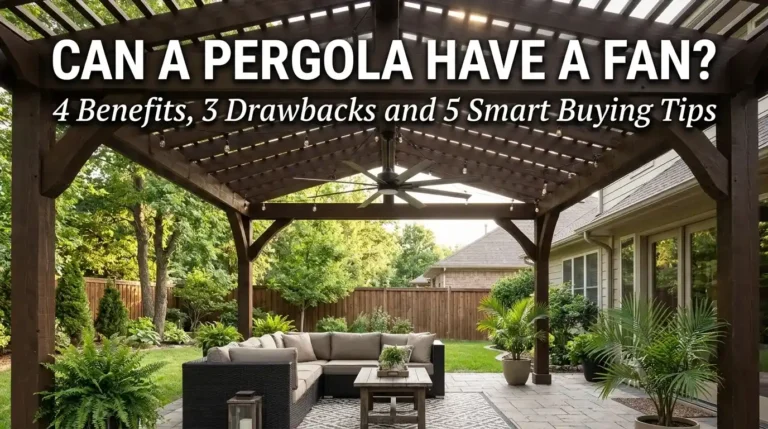
Modern pergolas can also include additional features such as adjustable roofs, privacy curtains, outdoor fans, and lighting. These additions make the structure more adaptable to different activities and weather conditions.
What Are the Main Parts of a Pergola?
Understanding pergola components helps homeowners choose a suitable design and recognize how the structure is assembled.
Posts or Columns
Posts are the vertical supports that hold the pergola in place. They transfer the weight of the overhead structure to its foundation. Their material, spacing, and anchoring are important for stability.
Beams
Beams run horizontally across the supporting posts. They carry the roof components and help distribute the structural load.
Rafters
Rafters sit across the beams and form the open roof. Their spacing influences how sunlight enters the space. Closely spaced rafters generally create more shade than widely spaced ones.
Purlins and Stringers
Some pergola designs include additional horizontal members called purlins or stringers. These can sit above the rafters and provide extra support or a surface for decorative roof elements.
Ledger Board
An attached pergola may use a ledger board to connect its structure to the house. Proper attachment and weatherproofing are essential to avoid structural and moisture problems.
What Are the Different Types of Pergolas?
Pergolas come in several configurations, allowing homeowners to select a structure that suits their available space and outdoor activities.
Freestanding Pergolas
A freestanding pergola stands independently rather than connecting to a building. It works well in open gardens, lawns, poolside areas, and large backyards.
This design can create a separate seating or dining area away from the house. It also offers flexibility in placement, provided the ground and foundation are suitable.
Attached Pergolas
An attached pergola connects directly to an exterior wall of a house. It is commonly installed over a patio, deck, or outdoor entrance.
This arrangement creates a natural transition between indoor and outdoor living areas. However, the wall connection, structural support, and drainage should be planned carefully.
Louvered Pergolas
A louvered pergola features adjustable roof panels that can open or close to control sunlight and airflow. Some modern systems use motorized controls, allowing homeowners to change the roof position conveniently.
Depending on the design, integrated gutters and additional weatherproofing features can also improve rain management.
Inserted Pergolas
An inserted pergola is incorporated into an existing architectural structure or outdoor design. It can complement a building’s appearance while creating a dedicated shaded area.
What Is the Difference Between a Pergola, Gazebo, and Arbor?
Although these structures can look similar, their purposes and roof designs are different.
A pergola has an open or partially adjustable roof supported by posts and beams. It is mainly designed to define outdoor spaces and provide partial shade.
A gazebo generally has a more complete roof, often with an open-sided or partially enclosed design. It offers greater overhead protection from direct sunlight and rain, depending on its construction.
An arbor is usually a smaller decorative garden structure with an arched or simple overhead framework. It is commonly placed over garden entrances or pathways and often supports climbing plants.
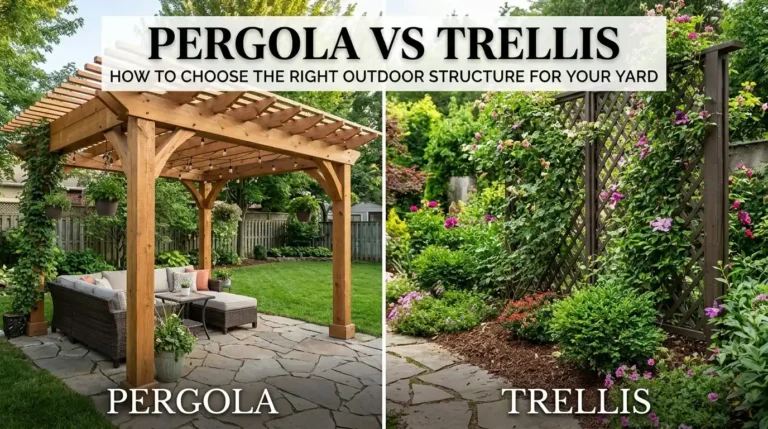
A trellis is different from all three because its primary purpose is to support climbing vegetation rather than provide a complete outdoor living area.
Choosing between these structures depends on whether you need decoration, partial shade, or more substantial weather protection.
Which Materials Are Best for Building a Pergola?
The right material influences appearance, durability, maintenance, and overall construction expenses.
Wood Pergolas
Wood is a popular option because it provides a natural appearance that complements gardens and traditional outdoor spaces. Cedar and redwood are commonly considered for their resistance to insects and moisture compared with untreated pine.
However, wooden structures need regular inspection, cleaning, and protective treatments. Without proper care, wood can develop cracks, rot, warping, or insect damage.
Aluminum Pergolas
Aluminum is a practical choice for homeowners who prefer a modern appearance and relatively low maintenance. It is lightweight, durable, and resistant to corrosion.
Some aluminum pergolas include reinforced structural components and adjustable roof systems. Although their initial purchase price can be higher, they generally require less routine maintenance than wood.
Vinyl Pergolas
Vinyl pergolas are valued for their easy cleaning and resistance to rot and many insect-related problems. They can be suitable for homeowners who want a simple, low-maintenance structure.
However, vinyl offers fewer customization possibilities in some product ranges and can be affected by temperature changes.
Fiberglass and Metal Pergolas
Fiberglass and other metal structures provide additional material choices. Their suitability depends on structural design, climate, appearance, and budget. Homeowners should compare product specifications rather than assuming all materials offer the same strength or lifespan.
Do Pergolas Provide Enough Shade and Rain Protection?
A traditional pergola provides partial shade, not complete protection from the weather. Its open roof allows sunlight to pass between the rafters, so the amount of shade depends on the spacing, orientation, and design.
For additional shade, homeowners can choose closely spaced rafters, climbing plants, lattice panels, or outdoor curtains.
Modern louvered pergolas provide more control because their roof panels can be adjusted according to sunlight and airflow requirements. Some models also feature integrated drainage systems.
Polycarbonate roof panels and retractable covers are other options for improving overhead protection. However, their effectiveness depends on the product and installation.
Before purchasing a pergola, consider your local weather conditions. A structure intended for occasional shade may not be suitable for heavy rain, strong winds, or severe weather without additional engineering and protective features.
What Are the Benefits of Installing a Pergola?
One major benefit is creating additional usable outdoor space. A pergola can transform an empty patio or backyard into a comfortable place for meals, conversations, and family activities.
It also adds architectural interest. The combination of posts, beams, and roof elements creates visual structure and can complement different landscaping styles.
Pergolas offer flexibility as well. You can add climbing plants, decorative lighting, outdoor curtains, fans, and furniture to create a space that suits your needs.
Privacy is another possible advantage. Adding lattice panels, screens, or curtains can make an outdoor seating area feel more secluded without completely closing it off.
A well-designed pergola may also improve a property’s appeal. However, its effect on resale value depends on construction quality, local buyer preferences, landscaping, and the overall condition of the property.
What Are the Disadvantages of a Pergola?
Despite their benefits, pergolas have some limitations.
Traditional open-roof designs cannot provide complete protection from rain or strong sunlight. Outdoor furniture and other belongings may still need weather-resistant covers.
Wooden pergolas also require ongoing maintenance. Exposure to moisture, insects, and sunlight can gradually damage unprotected surfaces.
Another consideration is installation. Poorly anchored posts, unsuitable foundations, or incorrect connections can affect structural safety. Large or attached pergolas may require professional assistance and compliance with local building regulations.
Finally, additional features such as motorized louvers, retractable screens, and integrated lighting can increase the overall cost.
How Much Does a Pergola Cost?
Pergola costs depend on the material, dimensions, roof system, design complexity, and installation method.
Basic DIY kits are generally different in price from custom-built structures with motorized louvers and integrated accessories. Professional installation also adds labor expenses.
One construction example uses a 14 × 14 ft pergola roof over a 14 × 14 ft patio. If the roof extends beyond the supporting posts, a larger 16 × 16 ft roof may be considered, with approximately 1 ft of inset on each side in the example.
These are planning illustrations, not universal sizing requirements. Actual post positions must follow the manufacturer’s structural drawings and installation instructions.
A separate cost estimate cited in the available research places an average modern pergola at just over $4,000. This should be treated as a reference rather than a current guaranteed quote because material and labor prices vary.
Some estimates also suggest a 50–80% return on investment for pergolas. However, this is not a guaranteed resale return. The actual financial benefit depends on the property and local market.
How Do You Maintain a Pergola?
Regular maintenance helps protect a pergola and keeps it looking attractive.
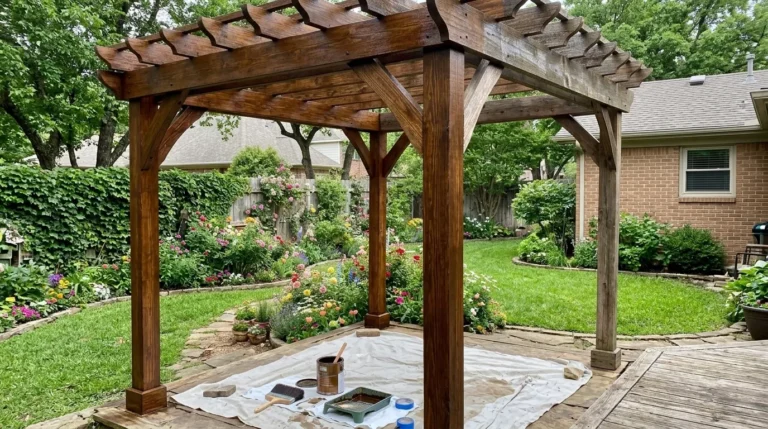
Wooden structures should be inspected for rot, cracks, loose connections, and insect damage. Cleaning, sanding, staining, and sealing help protect exposed surfaces.
A resealing or staining interval of approximately 1–3 years is commonly suggested for wood, depending on the material, finish, and weather exposure. An annual inspection is also useful for identifying problems before they become expensive repairs.
Aluminum and vinyl pergolas generally require less maintenance. Occasional washing with suitable cleaning products helps remove dust, leaves, and outdoor dirt.
Regardless of material, check fasteners, roof components, drainage channels, and structural connections. Remove accumulated debris before it causes blockages or unnecessary weight.
FAQs
What is the main purpose of a pergola?
A pergola creates a defined outdoor living area for relaxing, dining, and entertaining. Its open roof provides partial shade while allowing airflow and natural light.
Does a pergola increase home value?
A well-designed pergola can improve outdoor appearance and functionality. However, its impact on resale value depends on construction quality, location, buyer preferences, and maintenance.
Can a pergola be completely covered?
Yes. Homeowners can add polycarbonate panels, retractable covers, or adjustable louvers. The level of rain protection depends on the roof system and drainage design.
Which pergola material lasts the longest?
Aluminum is a durable, corrosion-resistant option with relatively low maintenance requirements. Proper installation, material quality, and environmental exposure influence its lifespan.
How often should a wooden pergola be maintained?
Inspect a wooden pergola annually and consider resealing or staining approximately every 1–3 years, depending on its finish and exposure to weather.
Is a pergola better than a gazebo?
Neither is universally better. A pergola is suitable for partial shade and open-air living, while a gazebo generally offers greater overhead weather protection.
Can I install a pergola on an existing patio?
Yes, provided the patio and foundation can support the structure. Proper anchoring, post placement, and structural assessment are essential before installation.
Final Thoughts
A pergola is a versatile addition that can make an ordinary backyard, patio, or garden more functional and attractive. Its open design provides partial shade while creating a dedicated area for relaxation, dining, and outdoor entertainment.
Choosing the right material, roof style, dimensions, and installation method is essential for long-term satisfaction. Whether you prefer a traditional wooden structure or a modern aluminum pergola with adjustable louvers, focus on your outdoor needs, local weather, maintenance expectations, and available budget before making a decision.


8 Comments