
Can You Really Relocate a Pergola? What You Need to Know
- Disclosure: This post may include affiliate links. If you click a link and complete a purchase, I may earn a commission. Additionally, as an Amazon Associate, I earn from eligible purchases.
Yes, a pergola can be moved. Whether it should be moved is a different question, and the honest answer depends on how the structure was built, what it is made of, and how firmly it is fixed to the ground.
A lightweight aluminum frame sitting on crushed stone is a very different job from a heavy wooden structure set in concrete.
This guide walks you through what makes relocation easy or difficult, how the process works from start to finish, and how to decide whether moving it is worth the effort.
Why Moving a Pergola Is Harder Than It Looks
A pergola is designed to stay put. Its posts carry the weight of the roof and have to resist wind, so they are usually anchored firmly, often with concrete footings or heavy steel brackets. That secure anchoring is exactly what makes moving one difficult. Before anything can be lifted, the posts may need to be dug out and the concrete broken away, which takes time and can leave damage to the yard.
Even after the structure is free, it generally has to be taken apart before it can be transported. Depending on its size and weight, you may need extra hands or professional help to avoid cracking joints, bending metal, or marking up the lawn and nearby surfaces. Moving a pergola is possible, but it is rarely a quick weekend errand.
What Decides How Easy a Pergola Is to Move
Three factors matter most: the material, the size and design, and the foundation. Understanding each one before you start will save you from unpleasant surprises.
Material and weight
Traditional wood pergolas are usually heavy and harder to transport. Wood can also weaken over time through weather exposure, so an older structure may not survive being taken apart and rebuilt. Aluminum and steel frames are far lighter for their strength and tend to handle disassembly well. Vinyl is light and low-maintenance, though it is not always the easiest to dismantle cleanly. Fiberglass is valued for combining strength with relatively low weight, along with good resistance to rust, rot and warping, which makes it a sensible choice if you expect to relocate in the future.
Size and design
A compact, freestanding pergola in a backyard is simpler to move than a large one covering an entire patio. Extra features add work: side walls, windows, and complicated roof layouts all mean more parts to remove and keep track of. Modern louvered pergolas can be surprisingly manageable, because their streamlined frames often come apart in a logical order.
Foundation and anchoring
This is where most of the difficulty lives. Posts set in concrete may require professional removal, while structures resting on crushed stone or on surfaces that are not deeply anchored are much easier to lift and relocate. There is a real trade-off here. Strong anchoring keeps a pergola stable in severe weather, but the same anchoring makes future relocation harder. If you think you might move the pergola one day, consider removable ground anchors or a temporary foundation from the start. They still provide stability while making disassembly far simpler.
How to Move a Pergola Step by Step
The process breaks down into four stages: preparing, disassembling, transporting, and reassembling. Treating it as a planned project rather than a rushed job is the single best way to protect your pergola from damage.
Preparing for the move
Start with a careful inspection. Look at the condition, age and structural integrity of the pergola, paying particular attention to the posts, anchors and metal parts, and note any signs of wear. A structure that is already weak may not be worth moving at all. Next, create an inventory of every component and record which pieces are damaged or worn. Give the structure a good clean so that dirt and soil are not carried to your new location.
Then document everything. Photograph the pergola from several angles and make notes on how it fits together, because those images become your instruction manual later. If you still have the original assembly manual, keep it close. Gather your tools, including power tools, wrenches, straps, fasteners and protective gear. Move outdoor furniture and decorations out of the work area and protect nearby windows and structures so a slipped panel does not cause damage.
Disassembling the pergola
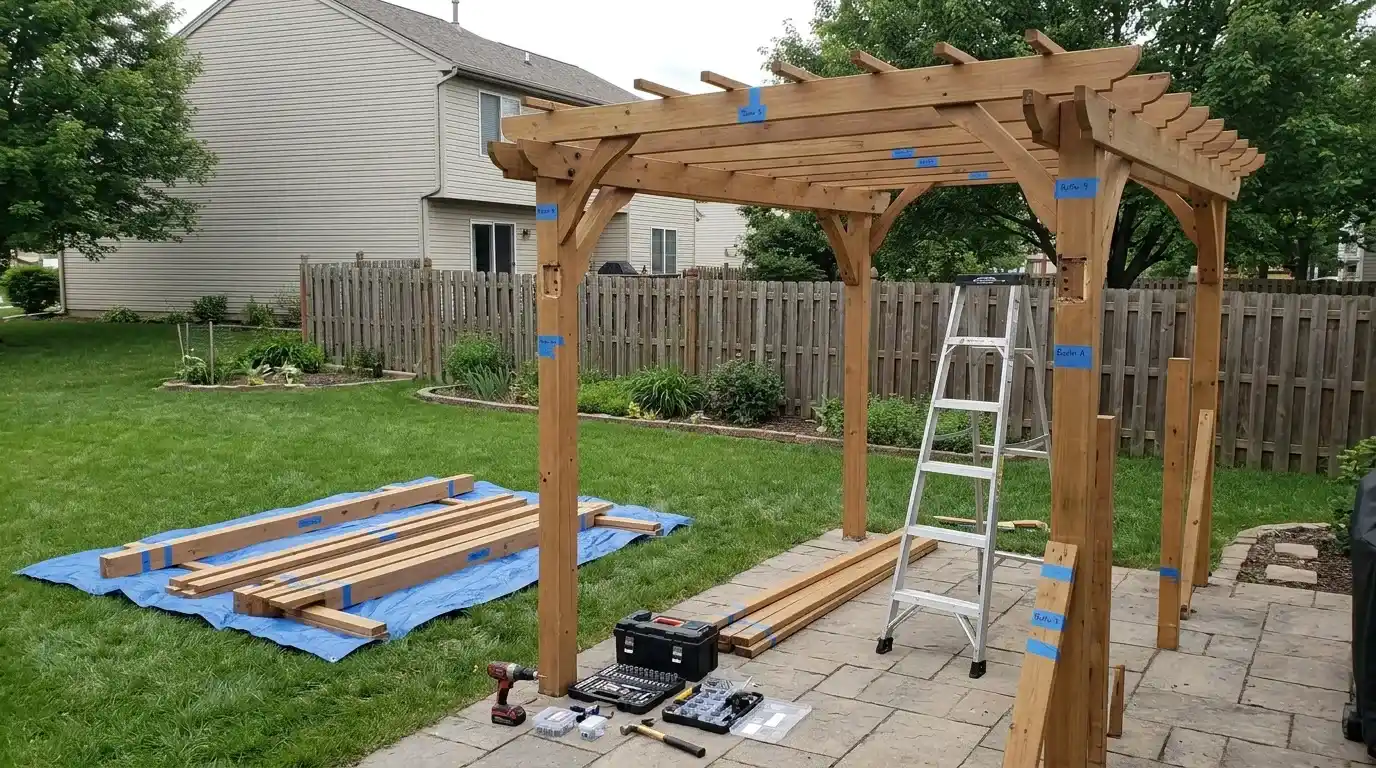
Work in a systematic order, generally reversing the way the pergola was first built. For an aluminum pergola, begin with the roof components such as shade elements and louvers, then move on to the frame and finally the supporting posts. Patience matters more than speed. Forcing a stubborn fastener is a quick way to strip a thread or bend a bracket.
As each piece comes off, label it and keep the matching fasteners together, for example in labeled bags or containers. It sounds fussy, but good labeling can save hours when you rebuild. If dismantling becomes difficult or unsafe, stop and bring in professional help rather than pushing on.
Transporting the components
Before you load anything, think about the size and weight of the largest pieces once the pergola is apart. That tells you whether everything will fit in a standard vehicle or trailer, or whether you will need a larger truck. Pack components with bubble wrap, moving blankets and sturdy containers, and keep metal parts from rubbing against each other, since that causes scratches and wear. Secure the load properly so wind and movement cannot shift or damage it on the road.
For a short move within the same yard, help from family or friends is often enough. For a move to a different property, professional movers may be the safer option.
Reassembling at the new site
Prepare the new location first. The ground should be level, and the pergola can be set on an appropriate concrete foundation or a crushed stone surface depending on your needs. Reassemble in the reverse order of dismantling, starting with the posts and finishing with the roof, using your photographs, notes and inventory as a guide. Once it is up, check the connections, look for any damage from the journey, and tighten fasteners where needed. A final stability check is important, because a pergola that is not properly secured can become a hazard in strong wind.
Professional Movers or DIY?
Hiring professionals brings experience, the right equipment, greater efficiency and possibly insurance coverage. The downsides are higher cost and the fact that specialists who have actually moved pergolas can be hard to find. Doing it yourself keeps costs down and gives you flexibility over timing, but it demands suitable tools, transport, physical effort and some construction experience. Incorrect handling can lead to injury or structural damage.
A practical way to decide is to weigh four things: how complex your pergola is, how comfortable you are with DIY work, your budget, and the risks involved. A small, bolted aluminum frame on a stone base is a reasonable DIY job for many people. A large wooden structure set in concrete, or a pergola with walls and an intricate roof, is usually better left to professionals.
Is It Worth Moving, or Should You Replace It?
This is the question that deserves the most honest thought. Removing, transporting and reinstalling a pergola involves real labor and expense, and the process can damage joints, posts and roofing parts. Improper handling may even cause the frame to warp permanently. Moving a pergola can be a poor investment, especially a large or older one.
A simple comparison helps. Price the cost of relocation, including tools, transport, any professional help and new foundation materials, and set it against the cost of buying a new pergola. As a rough benchmark, a replacement pergola can cost approximately $1,500, though your own price will depend on size, material and style. If relocation costs come close to that figure, replacing is often the smarter choice. Sentimental value matters too, so be honest about whether the structure means enough to justify the work.
If you are moving house, this comparison often favors leaving the pergola behind. Selling it, or letting it stay as a feature of the property, and buying a new one that suits the new yard can be easier and can give you a better fit for the new space.
Check Local Rules Before You Rebuild
Relocation can bring you into contact with regulations you did not face the first time. Local rules and neighborhood restrictions may affect where and how a pergola can be installed. Some areas require permits, particularly when a structure exceeds certain dimensions, and a homeowners association may have its own say about placement, style or height. Checking this before you dismantle anything is far cheaper than discovering a problem after the pergola is already rebuilt.
Alternatives to Moving Your Pergola
If you are moving it because the space feels tired rather than because you are leaving the property, you may not need to move it at all. Refreshing the area around it can change the whole feel of the space. New garden décor, crushed stone flooring, fresh outdoor furniture and better lighting can make an existing pergola look new without any dismantling.
If you simply want shade in another part of a large yard, a second pergola can be a better answer than moving the first. Buying another kit avoids the risk of damaging the original, and a gazebo can offer a different style of shaded gathering space if you want some variety.
Plan Ahead If You Might Move It Later
The easiest pergola to move is one that was planned for it. If you are building a new one, choose the location carefully, thinking about where you want shade, how you will use the space, and whether the pergola should be attached to the house or stand alone. Good planning up front prevents unnecessary relocation later.
If a future move is even a possibility, favor a modular design that can be assembled and disassembled without much difficulty, with standardized fasteners and fewer individual components. Pair it with a lighter material and a flexible foundation, and keep the assembly manual somewhere safe. These small decisions make a major difference years from now.
FAQ
Can a pergola be moved after it has been installed?
Yes. It is usually possible, but the effort depends on the material, size and foundation. A lightweight aluminum pergola that is not set in concrete is far easier to relocate than a heavy wooden one with deep, concrete-set posts.
Which pergola material is easiest to move?
Lighter materials such as aluminum, steel, vinyl and fiberglass are generally easier to transport than wood. Aluminum and fiberglass are especially popular for homeowners who want durability without excess weight, though the best option depends on your design and budget.
Do I need professional help to move a pergola?
Not always. For a small pergola moved a short distance within the same yard, capable helpers and the right tools may be enough. For concrete-set posts, large structures, or a move to a new property, professional help is often the safer and more efficient choice.
Should I take my pergola with me when I move house?
Often it is better to leave it behind. Compare the cost of dismantling, transport and reinstallation with the price of a new pergola, which can be approximately $1,500. If the two are close, buying a new one that suits your new yard is usually simpler.
Can I damage a pergola by moving it?
Yes. Joints, posts and roof parts can be damaged, and rough handling can warp the frame. Careful labeling, proper packing and a patient, step-by-step approach reduce that risk significantly.
Do I need a permit to rebuild a moved pergola?
It depends on where you live. Some areas require permits when a structure exceeds certain dimensions, and a homeowners association may have extra rules. Check with your local authority and any HOA before you begin.
Final Thoughts
A pergola can absolutely be moved, but success comes down to honest planning. Look at the material, the size, the foundation and the condition of the structure, then compare the true cost of relocating with the cost of replacing. If it is lightweight, in good shape and not deeply anchored, moving it can be a rewarding project. If it is heavy, old or set in concrete, a fresh start may save you money, time and frustration.