
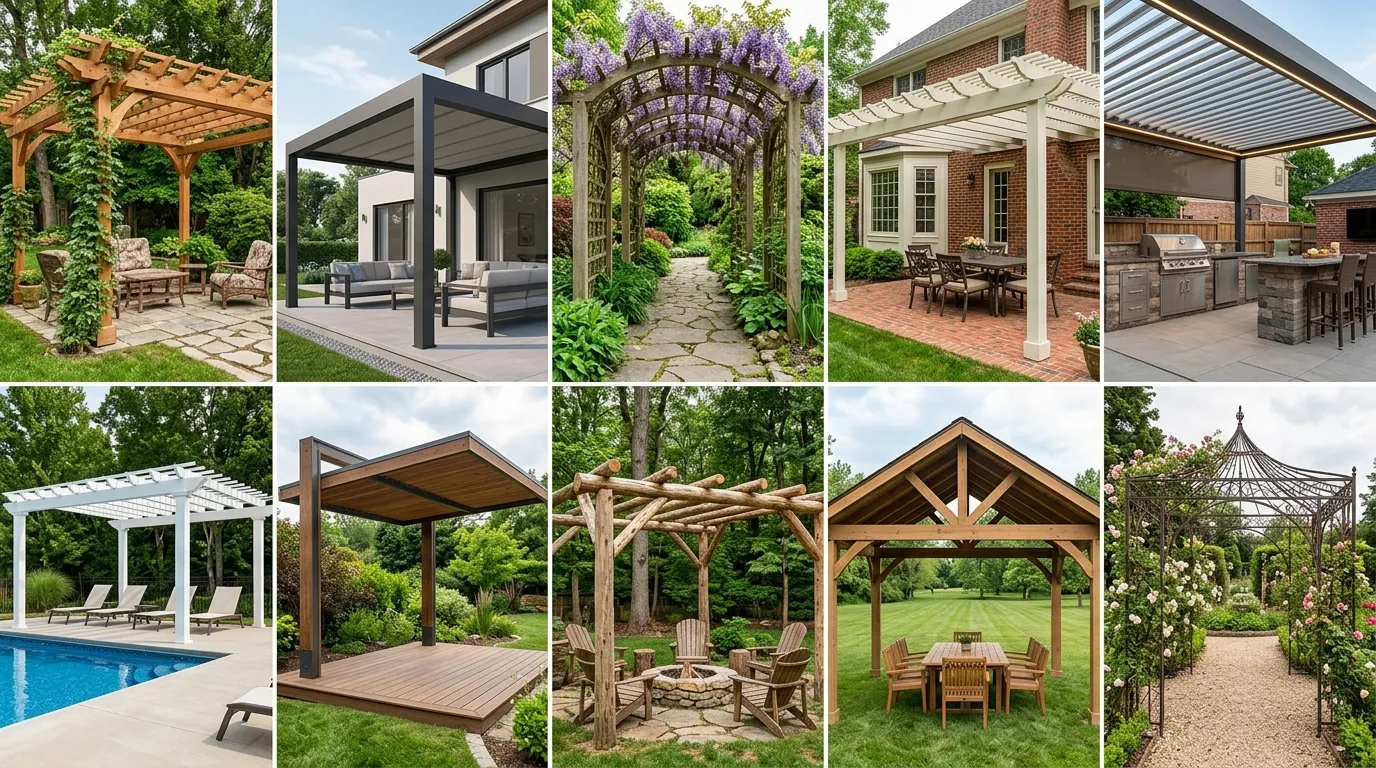
Choosing a Pergola? Pros and Cons of the Most Popular Types
- Disclosure: This post may include affiliate links. If you click a link and complete a purchase, I may earn a commission. Additionally, as an Amazon Associate, I earn from eligible purchases.
Choosing a pergola can transform an ordinary backyard into a comfortable outdoor living space. Whether you want a shaded patio for relaxing, a dedicated area for entertaining guests, or an attractive garden feature, the right structure can improve both the appearance and functionality of your outdoor space.
However, pergolas are available in several materials and designs, and each option has different advantages, maintenance requirements, durability, and installation costs. Some homeowners prefer the natural appearance of wood, while others choose aluminum or steel for their strength and lower maintenance needs.
Understanding the 10 different types of pergolas and their structural styles can help you make a practical decision. This guide explores their characteristics, estimated lifespans, costs, and suitability for different outdoor spaces.
10 Different Types of Pergolas Based on Materials
The material is one of the most important factors when selecting a pergola. It affects the structure’s appearance, maintenance requirements, weather resistance, and overall cost.
1. Wood Pergolas
Wood pergolas are a traditional choice for homeowners who appreciate natural textures and classic outdoor designs. Their warm appearance complements gardens, patios, and different architectural styles.
One of their biggest advantages is design flexibility. You can choose different timber finishes, decorative details, and roof arrangements to create a structure that matches your backyard.
However, wood requires regular attention. Moisture, insects, mold, and changing weather conditions can damage untreated timber. Applying protective stains helps reduce these problems and maintain its appearance.
A basic wooden pergola may last around 5 years without adequate protection, while regular staining can extend its lifespan to approximately 10–12 years.
2. Cedar Pergolas
Cedar is a popular wood choice because of its attractive grain, natural fragrance, and resistance to certain insect and moisture-related problems.
Red cedar is particularly appealing for outdoor structures because it offers a distinctive reddish appearance. It can complement traditional gardens and natural landscaping without requiring an overly decorative design.
Although cedar generally costs more than ordinary timber, its appearance and natural characteristics make it attractive to homeowners seeking a premium wooden pergola.
Without proper staining, its lifespan may be approximately 5 years. With suitable care, it can reach around 10 years.
3. Timber Pergolas
Timber pergolas provide a classic garden appearance and can be adapted to different outdoor layouts. They are often a more affordable alternative to red cedar, making them worth considering for homeowners working with a limited budget.
Their appearance can be customized through different finishes and roof designs. For example, a traditional cross-beam arrangement creates a timeless look, while decorative natural materials can give the structure a more relaxed garden atmosphere.
The main disadvantage is that timber can attract termites and develop rot when exposed to moisture. Regular staining and appropriate pest protection are important for maintaining the structure.
A timber pergola may last approximately 5 years with minimal staining maintenance, increasing to around 10–12 years with periodic treatment.
4. Aluminum Pergolas
Aluminum pergolas are suitable for homeowners who prefer contemporary outdoor designs. Their clean appearance works particularly well with modern patios, decks, and landscaped gardens.
One important advantage is their relatively low maintenance requirement. Unlike wooden structures, aluminum does not need regular staining or repainting to maintain its basic finish.
It is also lightweight, making it a practical option for certain deck installations. Powder coating allows homeowners to select a finish that complements their property’s exterior.
Look for quality extruded aluminum rather than inexpensive metal alternatives that may have a similar appearance.
An aluminum pergola can last approximately 15–20 years, while its powder-coated finish may also last around 20 years.
5. Vinyl Pergolas
Vinyl pergolas are an attractive option for people who want a low-maintenance outdoor structure. They offer a clean appearance and are available in different designs, including customized options.
Unlike wood, vinyl does not require regular staining or repainting. Occasional cleaning, including an annual power wash, can help maintain its appearance.
However, extreme weather conditions can affect the material. Heavy snow and environmental changes may contribute to sagging or brittleness over time.
Vinyl pergolas generally have an estimated lifespan of 15–20 years.
6. Steel Pergolas
Steel pergolas are known for their strength and suitability for permanent outdoor structures. Their solid construction makes them a useful option for homeowners who want a sturdy freestanding design.
They can be painted or powder-coated to complement the surrounding architecture. Steel may also be less expensive than aluminum, depending on the design and construction requirements.
One potential disadvantage is its industrial appearance, which may not suit every garden. Dust and surface dirt also require occasional cleaning.
Protective finishes are especially important. Galvanized or zinc-coated steel can last approximately 35–70 years, according to the reported estimates.
7. Metal Pergolas
Metal pergolas are generally considered a budget-friendly option. They are available in different sizes and designs and can work well for homeowners who want a simple outdoor shade structure.
However, not all metal pergolas offer the same strength or weather resistance. Less durable materials can corrode when exposed to outdoor conditions.
Compared with aluminum and properly protected steel, some basic metal structures have a shorter expected lifespan.
An estimated lifespan of around 5 years is reported for the basic metal option discussed here. The actual result depends on the metal quality, protective coating, and maintenance.
8. Fiberglass Pergolas
Fiberglass pergolas combine a relatively lightweight structure with low-maintenance characteristics. They are often compared with vinyl because both materials offer weather resistance and do not require the same routine treatment as wood.
Their lightweight construction can simplify installation, while their appearance can complement modern outdoor spaces.
The main disadvantage is their relatively high purchase price. Some fiberglass structures may also require repainting to maintain their finish.
With appropriate upkeep, their estimated lifespan is around 15–20 years.
9. Concrete Pergolas
Concrete pergolas are suitable for homeowners interested in permanent structures and distinctive architectural designs. They can be created with decorative pillars, traditional detailing, or minimalist shapes.
Their solid construction provides considerable design flexibility. You can create a structure that becomes a central feature of a garden or outdoor entertainment area.
However, concrete is not as easy to relocate or modify as lightweight materials. Installation also requires careful planning because the structure is intended to remain in place.
Regular washing helps maintain its appearance, while its permanent construction makes it worth considering for long-term outdoor projects.
10. CNC-Cut Pergolas
CNC-cut pergolas stand out because of their decorative laser-cut patterns. Rather than relying only on traditional open beams, these designs can introduce detailed shapes and interesting shadow effects.
They can be manufactured using aluminum, wood, or steel panels, offering flexibility in appearance and construction.
The lifespan depends on the material used. A properly maintained wooden version may last approximately 10–12 years, an aluminum version around 15–20 years, and a suitably protected steel version approximately 35–70 years.
This option is particularly appealing when visual design is just as important as creating an outdoor sitting area.
Different Pergola Styles for Your Backyard
Besides choosing a material, you should consider how the pergola will fit into your outdoor layout. Structural design affects where you can install it and how you intend to use the space.
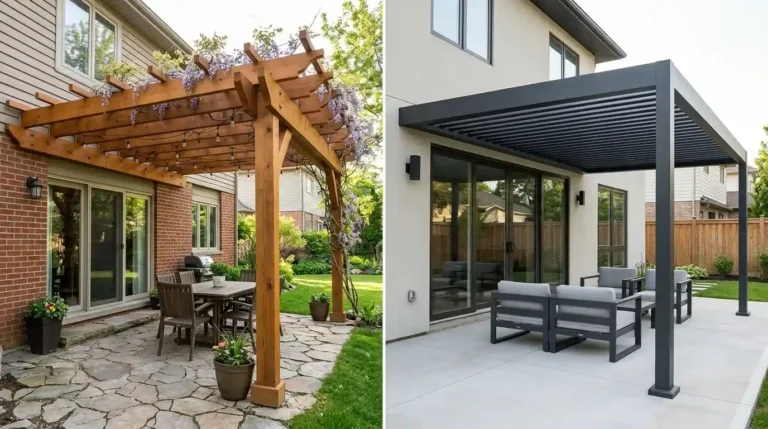
Attached Pergolas
An attached pergola, sometimes called a lean-to pergola, connects directly to an exterior wall of your home. Supporting posts are generally positioned along its outer edge.
This design extends the usable area beside the house and can create a natural transition between indoor and outdoor living spaces.
It is worth considering for patios where available space is limited or where you want convenient access from the home.
Freestanding Pergolas
Freestanding pergolas are independent structures that can be positioned in different areas of an open garden.
They are suitable for creating a separate seating area, an outdoor dining space, or a quiet place to relax away from the house.
Their flexible placement makes them particularly useful when you want the pergola to become a focal point in your landscaping.
Collapsible Pergolas
Collapsible pergolas are temporary structures designed to fold away when they are not needed. They can be useful for seasonal outdoor arrangements or homeowners who do not want a permanent installation.
Their lightweight construction makes them relatively easy to install and store.
However, they are generally less robust against harsh weather than permanent structures. They may also lack the substantial appearance of a fixed pergola.
Bioclimatic Pergolas
Bioclimatic pergolas feature adjustable roof systems that help regulate sunlight and temperature. Some designs use motorized roof louvers to adjust the amount of light entering the space.
They can also provide improved protection against wind and rain compared with basic open-roof structures.
Their main advantage is flexibility. You can adjust the roof according to outdoor conditions instead of relying on a fixed arrangement.
However, they can cost more than simpler pergolas and may require additional ground preparation and professional installation.
How Much Does a Pergola Cost?
Pergola prices depend on material, dimensions, design complexity, and installation requirements. The following figures are reported estimates in US dollars and should be treated as reference prices rather than guaranteed current quotations.
Wood and cedar pergolas can cost approximately $2,200–$6,300, although manually built cedar structures may start around $1,300. Premium timber options, such as tigerwood, can reach approximately $10,000.
Steel pergolas are estimated at around $500–$2,800, while basic metal options range from approximately $500–$3,000.
Aluminum pergolas generally cost around $1,000–$3,000, with an estimated material cost of approximately $20 per square foot.
Fiberglass structures can range from $1,500–$10,000, with an estimated cost of approximately $60 per square foot. A 144-square-foot fiberglass pergola, for example, could cost around $8,640.
Vinyl pergolas generally fall between $1,500 and $7,000.
These differences show why it is important to compare the complete project cost rather than focusing only on the initial material price.
How to Choose the Right Pergola for Your Outdoor Space
Start by considering how you plan to use the structure. If you want a traditional garden feature, wood or cedar may suit your preferences. If low maintenance and contemporary styling are more important, aluminum or vinyl may be more appropriate.
Next, consider your available space. An attached pergola works well beside a house, while a freestanding design provides greater flexibility in an open garden. A collapsible model may be more practical if you need a temporary arrangement.
Your local weather conditions also matter. Structures exposed to heavy rain, snow, moisture, or strong winds need appropriate materials and protective finishes.
Finally, establish a realistic budget. Include the material, size, ground preparation, installation, and future maintenance when comparing options. For adjustable or permanent structures, professional installation advice can help you avoid unsuitable design choices.
FAQ
What is the most durable type of pergola?
Properly galvanized or zinc-coated steel is among the longest-lasting options discussed, with an estimated lifespan of 35–70 years. Actual durability depends on construction quality and maintenance.
Which pergola requires the least maintenance?
Aluminum and vinyl are attractive low-maintenance choices. They generally do not require the regular staining and painting associated with wooden pergolas.
Are wooden pergolas worth installing?
Yes. Wooden pergolas offer natural beauty and flexible designs. However, they require protective staining and regular maintenance to reduce moisture damage, rot, and insect problems.
What is the cheapest type of pergola?
Basic metal pergolas are among the lower-priced options, with reported estimates starting around $500. Actual prices depend on size, material quality, and additional features.
How long does an aluminum pergola last?
An aluminum pergola can last approximately 15–20 years. A suitable powder-coated finish can also last around 20 years.
Is a freestanding or attached pergola better?
An attached pergola is useful for extending a home’s patio area, while a freestanding pergola offers more freedom in choosing its location. The better option depends on your available space and intended use.
Are bioclimatic pergolas worth the investment?
They may be worthwhile if adjustable sunlight, temperature control, and improved weather protection are important to your outdoor living plans. However, their higher cost and installation requirements should be considered.
Final Thoughts
The best pergola is not necessarily the most expensive or decorative option. It is the one that fits your outdoor space, budget, preferred appearance, and maintenance expectations.
Wood and cedar offer natural charm, aluminum and vinyl provide convenient low-maintenance alternatives, and protected steel offers impressive longevity. Meanwhile, attached, freestanding, collapsible, and bioclimatic designs provide different ways to organize your outdoor area.
Before making a decision, compare the material, expected lifespan, installation requirements, and long-term maintenance. A well-planned pergola can create a comfortable and attractive outdoor space that you can enjoy for years.



One Comment