
Do You Need a Pond Heater? A Complete Winter Care Guide
- Disclosure: This post may include affiliate links. If you click a link and complete a purchase, I may earn a commission. Additionally, as an Amazon Associate, I earn from eligible purchases.
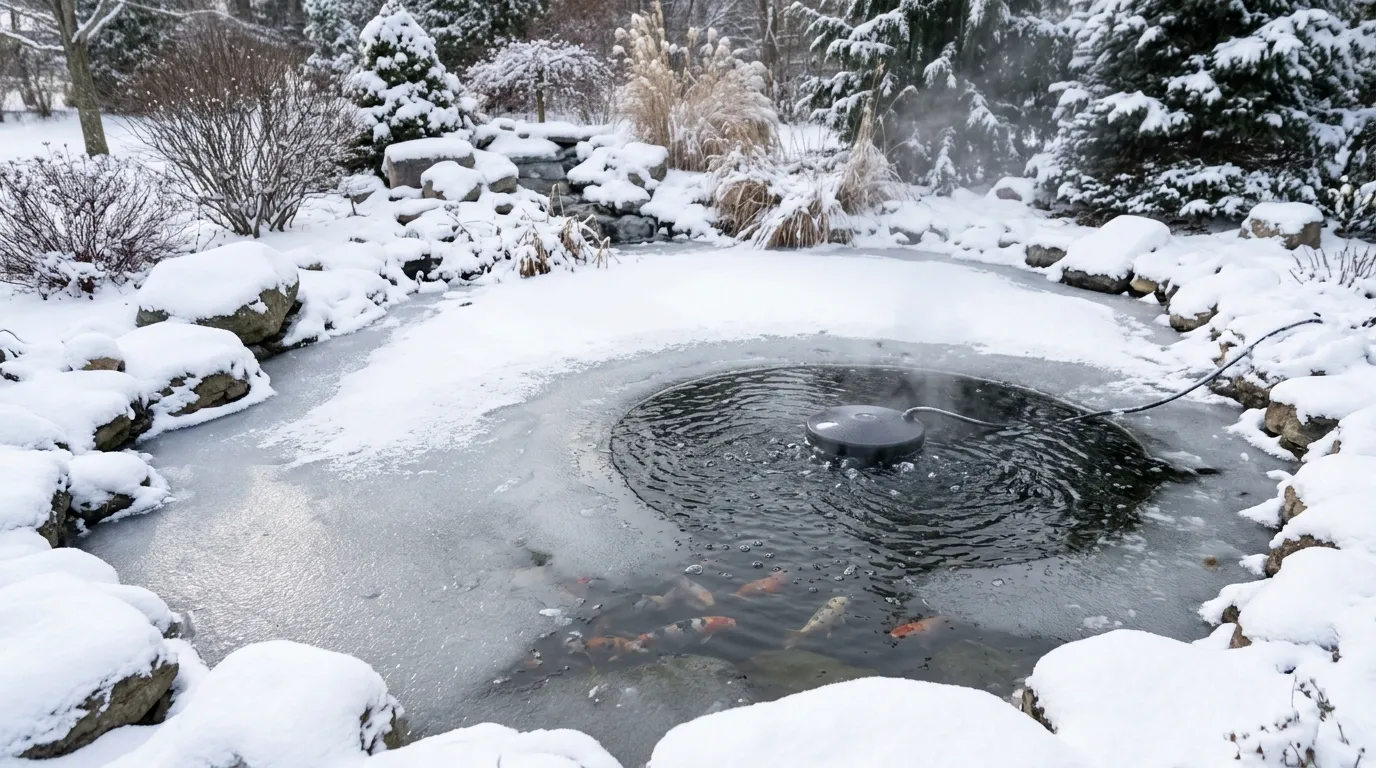
Outdoor ponds do not always need heaters, even during winter. Whether heating is necessary depends on the local climate, pond depth, water volume, fish species, and how cold temperatures become. In mild climates, a naturally maintained pond may remain healthy without additional heating. However, ponds exposed to prolonged freezing conditions may need a de-icer or heater to protect fish and maintain essential gas exchange.
One important point is that preventing the entire pond surface from freezing is not the same as heating all the water. Many cold-hardy fish, including goldfish and koi, can survive cold water when the pond is properly maintained. They need suitable water conditions, sufficient oxygen, and a way for harmful gases to escape.
Before purchasing heating equipment, understand what your pond actually needs.
When Do Outdoor Ponds Need Heaters?
A pond generally needs additional winter protection when temperatures remain below freezing for extended periods. A continuous layer of ice can seal the water surface, restricting the exchange of oxygen and gases with the atmosphere.
Fish, beneficial bacteria, and decomposing organic material contribute to changes in water quality. When an ice layer remains in place, gases such as carbon dioxide can accumulate, potentially creating unhealthy conditions.
However, a heater is not automatically necessary whenever frost appears. A pond in a mild climate may experience occasional surface ice without requiring continuous heating.
Climate and fish species matter more than the season alone. Tropical fish generally require warmer conditions than cold-hardy pond fish. If your pond contains tropical species, you may need a properly sized heating system to maintain their required temperature.
Can Fish Survive in an Outdoor Pond Without a Heater?
Yes. Many outdoor fish can survive winter without additional heating when their environment is suitable.
Goldfish and koi are cold-hardy species that can adapt to seasonal temperature changes. As water becomes colder, their metabolism slows, and they become less active. They generally spend more time in deeper areas where temperatures are more stable.
However, cold tolerance does not mean fish can survive every winter condition. Sudden temperature changes, insufficient oxygen, poor water quality, and prolonged freezing can create serious problems.
Goldfish and Koi in Winter
Goldfish and koi can generally tolerate water temperatures around 40°F (4°C), although their activity decreases as temperatures fall.
Below approximately 50°F (10°C), their metabolism slows considerably, and their immune response can become less effective.
For this reason, avoid unnecessary handling, excessive feeding, and sudden water temperature changes during winter.
What About Tropical Fish?
Tropical fish have different temperature requirements from goldfish and koi. They may not survive prolonged exposure to cold outdoor water.
If your pond contains tropical species, check the specific temperature requirements of each fish. A suitable heater or an indoor winter holding system may be necessary.
Pond Heater vs. Pond De-Icer: What Is the Difference?
Although these products are sometimes confused, they serve different purposes.
A pond heater increases water temperature. Depending on its capacity, it can warm a specific area or help maintain a more consistent temperature throughout a pond.
A pond de-icer primarily prevents a small section of the water surface from freezing completely. Its main purpose is to maintain an opening for gas exchange rather than heat the entire pond.
For many outdoor ponds containing cold-hardy fish, a de-icer may provide sufficient winter protection without the energy consumption of a full heating system.
Types of Pond Heating Equipment
Electric pond heaters use electricity to warm water. They are available in different capacities and can be suitable for ponds that require additional temperature control.
Submersible heaters operate underwater and provide heat directly to the surrounding water. They are useful when fish require a more controlled environment.
Inline pond heaters connect to the pond’s plumbing system, usually after the water pump. Water passes through the heating chamber before returning to the pond.
Floating de-icers sit on the water surface and maintain an opening in the ice. They are particularly useful for ponds that only need protection against complete surface freezing.
Solar-powered heaters use solar energy to provide additional warmth. Their effectiveness depends on sunlight availability, equipment capacity, and winter weather conditions.
Gas heat exchangers transfer heat into circulating pond water. They may be suitable for larger installations, although installation requirements and initial costs can be higher.
How Deep Should a Pond Be to Survive Winter?
Pond depth plays an important role in winter survival because deeper water generally experiences more stable temperatures than shallow water.
Ponds measuring less than 18 inches are more vulnerable to freezing throughout their water volume. By comparison, ponds measuring 24 inches or deeper generally provide better protection for cold-hardy fish.
Deeper sections allow fish to move away from colder surface water and remain in relatively stable conditions.
However, depth alone does not guarantee survival. Climate, pond construction, fish population, water quality, and oxygen availability also matter.
If you are planning a new fish pond, consider creating a sufficiently deep area before winter becomes a concern.
What Temperature Should an Outdoor Pond Be in Winter?
The appropriate water temperature depends on the fish species and the purpose of heating.
For goldfish and koi, approximately 40–45°F (4–7°C) may be a suitable range in some winter conditions, depending on their acclimation and overall health. The objective is generally to avoid sudden temperature changes rather than maintain summer-like conditions.
Water freezes at 32°F (0°C) under normal conditions. However, fish can survive in unfrozen water beneath an ice-covered surface.
A common mistake is attempting to keep the entire pond warm. This can increase electricity consumption and interfere with the natural seasonal adjustment of cold-hardy fish.
Always follow the temperature requirements of your particular fish and the manufacturer’s heater instructions.
How to Protect an Outdoor Pond During Winter Without Heating It
Not every pond owner needs to install an electric heater. Several maintenance practices can help reduce winter risks.
Maintain an Opening in the Ice
An opening allows gases to escape and supports gas exchange. Use a suitable pond de-icer when necessary.
Never strike the ice forcefully with a hammer or similar tool. The resulting vibrations can stress or injure fish.
Keep the Water Properly Aerated
An air pump and airstone can support oxygen circulation. Position aeration equipment carefully so that it does not unnecessarily disturb the warmer water at the bottom of a deep pond.
Remove Excess Organic Material
Fallen leaves, dead plants, and other organic debris can decompose underwater. This process increases oxygen consumption and affects water quality.
Remove excess debris before winter whenever possible.
Protect Pipes and Equipment
Freezing temperatures can damage exposed plumbing, pumps, and filtration equipment. Inspect these systems before winter and follow manufacturer instructions for seasonal operation or shutdown.
Consider a Pond Cover
A suitable pond cover can reduce heat loss, limit falling debris, and provide additional protection against harsh weather.
However, ensure that the cover does not completely prevent necessary gas exchange.
FAQs
Do small outdoor ponds need heaters?
Not necessarily. Small ponds may need additional protection in freezing climates because their water can cool more quickly. A suitable de-icer may be sufficient for some cold-hardy fish ponds.
Can an outdoor pond freeze completely?
Yes. Shallow ponds and ponds exposed to prolonged freezing weather can freeze throughout. Complete freezing can be dangerous for fish because it removes their liquid-water habitat.
Do goldfish need a pond heater in winter?
Usually not when kept in a suitably deep, well-maintained pond. Goldfish are cold-hardy, but they still need appropriate water quality, oxygen, and protection from prolonged freezing.
Can I pour warm water onto a frozen pond?
You can carefully create an opening using a container of warm water, but never pour boiling water directly into the pond. Avoid sudden temperature changes and repeated disturbance of the fish.
Last Words
Outdoor ponds do not automatically need heaters during winter. Cold-hardy fish such as goldfish and koi can often survive naturally cold water when the pond has sufficient depth and good water quality.
The most important decision is understanding whether your pond needs additional heating or simply an opening in the ice. Consider your climate, fish species, pond capacity, and equipment requirements before purchasing a heating system.
With appropriate preparation, regular monitoring, and safe winter maintenance, you can protect your pond without unnecessarily heating all its water.




One Comment