20 Common Pond Insects: Identification, Benefits & Risks
- Disclosure: This post may include affiliate links. If you click a link and complete a purchase, I may earn a commission. Additionally, as an Amazon Associate, I earn from eligible purchases.
Ponds attract many insects because they provide water, food, shelter, and suitable places for reproduction. Some species spend their entire lives underwater, while others develop as aquatic larvae before emerging as flying adults. Although certain insects may look unpleasant, most play an important role in maintaining a balanced freshwater ecosystem.
Understanding common pond insects helps pond owners distinguish beneficial species from potential pests. Their appearance, swimming patterns, feeding habits, and development stages can also provide useful clues about pond conditions. Here you can read about 20 common pond insects below
20 Common Pond Insects You May Find in a Pond
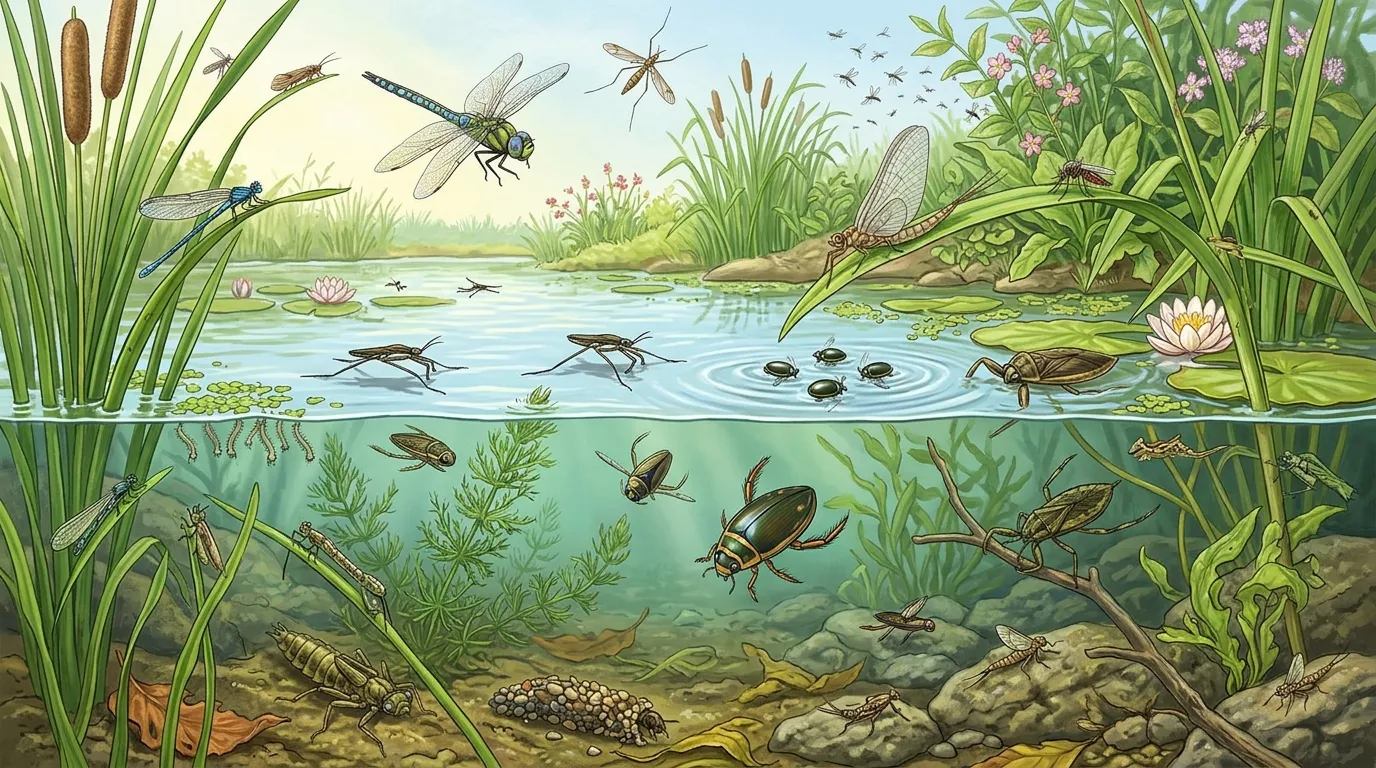
Different insects occupy different parts of a pond. Some skate across the surface, others swim underwater, and many live among aquatic plants or sediment at the bottom.
1. Mayflies
Mayflies are delicate flying insects whose early development takes place underwater. Their aquatic young, known as nymphs, feed on algae and organic debris. Depending on the species and environmental conditions, their underwater development can last up to approximately one year.
When mature, they emerge as winged adults, mate, and lay eggs. Adult mayflies generally have short lives, making their emergence an interesting seasonal event around freshwater ponds.
2. Dragonflies
Dragonflies are recognizable by their long bodies, large eyes, and two pairs of transparent wings. Their aquatic larvae are powerful predators that hunt mosquito larvae, small insects, and other aquatic organisms.
They often use submerged vegetation and muddy pond bottoms for shelter. Adult dragonflies also capture flying insects, making them useful natural predators around ponds.
3. Damselflies
Damselflies resemble dragonflies but usually have slimmer bodies and narrower wings. Their larvae live underwater and possess three leaf-like tail gills that help with respiration.
They generally develop among aquatic vegetation before emerging as adults. Their presence can contribute to a diverse pond ecosystem.
4. Water Striders
Water striders are small insects that appear to walk across the water. Their long legs distribute their weight across the surface, allowing them to move using surface tension.
They feed on small insects and organisms found at the water’s surface. Water striders are generally harmless to humans and can often be spotted in calm pond areas.
5. Water Boatmen
Water boatmen have oval-shaped bodies and flattened hind legs that work like paddles. Most species feed on algae, diatoms, and organic material.
They can carry a small air supply when diving underwater. Their swimming position is an important identification feature because they normally swim right-side up.
6. Backswimmers
Backswimmers are easily confused with water boatmen, but their swimming behavior is different. They swim upside down, using their long, hair-covered hind legs to move through the water.
These insects are predators that feed on mosquito larvae and other small aquatic animals. They can deliver a painful defensive bite if handled, so it is best to observe them without touching.
7. Diving Beetles
Diving beetles have smooth, oval bodies and strong hind legs adapted for swimming. They move quickly through pond water and hunt smaller aquatic organisms.
Their sizes vary considerably, with some species measuring approximately 5–40 mm. Larger diving beetles may bite or pinch when picked up, so avoid handling unfamiliar specimens.
8. Stoneflies
Stonefly larvae live underwater, often among stones and other submerged materials. They feed on algae, organic matter, and smaller aquatic organisms, depending on the species.
Some larvae remain in freshwater for several years before becoming adults. Because many stoneflies are sensitive to pollution and require well-oxygenated water, their presence can indicate relatively favorable environmental conditions.
9. Caddisflies
Caddisfly larvae are particularly interesting because many species construct protective cases from sand, tiny stones, leaves, and other available materials.
They live underwater and may feed on algae, plant material, or small organisms. Many species are associated with clean, oxygen-rich freshwater habitats. Their cases can sometimes be found attached to submerged rocks or vegetation.
10. Mosquito Larvae
Mosquito larvae develop in standing or slowly moving water. They have slender, wriggling bodies and frequently hang just below the surface to breathe.
The larvae do not bite people. However, adult female mosquitoes can bite after emerging. Large numbers of larvae may indicate insufficient water movement or suitable breeding areas around the pond.
11. Giant Water Bugs
Giant water bugs are large aquatic predators with flattened bodies and strong front legs. They use piercing mouthparts to capture and feed on other aquatic animals.
Some species reach approximately 3–4 inches in length. Their defensive bites can be painful, so avoid picking them up with bare hands.
12. Water Mites
Water mites are extremely small aquatic relatives of spiders. Some species have bright red or yellow coloring, making them noticeable despite their tiny size.
They live among aquatic plants and other underwater habitats. Their feeding habits vary by species, with some feeding on small aquatic organisms and others having more specialized relationships with their hosts.
13. Crane Flies
Crane flies have long, delicate legs and may resemble oversized mosquitoes. Their larvae often develop in moist soil, decaying vegetation, and wet areas near pond margins.
Despite their appearance, adult crane flies do not bite people. They are generally harmless and should not automatically be mistaken for mosquitoes.
14. Water Bugs
Water bugs is a broad common name used for several aquatic insect groups. Many are predators that hunt insects, larvae, and other small pond animals.
Some larger species possess piercing mouthparts and can bite when disturbed. Identifying their body shape, size, and swimming behavior helps distinguish them from less aggressive pond insects.
15. Water Beetles
Water beetles include several groups adapted to aquatic environments. Their bodies are often streamlined, allowing them to swim efficiently.
Depending on the species, they may eat algae, plant material, mosquito larvae, or other small organisms. Some species are useful predators, while others mainly consume decaying organic matter.
16. Damselfly Nymphs
Damselfly nymphs are the underwater developmental stage of adult damselflies. Their slender bodies and three external tail gills are useful identification features.
They move through aquatic vegetation and feed on small aquatic animals. Fish and other larger predators may also consume them.
17. Dragonfly Nymphs
Dragonfly nymphs have stockier bodies, large eyes, and strong lower jaws adapted for catching prey. They generally remain underwater until reaching maturity.
Their diet can include mosquito larvae, smaller insects, and other aquatic organisms. They are important predators in the pond food chain.
18. Mayfly Nymphs
Mayfly nymphs usually have elongated bodies and visible tail filaments. They crawl over pond bottoms, rocks, and submerged plants while feeding on algae and organic material.
Some mayfly species develop for approximately one year before emerging. Their sensitivity to environmental changes makes them useful organisms when assessing freshwater habitats.
19. Stonefly Nymphs
Stonefly nymphs commonly have elongated bodies and two tail-like filaments. They typically inhabit well-oxygenated freshwater environments.
Their underwater development may continue for several years, depending on the species. They provide food for fish and contribute to the natural aquatic food web.
20. Caddisfly Larvae
Caddisfly larvae are easily recognized in many species by their protective cases. These cases may consist of small stones, plant fragments, or other materials collected from their surroundings.
They help process organic material and provide food for fish. Their presence can be a useful sign of a functioning freshwater habitat, particularly when several pollution-sensitive species are present.
How to Identify Pond Insects
Identifying insects becomes easier when you observe their physical features and behavior rather than relying on color alone.
Start by checking where the insect lives. Water striders remain on the surface, while diving beetles swim underwater. Dragonfly and damselfly larvae often hide among submerged plants or along the pond bottom.
Next, examine their body shapes. Long legs suggest a water strider, a paddle-shaped body may indicate a water boatman, and three leaf-like tail gills are characteristic of damselfly larvae.
Swimming behavior is another useful clue. Water boatmen swim right-side up, whereas backswimmers move upside down.
Avoid handling unfamiliar insects because some predatory species can bite defensively.
Are Pond Insects Beneficial or Harmful?
Most pond insects are beneficial because they support natural food chains and help maintain ecological balance.
Dragonfly larvae, backswimmers, and diving beetles consume mosquito larvae and other small aquatic organisms. Water boatmen and certain other insects feed on algae and organic material. Many aquatic larvae also provide food for fish, frogs, and birds.
However, some insects can become problematic when their populations grow excessively. Large numbers of mosquitoes may create discomfort around outdoor spaces, while certain aquatic insects can damage plants or bite when disturbed.
The goal should be to maintain a healthy balance rather than eliminate every insect from the pond.
What Pond Insects Tell You About Water Quality
Aquatic insects can provide clues about freshwater conditions. Some species tolerate polluted or oxygen-poor environments, while others are more sensitive to changes in water quality.
Three important insect orders are included in the EPT Index:
- Ephemeroptera: Mayflies.
- Plecoptera: Stoneflies.
- Trichoptera: Caddisflies.
These groups are often used in freshwater biological assessments because many of their species are sensitive to pollution.
Dissolved oxygen is another important factor. Some stonefly larvae require approximately 8–10 ppm of dissolved oxygen, while certain caddisfly larvae are associated with levels around 7 ppm.
However, seeing one insect does not prove that pond water is clean. Species diversity, water testing, temperature, and habitat conditions should all be considered together.
How to Maintain a Healthy Pond for Beneficial Insects
A balanced pond should provide suitable habitats without allowing unwanted populations to become excessive.
Maintain a mixture of native aquatic plants and shoreline vegetation. These plants offer shelter, breeding areas, and feeding opportunities for many aquatic insects.
Keep water moving where appropriate, especially in areas that frequently become stagnant. Proper circulation and suitable oxygen levels can improve overall pond conditions.
Avoid unnecessary pesticide applications because chemicals can harm beneficial insects and other aquatic organisms. Regularly remove excessive decaying material and monitor water quality.
Natural predators, including fish and dragonflies, also contribute to controlling certain insect populations.
Frequently Asked Questions
1. What are the most common insects found in ponds?
Common pond insects include mayflies, dragonflies, damselflies, water striders, water boatmen, backswimmers, diving beetles, stoneflies, caddisflies, and mosquito larvae.
2. Which pond insects bite humans?
Backswimmers and giant water bugs can deliver painful defensive bites. Some large diving beetles may also pinch or bite when handled. Most commonly observed pond insects are harmless to people.
3. Are pond insects a sign of clean water?
Some insects, particularly certain mayflies, stoneflies, and caddisflies, are associated with cleaner, oxygen-rich freshwater. However, insect presence alone cannot confirm water quality.
4. Do pond insects eat mosquito larvae?
Yes. Dragonfly larvae, backswimmers, and diving beetles are among the aquatic predators that consume mosquito larvae and help control their populations naturally.
5. How long do pond insects live underwater?
Their development varies by species. Mayfly larvae may remain underwater for up to approximately one year, while some stonefly larvae can spend several years developing before emerging as adults.
6. Should I remove insects from my garden pond?
Not usually. Most aquatic insects contribute to a healthy ecosystem. Focus on controlling excessive mosquito breeding and maintaining suitable water conditions rather than removing all insects.
7. How can I distinguish water boatmen from backswimmers?
Observe their swimming position. Water boatmen generally swim right-side up, while backswimmers swim upside down. Backswimmers are also predatory and can bite defensively.
Final Thoughts
Pond insects are more than occasional visitors; they are important members of a freshwater ecosystem. From mosquito-eating dragonfly larvae to pollution-sensitive stoneflies, each species has a different role in maintaining natural balance.
Learning to identify these insects helps you understand pond biodiversity, recognize potential problems, and protect beneficial wildlife. A healthy pond does not need to be completely insect-free; it needs the right balance of plants, water quality, and aquatic life.