
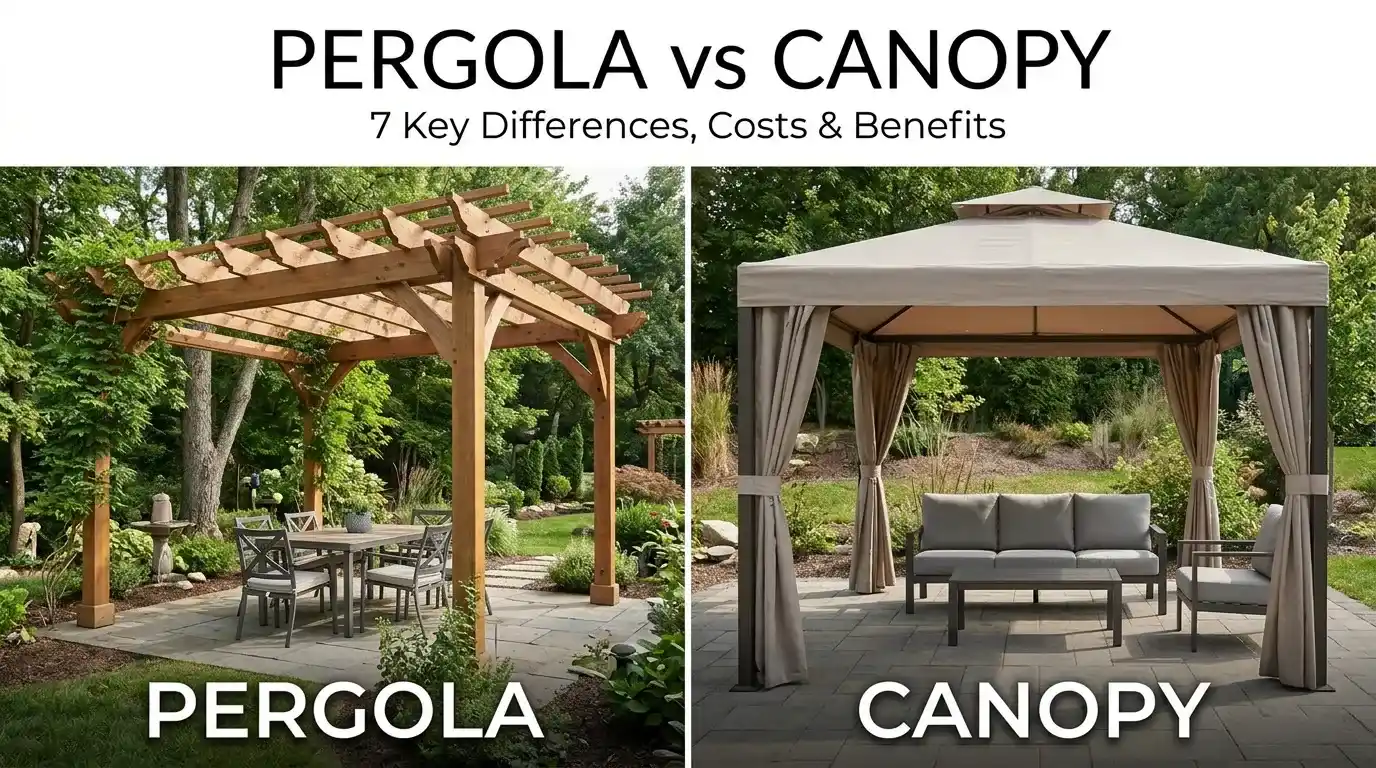
Pergolas vs. Canopies: Choosing the Best Shade for Your Outdoor Living
- Disclosure: This post may include affiliate links. If you click a link and complete a purchase, I may earn a commission. Additionally, as an Amazon Associate, I earn from eligible purchases.
Choosing between a pergola and a canopy depends on how you plan to use your outdoor space, how much you want to spend, and whether you need permanent or temporary protection. Both structures provide shade and improve outdoor comfort, but they differ considerably in construction, durability, appearance, and maintenance.
A pergola is generally a permanent outdoor structure supported by vertical posts and beams, with an open, slatted, or adjustable roof. A canopy is usually a lightweight shelter with a fabric or solid covering that provides more immediate protection from direct sunlight and rain.
If you want to create a long-term garden entertainment area, a pergola may be the better investment. However, if flexibility, affordability, and easy installation are your priorities, a canopy can be a more practical choice.
Understanding their differences before purchasing helps you select a structure that suits your garden, patio, budget, and local weather conditions.
1. What Is the Difference Between a Pergola and a Canopy?
The main difference is their construction and intended purpose. A pergola is primarily an architectural outdoor feature, while a canopy is designed to provide convenient overhead coverage.
A traditional pergola consists of supporting columns, horizontal beams, and rafters arranged to create an open roof. This arrangement allows natural light and air to pass through while providing partial shade. Modern designs may include adjustable louvers, retractable fabric, or solid roof panels for additional protection.
Pergolas are available in attached and freestanding designs. An attached pergola connects to an existing building, making it suitable for patios and outdoor dining areas. A freestanding model can be installed independently in a garden or beside a swimming pool.
A canopy generally consists of a metal or wooden frame covered with polyester, canvas, or another weather-resistant material. Some models are foldable, making them convenient for temporary gatherings, outdoor markets, and seasonal use.
Unlike traditional pergolas, many canopies can be assembled, dismantled, transported, and stored when they are no longer needed.
2. Pergola vs Canopy: 7 Key Differences
Understanding the following differences will help you decide which structure offers the most suitable combination of comfort, functionality, and value.
1. Design and Appearance
Pergolas offer a more architectural appearance and can become an attractive feature of a garden. Their wooden or aluminum frames complement outdoor furniture, climbing plants, decorative lighting, and landscaping.
Canopies have a more functional appearance. Their fabric roofs are available in different colors and designs, making it easier to coordinate them with outdoor furniture or event decorations.
Choose a pergola if appearance and permanent garden design matter most. A canopy is suitable when practical coverage is more important than architectural style.
2. Shade and Weather Protection
A traditional open-roof pergola provides partial shade rather than complete protection from the weather. Sunlight can still pass through its roof, and rain may reach the area underneath.
An adjustable louvered roof or retractable covering can improve its performance by allowing you to control sunlight and ventilation.
A canopy generally provides more consistent overhead coverage because its fabric or solid roof covers the supporting frame. It can protect people from direct sunlight and light rain, depending on its material and construction.
However, neither structure should automatically be considered storm-proof. Strong winds, heavy rainfall, and accumulated snow can damage poorly secured installations.
3. Materials and Durability
Pergolas are commonly made from pressure-treated timber, aluminum, steel, fiberglass, or vinyl. Wooden models offer a natural appearance but need protective treatment to reduce moisture damage. Aluminum is a popular option because it is lightweight and generally requires less maintenance.
Canopy frames commonly use powder-coated steel or aluminum, while their covers are made from polyester, canvas, or other outdoor fabrics.
Material quality makes a significant difference to lifespan. A poorly protected fabric canopy may deteriorate more quickly under continuous UV exposure, while a properly maintained metal pergola can remain useful for many years.
4. Installation and Portability
Canopies are generally easier to install because many models use lightweight frames and folding mechanisms. Some portable designs can be assembled in approximately 30–90 minutes by 2 people, depending on their size and construction.
Pergola installation requires more preparation. Homeowners may need to measure the area, prepare foundations, secure supporting posts, and assemble the roof structure.
A small DIY pergola may be manageable for experienced homeowners, but larger or attached structures can require professional installation.
For renters and people who frequently rearrange their outdoor spaces, a portable canopy offers greater flexibility.
5. Cost and Initial Investment
Budget is another important difference. Canopies generally have a lower purchase price, while pergolas can require additional spending on materials, foundations, installation, and customization.
Typical price ranges presented in the available product comparisons include:
- Canopy: £80–£400.
- Pergola: £250–£4,000+.
- Additional canopy price examples: $125.95–$399.95.
These are reference figures from different product comparisons, not directly equivalent quotations. Prices vary by country, dimensions, materials, roof design, and manufacturer.
A basic canopy may be sufficient for occasional use, whereas a permanent pergola can offer greater long-term functionality.
6. Maintenance Requirements
Both structures need regular cleaning and inspection, but their maintenance requirements differ.
Wooden pergolas may require sealing or staining approximately every 2–3 years, depending on the timber, protective finish, and weather exposure. Aluminum structures generally need occasional washing and checks of their fasteners and connections.
Canopy fabric should be cleaned regularly to prevent dirt, mold, and mildew accumulation. Allow it to dry properly before storage, and inspect it for small tears or damaged seams.
Removing or securely storing fabric during severe weather can help prevent unnecessary damage.
7. Flexibility and Customization
Pergolas offer extensive customization opportunities. You can add climbing plants, LED lights, outdoor fans, privacy blinds, retractable roofs, and louvered panels.
Canopies can also be customized with detachable side panels, mosquito nets, outdoor lighting, and weighted accessories.
However, their lightweight frames may limit the number and weight of additional attachments.
For a permanent outdoor entertainment area, a pergola generally provides more customization possibilities. A canopy is better when you want adaptable coverage without making major structural changes.
3. Pergola vs Canopy: Lifespan, Size, and Performance
Before purchasing either structure, consider its expected lifespan and the amount of space it will occupy.
A typical comparison gives portable canopies an estimated lifespan of 2–5 years, while pergolas may last 10–25+ years. These are broad estimates rather than guarantees. Actual performance depends on construction quality, material selection, installation, maintenance, and exposure to weather.
Common Pergola and Canopy Dimensions
Pergolas are available in different configurations, including compact patio designs and larger freestanding structures.
Common dimensions include 10 × 10 feet and 10 × 20 feet. Larger customized installations can accommodate outdoor dining furniture and entertainment areas.
Canopies are available in several standard sizes, including:
- 8 × 8 feet
- 10 × 10 feet
- 10 × 15 feet
- 10 × 20 feet
- 12 × 12 feet
- 13 × 13 feet
Measure your available space before choosing a model. Remember to account for furniture, walking paths, doors, planting borders, and the additional room needed for installation.
A structure that looks suitable in a product photograph may occupy considerably more usable space once installed.
4. Which Structure Is Better for Different Outdoor Spaces?
The right choice depends on your property’s layout and how frequently you use the covered area.
Small Patios and Balconies
A compact canopy can be a convenient solution for smaller outdoor areas because it provides coverage without requiring a substantial permanent installation.
However, a carefully sized attached pergola can also work well when you want to create a defined seating area.
Large Backyards and Gardens
A pergola is often more suitable for larger gardens because it establishes a permanent outdoor living area. It can accommodate dining furniture, decorative lighting, climbing plants, and other accessories.
A freestanding pergola can also help divide a large garden into separate relaxation and entertainment zones.
Outdoor Events and Commercial Activities
Canopies are particularly useful for weddings, picnics, markets, exhibitions, and temporary gatherings.
Their portability makes it possible to transport and reposition them according to event requirements. Pergolas are more appropriate for permanent outdoor hospitality areas or established commercial spaces.
Areas With Unpredictable Weather
A canopy with a suitable waterproof covering can offer convenient protection from light rain. However, its frame and fabric must be rated for the expected weather conditions.
For year-round use, a pergola with an adjustable or solid roof can provide greater flexibility. Always check its wind and snow-load specifications before installation.
5. How to Choose the Right Pergola or Canopy
Consider these practical factors before making your final decision.
1. Determine your main purpose. Decide whether you need permanent shade for everyday relaxation or temporary shelter for occasional activities.
2. Measure your outdoor area. Check the available width, length, height, and clearance around the proposed structure.
3. Set a realistic budget. Include the purchase price, installation, anchoring, accessories, and future maintenance.
4. Select suitable materials. Aluminum is useful for relatively low-maintenance construction, while treated timber offers a natural appearance.
5. Evaluate weather conditions. Consider direct sunlight, rainfall, wind exposure, and potential snow accumulation.
6. Check installation requirements. Make sure the surface can support the structure and that appropriate anchors or foundations are available.
7. Review local regulations. In the UK, planning requirements can depend on the structure’s height, location, attachment, and property circumstances. Check the applicable local council guidance rather than assuming every installation is exempt.
6. Can You Combine a Pergola and a Canopy?
Yes. Combining both structures can provide a useful balance between permanent design and adjustable shade.
A pergola with a retractable fabric canopy maintains the appearance of a traditional outdoor structure while allowing you to extend or retract the covering when necessary.
For example, you can keep the roof open during cooler mornings to enjoy natural sunlight and extend the covering during stronger sunshine.
Some modern pergolas also use adjustable aluminum louvers. These allow users to control the amount of incoming light and ventilation.
This combination is particularly useful for patios and outdoor dining spaces where weather conditions and sunlight change throughout the day.
7. Which Is Better: Pergola or Canopy?
Neither option is universally better. The most suitable structure depends on your priorities.
A pergola is the stronger choice when you want a long-term garden improvement, architectural appeal, customization, and a defined outdoor living space.
A canopy is more suitable when you need affordable coverage, portability, convenient storage, and relatively simple installation.
If your budget is limited or you rent your property, a canopy may offer better immediate value. If you own your home and plan to use the same outdoor area regularly, a well-designed pergola may provide greater long-term benefits.
Think about how you will use the space throughout the year rather than choosing a structure based only on its appearance.
FAQ
Is a pergola better than a canopy?
A pergola is generally better for permanent outdoor living spaces and architectural appeal, while a canopy is more suitable for portable, affordable, and convenient shade.
Does a pergola provide protection from rain?
A traditional open-roof pergola provides limited rain protection. Models with solid roofs, adjustable louvers, or retractable waterproof coverings offer better coverage.
How long does a pergola last compared with a canopy?
A typical pergola may last 10–25+ years, while a portable canopy may last approximately 2–5 years. Material quality, installation, and maintenance affect actual lifespan.
Is a canopy cheaper than a pergola?
Generally, yes. Reference prices range from £80–£400 for canopies and £250–£4,000+ for pergolas, depending on their specifications and construction.
Can a canopy withstand strong winds?
Not every canopy is designed for strong winds. Check the manufacturer’s wind rating, secure the frame properly, and remove or store the covering when severe weather is expected.
Which pergola material requires the least maintenance?
Aluminum is generally a low-maintenance option because it does not require regular staining or sealing like timber. Periodic cleaning and inspections are still necessary.
Can I install a pergola without professional help?
Smaller DIY pergolas can often be installed by experienced homeowners. Larger structures, attached models, and installations requiring substantial foundations may need professional assistance.
Is a pergola worth the investment?
A pergola can be worthwhile if you regularly use your garden or patio and want a durable outdoor feature. Its value depends on construction quality, installation costs, maintenance, and your long-term plans.
Final Thoughts
The decision between a pergola and a canopy comes down to permanence, affordability, weather protection, and flexibility.
A pergola offers a more established outdoor living space with opportunities for customization and long-term use. A canopy provides convenient coverage without the same level of installation commitment.
Compare the materials, dimensions, expected lifespan, and total ownership costs before purchasing. Most importantly, choose a structure that fits your available space and the way you actually enjoy your garden.



One Comment