7 Creative Pergola Side Ideas Every Homeowner Should Know
- Disclosure: This post may include affiliate links. If you click a link and complete a purchase, I may earn a commission. Additionally, as an Amazon Associate, I earn from eligible purchases.
A traditional pergola usually features four supporting columns and an open roof structure that lets in light and air. Many homeowners eventually ask whether they can add sides to create more privacy, reduce wind, or turn the structure into a more comfortable outdoor room. The answer is yes. Sides can be partial or full, permanent or flexible, solid or see-through, depending on how you want to use the space.
Adding sides transforms an open shelter into a more defined living area. They help block unwanted views from neighbors, cut down on strong breezes, filter harsh sunlight, and protect furniture from the elements. The right combination also improves comfort in cooler months by helping retain warmth. Because every garden and patio is different, the best approach balances appearance, function, and how much openness you still want to keep.
Why Add Sides to a Pergola
Open pergolas look elegant and airy, yet they often fall short when privacy or weather protection becomes a priority. Solid or screened sides create a more secluded feel without fully disconnecting the space from the garden. They can support seating areas that receive too much direct sun, shield delicate plants, or make an elevated deck safer by reducing the risk of accidental falls. In many cases the sides also improve the overall look of the structure by tying it more closely to the house or surrounding landscape.
Homeowners frequently combine different treatments rather than using the same material on every side. One side facing the garden might stay more open or use transparent panels, while a side facing a neighboring property receives denser screening. This mixed approach keeps the pergola feeling connected to the outdoors while solving the specific problems of each direction.
Practical Side Options That Work Well
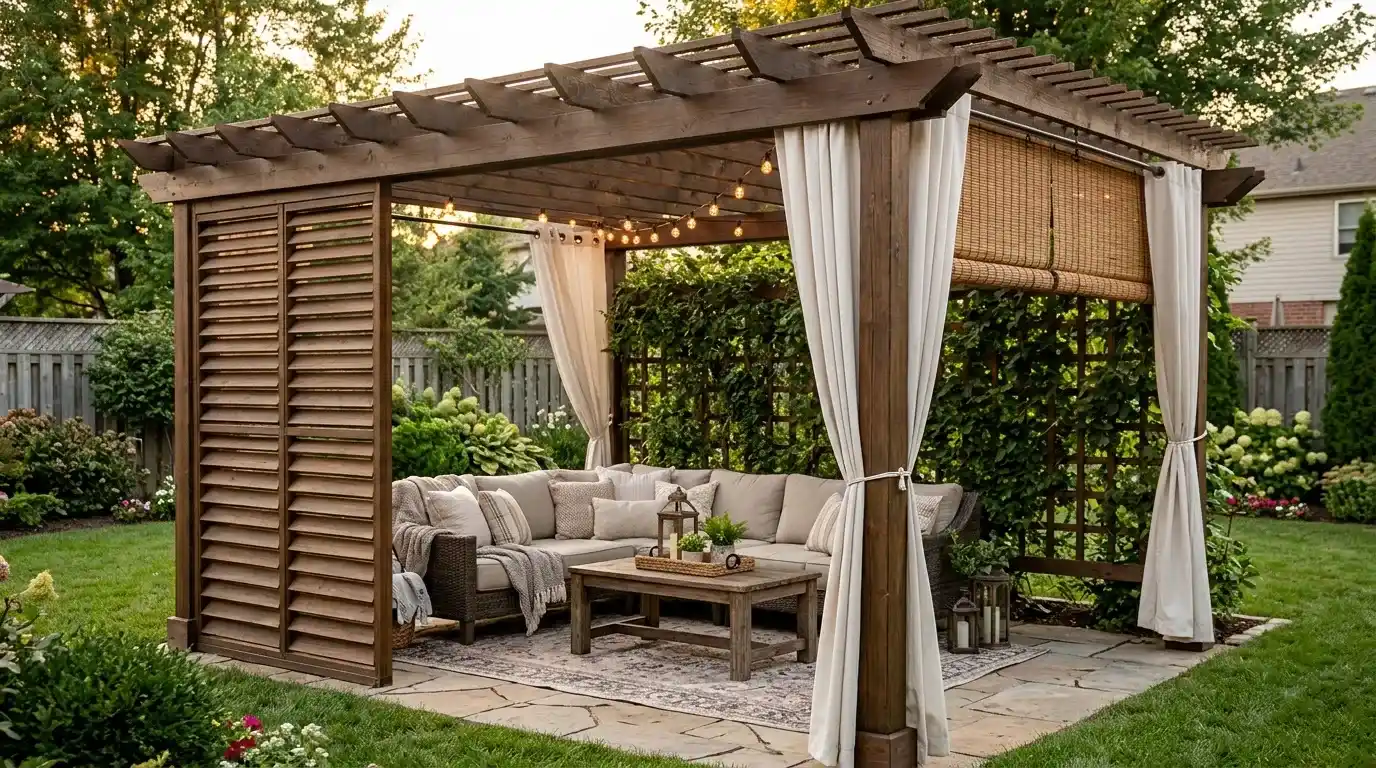
Several proven approaches give different levels of enclosure. Solid walls deliver the highest privacy and weather protection. Rustic wood panels blend naturally with gardens, while steel or stone create a more substantial look. These permanent solutions suit seating zones that need consistent shelter from sun or wind.
Glass or vinyl screens offer another popular route. Transparent versions maintain views of the surrounding scenery while reducing wind exposure. Translucent options soften direct sunlight without darkening the space completely. Frameless sliding glass panels move along slim tracks and stack neatly when open, letting you switch between enclosed and fully open configurations quickly. Fixed glass panels work well on sides that never need to open, such as those against a boundary wall.
Fencing panels create a defined outdoor room while still allowing airflow. They can back outdoor seating, protect plants, or separate the pergola from other garden zones. Lattice screens take privacy a step further with greater height and attractive patterns of light and shade. Horizontal beams arranged to echo the roof rafters provide a simpler, coordinated alternative.
Roll-up covers and retractable fabric screens add flexibility. They can be raised or lowered in minutes, making them useful for changing conditions or for pergolas that include a spa or hot tub. Curtains offer an affordable, soft option. Fabric panels open and close as needed and move gently in the breeze, creating a relaxed atmosphere even if they are less durable than rigid materials.
Plant covers turn the sides into living screens. Climbing vines trained on wooden lattice or pots of dwarf conifers placed around the structure deliver natural privacy that can be adjusted or moved. Jasmine and honeysuckle are especially effective for fragrance and coverage, while hanging gardens add vertical interest on lattice panels.
Materials and Design Considerations
Material choice affects both performance and maintenance. Wood brings warmth and a traditional appearance but needs regular care. Aluminium and powder-coated aluminium resist weather with far less upkeep and can even receive finishes that mimic wood grain. Steel and stone suit solid walls when a heavier look is desired. Glass and vinyl keep the connection to the outdoors, while fabric works best for flexible screens and curtains.
Customization matters. Measuring the openings carefully ensures a proper fit. Colors and patterns should complement the house and garden. Some systems incorporate integrated channels that hide wiring for lighting or allow fabric walls and curtains to run smoothly. Matching the style of any fencing or lattice to the surrounding landscape helps the whole structure feel intentional rather than added on.
Comfort Features That Extend Usability
Once sides are in place, additional features turn the pergola into a true outdoor room. Adjustable louvred roofs let blades rotate (often up to 140 degrees) or even slide fully open, controlling sunlight, ventilation, and rain. Weather sensors can close the roof automatically. Infrared heaters warm people and surfaces directly, while water misters cool the air in hot weather. Integrated LED lighting, outdoor speakers, and even underfloor heating (when the patio is built or renovated at the same time) make evening and cooler-season use far more pleasant.
Retractable covers, heater attachments, and climate-control apps further increase convenience. These additions are especially valuable when the goal is year-round enjoyment rather than occasional summer use.
Planning and Practical Tips
Before installing permanent sides, confirm local rules. In some regions, fully enclosing a structure and linking it directly to the house can bring building-regulation requirements into play, especially around safety glazing, independent heating controls, and floor-area limits (often around 30 square metres for certain exemptions). Keeping the space separated by external doors and at ground level can simplify compliance, but it is always wise to check current local guidance.
Professional installation is frequently recommended for heavier or sliding systems to ensure accurate alignment, structural stability, and minimal material waste. Measuring carefully and choosing materials suited to the local climate reduce long-term maintenance.
Frequently Asked Questions
Can every pergola accept sides?
Most freestanding or attached pergolas can, provided the posts and beams are strong enough to support the added weight and wind load. Lightweight fabric or lattice options suit lighter structures; heavier glass or solid panels need more robust framing.
Will sides make the space feel closed in?
Not necessarily. Transparent glass, open lattice, partial panels, and retractable screens preserve views and airflow. Combining open and enclosed sides keeps the connection to the garden.
How much privacy can I expect?
Solid walls and dense screens give the highest level. Lattice, curtains, and plant covers offer moderate privacy while still feeling airy. Sliding or roll-up systems let you adjust the level as needed.