
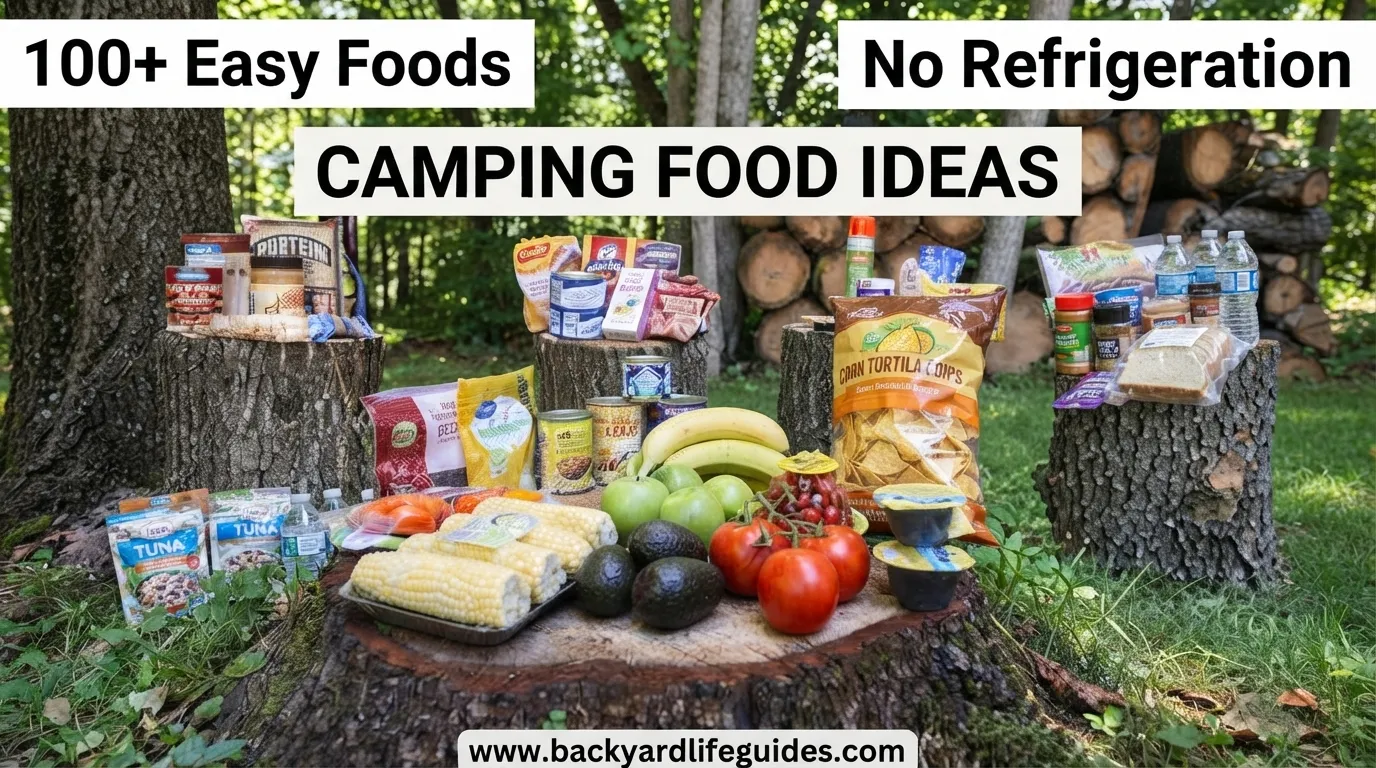
Camping Food Ideas No Refrigeration: 100+ Easy Foods
- Disclosure: This post may include affiliate links. If you click a link and complete a purchase, I may earn a commission. Additionally, as an Amazon Associate, I earn from eligible purchases.
Planning a camping trip without a refrigerator or cooler does not mean you have to survive on snacks. With the right shelf-stable foods, you can prepare filling breakfasts, simple lunches, warm dinners, desserts, and hiking snacks without depending on chilled storage.
The best approach is to choose naturally shelf-stable foods, packaged for storage, or designed to be prepared with water or heat. Think oatmeal, canned foods, pasta, rice, tortillas, peanut butter, dried fruit, nuts, jerky, powdered milk, instant potatoes, and other easy ingredients.
The ideas below combine the most useful approaches from established no-refrigeration camping-food lists, including lists featuring 47, 100, and 100+ ideas. The goal is not simply to give you a huge list—it is to help you decide what to pack, how to combine it, and how to avoid unnecessary food waste.
Important: Always check the food package for storage instructions. “Shelf-stable” does not automatically mean a food remains safe indefinitely after opening. When a package says refrigeration is required after opening, follow that instruction.
What Makes a Good No-Refrigeration Camping Food?
A good camping food should be easy to carry, easy to prepare, and suitable for the storage conditions.
The best choices usually fall into one of four groups:
- Naturally shelf-stable foods such as rice, pasta, nuts, and dried fruit.
- Sealed packaged foods that are designed to remain shelf-stable until opened.
- Canned foods such as soup, beans, fruit, chicken, and chili.
- Fresh foods that can tolerate short periods without refrigeration, depending on conditions and package guidance.
The easiest meals usually combine two or three of these categories instead of relying on a single food.
For example, peanut butter + banana + tortilla creates a simple meal without needing a complicated recipe.
Breakfast Camping Food Ideas Without a Fridge
Breakfast does not have to involve a large cooking setup. Many of the easiest morning foods require only hot water—or no cooking at all.
1. Instant Oatmeal
Instant oatmeal is one of the simplest options for a no-cooler trip.
Add:
- Dried fruit
- Nuts
- Seeds
- Honey
- Cinnamon
- Granola
You can make the meal more filling by adding peanut butter or another shelf-stable nut butter.
2. Cereal and Shelf-Stable Milk
Cereal is convenient because it requires zero cooking.
For milk, consider:
- Powdered milk
- Shelf-stable almond milk
- Shelf-stable soy milk
- Other unopened shelf-stable milk products
Use smaller packages when possible so you do not create unnecessary leftovers.
3. Granola and Dried Fruit
Combine granola with:
- Raisins
- Dried mango
- Dried apricots
- Nuts
- Seeds
This works as both a breakfast and hiking snack.
4. Pancakes
Bring a just-add-water pancake mix.
Add syrup or honey after cooking. Bananas or other suitable fruit can also be used as toppings.
5. Peanut Butter and Banana Wraps
Spread peanut butter on a tortilla and add banana slices.
For a sweeter version, add a little honey or chocolate.
6. Bagels and Honey
Bagels are convenient because they can work as breakfast or lunch.
Try them with:
- Honey
- Jam
- Peanut butter
- Nutella
- Shelf-stable spreads
7. Instant Potatoes
Instant potatoes can become a quick breakfast side.
Add water according to the package instructions and season with salt, pepper, or other dry seasonings.
8. Jerky and Bread
Jerky is not limited to snacking. Pairing it with bread, bagels, or another suitable carbohydrate can create a more substantial breakfast.
Easy No-Refrigeration Lunch Ideas
Lunch should be quick because campers may want to spend more time hiking, exploring, or relaxing.
9. Tuna Sandwiches
Tuna packets or appropriately packaged tuna can be combined with:
- Bread
- Bagels
- Crackers
- Tortillas
Use single-serving ingredients when possible to reduce leftovers.
10. Peanut Butter and Jelly
A classic PB&J is one of the easiest no-cooler lunches.
You need only:
- Bread or tortillas
- Peanut butter
- Jelly
Honey can also replace jelly.
11. Jerky and Crackers
Combine jerky with crackers and shelf-stable or suitable fresh vegetables.
This creates a simple lunch with very little preparation.
12. Canned Chicken Wraps
Canned chicken can be combined with tortillas and suitable toppings.
Add:
- Salsa
- Seasonings
- Shelf-stable vegetables
- Canned beans
Always follow the package’s storage instructions after opening.
13. Cracker Stackers
Layer crackers with ingredients such as:
- Summer sausage
- Pepperoni
- Suitable hard cheese
- Peanut butter
- Jelly
- Vegetables
This is particularly useful when you want a meal without cooking.
14. Canned Soup and Crackers
Canned soup is convenient for lunch or dinner.
Choose a filling variety and pair it with:
- Crackers
- Dinner rolls
- Pita
- Tortillas
No-Fridge Camping Dinner Ideas
Dinner can still feel like a proper meal even when you are avoiding refrigerated ingredients.
15. Pasta With Tomato Sauce
A basic combination of:
- Pasta
- Shelf-stable or canned tomato sauce
- Seasonings
can become a satisfying campsite dinner.
Add suitable canned vegetables or other shelf-stable ingredients for more variety.
16. Rice and Beans
Rice and beans are a practical combination because both can be stored without refrigeration before preparation when packaged appropriately.
Try adding:
- Canned corn
- Salsa
- Taco seasoning
- Tortillas
17. Campfire Chili and Potatoes
Pair canned chili with potatoes.
The potato can be cooked according to the available campsite method, while the chili can be heated following its package directions.
18. Macaroni and Cheese
Boxed macaroni and cheese is another easy choice.
You can make it more substantial with appropriate shelf-stable additions such as:
- Seasonings
- Canned vegetables
- Suitable packaged meat
- Powdered milk where appropriate
19. Lentil Soup and Dinner Rolls
Packaged or canned lentil soup can provide a warm dinner with minimal preparation.
Add dinner rolls or another bread option.
20. Campfire Nachos
Use:
- Tortilla chips
- Canned chili
- Salsa
- Beans
- Suitable shelf-stable toppings
Heat the ingredients using a suitable pan or foil method.
21. Grilled Vegetables
Suitable vegetables can be wrapped in foil with oil and dry seasonings.
Common choices include:
- Potatoes
- Carrots
- Corn
- Onions
- Peppers
- Butternut squash
- Zucchini
Cook according to the vegetable and your available camping equipment.
22. One-Dish Camping Meal
A useful formula is:
Grain + protein + vegetables + sauce + seasoning
For example:
Rice + canned chicken + canned corn + salsa + taco seasoning
This approach lets you change the meal without carrying dozens of separate ingredients.
No-Refrigeration Camping Snacks
Snacks are especially important for hiking days.
23. Trail Mix
Make a simple trail mix from:
- Nuts
- Seeds
- Dried fruit
- Coconut
- Chocolate pieces
Keep portions in sealed bags or containers.
24. Granola Bars
Granola and energy bars are compact and convenient for:
- Breakfast
- Hiking
- Afternoon snacks
- Emergency food
25. Dried Fruit
Good choices include:
- Raisins
- Dried mango
- Dried apricots
- Dried apples
- Dried cranberries
26. Nuts
Nuts provide a compact snack and combine well with dried fruit.
27. Popcorn
Packaged popcorn or popcorn prepared for the campsite can make an easy evening snack.
28. Crackers and Nut Butter
Crackers paired with peanut or almond butter require little preparation.
29. Applesauce
Single-serving applesauce pouches or cups can be convenient for hiking and family camping.
30. Cookies and Brownies
Cookies and brownies are simple treats to pack, although storage conditions and freshness still matter.
Easy Camping Desserts Without Refrigeration
You do not need refrigerated ingredients for a satisfying campsite dessert.
31. S’mores
Classic s’mores use 3 basic ingredients:
- Chocolate
- Marshmallows
- Graham crackers
They are one of the simplest campfire desserts.
32. Dessert Cones
Fill a waffle cone with combinations such as:
- Chocolate
- Marshmallows
- Nuts
- Fruit
Wrap appropriately and heat using a suitable campfire method.
33. Banana Boats
Make a slit in a banana while keeping the peel intact.
Fill it with suitable toppings such as:
- Chocolate
- Peanut butter
- Marshmallows
- Nuts
Wrap and heat carefully.
34. Sweet Apple Sandwiches
Use apple slices as the outside of a simple dessert sandwich.
Fill with:
- Peanut butter
- Chocolate
- Nuts
- Fruit
35. Baked Apple Slices
Slice apples, add cinnamon and sugar, then use a suitable foil-and-heat method.
36. Tortilla Roll-Ups
Spread peanut butter or another suitable spread over a tortilla and add sweet toppings.
Roll, wrap, and heat if desired.
Fresh Foods That Can Work Without Refrigeration
Not every food has to come from a can.
Some fresh foods can be useful for short camping trips, but weather and food-safety conditions matter.
Common options discussed include:
- Apples
- Oranges
- Bananas
- Grapes
- Kiwi
- Mango
- Watermelon
- Pineapple
- Cantaloupe
- Avocado
- Carrots
- Cucumbers
- Cherry tomatoes
- Peppers
- Broccoli
- Celery
- Potatoes
- Cabbage
- Onions
- Zucchini
How Long Can Some Foods Last?
The source gives several practical timeframes, but these should be treated as condition-dependent guidance rather than universal food-safety limits.
| Food | Time Mentioned in the Source Material |
|---|---|
| Bread | A few days |
| Butter | 2–3 days in suitable conditions |
| Bananas | About 1–2 days in very hot weather |
| Some berries in shade | Up to 2 days |
| Bagels/buns | 2–3 days |
| Some fresh vegetables | A couple of days |
| Homemade cookies | About 1 day |
| Hard cheese | A couple of days in suitable weather |
| Grated Parmesan | 3–4 days |
| Leftovers | Within 24 hours |
Best No-Refrigeration Food Categories
A simple way to organize your shopping list is by food function.
| Category | Pack These | Why They Help |
|---|---|---|
| Protein | Jerky, tuna, canned chicken, nuts | Helps make meals more filling |
| Carbohydrates | Pasta, rice, oatmeal, tortillas | Builds the base of meals |
| Fruit | Apples, oranges, bananas, dried fruit | Snacks and breakfast |
| Vegetables | Carrots, peppers, potatoes, onions | Sides and cooked meals |
| Flavor | Salsa, honey, syrup, oil, spices | Improves simple meals |
| Treats | Chocolate, marshmallows, cookies | Desserts and snacks |
| Drinks | Coffee, tea, powdered milk, drink mixes | Breakfast and hydration variety |
How to Pack Food for a No-Cooler Trip
Good food choices can still become inconvenient if they are poorly packed.
Keep Food Cool and Shaded
The guidance emphasizes keeping food out of direct sunlight and checking the location during the day because the sun moves.
A shaded storage area is preferable to leaving food beside a hot cooking area.
Use Airtight Containers
Reusable airtight containers or sealed bags can help protect food from:
- Moisture
- Insects
- Dirt
- Animals
- Accidental spills
One specifically recommends bringing 1–2 reusable airtight containers for leftovers and storage.
Pack Only What You Need
Overpacking creates unnecessary waste.
Before leaving, estimate:
People × meals × days
Then add only a reasonable amount for snacks and contingency needs.
Use Smaller Packages
Smaller packages can be particularly useful when a food needs refrigeration after opening.
For example, rather than opening a large package and struggling to store the remainder, use a smaller package when practical.
A Simple 3-Day No-Refrigeration Food Plan
Here is a practical way to combine the foods discussed above.
| Day | Breakfast | Lunch | Dinner | Snack |
|---|---|---|---|---|
| Day 1 | Oatmeal + dried fruit | Tuna + crackers | Pasta + tomato sauce | Trail mix |
| Day 2 | Cereal + shelf-stable milk | PB&J wraps | Rice + beans + salsa | Jerky + fruit |
| Day 3 | Pancakes + syrup | Chicken wraps | Chili + potatoes | Popcorn + s’mores |
This type of plan keeps the ingredients overlapping, which means you can carry fewer separate products while still having different meals.
Simple No-Cooler Camping Shopping List
Protein
- Jerky
- Tuna packets
- Canned chicken
- Canned chili
- Summer sausage
- Pepperoni
- Nuts
- Peanut butter
- Lentil soup
Breakfast
- Oatmeal
- Cereal
- Granola
- Pancake mix
- Bagels
- Bread
- Instant potatoes
- Powdered milk
- Coffee
- Tea
Main Meals
- Pasta
- Rice
- Couscous
- Quinoa
- Macaroni and cheese
- Canned beans
- Canned vegetables
- Tomato sauce
- Salsa
- Tortillas
Snacks
- Granola bars
- Crackers
- Popcorn
- Dried fruit
- Trail mix
- Applesauce
- Cookies
Dessert
- Graham crackers
- Marshmallows
- Chocolate
- Waffle cones
- Bananas
- Apples
- Cinnamon
Flavorings
- Honey
- Syrup
- Olive oil
- Salt
- Pepper
- Cinnamon
- BBQ sauce
- Mustard
- Ketchup
How to Reduce Food Waste
The easiest way to reduce waste is to design meals around overlapping ingredients.
For example:
Peanut butter can work for breakfast, lunch, snacks, and dessert.
Tortillas can become breakfast wraps, lunch wraps, dinner tortillas, or dessert roll-ups.
Dried fruit works with oatmeal, granola, trail mix, and snacks.
Canned chili can be used with potatoes, rice, beans, or nachos.
This approach reduces the number of different products you need to carry.
Food Storage When Camping in Bear Country
Food storage becomes especially important in areas with wildlife.
The source material recommends storing food at least 100 feet away from the campsite and 20 feet above the ground when using a suspended storage approach.
Follow the rules of the campground or land-management authority where you are camping. Some locations require approved bear-resistant containers rather than hanging food.
Never assume a sealed food package makes a campsite safe from wildlife.
What About Leftovers?
Leftovers require extra attention when you have no refrigeration.
One recommends eating leftovers within 24 hours. However, the safer rule is to follow current food-safety guidance and the specific food’s storage requirements rather than treating 24 hours as a universal guarantee.
If a cooked food has been sitting in unsafe temperatures, do not rely on reheating to make it safe.
The easiest solution is often to cook only the amount you expect to eat.
5-Step Campfire Dessert Idea
One of the recipes uses a simple 5-step campfire-pie process:
- Butter one side of the bread.
- Place the buttered side against the pie iron.
- Add a suitable filling such as pie filling, chocolate spread, or marshmallows.
- Close the pie iron and cook over the fire.
- Serve once properly cooked and cooled enough to eat.
This same concept can inspire different combinations without requiring refrigerated ingredients.
The Best Strategy for a No-Refrigeration Camping Trip
You do not need to pack 100 completely different foods just because a list contains 100+ ideas.
Instead, build your food around a small number of flexible ingredients.
A strong basic combination is:
2 proteins + 2 grains + 2 fruits + 2 vegetables + 2 snacks + 2 flavorings + 1 dessert
For example:
- Protein: jerky + canned chicken
- Grains: oatmeal + tortillas
- Fruit: apples + dried fruit
- Vegetables: carrots + potatoes
- Snacks: nuts + granola bars
- Flavor: salsa + honey
- Dessert: chocolate + marshmallows
You can turn those ingredients into multiple meals without carrying an oversized food box.
Frequently Asked Questions
What are the best camping foods that need no refrigeration?
Some of the most practical options include oatmeal, cereal, granola, tortillas, pasta, rice, canned foods, jerky, peanut butter, nuts, dried fruit, crackers, and shelf-stable packaged foods.
Can you go camping without a cooler?
Yes. A camping trip can be planned around shelf-stable foods that do not require refrigeration. The key is choosing appropriate foods and following the storage instructions on their packaging.
What is a good no-cook camping breakfast?
Granola, cereal, fruit, granola bars, peanut butter and banana wraps, bagels, bread, and suitable packaged breakfast foods are simple options.
What can I eat for lunch without a fridge?
Try PB&J sandwiches, tuna with crackers or bread, jerky with crackers, canned chicken wraps, fruit, vegetables, and packaged soups.
What can I cook for dinner without refrigeration?
Good choices include pasta with tomato sauce, rice and beans, chili with potatoes, macaroni and cheese, lentil soup, grilled vegetables, and campfire nachos.
How long can bread last while camping?
The source says bread can last a few days when kept tightly closed and away from direct sun. Actual freshness depends on temperature, humidity, packaging, and the product itself.
How long can butter last without refrigeration?
The source material gives 2–3 days in suitable conditions, particularly when protected from heat and sunlight. Always follow the product’s storage instructions.
How many ingredients do classic s’mores need?
Classic s’mores use 3 ingredients: chocolate, marshmallows, and graham crackers.
How far away should food be stored in bear country?
The source material recommends at least 100 feet from the campsite and 20 feet above the ground for a suspended storage setup. Always follow local wildlife-storage regulations.
How can I prevent food waste while camping without a fridge?
Plan meals before leaving, buy suitable package sizes, prioritize foods that need to be consumed sooner, and avoid opening more food than you expect to eat.
Final Takeaway
The best camping food ideas with no refrigeration are not necessarily complicated recipes. They are flexible foods that can be combined into several meals while remaining practical to transport and prepare.
Start with oatmeal, granola, tortillas, pasta, rice, canned foods, jerky, nuts, peanut butter, dried fruit, vegetables, crackers, shelf-stable drinks, and simple desserts.
Then build meals around them.
With a little planning, you can create breakfast, lunch, dinner, snacks, and desserts without relying on a refrigerator or cooler—while keeping your food list compact, your preparation simple, and your campsite easier to manage.
Food-safety reminder: Always follow the manufacturer’s storage directions and local food-safety guidance. If a food requires refrigeration after opening or has been exposed to unsafe temperatures, do not assume it is safe simply because it appears or smells normal.