4 Surprising Reasons Your Backyard Koi Pond Is Full of Foam
- Disclosure: This post may include affiliate links. If you click a link and complete a purchase, I may earn a commission. Additionally, as an Amazon Associate, I earn from eligible purchases.
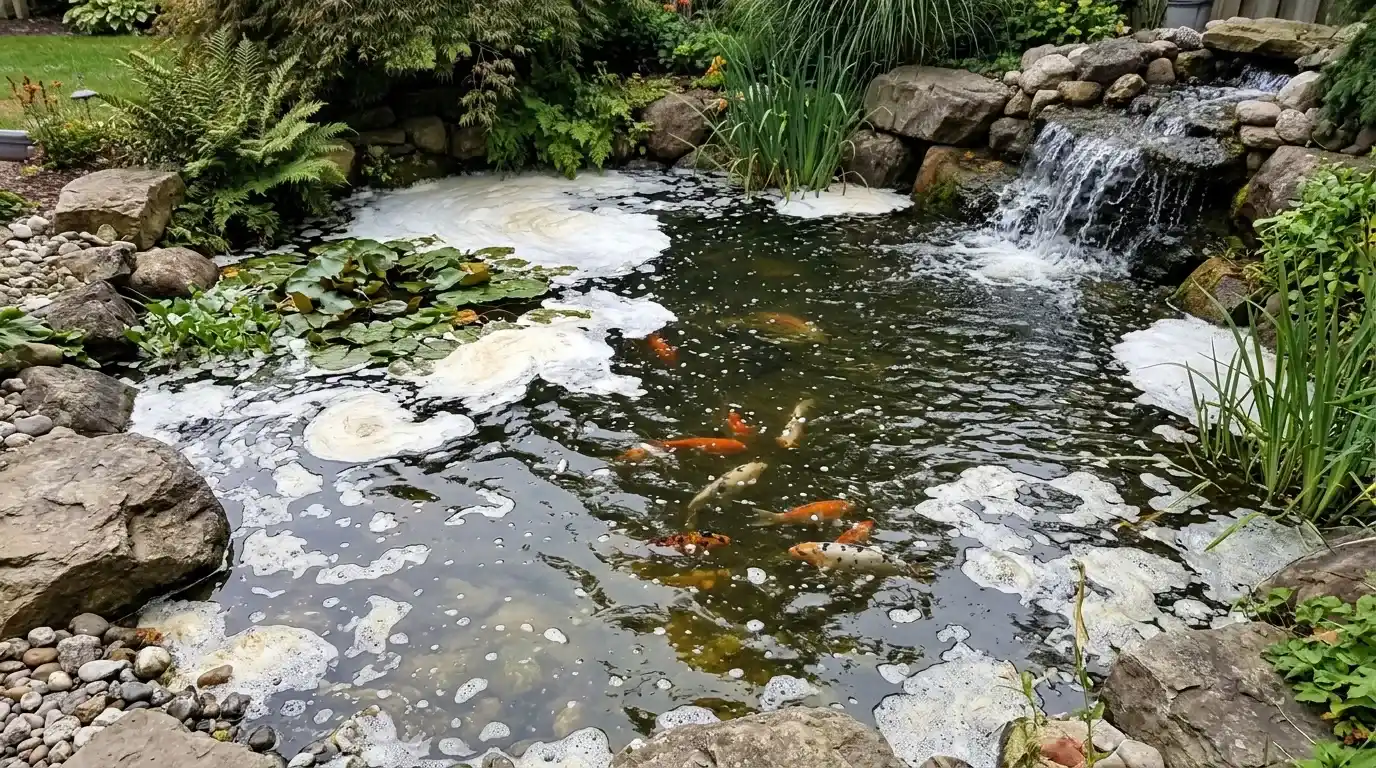
Seeing white bubbles or a layer of foam floating on your koi pond can be confusing, especially when the water previously looked clear. In most cases, pond foam develops due to organic waste, excess protein, fish food, or water movement. However, a sudden increase in foam may indicate an issue with your pond’s water quality.
A small amount of foam is not necessarily dangerous to koi. The important thing is to understand why it is appearing, how long it remains, and whether your fish are behaving normally.
This guide explains the 7 common causes of koi pond foam, how to identify the underlying problem, and 5 practical ways to remove it while keeping your fish healthy.
Why Does My Koi Pond Have Foam?
Pond foam usually develops when organic substances reduce the natural surface tension of water. These substances can include proteins, fish waste, decomposing leaves, uneaten food, and other dissolved organic materials.
When water moves through a waterfall, fountain, or filtration system, air becomes trapped in the water. Normally, bubbles disappear quickly. However, dissolved organic compounds help stabilize the bubbles, allowing them to collect and form visible foam.
This process can happen in ponds with or without fish. The amount of foam depends on the concentration of organic material and the level of water movement.
7 Common Causes of Koi Pond Foaming
1. Overfeeding and Uneaten Fish Food
Overfeeding is one of the most common reasons for excessive pond foam. When koi receive more food than they can consume, leftover pellets settle at the bottom and begin decomposing.
This process releases organic compounds and proteins into the water. As these substances accumulate, they can reduce surface tension and encourage persistent bubbles.
Feed your koi only what they can comfortably consume. Remove uneaten food instead of allowing it to decompose.
2. Fish Waste and Poor Water Quality
Koi produce waste continuously, and their waste can accumulate when filtration is insufficient. Decomposing organic material increases the biological load and may contribute to excessive foam.
Poor water quality can also involve elevated ammonia and nitrite levels, which are harmful to fish.
Regularly test your pond water and check whether the filtration system is handling the number of fish in your pond.
3. Koi Spawning and Breeding Activity
Foam can appear during koi spawning, particularly in the breeding season. Female koi release eggs, while males release sperm during reproduction.
This activity introduces protein-rich organic substances into the water. Fish also swim rapidly, disturb bottom debris, and create additional water movement.
The resulting foam may appear suddenly and can be more noticeable around spawning areas.
If your koi are otherwise healthy, the foam may decrease naturally after spawning. Avoid unnecessary chemical treatments during this period.
4. Algae Growth and Decomposing Plants
Algae, fallen leaves, dead plant material, and other organic debris can contribute to foam formation.
When algae die and decompose, they release additional organic compounds into the water. Similarly, leaves and other plant debris can increase the pond’s waste load.
Remove dead vegetation regularly and prevent excessive algae accumulation to maintain a healthier pond environment.
5. Excess Nutrients and Fertilizers
Fertilizers, garden runoff, and excess nutrients can enter outdoor ponds, particularly after rainfall or watering nearby plants.
These materials may encourage algae growth and increase organic activity. Over time, the additional waste can contribute to foaming and unstable water conditions.
Keep garden fertilizers away from pond edges and avoid allowing treated water to drain directly into the pond.
6. Waterfalls, Fountains, and Excessive Water Movement
Waterfalls, fountains, and pumps introduce air into pond water. This movement naturally creates bubbles, but excessive dissolved organic material can cause those bubbles to remain longer.
If foam appears mainly below a waterfall or around a fountain, inspect the water conditions before assuming the equipment is faulty.
Water movement alone does not necessarily indicate a problem. The combination of air and organic substances is often responsible for persistent foam.
7. Microorganisms and Organic Decomposition
Bacteria and other microorganisms break down fish waste, leftover food, and dead plant material.
Although beneficial bacteria are essential for biological filtration, excessive organic waste can overwhelm the pond’s natural cleaning capacity.
A buildup of decomposing material may therefore contribute to cloudy water, unpleasant odors, and persistent foam.
Is Foam in a Koi Pond Dangerous?
A thin layer of occasional bubbles is generally not a reason to panic. Foam becomes more concerning when it is thick, persistent, or accompanied by other changes in pond conditions.
Watch your koi for signs such as reduced appetite, unusual swimming, gasping near the surface, or sluggish behavior. Also check for cloudy water, unpleasant smells, and excessive algae.
Pay particular attention to water quality. Test ammonia, nitrite, nitrate, pH, and KH (alkalinity) to identify potential imbalances.
Remember that foam alone cannot confirm whether your pond is healthy or unhealthy. Fish behavior and water-test results provide much better evidence.
5 Ways to Get Rid of Foam in a Koi Pond
1. Remove Surface Foam and Organic Debris
Start by removing visible foam with a pond net or skimmer. Collect floating leaves, dead plants, and uneaten fish food before they break down further.
A pond vacuum can also help remove accumulated sludge from the bottom.
Surface cleaning provides immediate improvement, but it will not permanently solve the problem if organic waste continues accumulating.
2. Improve Your Pond Filtration
A properly maintained filtration system helps remove waste and supports beneficial bacteria.
Check your mechanical filter for trapped debris and inspect biological filter media for blockages. Make sure the system is appropriate for your pond’s water volume and fish population.
A protein skimmer or foam fractionator can provide additional support by collecting dissolved organic substances, particularly in ponds with persistent organic loading.
3. Perform Partial Water Changes
A partial water change can help dilute dissolved organic compounds and improve overall water conditions.
A useful starting point is replacing approximately 10–20% of the pond water weekly while addressing excessive organic buildup, provided your pond conditions allow it.
Always treat replacement water to remove chlorine and chloramine when necessary. Avoid sudden temperature or chemistry changes because koi can be sensitive to environmental stress.
4. Adjust Fish Feeding Habits
Feed your koi according to their size, activity, water temperature, and nutritional needs.
Avoid adding excessive food simply because your fish gather near the surface. Remove leftover pellets and monitor how quickly the fish finish their meals.
Choose quality koi food with suitable protein and nutritional content. Better feeding practices reduce unnecessary waste and help maintain cleaner water.
5. Use Pond-Safe Foam Treatments Carefully
Pond-specific defoaming products can help break down visible bubbles when foam becomes excessive.
However, these products generally address the appearance of foam rather than removing its underlying cause.
Follow the manufacturer’s dosage instructions and check that the product is suitable for koi and other pond inhabitants. Avoid household detergents, soaps, and unapproved oils.
During spawning, prioritize observation and water-quality management rather than applying unnecessary treatments.
How to Prevent Koi Pond Foam in the Future
Preventing foam is easier than repeatedly treating it. A consistent maintenance routine helps control organic waste and supports a balanced pond ecosystem.
Keep your filtration system clean, remove fallen leaves, and avoid overfeeding. Check water parameters regularly, especially when fish numbers increase or the pond experiences unusual changes.
Maintain suitable water movement without creating unnecessary turbulence. If your pond has a waterfall or fountain, inspect its operation and clean surrounding areas where debris collects.
Also, avoid overcrowding your pond. More fish produce more waste, which increases the workload on your filtration system.
Most importantly, observe your koi regularly. Changes in appetite, swimming patterns, and breathing can provide early warnings of water-quality problems.
FAQs
Why Is My Koi Pond Suddenly Covered in White Foam?
Sudden white foam can result from spawning, excessive fish food, organic waste, or increased water movement. Check your pond’s water quality and inspect the surrounding area for decomposing debris.
Does Pond Foam Mean There Is Too Much Protein?
Not always, but proteins and other dissolved organic compounds can reduce surface tension and stabilize bubbles. Excessive foam may indicate that organic material is accumulating in the water.
Can I Remove Koi Pond Foam Without Chemicals?
Yes. Remove visible foam, clean accumulated debris, improve filtration, control feeding, and perform appropriate partial water changes. These methods address common underlying causes without relying on chemical treatments.
Does a Waterfall Cause Foam in a Koi Pond?
A waterfall can introduce air and create bubbles. However, persistent foam usually develops when dissolved organic substances are present to stabilize those bubbles.
How Often Should I Change Koi Pond Water?
There is no universal schedule for every pond. A partial weekly change of around 10–20% can be a useful maintenance approach, depending on stocking levels, filtration, and water-test results.
Should I Worry if My Koi Are Swimming Normally?
If your koi are active, eating normally, and showing no signs of distress, occasional foam may not be serious. Nevertheless, test the water and monitor whether the foam continues to increase.
Final Thoughts
A foaming koi pond does not automatically mean your fish are in danger. In many cases, excess organic material, uneaten food, spawning activity, and water movement explain the appearance of bubbles.
The best long-term approach is to identify the underlying cause, maintain effective filtration, control feeding, and monitor water quality. Removing foam from the surface can improve the pond’s appearance, but maintaining balanced water conditions is what helps keep koi healthy.