
Do Gutter Guards Work in Heavy Rain? 5 Things to Know
- Disclosure: This post may include affiliate links. If you click a link and complete a purchase, I may earn a commission. Additionally, as an Amazon Associate, I earn from eligible purchases.
Gutter guards can make a big difference during heavy rainfall by keeping leaves, twigs, and other debris out of your drainage system. However, they do not guarantee that gutters will never overflow. Their performance depends on the guard design, gutter size, roof structure, installation quality, and the amount of rainwater flowing from the roof.
A properly selected and maintained system can handle many heavy downpours effectively. However, intense storms may overwhelm even a good-quality guard if water reaches the gutter faster than it can drain.
Understanding how gutter guards work and what causes overflow can help you choose the right protection for your home.
Do Gutter Guards Work During Heavy Rain?
Yes, gutter guards can work during heavy rain when they are designed to provide sufficient water flow. Their primary purpose is to keep debris out while allowing rainwater to enter the gutter and travel toward the downspouts.
Micro-mesh and perforated metal designs are particularly useful because they combine debris filtration with controlled drainage. However, fine openings can become obstructed by pollen, roof grit, and shingle granules over time.
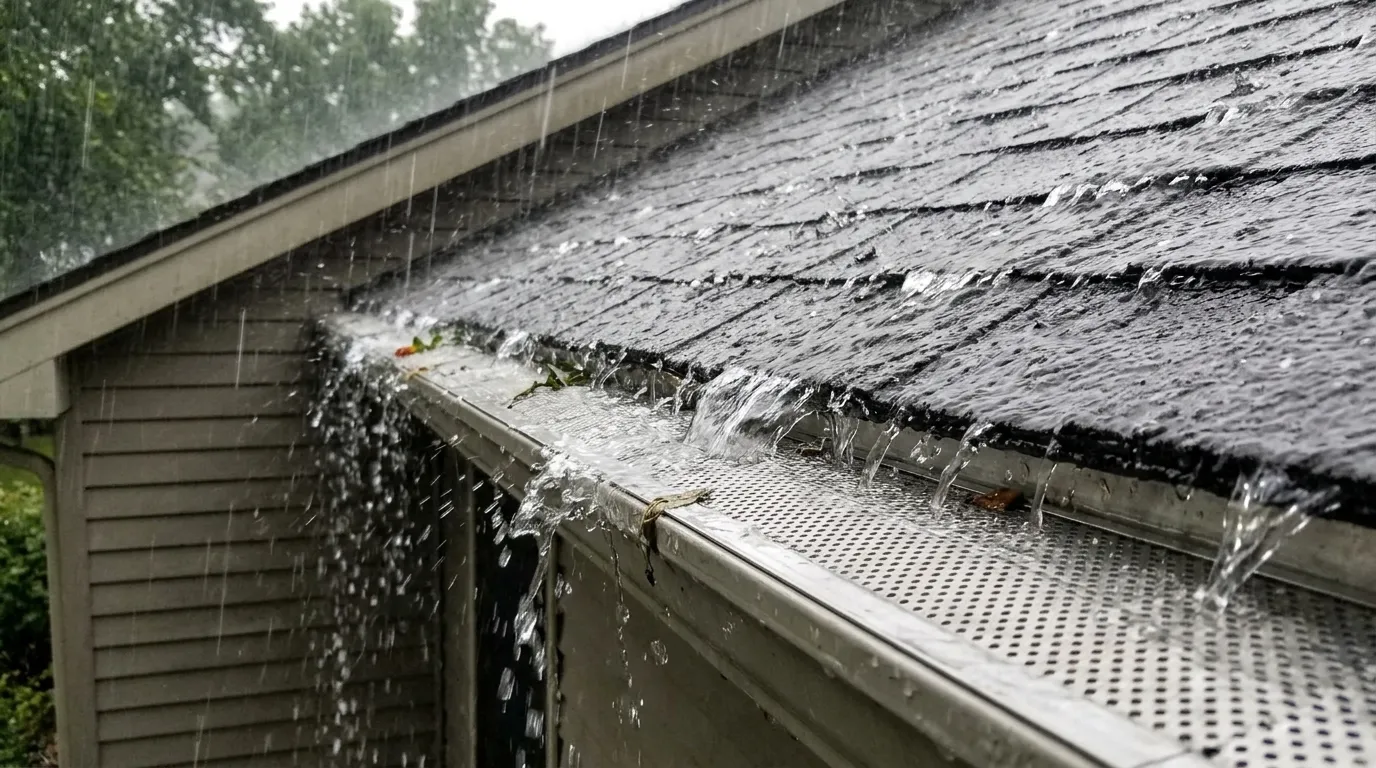
During an intense downpour, water may move across the guard instead of entering the gutter. This does not necessarily mean the product is defective. The drainage system may simply be unable to handle the volume of runoff.
Important: Gutter guards reduce blockage risks, but they cannot replace correctly sized gutters, properly positioned downspouts, and regular maintenance.
5 Factors That Affect Gutter Guard Performance in Heavy Rain
Several factors determine whether your gutter protection system can manage a strong downpour.
1. Gutter Guard Material and Design
Not all gutter guards work in the same way. Their opening size, construction material, and surface design affect how efficiently they filter debris and allow water to pass.
Micro-mesh guards have very small openings that block leaves, pine needles, and smaller debris. They are a useful choice for properties that need fine filtration, although their screens require occasional cleaning.
Perforated metal guards use small openings in a durable metal surface. Aluminum designs can provide a balance between debris protection and water flow.
Brush guards use bristles to catch larger debris while allowing rainwater to move through the gutter. However, leaves and dirt can become trapped between the bristles.
Foam guards fit inside the gutter and allow water to pass through their porous material. They are relatively simple to install, but dirt accumulation and saturation can reduce their effectiveness during prolonged rainfall.
2. Gutter Size and Water Capacity
Even the best gutter guard cannot correct an undersized drainage system. Gutters must accommodate the amount of rainwater collected from the roof.
For example, a 6-inch gutter can carry nearly 50% more water than a 5-inch gutter under comparable conditions. However, actual capacity also depends on gutter shape, slope, downspout dimensions, and installation.
Homes with large roof surfaces or concentrated runoff may need wider gutters and additional downspouts.
3. Roof Slope and Water Runoff
Roof design directly affects how quickly water reaches gutter guards.
A steep roof sends rainwater toward the gutter faster than a shallow roof. Roof valleys can create another challenge because they concentrate runoff from two roof sections into one smaller area.
When water arrives too quickly, it may overshoot the gutter or flow over the guard’s front edge.
Installing appropriately designed splash guards or rainwater diverters can help manage concentrated runoff in problematic areas.
4. Correct Installation Angle
Installation quality plays an important role in drainage performance.
Gutter guards should fit securely and sit at the appropriate angle to direct rainwater into the gutter. Poor alignment, loose sections, or an unsuitable installation position can cause water to collect on the surface instead of draining properly.
Gutters also need a consistent downward slope toward their downspouts. One commonly cited guideline is approximately ½ inch of slope per 10 feet of gutter length, although the appropriate pitch depends on the system and installation requirements.
5. Regular Cleaning and Maintenance
Gutter guards are not completely maintenance-free. Leaves, pollen, dirt, and roof granules can collect on their surfaces and restrict water movement.
A screen that was working properly before the rainy season may perform poorly after months of accumulated debris.
Inspect your gutters periodically, particularly after storms and seasonal changes. Homes surrounded by trees may need more frequent cleaning than properties with limited vegetation.
Why Do Gutter Guards Overflow During Heavy Rain?
Gutter guards can overflow for several reasons, even when they are correctly installed.
The most common problem is excessive rainfall intensity. When the roof collects more water than the gutter system can handle, water may spill over the edge.
Another common cause is debris blocking the guard’s openings. Fine materials such as pollen, roof grit, and shingle granules can create a layer that prevents water from entering.
Undersized gutters and blocked downspouts also contribute to drainage problems. If water cannot move away from the gutter quickly enough, it accumulates and eventually overflows.
You should also check roof valleys, gutter corners, and sections where multiple roof surfaces direct water into one area.
How to Improve Gutter Performance During Heavy Rain
A few practical improvements can make your gutter system more reliable during storms.
Choose a suitable guard design: Select a system that balances debris filtration with adequate water flow. Consider micro-mesh or perforated metal designs where finer debris protection is needed.
Check gutter dimensions: Make sure the gutter size matches your roof area and local rainfall conditions. Larger gutters may be appropriate for roofs that generate substantial runoff.
Keep downspouts clear: Remove blockages that prevent water from leaving the gutter system. Check their outlets and connections for accumulated debris.
Inspect roof valleys: Areas receiving concentrated runoff may need splash guards or rainwater diverters to reduce overshooting.
Check installation quality: Loose guards, incorrect angles, and poorly aligned sections should be corrected before the next major storm.
Schedule regular inspections: Check for standing water, corrosion, loose brackets, and visible debris accumulation.
Signs Your Gutter Guards Are Not Handling Heavy Rain
Pay attention to these warning signs because they may indicate a problem with your drainage system:
- Water spilling over: Rainwater repeatedly flows over the gutter edges.
- Standing water: Water remains inside gutters after rainfall stops.
- Visible debris: Leaves, dirt, or granules cover the guard surface.
- Repeated overflow: The same gutter section spills water during ordinary rainfall.
- Loose gutter guards: Sections move, lift, or separate during strong winds.
- Foundation water problems: Water collects around the base of your home because drainage is not directing it away properly.
If these problems continue, arrange a professional inspection to identify whether the issue comes from the guards, gutters, roof design, or downspouts.
Which Gutter Guards Are Best for Heavy Rain?
The best option depends on your property’s roof design, surrounding trees, and expected rainfall.
| Gutter guard type | Main advantage | Potential limitation |
|---|---|---|
| Micro-mesh | Blocks small debris | Requires surface cleaning |
| Perforated metal | Durable with good drainage potential | Performance depends on opening design |
| Brush | Simple installation | Debris can collect between bristles |
| Foam | Fits inside existing gutters | Can become saturated or clogged |
| Standard mesh | Helps block larger debris | Smaller particles may pass through |
For many homes, micro-mesh or perforated metal guards are worth considering. However, compare actual water-flow specifications, material quality, installation requirements, and warranty conditions before purchasing.
FAQs
1. Can gutter guards handle extremely heavy rainfall?
Yes, suitable gutter guards can handle many heavy downpours. However, extreme rainfall can exceed the drainage capacity of the guard, gutters, or downspouts.
2. Do micro-mesh gutter guards prevent overflow?
Micro-mesh guards reduce debris entering gutters, but they cannot completely prevent overflow. Pollen, dirt, and roof granules can block their openings and restrict water flow.
3. Are foam gutter guards good for heavy rain?
Foam guards can work in ordinary rainfall, but prolonged downpours may expose their limitations. Saturation and accumulated debris can reduce drainage performance.
4. Why does water flow over my gutter guards?
Common causes include excessive rainfall, blocked screens, undersized gutters, steep roof slopes, and concentrated runoff from roof valleys.
5. How often should gutter guards be cleaned?
Inspect them at least once a year as a starting point. Properties surrounded by trees or exposed to significant pollen and debris may require more frequent cleaning.
6. Do larger gutters improve heavy-rain performance?
Yes, larger gutters can provide additional water capacity. For example, a 6-inch gutter can carry nearly 50% more water than a 5-inch gutter under comparable conditions.
7. Can gutter guards protect my home’s foundation?
They can help by reducing gutter blockages and supporting proper drainage. However, effective downspouts and suitable water discharge away from the foundation are also essential.
Final Thoughts
Gutter guards can improve your home’s drainage system during heavy rainfall, but choosing the right design is only part of the solution. Gutter dimensions, roof slope, downspout capacity, installation quality, and regular cleaning all influence performance.
For reliable protection, evaluate your entire gutter system rather than focusing only on the guard material. A properly sized, correctly installed, and regularly inspected system is better prepared to manage heavy downpours and reduce the risk of water damage.
Practical advice: If your gutters overflow repeatedly during normal rainfall, investigate the underlying drainage problem instead of simply replacing the gutter guards.




One Comment