Why Do Ponds Turn Over? Causes, Signs & Prevention
- Disclosure: This post may include affiliate links. If you click a link and complete a purchase, I may earn a commission. Additionally, as an Amazon Associate, I earn from eligible purchases.
Pond turnover is a natural process in which water from different depths mixes, changing the distribution of temperature, oxygen, nutrients, and organic materials throughout the pond. It usually happens during spring and fall, when seasonal temperature changes reduce the differences between warm surface water and colder bottom water.
Although this is part of a healthy aquatic ecosystem, it can sometimes create problems for fish and other aquatic organisms. When oxygen-poor bottom water mixes with oxygen-rich surface water, dissolved oxygen levels can drop throughout the pond. This may cause fish stress, unpleasant odors, cloudy water, and even fish deaths.
Understanding why ponds turn over, when it happens, and how to manage the process can help pond owners maintain better water quality in my blog. Reading continue
What Causes a Pond to Turn Over?
The main cause of pond turnover is a change in water temperature and density. Water becomes denser as it cools, until it reaches approximately 39.2°F (4°C), its temperature of maximum density.
During warmer months, sunlight heats the upper water while deeper areas remain colder. Because warm water is less dense, it stays near the surface instead of mixing completely with the colder water below.
When seasonal temperatures change, these layers become less stable. Cooler surface water sinks, while deeper water moves upward. Wind and natural water circulation help complete the mixing process.
This movement redistributes oxygen, nutrients, gases, and bottom sediments throughout the pond.
Understanding the 3 Layers of Pond Water
During summer, deeper ponds often develop three distinct water layers. Each layer has different temperature and oxygen conditions.
1. Epilimnion: The Warm Surface Layer
The epilimnion is the uppermost layer of pond water. It receives direct sunlight and is warmed by the surrounding air. Wind also helps circulate this water and introduce oxygen from the atmosphere.
This layer generally contains more dissolved oxygen than deeper water, making it an important habitat for fish and other aquatic organisms.
2. Metalimnion: The Middle Transition Layer
The metalimnion lies between the warm surface and cold bottom layers. It contains a rapid temperature change as water depth increases.
The thermocline is the part of this transition zone where temperature decreases particularly quickly. It limits the natural mixing of surface and deep water.
3. Hypolimnion: The Cold Bottom Layer
The hypolimnion is the deepest and coldest layer. Sunlight and wind have little direct influence here.
Bacteria break down dead plants, leaves, and other organic materials, consuming dissolved oxygen in the process. As decomposition continues, oxygen levels can become extremely low.
When turnover occurs, this oxygen-poor water mixes with the upper layers.
When Does Pond Turnover Happen?
Pond turnover generally occurs twice a year in temperate climates, during spring and fall. However, weather conditions and pond characteristics can affect its timing.
Spring Pond Turnover
During winter, ponds may develop inverse stratification, with colder water near the surface and relatively warmer water deeper down. Ice can further restrict wind-driven circulation.
When spring arrives, melting ice exposes the water to sunlight and wind. Surface water gradually warms toward 39.2°F (4°C), becomes denser, and sinks.
This movement helps mix the water column, distributing oxygen and nutrients throughout the pond.
Fall Pond Turnover
Fall turnover begins when cooler air temperatures reduce the temperature of surface water.
As the upper layer cools, its density increases and it begins sinking. Wind encourages further circulation, eventually mixing the different water layers.
This process can bring accumulated sediments, nutrients, and oxygen-poor water toward the surface.
6 Warning Signs That a Pond Is Turning Over
Recognizing early signs of turnover can help pond owners respond before water quality becomes dangerous.
1. Cloudy or Murky Water
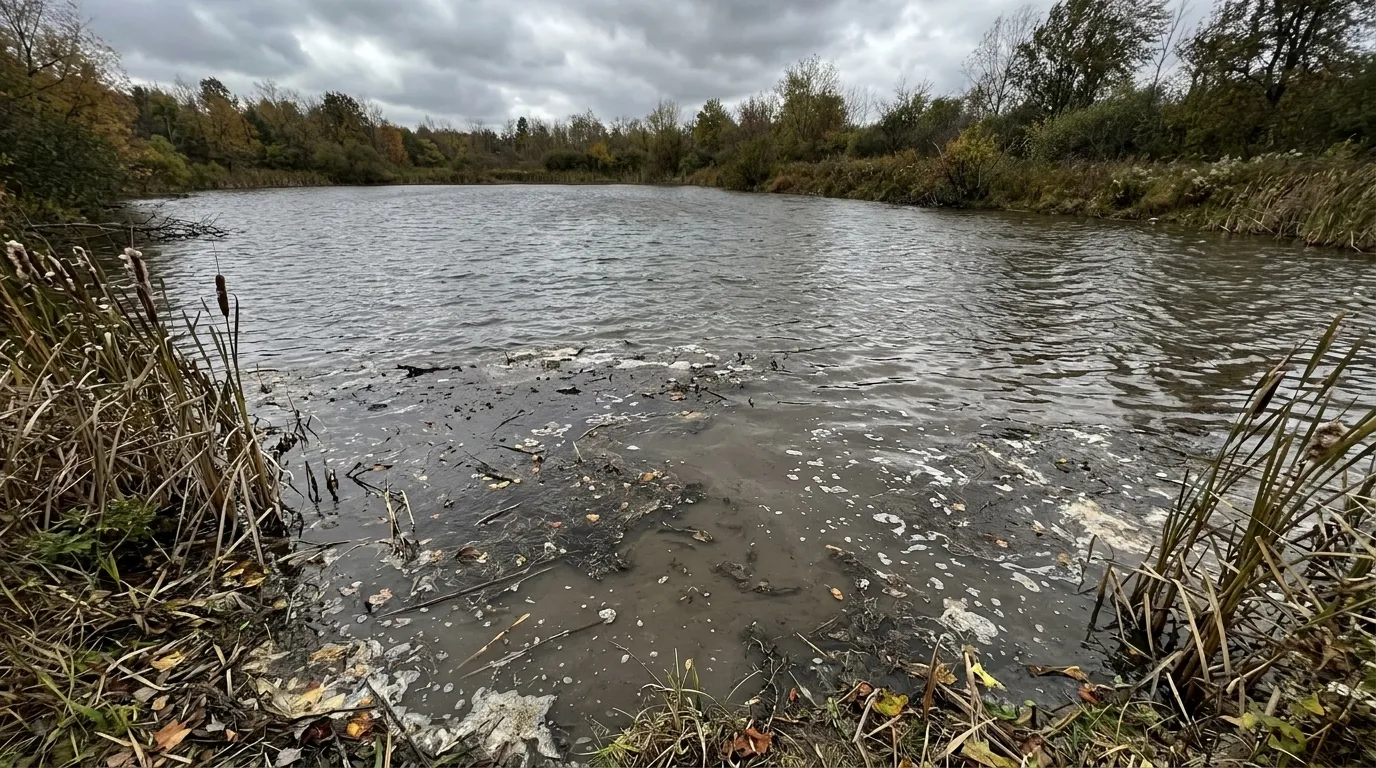
Water may become cloudy as bottom sediments and decomposing organic materials move upward. This can temporarily reduce water clarity.
2. Unpleasant Rotten Egg Smell
A sulfur-like odor may develop when hydrogen sulfide escapes from oxygen-depleted bottom sediments. This gas is produced during the decomposition of organic material under low-oxygen conditions.
3. Fish Gasping at the Surface
Fish may gather near the surface or around fountains because they are searching for water with more available oxygen. This is an important warning sign of oxygen stress.
4. Floating Leaves and Debris
Turnover can bring leaves, small branches, and other organic materials from deeper water toward the surface.
5. Sudden Fish Deaths
Severe oxygen depletion can cause fish deaths, particularly when bottom water contains very little dissolved oxygen before mixing begins.
6. Changes in Water Quality
A sudden change in water color, odor, or clarity may indicate that sediments and nutrients are moving through the water column.
How Low Dissolved Oxygen Affects Fish
Dissolved oxygen is essential for fish survival. When oxygen levels fall, fish become stressed, reduce their activity, and may eventually die.
The following ranges provide a general guide to fish oxygen conditions:
| Dissolved oxygen | Possible effect |
|---|---|
| Above 5 mg/L | Generally suitable for healthy fish |
| 3–5 mg/L | Stress and reduced feeding |
| 2–3 mg/L | Severe stress |
| Below 2 mg/L | High risk of fish deaths |
Some fish species tolerate lower oxygen levels better than others. Water temperature, fish size, and overall pond conditions also influence their oxygen requirements.
How to Prevent and Manage Pond Turnover
Pond turnover is a natural process, so completely preventing it is not always possible or desirable. However, proper management can reduce the risk of severe oxygen depletion.
Install a Bottom Diffused Aeration System
Bottom aeration is one of the most useful ways to improve water circulation. It uses an air compressor, tubing, and diffusers placed near the pond bottom.
Rising bubbles help move deeper water upward, supporting circulation and oxygen distribution. A properly sized system can help reduce strong temperature differences when operated consistently.
Maintain Healthy Pond Depth
Shallow ponds, particularly those under 6 feet deep, are generally less likely to develop strong thermal stratification.
However, shallow water does not guarantee protection against oxygen depletion. Smaller water volumes can lose oxygen quickly under unfavorable conditions.
Control Excess Organic Material
Remove excessive fallen leaves, dead plants, and accumulated debris when practical. Reducing decomposing organic material can help limit oxygen consumption at the bottom.
Monitor Dissolved Oxygen
Regularly checking dissolved oxygen can help identify dangerous conditions before fish begin showing severe symptoms.
Pay particular attention during seasonal transitions and early mornings, when oxygen levels may be especially low.
Avoid Sudden Chemical Treatments
Do not apply algaecides or other chemical treatments during suspected oxygen depletion without understanding their effects. Killing large amounts of algae can increase decomposition and further reduce oxygen availability.
What to Do During an Active Pond Turnover
If fish are gasping at the surface or dying, treat the situation as an oxygen emergency.
Start available aeration equipment to increase circulation and oxygen exchange. Avoid feeding fish temporarily because digestion and waste production add to the pond’s oxygen demand.
Remove dead fish and excessive floating debris when safe. Check dissolved oxygen levels if a suitable testing kit is available.
Recovery may take approximately 3–7 days, depending on pond conditions and the severity of oxygen depletion. More serious situations can require up to 2 weeks.
Avoid making several major water or chemical changes at once. If fish deaths continue, seek help from an aquatic pond-management professional.
Pond Turnover vs. Summer Fish Kills
Pond turnover and summer fish kills can both cause fish deaths, but their underlying causes are different.
Turnover usually occurs during spring or fall because temperature changes mix separate water layers. Summer fish kills are often associated with algae die-offs, decomposition, and high water temperatures.
During hot weather, pond temperatures around 75–85°F can increase fish oxygen demand while warmer water holds less dissolved oxygen.
Understanding the difference helps pond owners choose appropriate management measures instead of assuming every fish kill is caused by seasonal turnover.
FAQs
1. How often do ponds turn over?
Most temperate ponds experience turnover twice annually, usually during spring and fall. However, weather, water depth, and local climate can influence the timing.
2. Can pond turnover kill fish?
Yes. Turnover can bring oxygen-poor bottom water into contact with the entire water column, reducing available oxygen and potentially causing fish deaths.
3. How deep does a pond need to be to turn over?
Ponds deeper than approximately 8–10 feet commonly develop stronger thermal stratification. However, shallower ponds can also experience mixing and oxygen-related problems.
4. Does pond turnover happen in summer?
It can happen during summer if sudden temperature drops, heavy cold rain, or strong winds disturb the water layers. However, regular seasonal turnover is more common in spring and fall.
5. How long does pond turnover last?
The mixing event depends on pond size, depth, and weather conditions. Water quality recovery may take approximately 3–7 days, while severe oxygen problems can take up to 2 weeks.
6. Is pond turnover good or bad?
Pond turnover is a natural ecological process that redistributes oxygen and nutrients. However, it can become harmful when oxygen-poor bottom water spreads throughout the pond.
Final Thoughts
Pond turnover is a natural result of seasonal temperature and water-density changes. Understanding the three water layers, recognizing early warning signs, and maintaining proper aeration can help reduce the risk of oxygen depletion and protect aquatic life.
Regular water-quality monitoring, responsible organic-material management, and properly maintained aeration equipment are practical ways to keep a pond healthier throughout the year.