

How Much Sand Do You Need for a Sandbox? Easy Calculator Guide
- Disclosure: This post may include affiliate links. If you click a link and complete a purchase, I may earn a commission. Additionally, as an Amazon Associate, I earn from eligible purchases.
Filling a sandbox with the right amount of sand makes outdoor play more enjoyable, comfortable, and safe for children. Too little sand can leave the bottom exposed, while too much may spill over the edges and make the area messy. The exact amount depends on your sandbox’s length, width, shape, and desired sand depth.
For most rectangular sandboxes, calculating the required quantity is straightforward. You only need a measuring tape, the sandbox dimensions, and a basic volume formula. Once you know the volume, you can estimate how many bags of play sand to purchase.
A common calculation uses a 50-pound bag containing approximately 0.5 cubic feet of sand. However, actual bag coverage can vary by product, so always check the packaging before buying.
Read the full guide for the best method
How to Calculate the Amount of Sand for a Sandbox
The easiest way to determine your sand requirements is to calculate the sandbox’s internal volume. Measure the inside dimensions rather than the outside edges to avoid overestimating the quantity. Follow these steps.
Step 1: Measure the Sandbox
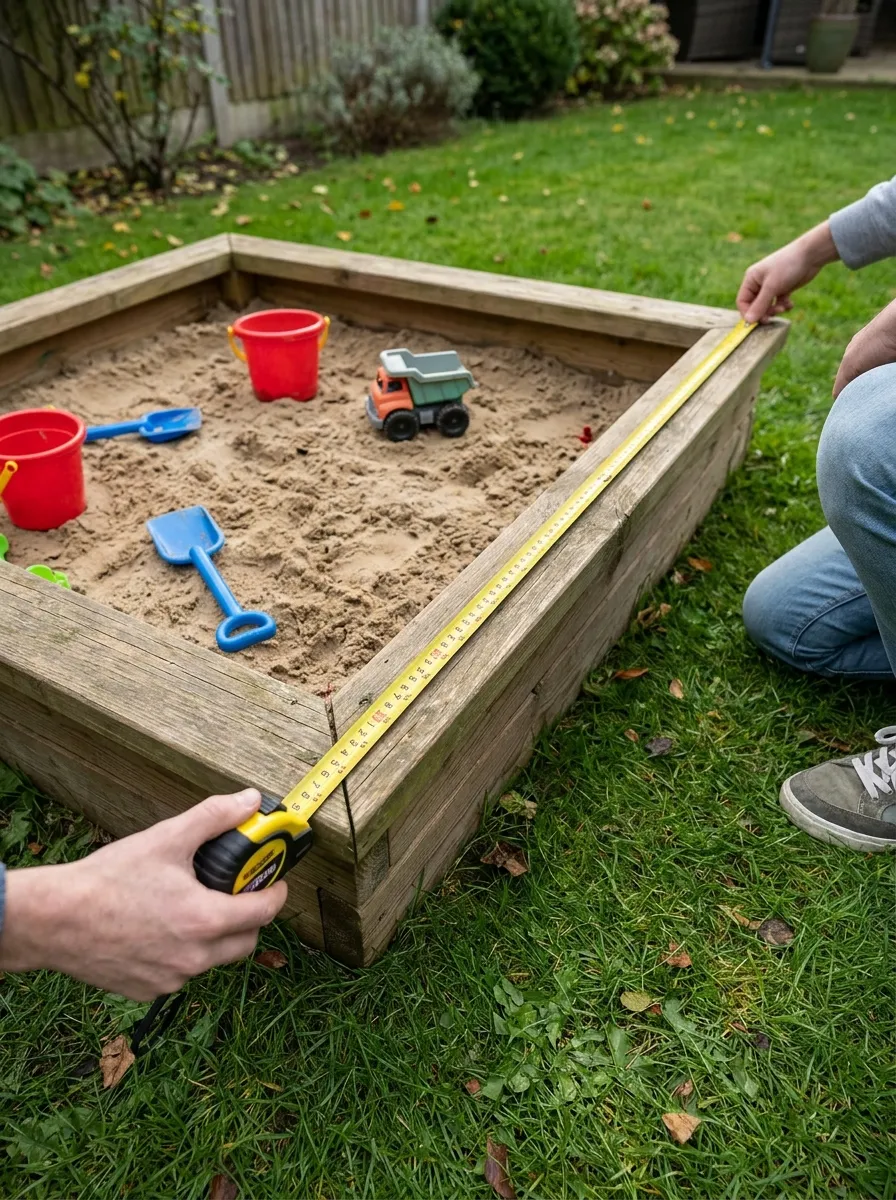
Use a measuring tape to find the interior length and width of your sandbox. If it has a rectangular or square shape, measure both dimensions from inside wall to inside wall.
For example, imagine your sandbox is 5 feet long and 5 feet wide. Multiplying these measurements gives an area of 25 square feet.
For circular or irregularly shaped sandboxes, use the appropriate shape-specific calculation instead.
Step 2: Choose the Right Sand Depth
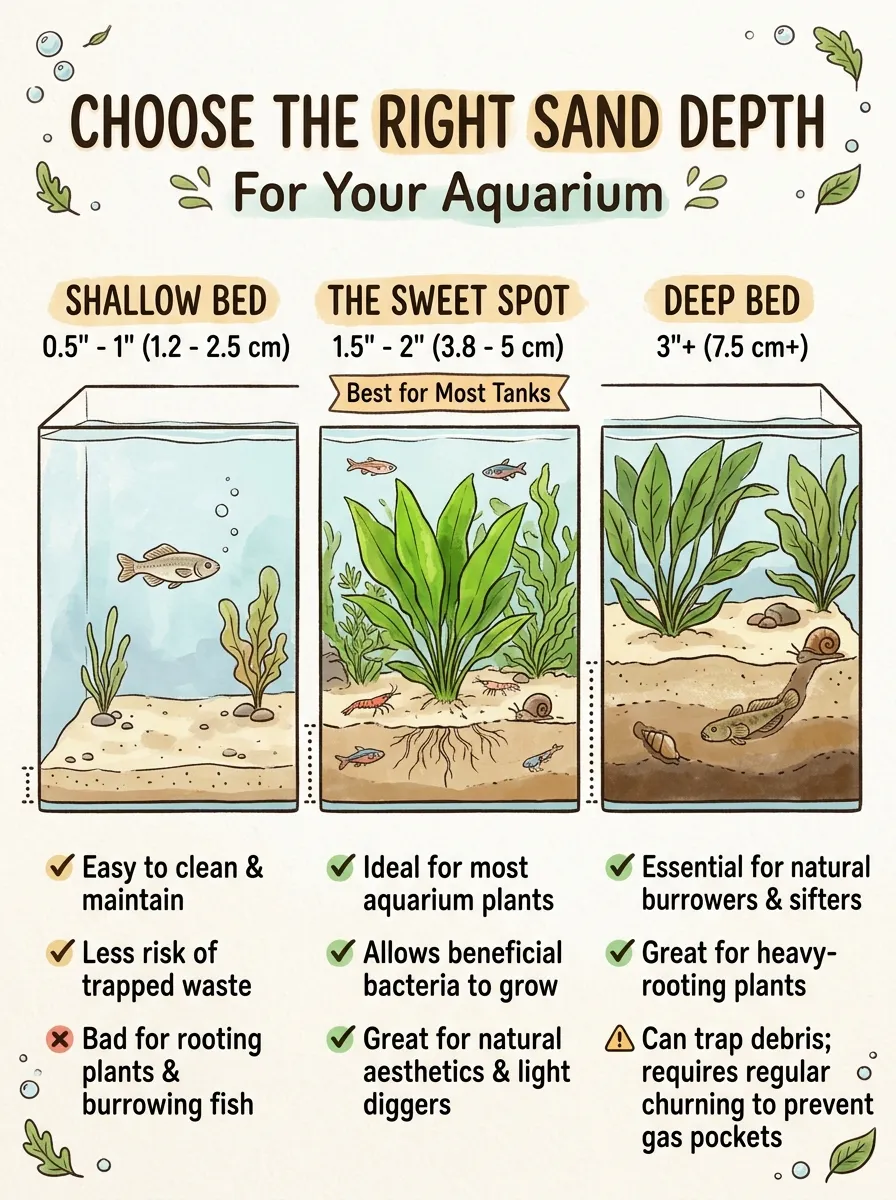
The amount of sand you need also depends on how deeply you want to fill the sandbox.
A depth of 4–6 inches is a practical starting point for many small backyard sandboxes. It provides room for children to dig, scoop, and build without filling the entire structure to the top.
Consider the sandbox wall height before deciding on the depth. For example, an 8-inch-high sandbox wall can accommodate approximately 4–6 inches of sand while leaving some empty space above the surface.
Leaving room at the top helps reduce spills and makes it easier to use a protective cover.
Step 3: Calculate the Sand Volume
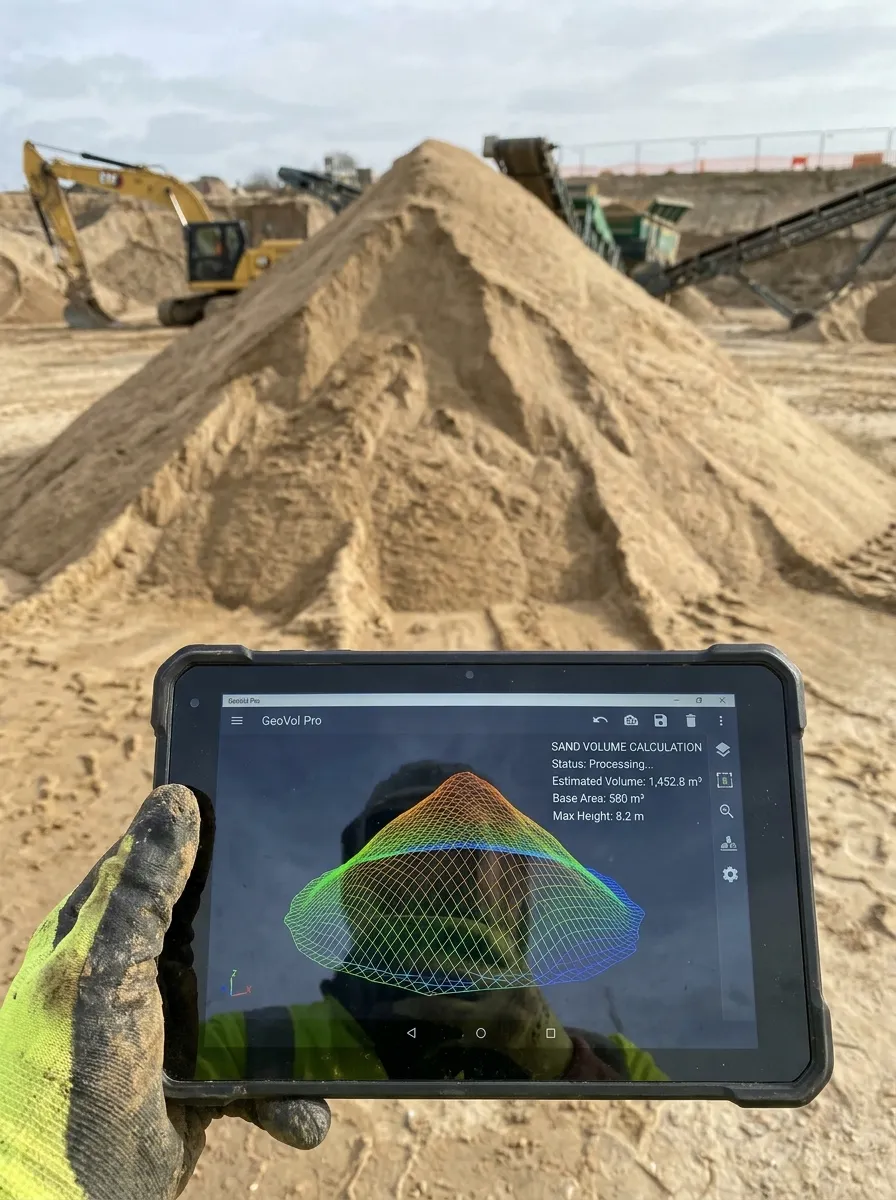
Use this simple formula for square and rectangular sandboxes:
Length × Width × Sand Depth = Sand Volume
Make sure all measurements are in feet before multiplying. To convert inches into feet, divide the measurement by 12.
For example, a sandbox measuring 5 feet long and 5 feet wide with a 6-inch sand depth requires:
- Length: 5 feet
- Width: 5 feet
- Sand depth: 6 inches (0.5 feet)
Calculation:
5 × 5 × 0.5 = 12.5 cubic feet
Therefore, you need approximately 12.5 cubic feet of sand to fill this sandbox to the selected depth.
Step 4: Convert Cubic Feet Into Sand Bags

After calculating the volume, determine how many bags you need.
A typical 50-pound bag of play sand contains approximately 0.5 cubic feet.
Use this formula:
Total Cubic Feet ÷ Sand Volume Per Bag = Number of Bags
For the previous example:
12.5 ÷ 0.5 = 25 bags
You would need approximately 25 bags of 50-pound sand to fill the 5 × 5-foot sandbox to a depth of 6 inches.
Always verify the volume printed on the packaging because different sand products may have different weights and coverage.
How Much Sand Do Different Sandbox Sizes Need?
The required amount changes with the dimensions and filling depth. A small sandbox may need only a few bags, while a larger play area can require several dozen.
For example, a 4 × 4-foot sandbox filled to a depth of 4 inches has a volume of approximately 5.33 cubic feet. Using bags containing 0.5 cubic feet each, you would need around 11 bags.
A 4 × 4-foot sandbox filled to 6 inches requires approximately 8 cubic feet, or 16 bags of the same size.
Similarly, a 5 × 5-foot sandbox requires approximately 8.33 cubic feet at a 4-inch depth, which equals about 17 bags. At a 6-inch depth, the requirement increases to 12.5 cubic feet, or 25 bags.
These calculations assume a uniform sand depth and the stated bag volume. Purchase quantities should be based on the actual product packaging.
How to Calculate Sand for Different Sandbox Shapes
Not every sandbox is rectangular. Some backyard play areas have circular, triangular, or polygonal designs. The calculation method depends on the shape.
Square and Rectangular Sandboxes
For square and rectangular designs, multiply the interior length by the interior width to calculate the base area. Then multiply that result by the desired sand depth in feet.
This is the simplest method and works for most traditional wooden and plastic sandboxes.
Circular Sandboxes
For a circular sandbox, use the following formula:
π × Radius × Radius × Sand Depth = Sand Volume
First, measure the diameter across the sandbox. Divide that number by 2 to find the radius. Then multiply the radius by itself and by approximately 3.14.
Finally, multiply the area by the desired sand depth in feet.
For example, a circular sandbox with a 6-foot diameter has a radius of 3 feet. With a sand depth of 0.5 feet, the calculation is:
3.14 × 3 × 3 × 0.5 = 14.13 cubic feet
This gives you an estimated sand requirement before converting the volume into bags.
Triangular and Polygonal Sandboxes
Triangular sandboxes require a triangle area calculation, while pentagonal, hexagonal, and octagonal designs need their respective geometric area formulas.
For a regular polygon, the calculation depends on the number of sides and the length of each side. If the shape is irregular, divide its base into smaller familiar shapes, calculate each area, and add the results together.
Once you have the total base area, multiply it by the selected sand depth to find the required volume.
What Type of Sand Should You Use in a Sandbox?
Choosing suitable sand is just as important as calculating the quantity. Sand intended for children’s play areas should be clean, appropriately processed, and suitable for sandbox use.
Play sand is generally the preferred option because it is sold specifically for children’s play activities. Look for clearly labeled products and check the manufacturer’s information before purchasing.
Avoid using ordinary construction sand or unknown materials from outdoor locations. These products may contain unwanted debris or may not be intended for children’s play environments.
Before filling your sandbox, inspect the sand for visible rocks, sticks, sharp objects, and other unwanted materials.
How Much Does Sandbox Sand Cost?
The total cost depends on the quantity, packaging, product quality, and delivery arrangements.
An approximate price range for a 50-pound bag of play sand is $5–$10. Bulk sand may cost approximately $25–$50 per cubic yard, although delivery fees can increase the final expense.
For a small sandbox, individual bags may be more convenient because they are easier to transport and store. For larger play areas, bulk purchasing may be worth considering.
Compare the price per cubic foot rather than looking only at the price per bag. This makes it easier to identify which option provides better value.
Tips for Maintaining a Clean and Safe Sandbox
Once your sandbox is filled, regular maintenance helps keep the play area pleasant and suitable for children.
Keep the sandbox covered when it is not being used. A properly fitted cover helps prevent leaves, debris, and animals from entering the sand.
Inspect the surface regularly and remove visible foreign objects. Check for damaged sandbox walls, loose parts, and other potential hazards.
Keep the surrounding area clean and encourage children to wash their hands after playing. If the sand becomes contaminated, replace it rather than relying on surface cleaning.
Inspect the sand condition frequently and replace it when necessary. One maintenance recommendation is to consider replacement every 1–2 years, but actual timing depends on usage, weather exposure, and cleanliness.
FAQs
How Many Bags of Sand Do I Need for a 5 × 5 Sandbox?
A 5 × 5-foot sandbox requires approximately 25 bags of 50-pound sand when filled to a depth of 6 inches, assuming each bag contains 0.5 cubic feet.
How Deep Should Sand Be in a Sandbox?
A depth of 4–6 inches is a practical starting point for many small sandboxes. Adjust the depth according to the sandbox design, children’s activities, and available wall height.
How Much Sand Does a 4 × 4 Sandbox Need?
A 4 × 4-foot sandbox requires approximately 5.33 cubic feet at a 4-inch depth or 8 cubic feet at a 6-inch depth.
Can I Use Regular Construction Sand in a Sandbox?
It is better to choose sand specifically labeled for children’s play areas. Construction sand may contain materials or impurities that make it unsuitable for sandbox activities.
Should I Leave Space at the Top of a Sandbox?
Yes. Leaving approximately 2–3 inches of clearance can help prevent sand from spilling over the edges and provide room for a protective cover.
How Often Should Sandbox Sand Be Replaced?
Inspect the sand regularly and replace it when it becomes dirty, contaminated, or unsuitable for play. A 1–2-year interval can be a maintenance guideline, but actual replacement needs depend on its condition.
Final Thoughts
Calculating the right amount of sandbox sand does not have to be difficult. Measure the interior dimensions, choose a suitable filling depth, and calculate the volume using the correct formula for your sandbox shape.
For a typical 5 × 5-foot sandbox with 6 inches of sand, you need approximately 12.5 cubic feet or 25 bags of 50-pound play sand.
Always check the actual bag coverage before purchasing, leave enough room at the top, and maintain clean sand for a better backyard play experience.