What to Plant Near a Chicken Coop: 20+ Safe Plants
- Disclosure: This post may include affiliate links. If you click a link and complete a purchase, I may earn a commission. Additionally, as an Amazon Associate, I earn from eligible purchases.
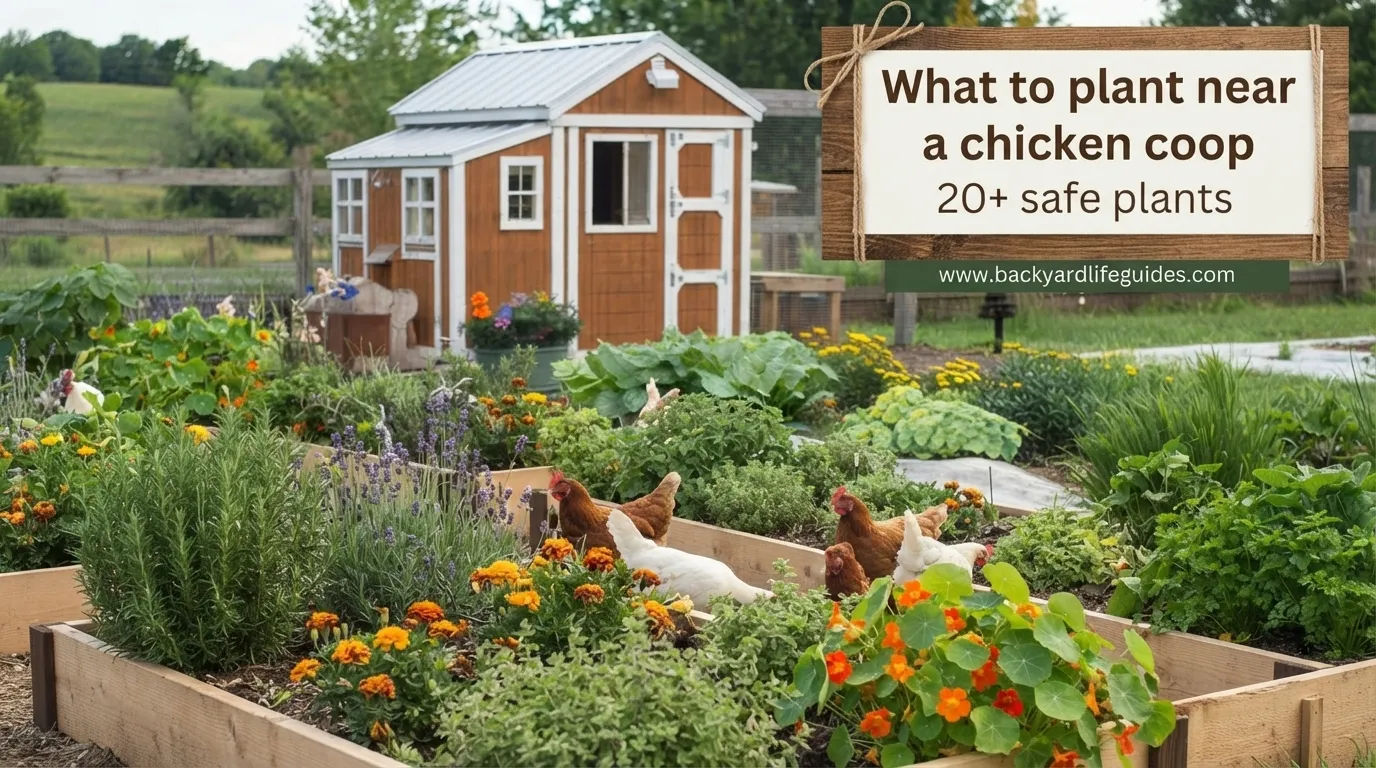
Planting around a chicken coop can do more than make your backyard look attractive. The right plants can provide shade, forage, ground cover, seasonal treats, natural barriers, and useful herbs while creating a more comfortable environment for your flock.
However, chickens are active foragers. They scratch the soil, peck leaves, dig around roots, and may quickly destroy young plants. That means choosing chicken-friendly plants is only half the job. You also need to think about plant placement, protection, spacing, sunlight, and safety.
The best approach is to create a small, useful garden rather than filling the entire chicken run with plants at once.
Best Plants to Grow Near a Chicken Coop
1. Comfrey
Comfrey is a perennial plant that can work well around a chicken garden. It can reach about 12 inches and is associated with hardy ground-cover growth.
It can also provide plant material that chickens may investigate while foraging.
If your chickens constantly scratch around its base, protect young plants until they become established.
Best for: Ground cover and forage.
2. Oregano
Oregano is a perennial herb that can grow up to about 2 feet tall. It is one of the more useful herbs to include in a chicken-friendly garden.
Its strong aroma also makes it a practical addition to a mixed herb area.
For gardeners working across different climates, the information places oregano within Zones 4–10.
Best for: Herb gardens and chicken-friendly planting.
3. Thyme
Thyme is a compact herb that works particularly well where you want a low-growing plant.
It can tolerate some foot traffic and can be used as part of a mixed herb or ground-cover area.
Best for: Low-growing areas and herb gardens.
4. Sage
Sage is another useful herb for a chicken garden. It prefers well-drained soil and good sunlight.
A raised bed or container can be especially useful when chickens are likely to scratch aggressively around the plant.
During active growth, harvesting can be done every few weeks while allowing enough foliage to remain for continued growth.
Best for: Herb gardens and container planting.
5. Rosemary
Rosemary adds a strong fragrance and works well around the outside of a coop or run.
It can also become a useful structural plant because mature rosemary forms a larger, woody shape than many soft herbs.
For best results, give it good drainage and sunlight rather than keeping it in constantly wet soil.
Best for: Herb borders and dry, sunny areas.
6. Lavender
Lavender is attractive, aromatic, and useful in a chicken-friendly garden.
The plant can be positioned near coop entrances or other areas where its fragrance can be enjoyed. Dried lavender material can also be refreshed approximately monthly when used around the coop environment.
Avoid planting it where constant scratching will expose its roots.
Best for: Fragrance, appearance, and coop borders.
7. Mint
Mint is popular because of its strong fragrance, but there is an important gardening problem: it can spread aggressively.
That makes containers a particularly practical choice.
You can grow several types, including:
- Spearmint
- Peppermint
- Apple mint
- Chocolate mint
Keeping mint contained makes it easier to control while preventing it from taking over the garden.
Best for: Containers and aromatic planting.
8. White Clover
White clover is especially useful when you want living ground cover.
It can provide forage while also functioning as a form of living mulch. Its ability to recover from moderate chicken activity makes it more suitable for some run areas than delicate ornamental plants.
It can also contribute nitrogen to the soil.
Best for: Ground cover and forage.
9. Dandelions
Dandelions are easy for chickens to investigate and can provide leaves, flowers, and roots.
They are particularly useful where you want a natural forage plant instead of a highly ornamental garden.
The plant is associated with vitamins A, C, and K, along with minerals.
Best for: Natural foraging.
10. Calendula
Calendula adds bright flowers to the chicken garden while providing edible petals.
It can be planted in beds or protected areas where chickens can forage without completely destroying young plants.
Best for: Flowers, color, and occasional forage.
11. Nasturtiums
Nasturtiums are another colorful choice for a chicken-friendly garden.
Both their leaves and flowers can attract attention from chickens, making them useful as part of a mixed edible garden.
They are also relatively easy to grow from seed.
Best for: Flowers and edible garden areas.
12. Sunflowers
Sunflowers are one of the most useful choices if you want height, shade, and seeds.
They can grow more than 3 feet tall, while their mature seed heads provide a seasonal food source.
Planting sunflowers around a run can also introduce vertical structure into an otherwise flat space.
Best for: Seeds, height, shade, and visual appeal.
13. Amaranth
Amaranth provides edible leaves and seeds and can add height to a chicken garden.
One of the flower spikes reaches about 10 inches.
It can be grown as part of a mixed food garden where chickens can forage on suitable plant material.
Best for: Seeds, leaves, and forage.
14. Grapevines
A grapevine can provide a combination of shade, cover, and fruit.
Because mature vines can become heavy, they need strong support. A reinforced trellis or pergola is a better choice than a weak temporary structure.
Grapevines may also take a couple of seasons to become productive.
Best for: Shade, climbing cover, and fruit.
15. Berry Bushes
Berry bushes can create a natural boundary while producing seasonal treats.
Useful examples include:
- Blackberries
- Blueberries
- Raspberries
- Strawberries
A practical strategy is to place berry bushes just outside the most heavily trafficked section of the chicken run. This allows chickens to reach fallen fruit while reducing root disturbance.
Best for: Fruit and natural barriers.
16. Mulberry Trees
A mulberry tree can provide substantial shade as well as fallen fruit.
One extracted source lists mature mulberry trees at around 30 feet tall and places them within Zones 4–8.
Because of its potential size, it should not be planted directly beside the coop.
Another recommends keeping a mulberry tree at least 10 feet from the coop structure.
Best for: Large-scale shade and fruit.
17. Apple Trees
Apple trees can provide shade, fruit, and perching opportunities.
For smaller spaces, dwarf varieties can be easier to manage.
A useful planting distance is approximately 8–12 feet from the main coop entrance, depending on the tree’s eventual size and the layout of your property.
Best for: Fruit and shade.
18. Pine Trees
Pine can be useful when the goal is to create a windbreak.
Planting trees on the north or west side can help create a barrier against prevailing winter winds in suitable climates.
One recommends keeping pine trees at least 20 feet from the coop.
Best for: Wind protection and larger landscapes.
19. Pumpkins, Squash, and Melons
Large fruiting plants can provide seasonal forage.
Chickens may eat different parts of suitable fruits, including:
- Seeds
- Pulp
- Some softer plant material
Pumpkins can be especially useful as a seasonal treat because chickens can investigate both the seeds and pulp.
Other options include:
- Watermelon
- Cantaloupe
- Honeydew
- Zucchini
- Cucumbers
Best for: Seasonal treats and hydration.
20. Peas
Peas are a useful cool-season addition to a chicken garden.
They provide forage and are associated with niacin, which supports normal development and strong bones.
However, avoid giving chickens uncooked dried beans, which are different from fresh garden peas.
Best for: Early-season forage.
21. Leafy Greens
A chicken-friendly vegetable area can include:
- Kale
- Collards
- Swiss chard
- Romaine lettuce
- Cabbage
- Spinach
- Mustard greens
These can provide variety, but not every green should be offered without moderation.
For example, spinach and Swiss chard contain oxalic acid, so they are better treated as part of a varied diet rather than the sole source of greens.
Best for: Variety and fresh forage.
Best Plants by Purpose
Choosing plants by purpose makes planning your chicken garden much easier.
| Purpose | Good choices |
|---|---|
| Shade | Sunflowers, grapevines, mulberry, apple |
| Ground cover | White clover, thyme, plantain |
| Herbs | Oregano, thyme, sage, rosemary, lavender, mint |
| Flowers | Calendula, nasturtiums, sunflowers |
| Fruit | Grapes, mulberries, apples, berries, melons |
| Seasonal forage | Pumpkins, peas, cucumbers, beets, leafy greens |
| Wind protection | Pine |
| Aromatic planting | Lavender, mint, rosemary |
| Natural garden structure | Berry bushes, grapevines, trees |
How Far Should Plants Be From a Chicken Coop?
There is no single distance that works for every plant because mature size, root spread, sunlight, and chicken activity are different.
Still, the recommendations provide useful starting points.
| Plant | Suggested measurement |
|---|---|
| Wormwood | 3–4 ft intervals |
| Apple tree | 8–12 ft from main entrance |
| Mulberry | At least 10 ft from coop |
| Pine | At least 20 ft from coop |
| Chicken garden fence | At least 3 ft high |
Use these as planning guidelines rather than rigid rules. A large tree needs considerably more room than a small herb.
How to Protect Plants From Chickens
Even a chicken-friendly plant may not survive if the flock has unrestricted access to young growth.
Use a Small Wire Barrier
A simple wire enclosure can keep chickens away while plants establish their roots.
For a larger garden, a fence of at least 3 feet can help, although particularly active or flighty chickens may still get over it.
Protect Tree Trunks
Young trees can suffer from scratching and pecking around their bases.
A protective wire barrier around the trunk can give roots time to establish.
Leave enough room for the trunk to grow instead of wrapping protection tightly around it.
Use Containers
Containers are particularly useful for:
- Mint
- Sage
- Rosemary
- Other herbs
They make it easier to control aggressive spreading and move plants when necessary.
Add Hardscaping
Rocks or other durable material around the base of plants can make digging more difficult.
This is especially useful for plants that chickens repeatedly disturb.
Start Small
Don’t plant an entire garden immediately.
Start with 1–2 plants of a type you are considering and observe how your chickens interact with them.
If the plants survive, you can expand the planting area.
Should Chickens Have Free Access to the Garden?
Not necessarily.
Chickens can provide valuable services in a garden, including:
- Fertilizing
- Soil scratching
- Pest removal
- Mulching
- Compost aeration
But they can also create problems.
They may:
- Eat newly planted seeds
- Uproot seedlings
- Scratch freshly prepared soil
- Remove leaves
- Destroy flowers
- Eat immature fruit
- Turn planting beds into dust-bathing areas
A controlled-access system is often more practical than unrestricted access.
How to Use Chicken Manure in the Garden
Chicken manure can be valuable because it contains a significant amount of nitrogen.
However, fresh manure should not simply be spread directly around every new plant.
One recommends allowing manure to improve the soil for a few months before planting.
This gives the material time to break down and reduces the risk associated with using fresh, highly concentrated manure around young plants.
A composting area can also be useful because chickens naturally scratch and aerate organic material.
Plants You Should Avoid Near Chickens
Plant safety is just as important as choosing useful plants.
The content identifies several plants or plant groups that should be avoided or treated with caution:
- Azalea
- Foxglove
- Hydrangea
- Rhododendron
- Nightshade plants
- Rhubarb
- Daphne
- Onions
- Oak
- Avocado
- Daffodils
- Poison ivy
- Amaryllis
- Honeysuckle
- Tulips
Nightshade plants mentioned in the source material include tomatoes, eggplants, and potatoes.
Oak is another important concern because the article specifically identifies acorns as poisonous.
When introducing an unfamiliar plant, identify it correctly before allowing chickens access to it.
A Simple Chicken-Coop Planting Plan
You don’t need dozens of plants to create a useful chicken garden.
A simple layout can use different planting zones.
Zone 1: Around the Coop
Use compact herbs such as:
- Thyme
- Oregano
- Lavender
- Rosemary
Keep them protected from excessive scratching.
Zone 2: Along the Run
Use tougher ground-cover plants such as:
- White clover
- Plantain
- Dandelions
These can provide natural forage while helping cover bare soil.
Zone 3: Outside the Run
Plant:
- Berry bushes
- Grapevines
- Sunflowers
- Calendula
- Nasturtiums
This provides food and visual interest without putting every plant directly under chicken feet.
Zone 4: Larger Trees
Place:
- Mulberry
- Apple
- Pine
farther away from the structure according to mature size and the available space.
How to Build a Balanced Chicken Garden
The best chicken garden isn’t necessarily the one with the greatest number of plants.
A balanced combination is more useful.
For example, you could combine:
| Garden role | Example |
|---|---|
| Herb | Oregano |
| Aromatic plant | Lavender |
| Ground cover | White clover |
| Flower | Calendula |
| Tall plant | Sunflower |
| Fruit | Berry bush |
| Vine | Grapevine |
| Seasonal food | Pumpkin |
| Shade tree | Mulberry |
| Windbreak | Pine |
This approach gives your garden several functions instead of depending on one plant.
Important Tips Before Planting
Check Your Climate
Some plants perform better in particular growing zones.
For example, the extracted plant information places:
- Comfrey in Zones 4–8
- Oregano in Zones 4–10
- Marigolds in Zones 2–11
- Mint in Zones 3–11
- Amaranth in Zones 2–11
- Sunflowers in Zones 2–11
- Grapevines in Zones 6–9
- Sunchokes in Zones 3–9
- Mulberry in Zones 4–8
Your local growing conditions should determine which options are actually practical.
Consider Mature Size
A small herb and a 30-foot tree should never be planned in the same way.
Check mature height and spread before planting anything permanently near the coop.
Watch Chicken Behavior
Your chickens are the best test.
If they repeatedly destroy a particular plant, move it behind protection rather than continually replacing it.
Give Plants Time to Establish
Young seedlings are much more vulnerable than mature plants.
Temporary fencing can make a major difference during the establishment stage.
Frequently Asked Questions
What is the best plant to grow near a chicken coop?
There isn’t one universal best plant. Oregano, thyme, lavender, white clover, sunflowers, and dandelions are useful starting choices because they provide different benefits such as herbs, forage, flowers, and ground cover.
Can chickens eat plants growing around their coop?
Chickens can forage on many chicken-friendly plants, but not every plant is safe. Always identify plants correctly and keep potentially toxic species away from the flock.
How tall should a fence around a chicken garden be?
The guidance recommends a fence of at least 3 feet high. However, some chickens can fly over a fence of this height, so taller or covered protection may be necessary for determined birds.
Is mint good to plant near chickens?
Mint can be useful in a chicken garden, but it spreads aggressively. Growing it in a container is a practical way to control its growth.
How far should a mulberry tree be from a chicken coop?
One recommends planting a mulberry tree at least 10 feet from the coop. The exact distance should also account for the mature tree’s size and root development.
How far should pine trees be from a chicken coop?
The extracted guidance recommends keeping pine trees at least 20 feet from the coop and positioning them strategically as a windbreak.
Can chickens eat sunflower plants?
Sunflowers are commonly included among chicken-friendly garden plants, particularly because chickens can forage on their seeds. Mature plants can also add height and seasonal shade.
Are dandelions good for chickens?
Dandelions can be a useful forage plant. Chickens may investigate the leaves and flowers, and the plant contains vitamins A, C, and K along with minerals.
Can chickens eat pumpkins?
Pumpkins are included among the chicken-friendly seasonal foods. Chickens can investigate the seeds and pulp, making pumpkins a useful seasonal addition.
Should chickens have unrestricted access to a garden?
Not always. Chickens can fertilize and till soil, but they may also uproot seedlings, destroy flowers, scratch beds, and eat plants before they mature. Controlled access is often easier to manage.
Final Takeaway
The best plants for a chicken coop are those that match your flock’s behavior, available space, climate, and gardening goals.
For a simple starting garden, combine oregano, thyme, lavender, white clover, dandelions, calendula, sunflowers, and one seasonal food crop. Add berry bushes or vines outside the busiest part of the run, and reserve larger trees such as mulberry, apple, and pine for areas with sufficient space.
Most importantly, don’t treat every chicken-friendly plant as indestructible. Protect young plants, observe how your flock behaves, and expand gradually.
A successful chicken garden should provide useful forage, comfortable shade, attractive planting, and manageable maintenance without putting your flock at unnecessary risk.