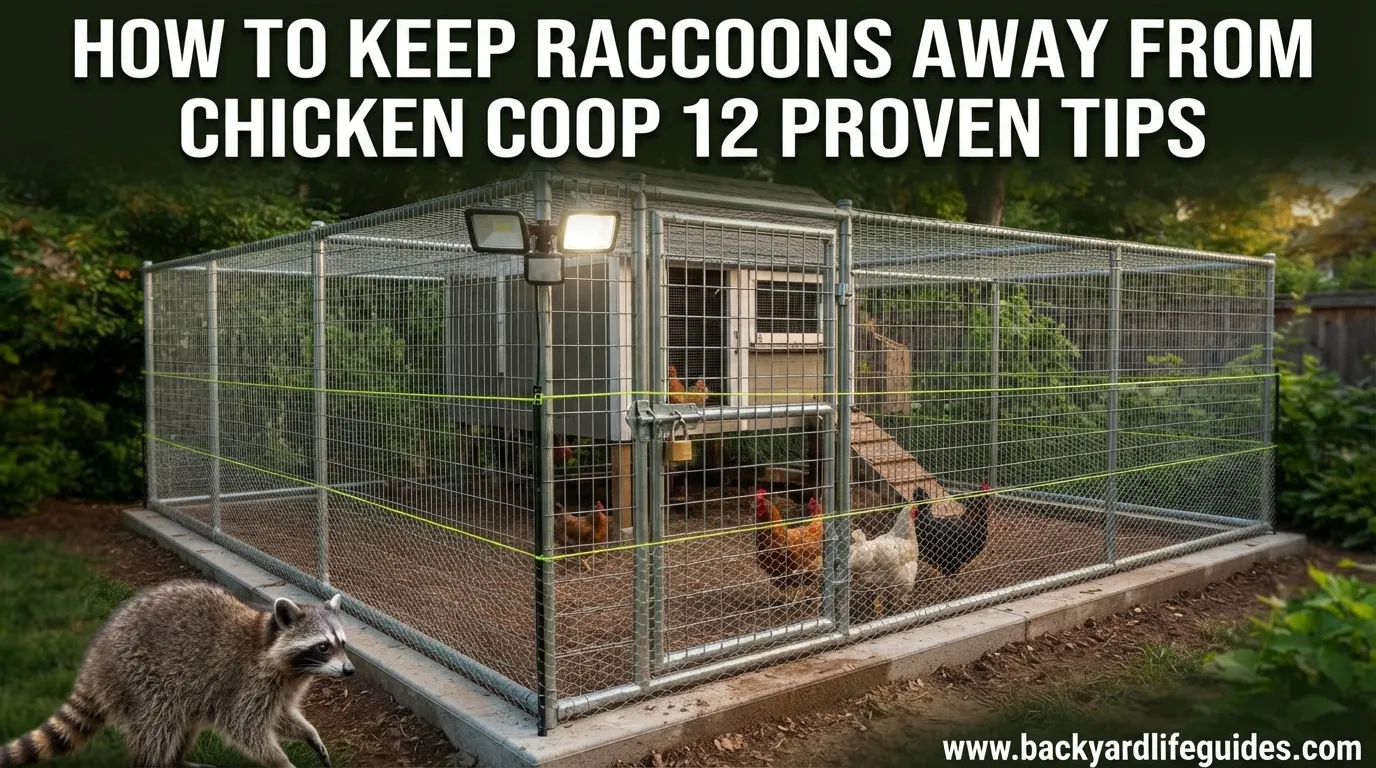
How to Keep Raccoons Away From Chicken Coop: 12 Proven Tips
- Disclosure: This post may include affiliate links. If you click a link and complete a purchase, I may earn a commission. Additionally, as an Amazon Associate, I earn from eligible purchases.
Raccoons are attracted to chicken coops because they can provide several easy food sources in one place. Eggs, chicks, chicken feed, pet food, garbage, and food scraps can all encourage repeated visits.
They are also capable climbers and have dexterous front paws that allow them to manipulate simple latches and reach through openings. A weak door or small gap can therefore become a serious security problem.
The goal should not be to rely on one scare tactic. A safer approach is to combine strong physical barriers, secure locks, food management, regular inspections, and nighttime protection.
The most important principle is simple: make the coop difficult to enter and remove the reasons raccoons want to return.
5 Signs Raccoons May Be Near Your Coop
Before changing your entire setup, look for evidence that identifies the actual predator.
1. Raccoon Tracks
Raccoon footprints commonly show 5 toes and can be surprisingly hand-like.
One notes front tracks of about 2¼ inches and hind tracks around 3¼ inches, while another gives a general track length of 2–3 inches. Check muddy ground, soft soil, snow, or dusty areas around the coop.
2. Damaged Fencing or Coop Parts
Inspect for:
- Torn or bent wire
- Holes
- Loose boards
- Damaged vents
- Roof gaps
- Scratches around doors
- Weak fencing
- Disturbed soil beneath the fence
A damaged area is more important than simply seeing a raccoon nearby because it can reveal the route being used.
3. Scattered Feathers or Injured Birds
Scattered feathers around the coop or run can indicate predator activity. Raccoon attacks can also leave behind injured or dead chickens rather than animals being carried away.
4. Cracked Eggs or Missing Eggs
Raccoons may be attracted to eggs as much as the chickens themselves. Leaving eggs in nesting boxes longer than necessary can therefore create another food incentive.
5. Droppings or Nighttime Sounds
Look around feeding areas, water sources, and common travel routes for droppings.
Also listen for scratching or rustling, particularly during evening or early-morning hours. These signs become more useful when combined with tracks or physical damage.
How to Raccoon-Proof a Chicken Coop
The strongest common recommendation across the material is to prioritize physical exclusion rather than depending entirely on repellents.
Use ¼-Inch Hardware Cloth.
One of the most specific recommendations is ¼-inch hardware cloth.
Do not assume ordinary chicken wire provides the same protection. The material points out that raccoons can push their paws through weaker wire and manipulate or damage it.
Use hardware cloth around:
- Windows
- Vents
- Chicken runs
- Open sides
- Roof sections
- Other potential entry points
- The perimeter of vulnerable areas
Secure it firmly rather than leaving loose edges that an animal can pull away.
Bury the Barrier 12 Inches Deep
Raccoons can dig underneath fencing, so protecting only the vertical surface is not enough.
A practical recommendation is to bury the hardware cloth approximately 12 inches (1 foot) into the ground.
For additional anti-digging protection, the buried section can be bent approximately 90 degrees outward. This creates a ground barrier that makes it harder for an animal to dig directly beneath the fence.
Consider ¾-Inch Welded Wire for Added Strength.
Another recommends ¾-inch welded wire as a stronger option, describing ordinary hardware cloth as a minimum intervention in its approach.
The important lesson is not simply to choose a particular product but to use a strong, properly secured barrier with openings small enough to prevent raccoons from reaching chickens.
Make Every Coop Door Hard to Manipulate
A basic latch can be a weak point even when the rest of the coop is strong.
Raccoons have dexterous paws and can manipulate simple closures. Instead of relying on one easy-to-operate latch, use a locking arrangement that requires more than one movement.
Use 2 or 3 Locking Steps
One specifically recommends 2 or 3 multiple-step latches.
Other suggested locking options include:
- Padlocks
- Spring-loaded locking eye hooks
- Carabiners
- Barrel locks
- Other predator-resistant closures
The principle is straightforward: if a latch is extremely easy for a person or child to operate, it may also be vulnerable to a determined raccoon.
Check Old Latches Immediately
Replace latches that are:
- Broken
- Loose
- Rusted
- Difficult to close completely
- Easy to open with one movement
A strong fence cannot compensate for a door that can be pushed or opened.
Build a Fence That Raccoons Cannot Easily Climb or Dig Under
Fence height and construction both matter.
One recommends a fence at least 3 feet high, while another discusses perimeter fencing around 4–5 feet high.
Rather than focusing only on height, combine a suitable fence with:
- A buried underground barrier
- Strong mesh
- No convenient tree branches
- No nearby structures that provide a climbing route
- Securely fastened edges
- A protected top where appropriate
Raccoons are capable climbers, so simply making a fence taller is not necessarily enough.
Close Gaps Larger Than 1 Inch
Small openings deserve special attention.
One recommends covering gaps larger than 1 inch with suitable hardware cloth or netting.
Inspect:
- Door frames
- Windows
- Ventilation openings
- Roof joints
- Corners
- The bottom of the walls
- Places where wire meets wood
A gap that looks insignificant to you can still become an access point for a persistent animal.
Keep Chickens Secure at Night
Nighttime security should be treated as a non-negotiable part of the routine.
The material consistently describes raccoons as nighttime or primarily nocturnal visitors. Keeping chickens inside a fully protected coop after dark removes much of the opportunity for direct contact.
Before leaving the coop for the night:
- Bring the flock inside.
- Check that every bird is accounted for.
- Close the main door completely.
- Engage all locking points.
- Check vents and windows.
- Remove accessible feed.
- Check the surrounding fence for obvious damage.
A 30-second closing routine can prevent an entire night’s exposure.
Remove Food That Attracts Raccoons
A secure coop can still attract raccoons if food is readily available nearby.
Store Chicken Feed Securely
Keep feed in containers that raccoons cannot easily access.
The feed area should be checked for:
- Spilled grain
- Open bags
- Loose containers
- Food scattered around feeders
- Leftover feed overnight
One specifically recommends putting feeders away at night and also mentions treadle feeders, which open when chickens step on them.
Secure Garbage
Use garbage containers with:
- Tight-fitting lids
- Locking lids where needed
- A location away from the coop
Clean up spilled garbage or food promptly rather than allowing the smell to remain around the property.
Remove Outdoor Pet Food
Do not overlook food intended for other animals.
The material specifically identifies outdoor pet food and bird feeders as potential attractants. If raccoons repeatedly visit, temporarily removing these food sources can reduce the incentive to remain nearby.
Try Motion-Activated Deterrents
Physical security should come first, but motion-activated devices can provide an additional layer.
Motion-Activated Lights
Lights can startle raccoons when they approach the coop.
Choose a system with adjustable sensitivity when possible so ordinary environmental movement does not constantly trigger it.
Motion-Activated Sprinklers
A sudden burst of water can make the area less comfortable for approaching wildlife.
These devices work best as supplementary deterrents, not replacements for secure fencing and locks.
Other Light or Sound Options
The material also discusses:
- Solar-powered guard lights
- Motion-activated sparklers
- A small battery-powered radio
One suggested radio approach is leaving it tuned to a news channel overnight so human voices may make the area appear occupied.
These methods should be considered secondary because a determined raccoon may eventually ignore a repeated stimulus.
Use Scent Deterrents Carefully
Several natural scent options appear in the material, including:
- Coyote urine
- Peppermint oil
- Cayenne pepper
- Vinegar
- Ammonia
Hawkeye recommends refreshing scent deterrents after heavy rain or wind, since weather can reduce their effectiveness.
However, scent deterrents should not be treated as your primary security system. Another specifically reports limited confidence in repellents and says its own experience found a wildlife eviction fluid useful mainly in a particular situation involving a female raccoon with a den and kits.
Best practice: use scent as an extra layer after the coop itself has been secured.
What About Electric Fencing?
Electric fencing is another option discussed in the material.
The suggested specifications include:
- At least 3 feet of fence height
- Around 4,000 volts
- A dual-surge system for additional protection
Because electric fencing introduces safety considerations, installation should follow the equipment manufacturer’s requirements and applicable local rules. Keep children and unintended animals away from exposed electrical components.
Keep the Coop Clean
Sanitation is part of raccoon prevention because leftover food and waste can make your property more attractive.
Create a consistent maintenance routine.
Weekly Cleaning
One recommends removing soiled bedding at least once a week.
The same material suggests:
- Replacing dirty bedding
- Cleaning feeding areas
- Cleaning watering areas
- Removing accumulated waste
- Disinfecting appropriate surfaces
It gives a 1:10 bleach-to-water ratio for disinfection.
Cleaning alone will not raccoon-proof a coop, but reducing food smells and waste removes another reason for wildlife to investigate.
Inspect the Coop Every 2–3 Months
A thorough inspection every 2–3 months can help identify weaknesses before they become entry points.
However, inspect immediately whenever you notice:
- New tracks
- Scratching
- Damaged wire
- Missing eggs
- Scattered feathers
- A loose latch
- Digging beneath a fence
Regular maintenance is much easier than repairing a coop after a successful predator entry.
Should You Use a Raccoon Trap?
Humane trapping is discussed in the material, but trapping should not be the first response when a coop remains vulnerable.
First:
- Secure the chickens.
- Remove accessible food.
- Repair entry points.
- Strengthen fencing.
- Secure the door.
- Then consider appropriate wildlife-control measures if the raccoon continues returning.
One discusses humane traps and recommends approaching cautiously, wearing gloves, and keeping children and pets away from the trap. It also gives a 5-mile relocation recommendation, while another FAQ on the same site gives 3 miles, so those figures are not consistent within that source.
Because wildlife relocation rules vary by location, check applicable local regulations or contact an appropriate wildlife-control professional before relocating an animal.
The Best Raccoon-Proofing Strategy
You do not need to install every possible deterrent.
A more practical layered approach is:
Layer 1 — Physical barrier
Use strong mesh around vulnerable areas and protect openings.
Layer 2 — Anti-digging protection
Extend the barrier approximately 12 inches underground and consider the 90° outward ground apron approach.
Layer 3 — Door security
Use 2 or 3 locking steps rather than a simple latch.
Layer 4 — Food control
Secure feed, remove spilled food, secure garbage, and avoid leaving pet food outdoors.
Layer 5 — Night protection
Lock chickens inside a fully protected coop before dark.
Layer 6 — Detection and deterrence
Use trail cameras, motion lights, sprinklers or scent deterrents when appropriate.
Layer 7 — Regular maintenance
Check the structure every 2–3 months and immediately after any sign of predator activity.
This layered approach is more dependable than expecting a single light, smell, spray or gadget to solve the problem.
Common Mistakes to Avoid
Relying Only on Chicken Wire
Chicken wire may keep chickens contained, but the material repeatedly distinguishes itself from stronger predator barriers.
Using Only One Simple Latch
A raccoon may manipulate an easy closure. Multiple locking steps provide an additional obstacle.
Ignoring the Ground
A strong above-ground fence can still fail if an animal can dig underneath it.
Leaving Feed Out Overnight
Food smells can attract wildlife during the hours when raccoons are most active.
Assuming a Repellent Will Solve Everything
Scent and sound deterrents are best considered additional layers rather than the foundation of coop security.
Forgetting the Roof and Vents
Do not inspect only the main door. Windows, vents, roof sections a, nd corners can also become vulnerable entry points.
Frequently Asked Questions
What size hardware cloth is best for raccoon protection?
One specifically recommends ¼-inch hardware cloth throughout vulnerable areas of the coop and run. Another discusses ¾-inch welded wire as a stronger option. The key is using a durable barrier that prevents raccoons from reaching through or forcing their way inside.
How deep should I bury the chicken-coop barrier?
The recommendations include approximately 12 inches, or 1 foot, underground. One source also recommends bending the buried section 90 degrees outward to create an anti-digging barrier.
How high should a raccoon-proof chicken fence be?
One recommends at least 3 feet, while another discusses a 4–5-foot perimeter fence. Height alone is not enough; the fence also needs to resist climbing and digging.
Can raccoons open chicken-coop latches?
Yes. The material emphasizes that raccoons have dexterous paws and can manipulate simple closures. Using 2 or 3 locking steps is recommended rather than relying on one basic latch.
Should chickens be locked inside at night?
Yes. The supplied material strongly emphasizes nighttime protection because raccoons are primarily active at night. Chickens should be secured inside a fully protected coop after dark.
Does chicken feed attract raccoons?
Yes. Chicken feed is identified as an important attraction. Store feed securely, clean up spills, and consider removing feeders at night. Treadle feeders are also discussed as an option.
Are motion lights enough to stop raccoons?
No. Motion-activated lights can provide an additional deterrent, but they should not replace strong fencing, secure doors and food management. The article specifically presents these devices as part of a broader prevention strategy.
How often should I inspect my chicken coop?
One recommends a thorough inspection every 2–3 months. However, you should inspect sooner whenever you notice tracks, digging, damaged wire, missing eggs, or other signs of raccoon activity.
Final Takeaway
The most reliable way to keep raccoons away from a chicken coop is to make the property difficult to enter and unrewarding to revisit.
Start with the structure: use strong mesh, protect openings, close gaps, bury the perimeter barrier about 12 inches, and consider the 90-degree outward ground extension. Then make the door harder to manipulate with 2–3 locking steps.
After the physical protection is in place, remove attractants by securing chicken feed and outdoor pet food. Finally, use motion lights, sprinklers or scent deterrents as additional layers rather than depending on them alone.
A few minutes spent checking the coop each night, combined with regular inspections every 2–3 months, can make a major difference in protecting your flock.