How to Get Rid of Bees in Siding: Safe Removal Guide
- Disclosure: This post may include affiliate links. If you click a link and complete a purchase, I may earn a commission. Additionally, as an Amazon Associate, I earn from eligible purchases.
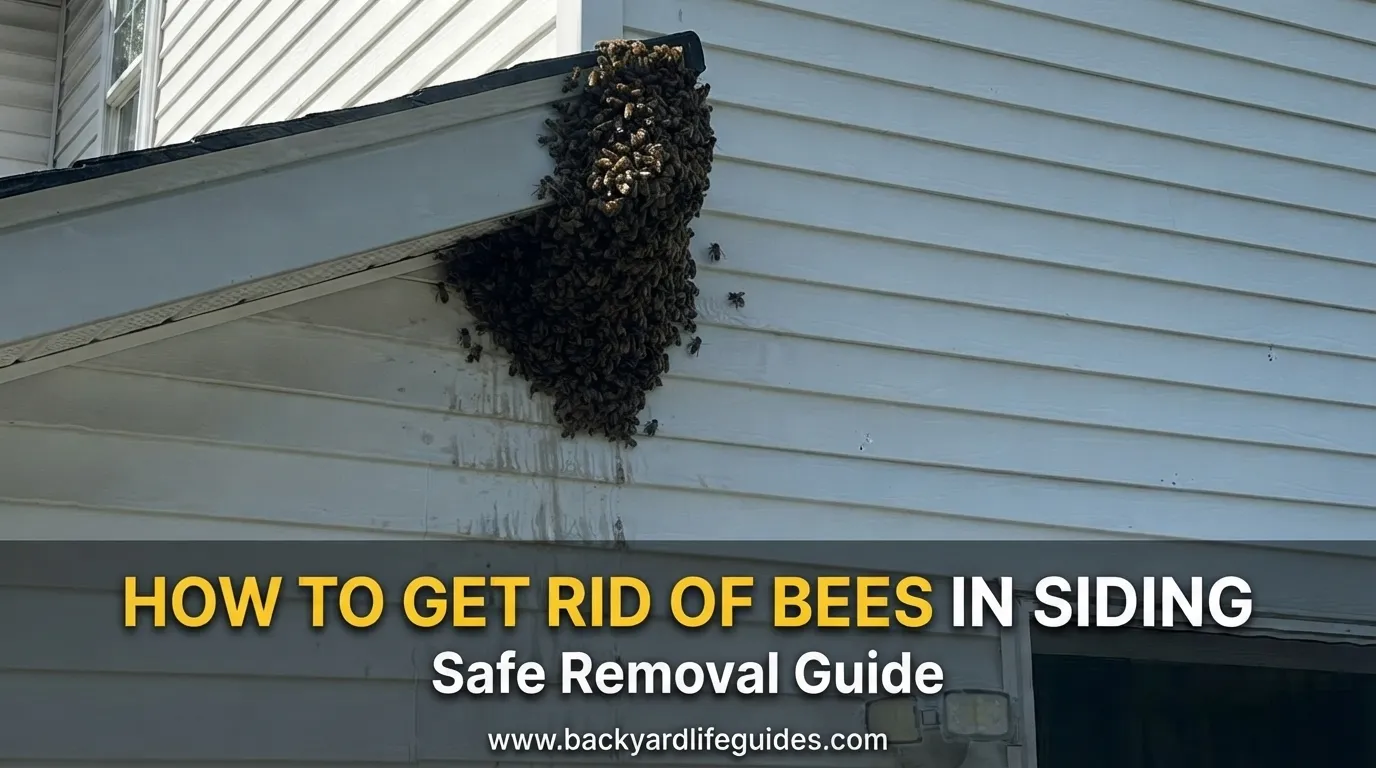
Hearing buzzing behind your siding or watching bees disappear into a wall opening can be unsettling. The important thing is not to seal the opening immediately. First, determine where the bees are entering, identify what type of insect you are dealing with, and decide whether the situation is suitable for DIY treatment or professional removal.
Bees can be beneficial pollinators, but a nest inside siding can become a household nuisance and a potential safety concern, particularly for people who are sensitive to stings.
The most practical approach is:
Identify → Locate → Protect → Treat or Relocate → Repair → Prevent
This sequence helps you address the current infestation without overlooking the damaged siding or openings that allowed the insects inside.
How to Find Bees in Siding
1. Watch the Bees During the Day
Start with observation rather than immediately spraying or opening the siding.
During their active daytime period, watch where the bees repeatedly enter and leave the exterior. A single bee flying around the house does not necessarily mean the nest is directly behind that location.
Look for:
- Repeated entry and exit activity
- Several bees using the same opening
- Concentrated activity around one section of siding
- Gaps around siding panels
- Cracks or damaged exterior areas
- Openings beneath eaves or around exterior components
The guidance specifically recommends observing activity during the daytime and marking suspected entry points with weather-resistant tape.
2. Inspect All Sides of the House
Do not assume the visible activity represents the entire infestation.
Walk around the exterior and inspect each side of the house. Multiple entry points or more than one nesting location may exist.
A simple inspection checklist is:
- Front wall
- Rear wall
- Left and right sides
- Eaves
- Siding seams
- Damaged siding
- Gaps and cracks
- Areas where siding meets other materials
Mark suspicious openings so you can return to them later.
Do Not Seal an Active Nest Immediately
One of the most important practical lessons from the material is the order of operations.
Do not simply caulk or close an active bee entrance before the infestation has been dealt with.
If bees are still active inside the siding, sealing the opening can leave the colony trapped inside the structure and make the underlying problem harder to resolve.
A better sequence is:
- Locate the active entry point.
- Determine what insect is present.
- Decide whether relocation or pest treatment is appropriate.
- Deal with the active infestation.
- Check the area for damage.
- Repair the opening.
- Seal vulnerable gaps to discourage another nest.
This approach is especially important when bees may have entered deeper behind the siding.
When Honeybees Should Be Relocated
Honeybees play an important role in pollination, so removal does not always have to mean extermination.
If you discover a honeybee colony inside your siding, consider contacting a professional beekeeper or qualified bee-removal specialist.
A beekeeper may be able to remove the colony and relocate it rather than killing the bees. The report specifically recommends professional relocation for honeybees and bumblebees where practical.
This is also a good option if you are uncomfortable working around a live colony.
How to Treat Bees in Siding
3. Prepare Before Handling the Infestation
If you are considering DIY treatment, personal protection comes first.
The guidance recommends:
- Protective gloves
- A suitable protective mask
- An N95 respirator for dust and particulates when using insecticide powder
- Avoiding unnecessary contact with the insects
- Keeping other people away from the work area
Powdered insecticides can contain substances that irritate the respiratory system, so avoid creating airborne dust and follow the product label carefully.
4. Choose the Treatment According to the Situation
The material discusses powdered insecticide containing active ingredients such as:
- Diatomaceous earth
- Boric acid
- Pyrethrin
It also recommends professional pest control when the infestation is difficult, aggressive, inaccessible, or beyond the homeowner’s comfort level.
Do not choose a chemical simply because it is mentioned online. Always check its label, intended use, application instructions, and safety requirements.
5. Treat Active Entry Points at Night
The recommended timing is after dark, when bees are generally less active and more likely to be inside the nest.
The source’s process involves applying treatment around the previously identified entry and exit points rather than randomly treating the entire exterior.
If an entry point is close to the ground, the source also discusses treating the nearby ground area.
Important: Nighttime does not make an active nest harmless. Wear appropriate protection and avoid disturbing the opening unnecessarily.
How Long Can Bee Removal Take?
The article states that, when its described treatment works as intended, the bees should die within 1 week.
That should not be treated as a universal guarantee.
The actual timeframe can vary depending on:
- Type of insect
- Size of the colony
- Location of the nest
- Accessibility
- Treatment used
- Whether multiple nests are present
- Whether the queen or reproductive colony has been dealt with
If activity continues after treatment, do not simply keep adding more product. Reassess the nest location and consider professional pest control.
What to Do After the Bees Are Gone
Removing the insects is only half of the job.
If an opening remains, another colony may eventually use the same vulnerable area.
6. Inspect the Siding for Damage
Look for:
- Loose panels
- Cracks
- Open seams
- Holes
- Damaged trim
- Gaps around penetrations
- Damaged wood behind siding
The presence of bees can reveal weaknesses in the exterior that were already present before the infestation.
7. Repair Damaged Siding
Minor damage may be repairable, while severely damaged siding may need replacement.
Repairing these areas can also improve the home’s exterior performance by reducing unwanted openings and air leakage.
If you are not experienced with siding repairs, hiring a professional can be safer and produce a more durable result.
8. Seal the Entry Points
Once the infestation has been resolved, close appropriate gaps and openings.
The goal is not simply to make the exterior look better. You want to eliminate the convenient access points that allowed insects to establish a nest in the first place.
6 Ways to Help Prevent Bees From Returning
1. Repair Loose or Damaged Siding
Loose siding and exterior gaps create opportunities for insects to enter.
Inspect your siding periodically and repair problems before they become nesting sites. The material also connects siding maintenance with improved exterior performance and reduced air leakage.
2. Consider Bee-Deterring Plants
The article discusses several plants traditionally used around the home’s perimeter as deterrents, including:
- Basil
- Mint
- Citronella
- Marigolds
- Geraniums
These should be considered a supplementary deterrent, not a replacement for repairing a physical entry point.
3. Use Mothballs Carefully
The source discusses mothballs as a scent-based deterrent around areas where bees are unwanted.
However, mothballs are pesticides and should not be treated as a casual outdoor product. Use them only according to their label and applicable local requirements.
4. Use Citronella Around Outdoor Sitting Areas
Citronella candles are discussed as a temporary way to make outdoor areas less attractive to insects.
They may be useful when you’re sitting on a:
- Deck
- Patio
- Porch
This is a temporary deterrent, not a solution for an established nest inside siding.
5. Try a Vinegar-Based Deterrent
The article discusses a simple mixture of:
1 part water + 1 part distilled white vinegar
It also mentions that some people add 1 tablespoon of dish soap to the mixture.
This type of spray should be viewed as a surface deterrent rather than a dependable method for eliminating an established colony inside a wall.
6. Get Professional Help When Needed
Professional help is especially sensible when:
- The nest is inaccessible.
- Bees are aggressive.
- The colony appears large.
- You cannot identify the insect.
- You are concerned about stings.
- Someone in the household has a serious allergy.
- Bees appear to be entering deeper into the structure.
- The siding may need to be removed to reach the nest.
A professional can also inspect for structural damage and identify additional entry points.
DIY Removal vs Professional Removal
| Situation | DIY approach | Professional help |
| A few insects outside | Observation and prevention | Usually unnecessary |
| Clear entry point | Possible inspection | Useful if uncertain |
| Honeybee colony | Avoid disturbing it | Strongly recommended for relocation |
| Aggressive insects | Higher risk | Recommended |
| Nest behind inaccessible siding | Difficult | Recommended |
| Multiple entry points | More complicated | Recommended |
| Structural damage | Limited DIY repair | Recommended if extensive |
| Sting allergy concern | Avoid exposure | Recommended |
The safest choice is not always the fastest DIY method. If reaching the nest requires opening siding or working close to an active colony, professional removal can prevent an otherwise small pest problem from becoming a personal-safety or structural problem.
Common Mistakes to Avoid
Sealing the Hole Too Early
Why it fails: You may trap an active colony inside the siding.
Better approach: Deal with the active infestation first, then repair and seal.
Spraying Every Bee You See
Why it fails: Flying bees do not necessarily reveal the nest location.
Better approach: Watch their movement and identify repeated entry and exit points.
Ignoring the Siding Damage
Why it fails: Another colony may use the same opening.
Better approach: Repair cracks, holes, loose panels, and other vulnerabilities after removal.
Treating Honeybees Like Aggressive Pests
Why it fails: You may destroy a beneficial colony unnecessarily.
Better approach: Consider professional relocation when honeybees are involved.
Working Without Protection
Why it fails: Stings, chemical exposure, and airborne insecticide dust can create unnecessary risks.
Better approach: Use suitable protective equipment and follow product instructions.
A Simple Bee-in-Siding Action Plan
If you need a quick checklist, follow this sequence:
Step 1: Observe bee activity during the day.
Step 2: Locate and mark entry points.
Step 3: Inspect the rest of the exterior.
Step 4: Identify the insect if possible.
Step 5: Consider beekeeper relocation for honeybees or bumblebees.
Step 6: Use appropriate pest-control treatment for aggressive or unsuitable-to-relocate insects.
Step 7: Treat active entry areas at the appropriate time and with proper protection.
Step 8: Monitor activity rather than assuming the problem is immediately solved.
Step 9: Inspect the siding and underlying area for damage.
Step 10: Repair and seal openings only after the infestation has been addressed.
Step 11: Add preventative measures around vulnerable areas.
Step 12: Call a professional if the nest is inaccessible, aggressive, extensive, or structurally complicated.
When Should You Call a Professional?
You should strongly consider professional help if you cannot determine what type of insect is nesting inside the siding.
Professional assistance is also worthwhile when the colony is located deep behind the siding, when removing the nest could require dismantling exterior materials, or when the insects are becoming aggressive.
If you have a known severe reaction to stings, do not make DIY removal your first choice.
Professionals can assess the nest, determine the safest treatment or relocation method, and inspect the surrounding structure afterward.
FAQs
How do I know if bees are inside my siding?
Repeated bee activity at the same crack, seam, or opening is a strong indication that insects may be using that location as an entrance. Watch the area during the daytime and look for consistent entry and exit activity.
Should I seal a bee hole in siding?
Not while the nest is active. First address the infestation or arrange professional removal. Once the colony has been dealt with, repair and seal the opening to discourage future nesting.
What time of day is best for treating bees in siding?
The guidance recommends nighttime, when bees are generally less active and more likely to be inside the nest.
How long does it take for the bees to die after treatment?
The source states that its described treatment should result in the bees dying within 1 week when everything works as expected. Actual results can vary by infestation.
Can I remove honeybees from siding without killing them? Yes it
YesIthe recommends contacting a professional beekeeper to relocate honeybees where possible.
What can I use to deter bees naturally?
The discusses equal parts water and distilled white vinegar and also mentions peppermint oil as a deterrent. These approaches are better considered supplemental deterrents rather than reliable solutions for an established nest.
Does vinegar kill bees in siding?
Vinegar is presented as a deterrent, not as a dependable solution for eliminating a colony hidden behind siding. An established nest requires a different removal strategy.
Can carpenter bees damage siding?
Carpenter bees can be associated with openings and wooden structural areas behind siding. If you suspect they have moved beyond the exterior surface, inspect the underlying material and consider professional assessment.
What should I do if bees keep coming back?
Look for the reason they are returning. Inspect for remaining gaps, cracks, damaged siding, or an untreated nest. Simply repelling visible bees without correcting the entry point may not solve the underlying problem.
Final Takeaway
Getting rid of bees in siding is not just about removing the insects you can see. The real solution is to find the entry point, identify the insect, handle the active nest safely, and then repair the opening that allowed the infestation to begin.
For honeybees and bumblebees, professional relocation can be the better option. For aggressive or difficult-to-reach colonies, professional pest control can reduce unnecessary risk.
If you choose a DIY approach, prioritize protective equipment, careful observation, correct treatment timing, and label instructions. After the infestation is resolved, inspect and repair the siding so the same problem does not return.
A successful solution therefore has two parts:
Remove the current infestation + prevent the next one.