5 Smoking Techniques for the Modern Kitchen: Complete Guide
- Disclosure: This post may include affiliate links. If you click a link and complete a purchase, I may earn a commission. Additionally, as an Amazon Associate, I earn from eligible purchases.
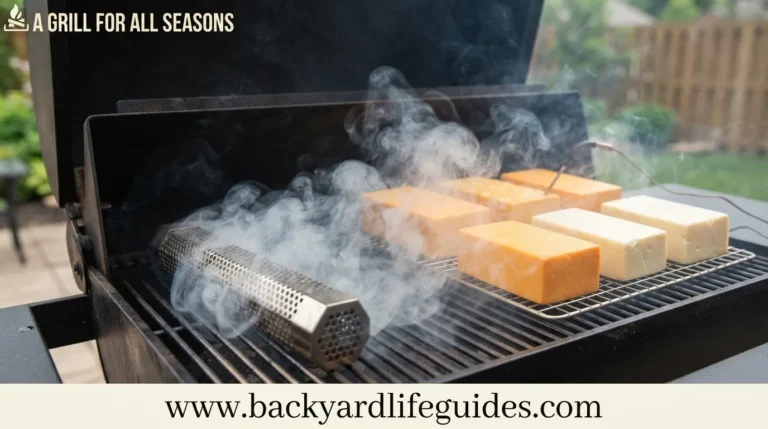
Smoking is no longer limited to traditional outdoor barbecue. Modern home cooking can use smoke to add depth to fish, meat, vegetables, mushrooms, nuts, and other ingredients while giving familiar dishes a more distinctive character.
The key is control. Good smoking is not simply about producing as much smoke as possible. Temperature, smoke intensity, cooking time, wood selection, airflow, humidity, and the type of food all influence the final result.
The most useful way to understand kitchen smoking is through the major techniques used across home cooking and professional culinary practice. These include hot smoking, cold smoking, hybrid or low-and-slow smoking, curing before smoking, and modern finishing techniques.
This guide brings those approaches together so you can understand what each technique does, which foods suit it, what equipment is useful, and where careful temperature and food-safety control matter most.
5 Smoking Techniques for the Modern Kitchen
1. Hot Smoking
Hot smoking combines smoke and heat. Unlike cold smoking, the food is exposed to enough heat to cook while it absorbs smoky flavor.
The verified home-smoking guidance places hot smoking around 80–120°C, while the broader meat-smoking guide gives a higher range of approximately 225–275°F (107–135°C) for hot smoking.
The exact temperature depends on the food and the smoking approach, but the central idea remains the same: the heat source cooks the food while smoke contributes flavor.
Hot smoking works particularly well with:
- Salmon
- Mackerel
- Haddock
- Ham
- Eel
- Pork
- Brisket
- Poultry
- Mushrooms
- Vegetables
For smaller fish fillets, smoking may take around 1–3 hours. Large cuts such as brisket can require approximately 8–16 hours, making temperature stability especially important.
A successful hot-smoking process depends on more than time. Temperature stability, airflow, humidity, smoke density, and internal food temperature all influence the finished result.
2. Cold Smoking
Cold smoking is fundamentally different because the food is exposed to smoke without the same cooking temperatures used during hot smoking.
The home-smoking guide identifies approximately 25°C as the cold-smoking temperature, while the broader smoking and curing guide describes cold smoking as remaining below approximately 90°F (32°C).
Because the food is not cooked in the same way as hot-smoked food, cold smoking is closely associated with curing and preservation.
Foods suitable for this style can include:
- Fish
- Ham
- Eel
- Certain meats
- Other cured ingredients
Cold smoking can take a few hours when a lighter smoke profile is desired or extend to multiple days for deeper smoke development.
The most important distinction is that cold smoking should not be treated as simply “hot smoking at a lower temperature.” The process has different food-safety considerations because the food remains essentially uncooked.
3. Hybrid or Low-and-Slow Smoking
Hybrid smoking sits between traditional hot smoking and colder smoking methods.
The broader guide places this approach around 180–225°F (82–107°C). Its purpose is to combine tenderness with smoke penetration.
This approach is especially useful when you want a substantial cut to develop a smoky exterior and deeper flavor while gradually becoming tender.
The technique emphasizes:
- Stable temperature
- Controlled smoke
- Longer cooking
- Moisture management
- Airflow
- Internal temperature monitoring
It can be particularly useful for larger cuts where simply increasing the heat would change the texture too quickly.
4. Curing Before Smoking
Curing is not technically identical to smoking, but it is an important part of the smoking process for certain foods, particularly when using cold-smoking techniques.
The supplier identifies 3 main curing methods:
| Curing method | Basic approach | Example foods |
|---|---|---|
| Dry curing | Salt-based curing without a liquid cure | Prosciutto, pancetta, dry-cured bacon |
| Wet curing | Brining or liquid-based curing | Corned beef, brined turkey |
| Equilibrium curing | Controlled curing based on the desired balance of ingredients | Various cured meats |
Curing can prepare food for smoking while also contributing to flavor and preservation.
This is particularly important with cold smoking because the process does not reach pasteurizing temperatures. The supplied guide therefore stresses that curing or salting is required before cold smoking in those applications.
For anyone moving beyond basic hot smoking, understanding the relationship between curing and smoking is one of the most useful steps.
5. Modern Smoking and Finishing
The fifth approach moves smoking away from the traditional idea of putting a large piece of meat into a smoker for hours.
Modern culinary applications can use smoke more selectively.
The supplied fine-dining identifies 3 modern trends:
- Micro-smoking or tableside finishing
- House-curing
- Global flavor fusion
Instead of making smoke the dominant flavor, chefs may use a smaller amount to accent premium ingredients or finish a dish.
Examples mentioned in the supplied material include:
- Miso-glazed black cod
- Toro tartare
- Caviar
- Uni pasta
- Miyazaki A5 Wagyu
- Delicate seafood
- Japanese-inspired preparations
This approach follows an important principle: subtlety.
Too much smoke can create an acrid or overpowering flavor that hides the natural character of the food. Modern smoking therefore often focuses on using smoke as an accent rather than allowing it to dominate every ingredient.
Hot Smoking vs Cold Smoking
The difference between the two main smoking methods becomes much clearer when they are placed side by side.
| Feature | Hot Smoking | Cold Smoking |
|---|---|---|
| Typical temperature | 80–120°C / 225–275°F depending on method | Around 25°C / below ~90°F |
| Main purpose | Cook and flavor | Smoke and preserve/season |
| Food cooked by smoke process? | Yes | Essentially no |
| Typical duration | Hours | Hours to multiple days |
| Curing relationship | Not always required | Important for applicable foods |
| Main equipment examples | Electric or stove-top smoker | Electric smoker and controlled smoking setup |
The biggest practical difference is simple: hot smoking cooks, while cold smoking does not provide the same cooking process.
Choosing the Right Smoking Equipment
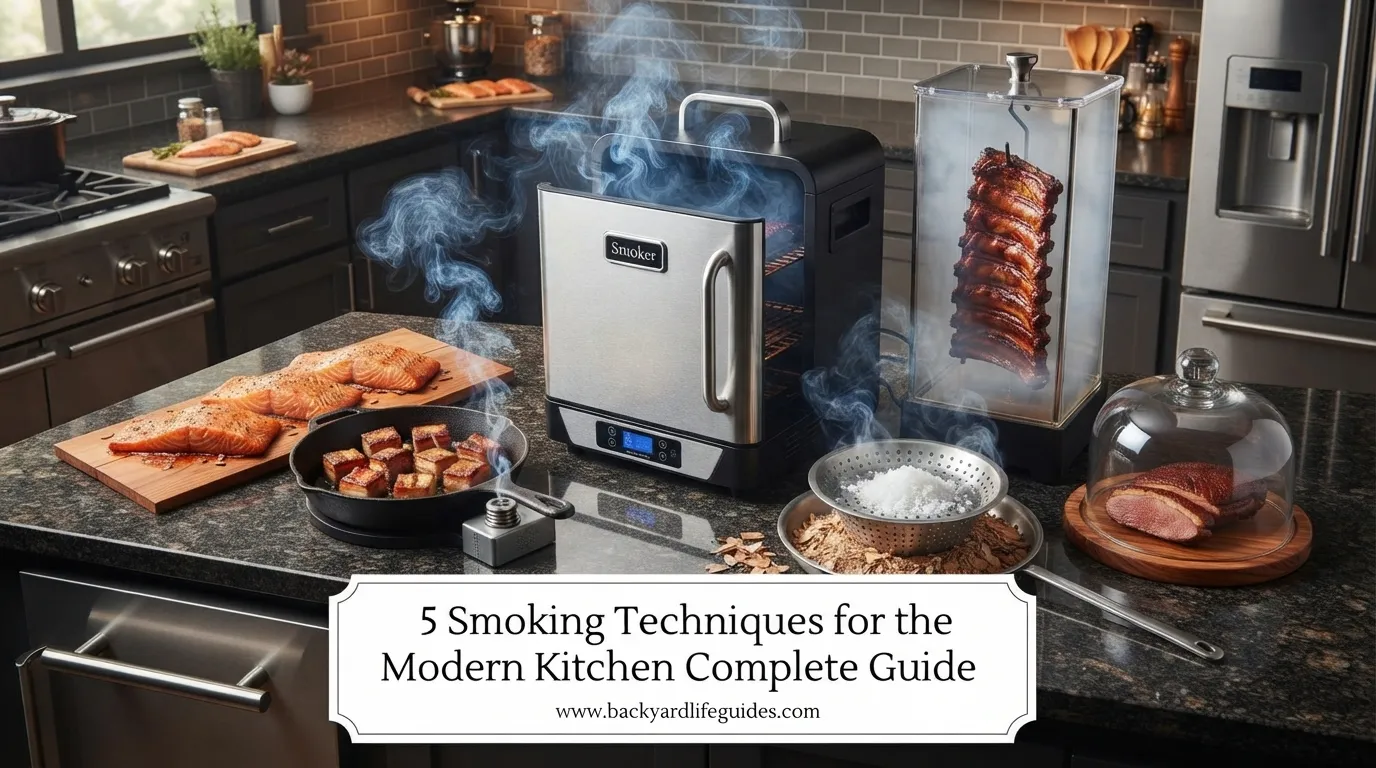
You do not necessarily need a large outdoor smoker to explore smoking.
The supplied home-smoking material identifies 2 broad home smoker types.
Electric Smokers
Electric smokers are particularly useful for beginners because they offer more precise control over heat and smoke.
They can be used for both hot and cold smoking applications, according to the supplier.
Their biggest advantage is control.
When smoking requires stable conditions for an extended period, being able to manage temperature consistently can make the process easier.
Stove-Top Smokers
Stove-top smokers use direct heat from a hob.
They are:
- Portable
- Compact
- Designed primarily for hot smoking
- Suitable for bringing smoking into a kitchen environment
They offer a convenient way to experiment with smoky flavors without using a large smoking setup.
Larger Smoking Equipment
For more advanced applications, the supplied material identifies several larger equipment categories:
- Offset smokers
- Pellet smokers
- Commercial smokehouses
- Convection units
An offset smoker generally represents a more hands-on approach, while pellet smokers offer a more automated experience. Commercial smokehouses and convection units are more appropriate for larger-scale or professional applications.
Choosing Wood for Different Foods
Wood selection has a major influence on the character of smoke.
The supplied material identifies 6 important woods:
| Wood | Smoke character | Suggested pairing |
|---|---|---|
| Hickory | Bold and bacon-like | Beef and pork |
| Oak | Versatile and steady | Large cuts and long smoking |
| Apple | Soft and fruity | Fish and poultry |
| Cherry | Soft and fruity | Fish and poultry |
| Maple | Mild, sweet-style profile | Various smoking applications |
| Mesquite | Intense and peppery | Use sparingly |
The easiest way to choose wood is to think about the strength of the food itself.
A delicate fish generally benefits from a softer smoke profile, while beef and pork can stand up to stronger smoke.
Hickory provides a bold profile, whereas apple and cherry are associated with softer, fruitier smoke. Oak is described as versatile and steady for larger cuts and longer smoking.
Mesquite is considerably more intense, so the supplier recommends using it sparingly.
Foods You Can Smoke in a Modern Kitchen
Smoking does not have to mean meat alone.
Across the verified material, the food range includes fish, meat, vegetables, mushrooms, nuts, and other ingredients.
Fish and Seafood
Examples include:
- Salmon
- Mackerel
- Haddock
- Eel
- Black cod
- Delicate seafood
- Toro
Fish is particularly useful for demonstrating the difference between gentle and aggressive smoke because excessive smoke can quickly overpower delicate flavors.
Meat and Poultry
The supplied material includes:
- Ham
- Pork
- Brisket
- Poultry
- Chicken
- Wagyu
- Bacon
- Pancetta
- Prosciutto
- Sausages
Larger cuts require more patience and temperature management, while cured meats bring smoking into the broader world of preservation and charcuterie.
Vegetables and Plant-Based Ingredients
The verified examples include:
- Mushrooms
- Enoki mushrooms
- Baby beetroot
- Tomatoes
- Walnuts
These ingredients demonstrate how smoking can be used outside traditional barbecue.
More Experimental Ingredients
The home-smoking material also mentions:
- Ice cubes
- Cocktail glasses
- Hay
- Herbal teas
- Aromatic wood chips
These applications show how smoke can become part of presentation, aroma, and finishing rather than simply being a cooking method.
How Much Smoke Should You Use?
More smoke does not automatically mean better flavor.
One of the strongest principles from the supplied culinary is subtlety. Heavy smoke can become acrid and overpower the other elements of a dish.
Think about smoke as another seasoning.
If the food has a delicate flavor, a softer wood and lighter smoke may be more appropriate. Stronger ingredients and larger cuts can tolerate a more substantial smoke profile.
The goal is not to make every bite taste the same. The goal is to create enough smoke character to complement the food.
Smoking Time: Why the Number Changes
There is no single smoking time that works for every ingredient.
The supplied figures demonstrate how widely smoking times can vary:
- Small fish fillets: 1–3 hours
- Large cuts such as brisket: 8–16 hours
- Cold-smoking applications: a few hours to multiple days
The difference comes from the method, food size, desired smoke intensity, and whether the process involves cooking or curing.
For that reason, time alone should never be treated as the only measurement for a smoking process. The broader smoking guide emphasizes internal meat temperature alongside temperature stability, airflow, humidity, and smoke density.
Food Safety and Temperature Control
Smoking combines food, heat, smoke, moisture, and time, so careful control is essential.
The supplied material recommends refrigeration below 40°F (4°C) for applicable food-storage situations and emphasizes using a calibrated probe thermometer.
Important control points include:
- Keep appropriate foods refrigerated below 40°F / 4°C
- Use a calibrated probe thermometer
- Monitor internal food temperature
- Maintain controlled smoking temperatures
- Pay attention to humidity
- Maintain appropriate airflow
- Measure curing salts precisely when curing is involved
Cold smoking requires particular attention because the food does not reach the same cooking temperatures associated with hot smoking.
This is why the relationship between curing, refrigeration, temperature, and smoking time should never be ignored.
Smoking and Charcuterie
Smoking becomes even more interesting when combined with charcuterie.
The supplier identifies 4 broad charcuterie categories:
- Whole-muscle cures
- Bacon and slab cures
- Dry sausages
- Pâtés and terrines
Examples such as prosciutto, pancetta, dry-cured bacon, and other cured products demonstrate how smoking can become part of a much broader preservation process.
This also explains why smoking should not always be viewed as a simple barbecue technique. It can connect cooking, curing, preservation, fermentation, and presentation.
Japanese-Inspired Smoking and Curing
The supplied material also identifies a modern Japanese-inspired direction.
Important ingredients and flavor concepts include:
- Miso
- Shiso
- Soy
- Yuzu
- Sake
- Delicate seafood
- Umami
The idea is to combine traditional preservation techniques with refined flavor combinations.
Instead of covering an ingredient in heavy smoke, the smoke can become one layer among several flavors.
For example, delicate seafood can be combined with Japanese-inspired ingredients where smoke adds depth without becoming the primary taste.
Common Mistakes When Smoking Food
Using Too Much Smoke
One of the clearest mistakes is assuming that more smoke always produces better results.
It can instead create an acrid, overpowering flavor.
Ignoring Temperature
Smoking is highly dependent on temperature. Hot smoking, cold smoking, and hybrid smoking operate in different ranges.
Treating all three methods as interchangeable can lead to poor results.
Choosing an Overly Strong Wood
Mesquite, for example, has an intense and peppery character. Delicate foods may be overwhelmed when the smoke is too aggressive.
Relying Only on Time
The difference between 1–3 hours for small fish and 8–16 hours for brisket shows why food size and type matter.
Time should be considered alongside temperature and the food’s internal condition.
Treating Cold Smoking Like Cooking
Cold smoking does not provide the same cooking effect as hot smoking.
Where applicable, curing and salting become important because the food remains essentially raw during the smoking process.
A Simple Modern-Kitchen Smoking Workflow
For someone new to smoking, the following workflow brings the main concepts together.
Step 1: Choose the Food
Start by deciding whether you are working with fish, meat, poultry, vegetables, mushrooms, nuts, or another ingredient.
Step 2: Select the Smoking Method
Choose between:
- Hot smoking for cooking and smoke flavor
- Cold smoking for applicable cured foods
- Hybrid smoking for low-and-slow cooking
- Modern finishing for subtle smoke applications
Step 3: Choose Your Equipment
For home use, consider an electric smoker or stove-top smoker. Larger offset, pellet, commercial, and convection systems provide different levels of control and capacity.
Step 4: Select the Wood
Match the smoke intensity with the food.
Use softer fruitwood profiles for delicate ingredients and stronger woods for foods that can handle a more substantial smoke character.
Step 5: Control the Temperature
Use the appropriate smoking range for the chosen technique and maintain stable conditions.
Step 6: Monitor the Food
For applicable meats, use a calibrated probe thermometer and monitor internal temperature rather than relying only on elapsed time.
Step 7: Keep Smoke Balanced
Aim for complementary smoke rather than maximum smoke.
The finished food should still taste like the ingredient you started with.
Quick Reference: Smoking Numbers at a Glance
| Smoking detail | Key number |
|---|---|
| Main techniques covered | 5 |
| Hot-smoking home range | 80–120°C |
| Cold-smoking reference | 25°C |
| Cold-smoking upper reference | Below ~90°F / 32°C |
| Hot-smoking meat range | 225–275°F / 107–135°C |
| Hybrid range | 180–225°F / 82–107°C |
| Small fish smoking time | 1–3 hours |
| Large brisket smoking time | 8–16 hours |
| Curing methods | 3 |
| Charcuterie categories | 4 |
| Modern smoking trends | 3 |
| Important refrigeration level | Below 40°F / 4°C |
| Main home smoker types | 2 |
| Key wood examples | 6 |
Frequently Asked Questions
What are the main smoking techniques for a modern kitchen?
The main approaches are hot smoking, cold smoking, hybrid or low-and-slow smoking, curing before smoking, and modern smoke finishing.
What temperature is hot smoking?
The supplied home-smoking guide gives 80–120°C, while the broader meat-smoking guide provides approximately 225–275°F (107–135°C) for hot smoking.
What temperature is cold smoking?
One supplied home-smoking source identifies approximately 25°C, while the broader smoking guide describes cold smoking as below approximately 90°F (32°C).
How long does it take to smoke food?
The time depends on the food and technique. Small fish fillets may take 1–3 hours, while large cuts such as brisket may take 8–16 hours. Cold smoking can range from several hours to multiple days.
What wood is best for smoking?
It depends on the food. Hickory is bold and suits beef and pork, while apple and cherry provide softer, fruitier profiles suited to fish and poultry. Oak is versatile, while mesquite is intense and should be used sparingly.
Can you smoke vegetables?
Yes. The supplied examples include mushrooms, enoki mushrooms, baby beetroot, and tomatoes, showing that smoking can extend well beyond meat and fish.
Is cold smoking the same as cooking?
No. Cold smoking keeps the food essentially raw rather than cooking it like hot smoking. Because of this, curing and appropriate food-safety control are particularly important for applicablecold-smokedg foods.
What equipment can be used for home smoking?
The supplied home-smoking material identifies electric smokers and stove-top smokers. Broader equipment options include offset smokers, pellet smokers, commercial smokehouses, and convection units.
Why does smoked food sometimes taste too strong?
Excessive smoke can produce an acrid and overpowering flavor. The most useful approach is to control smoke density and choose a wood whose intensity matches the food.
Do you need a thermometer for smoking?
A calibrated probe thermometer is specifically recommended in the supplied smoking and curing guidance, particularly when monitoring internal temperatures and maintaining controlled smoking conditions.
Final Thoughts
Modern kitchen smoking is less about producing the heaviest possible smoke and more about precision.
The 5 approaches covered here show how broad the technique can be: hot smoking cooks food while adding smoke, cold smoking works alongside curing, hybrid smoking focuses on low-and-slow tenderness, curing expands smoking into preservation and charcuterie, and modern finishing techniques use smoke as a controlled accent.
The numbers help put the methods into perspective. Hot smoking can range around 80–120°C, cold smoking may sit around 25°C, hybrid smoking around 180–225°F, small fish can take 1–3 hours, and large cuts such as brisket may require 8–16 hours.
The best results come from treating smoke as a carefully controlled ingredient. Choose the right method, equipment, wood, temperature, and duration for the food, and focus on balance rather than simply maximizing smoke.