
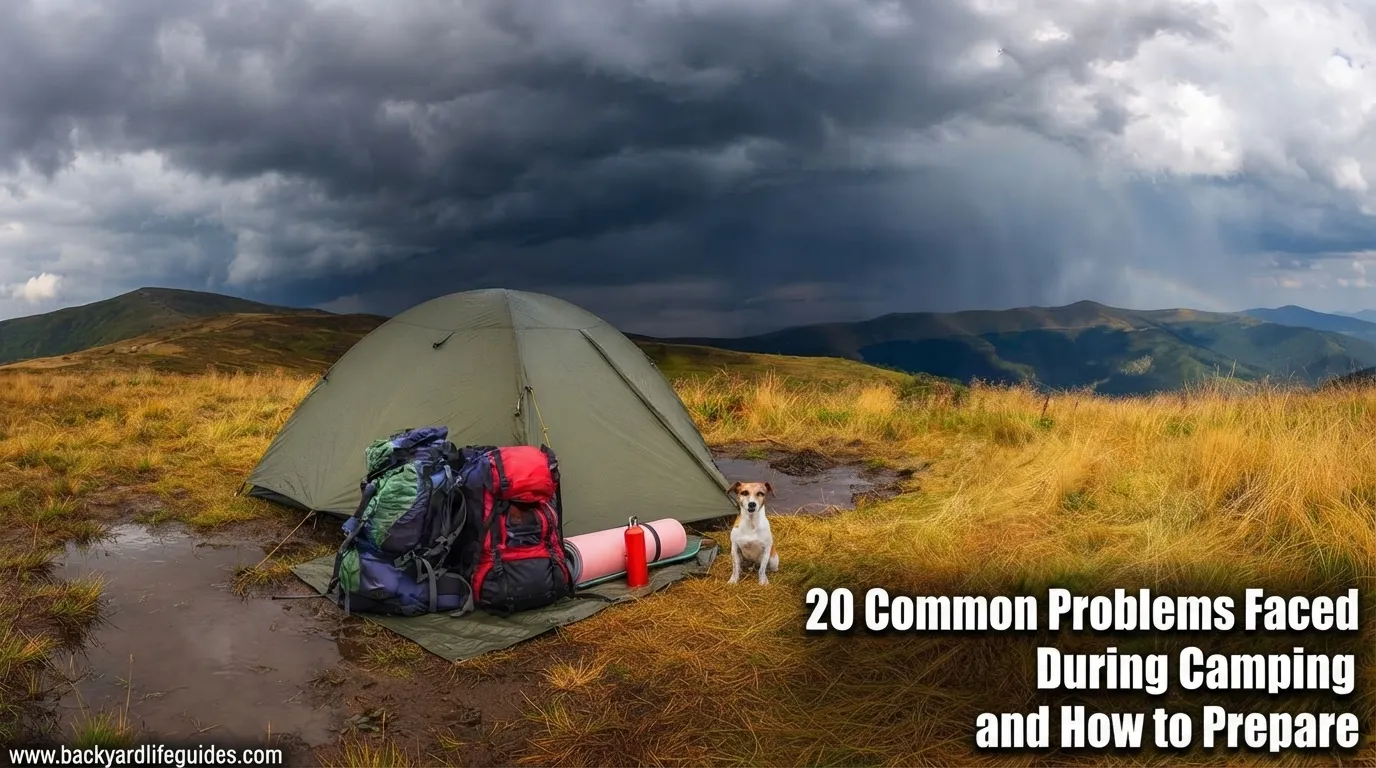
20 Common Problems Faced During Camping and How to Prepare
- Disclosure: This post may include affiliate links. If you click a link and complete a purchase, I may earn a commission. Additionally, as an Amazon Associate, I earn from eligible purchases.
Camping can be one of the best ways to enjoy nature, but outdoor trips rarely go exactly as planned. Unexpected weather, forgotten gear, insects, wildlife, injuries, food shortages, and navigation problems can quickly turn a relaxing trip into a stressful experience.
The good news is that most camping problems are easier to handle when you prepare before leaving home.
This guide covers 20 common problems faced during camping and explains practical ways to prevent or manage them. Whether you are a first-time camper or an experienced outdoor traveler, these tips can help you make your campsite safer, more comfortable, and easier to manage.
1. Unexpected Bad Weather
Weather can change quickly when you are outdoors. A forecast may show clear skies when you leave home, but rain, strong wind, thunderstorms, cold temperatures, or extreme heat can develop later.
Before your trip, check the forecast for your camping location and the days you will be there. Do not prepare only for the expected conditions.
| Weather problem | Useful preparation |
|---|---|
| Rain | Waterproof tent, rain jacket, tarp |
| Cold | Warm layers, suitable sleeping bag |
| Heat | Water, sunscreen, breathable clothing |
| Wind | Secure tent stakes and guy lines |
| Storms | Monitor weather updates and local warnings |
Pack at least one extra layer of clothing and protect important items from moisture.
Tip: If severe weather is forecast, changing your camping plans is often safer than trying to manage dangerous conditions at the campsite.
2. Tent Is Difficult to Set Up
A complicated tent can become frustrating when you are tired, dealing with wind, or arriving after dark.
First-time campers should practice setting up the tent before the trip. Read the manufacturer’s instructions and understand where the poles, stakes, clips, and guy lines belong.
If possible, complete one full setup in your backyard or another suitable location.
Keep the instructions with your camping equipment. If you borrowed the tent, ask the owner how it should be assembled.
Choose a Suitable Tent Size
Tent capacity is another common problem. A tent that technically sleeps several people may not provide enough comfortable living space for everyone’s gear.
A useful guideline:
| Campers | Suggested floor space |
|---|---|
| 1 person | 30–40 sq ft |
| 2 people | 50–60 sq ft |
| 3+ people | Around 80 sq ft |
Consider both sleeping capacity and equipment storage when choosing a tent.
3. The Tent Is Too Small
A cramped tent can make sleeping uncomfortable and leave little room for backpacks, clothing, and other equipment.
Before buying or borrowing a tent, check its stated capacity and dimensions. Think about how many people will actually sleep inside and how much gear they will bring.
For longer trips, having additional interior space can make a significant difference.
Remember: A two-person tent does not necessarily feel spacious with two adults and all their equipment inside.
4. Getting Lost While Hiking
Getting lost is one of the more serious camping problems because unfamiliar terrain can make returning to camp difficult.
Before starting a hike, study the route and identify recognizable landmarks, trails, rivers, roads, or other natural features.
Carry a map and compass when appropriate, even if you normally rely on a phone.
Before Leaving Camp
Tell someone where you are going and approximately when you expect to return.
Avoid wandering away from marked trails without understanding the terrain. If you are hiking with other people, stay together and communicate when someone wants to stop or change direction.
Do not rely entirely on your phone. Battery failure, poor reception, or damaged equipment can leave you without digital navigation.
5. Running Out of Food
Food shortages can happen when a trip lasts longer than expected or when bad weather prevents you from leaving the campsite.
Plan meals before departure and pack enough food for the expected duration of the trip.
It is also sensible to carry a small amount of extra non-perishable food for unexpected delays.
Good emergency options include:
- Granola bars
- Canned food
- Dried foods
- Other shelf-stable snacks
If carrying additional food creates a weight problem, reconsider the type of food rather than simply reducing your emergency supply.
6. Forgetting Essential Camping Gear
Forgetting a small item can be inconvenient. Forgetting something important can seriously affect the trip.
Start preparing a packing list about 1 week before departure. This gives you time to identify missing equipment rather than discovering the problem at the campsite.
Basic Camping Checklist
- Tent
- Sleeping bag
- Warm clothing
- Hiking shoes
- Food
- Drinking water
- Cooking equipment
- First-aid kit
- Flashlight
- Phone charger
- Navigation equipment
- Personal medication
- Waterproof storage bags
Check the list again immediately before leaving.
7. Getting Too Cold at Night
Daytime temperatures can be comfortable while nighttime conditions become surprisingly cold.
This can happen even during warmer seasons, particularly in locations where temperatures drop significantly after sunset.
Bring:
- Warm layers
- Jacket
- Appropriate sleeping bag
- Extra blanket or clothing
- Dry socks
Do not depend on a campfire as your only source of warmth.
A proper sleeping system is more reliable and helps you stay comfortable throughout the night.
8. Bugs, Bites, and Stings
Mosquitoes, ticks, chiggers, fire ants, and wasps can make camping unpleasant and may create health concerns.
Reduce exposure by wearing appropriate clothing and using insect repellent when suitable.
You can also:
- Avoid unnecessary contact with tall grass
- Keep food covered
- Clean food spills quickly
- Use screens or mosquito nets
- Keep sleeping areas protected
Inspect clothing and exposed skin after hiking through vegetation, particularly in areas known for ticks.
9. Poisonous Plants
Not every plant around a campsite is harmless. Poison ivy, poison oak, and poison sumac can cause an uncomfortable skin reaction after contact.
A simple rule commonly used for recognizing poison ivy and similar plants is:
“Leaves of three, let it be.”
Avoid touching unfamiliar plants, berries, or leaves.
Teach children not to pick wild plants, even if they look attractive.
If you are unsure whether a plant is safe, leave it alone rather than experimenting.
10. Someone Gets Sick or Injured
Minor injuries can happen while hiking, cooking, setting up a tent, or moving around a campsite.
A properly prepared first-aid kit should be part of your camping equipment.
Useful supplies can include:
- Bandages
- Antiseptic wipes
- Adhesive tape
- Antibacterial ointment
- Tweezers
- Appropriate pain relief
- Other personally required medical supplies
Learn basic first aid before a remote camping trip.
For serious injuries or symptoms, seek professional medical assistance rather than relying on a basic first-aid kit.
11. Fire or Campfire Problems
Campfires can provide warmth and a place to cook, but they require careful management.
Before lighting a fire, check whether campfires are permitted at your location. Local restrictions can change because of dry conditions or wildfire risk.
Keep water or sand available for extinguishing the fire.
Never leave a campfire unattended.
Before going to sleep or leaving the campsite, make sure the fire is completely extinguished.
Campfire Cooking Preparation
Useful cooking equipment may include:
- Camping stove or grill
- Pot
- Pan
- Tongs
- Spatula
- Knife
- Cutting board
- Can opener
Keep raw and cooked food separated and store perishables appropriately.
12. Nearby Wildlife
Wild animals are part of the outdoor environment, but problems can occur when campers accidentally attract them.
Food, garbage, cooking smells, and improperly stored supplies can attract wildlife.
Depending on the location, animals may include bears, skunks, insects, and other wildlife.
Protect Your Campsite
- Store food securely.
- Keep garbage contained.
- Clean cooking equipment.
- Never intentionally feed wildlife.
- Follow local food-storage requirements.
- Use bear-resistant storage where required.
If you encounter wildlife, maintain a safe distance and avoid approaching or cornering the animal.
13. A Bear Gets Into Your Food
Food storage deserves special attention in areas where bears are present.
A bear that discovers food at a campsite may return later because it has learned that campsites can provide an easy food source.
Follow the rules established by the campground or park. If bear-resistant containers are required, use them correctly.
Do not leave food, food waste, or strongly scented items exposed around your sleeping area.
Important: Never try to approach wildlife to take photographs.
14. Skunks or Other Nocturnal Animals Visit Camp
Leaving food scraps or trash outside overnight can attract animals such as skunks.
Keep food and garbage secured before going to sleep.
A flashlight is useful for checking the area around your campsite after dark. Avoid approaching an animal simply because it is near your tent or cooking area.
The safest approach is to give wildlife plenty of space.
15. Campground Is Too Noisy or Crowded
Camping does not always mean complete peace. Popular campgrounds can become busy, particularly during summer and spring-break periods.
Nearby campers may talk, play music, or make other noise.
Good campground etiquette helps everyone enjoy the trip.
Be a Considerate Camper
- Respect quiet hours.
- Keep music at a reasonable level.
- Stay within your campsite.
- Keep children and pets under control.
- Clean up food and waste.
- Avoid unnecessary vehicle noise.
If you want a quieter experience, researching campground reviews and considering less busy periods can help.
16. Your Campsite Is Fully Booked
Popular campgrounds can fill up months in advance, especially during busy seasons.
Avoid waiting until the last moment to reserve a campsite.
Before traveling, check:
- Availability
- Cancellation policies
- Campsite rules
- Maximum occupancy
- Fire restrictions
- Available facilities
If a campground is full, check whether cancellations become available rather than assuming there are no options.
17. Camping Equipment Breaks
Equipment can fail when it is exposed to wind, rain, repeated use, or rough terrain.
Inspect important gear before leaving home.
Pay special attention to:
- Tent poles
- Stakes
- Guy lines
- Cooking equipment
- Flashlights
- Batteries
- Sleeping equipment
A small repair kit can be extremely useful.
Helpful Backup Supplies
- Multi-tool
- Duct tape
- Extra tent stakes
- Spare batteries
- Portable charger
- Basic replacement parts
Testing your equipment before departure allows you to discover problems while you are still at home.
18. Vehicle Trouble or Getting Stranded
Camping trips involving driving can be disrupted by a flat tire, vehicle failure, severe weather, or difficult road conditions.
Before leaving, inspect the vehicle and make sure you have the equipment necessary for the journey.
Consider carrying:
- Spare tire
- Basic tools
- Extra food
- Water
- Necessary medication
- Charged phone
- Portable charger
If your route passes through remote areas, make sure someone knows your planned destination and approximate schedule.
19. Sunburn and Dehydration
Sun exposure can become a problem even when the temperature does not feel extremely hot.
Cloudy or cool conditions do not eliminate the need for sun protection.
Use suitable sunscreen, wear protective clothing, and drink enough water throughout the day.
During hiking or other physical activities, carry water with you instead of assuming that a reliable water source will be available.
Hydration should be part of your camping plan, not an afterthought.
20. Your Dog Will Not Stop Barking
Camping can be unfamiliar for dogs. New sounds, wildlife, people, and smells may cause excessive barking.
Before taking a dog on a longer camping trip, introduce it gradually to outdoor environments.
A useful approach is to spend time with the dog in a large outdoor area or park and observe how it reacts to unfamiliar surroundings.
Bring appropriate supplies and follow campground pet rules.
A calm and prepared dog makes the campsite more enjoyable for both you and neighboring campers.
What to Pack to Prevent Most Camping Problems
You do not need to pack your entire house to be prepared. The goal is to bring equipment that solves realistic problems without making your load unnecessarily heavy.
Essential Safety Gear
- First-aid kit
- Flashlight
- Extra batteries
- Map
- Compass
- Phone
- Portable charger
- Emergency communication device when appropriate
Shelter and Clothing
- Properly sized tent
- Sleeping bag
- Warm layers
- Rain jacket
- Extra socks
- Weather-appropriate footwear
- Tarp or suitable shelter protection
Food and Water
- Drinking water
- Food for the planned trip
- Extra non-perishable food
- Cooking equipment
- Cooler when appropriate
- Food-storage containers
Repair and Backup Supplies
- Multi-tool
- Duct tape
- Extra tent stakes
- Spare batteries
- Basic equipment repair items
A well-planned packing list is often more valuable than simply carrying more equipment.
How to Prepare for a Camping Trip
Good preparation does not have to be complicated. Follow these steps before leaving.
1. Check the Location
Research the campsite, surrounding area, weather, wildlife, facilities, and local rules.
2. Check the Weather
Look at the forecast shortly before departure and prepare for conditions beyond the ideal forecast.
3. Inspect Your Equipment
Set up your tent, test your lights, inspect cooking equipment, and check other essential gear.
4. Prepare Your Food
Plan meals and carry enough food for the expected trip plus a reasonable emergency supply.
5. Build a Packing List
Start the list about 1 week before departure and review it again before leaving.
6. Prepare for Emergencies
Tell someone about your destination and expected schedule, particularly when traveling to remote areas.
7. Learn Basic Outdoor Safety
Understand fire safety, wildlife behavior, navigation, first aid, and campground rules before the trip.
Frequently Asked Questions
What are the most common problems faced during camping?
Common problems include bad weather, tent setup difficulties, getting lost, food shortages, insects, injuries, wildlife encounters, cold nights, equipment failures, and overcrowded campsites.
How can I avoid camping problems?
The best approach is to prepare before leaving. Check the weather, inspect your equipment, create a packing list, plan meals, understand campsite rules, and prepare for emergencies.
How early should I make a camping packing list?
Starting about 1 week before your trip gives you enough time to identify missing equipment and purchase or replace essential items.
What size tent should I use?
A useful guideline is around 30–40 sq ft for one person, 50–60 sq ft for two people, and about 80 sq ft for three or more people. Actual comfort also depends on gear and personal space.
How do I prepare for bad camping weather?
Check the forecast and prepare for rain, wind, cold, or heat that could occur during the trip. Bring appropriate clothing, shelter protection, and a suitable sleeping system.
What should I do if I get lost while camping?
Stay calm, avoid unnecessary wandering, and use your map, compass, or other reliable navigation tools. Tell someone your planned route before leaving camp so they know where you intended to go.
How do I keep wildlife away from my campsite?
Secure food and garbage, clean cooking areas, follow local wildlife rules, and never feed wild animals. In bear country, follow the area’s specific food-storage requirements.
Should I bring extra food when camping?
Yes. Bringing a reasonable amount of extra non-perishable food can help if bad weather, vehicle trouble, or another unexpected problem extends your trip.
What should be in a camping first-aid kit?
A basic kit can include bandages, antiseptic wipes, adhesive tape, antibacterial ointment, tweezers, and appropriate medication. Customize it according to your trip and personal needs.
Can camping problems be completely avoided?
Not always. Outdoor conditions are unpredictable. The goal is not to eliminate every problem but to reduce preventable risks and know how to respond when something goes wrong.
Final Thoughts
Camping problems are often less stressful when you expect them before they happen. A sudden rainstorm, cold night, missing item, insect bite, equipment failure, or food shortage does not have to ruin the entire trip.
The most useful preparation is simple: check the weather, test your equipment, pack deliberately, secure food, understand local rules, carry basic safety supplies, and tell someone about your plans.
You do not need an enormous amount of gear to camp confidently. You need the right preparation for the conditions, location, people, and activities involved.
A thoughtful plan can turn many common camping problems into manageable inconveniences—and help you spend more time enjoying the outdoors.