
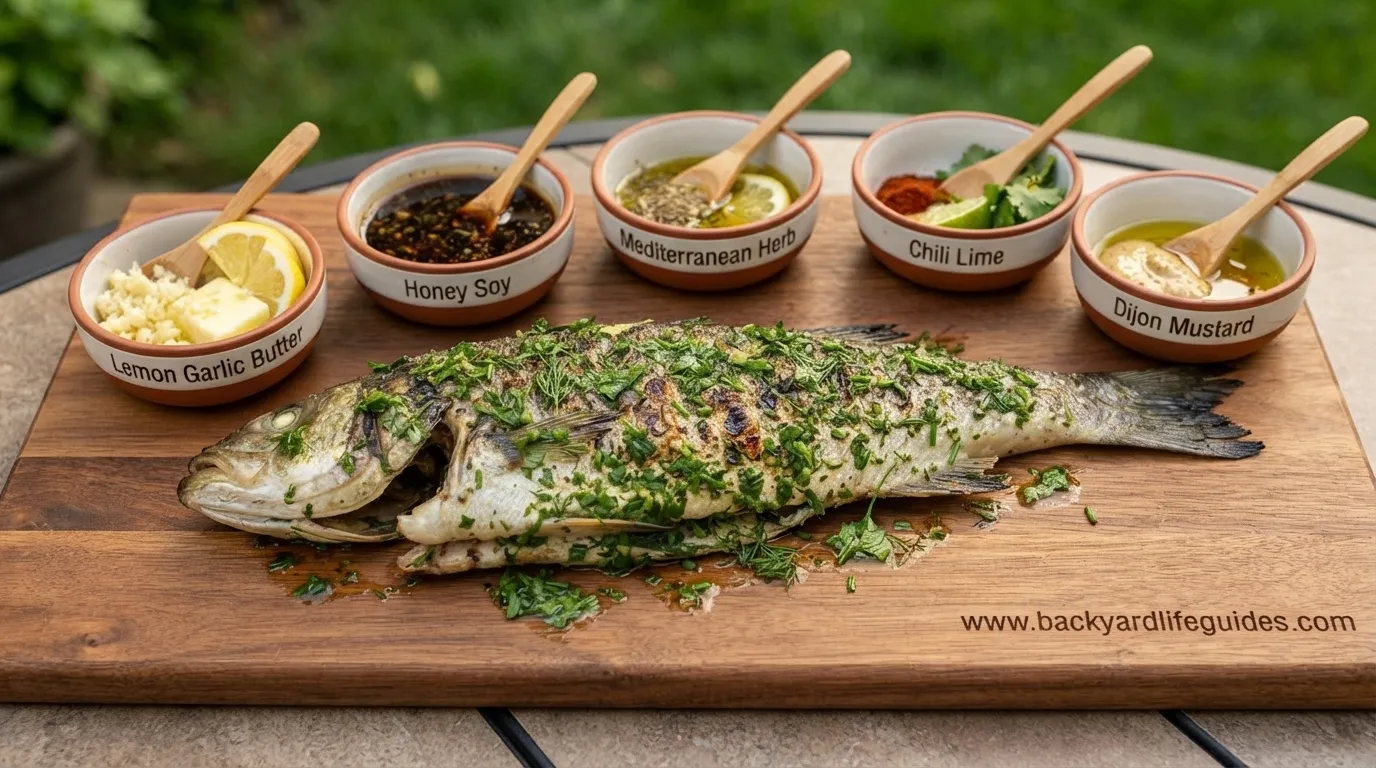
5 Easy Marinades to Transform Your Grilled Fish Game
- Disclosure: This post may include affiliate links. If you click a link and complete a purchase, I may earn a commission. Additionally, as an Amazon Associate, I earn from eligible purchases.
Grilled fish can be simple, but the right marinade can add a completely different level of flavor. A good marinade combines oil, acid, seasoning, herbs, sweetness, or savory ingredients to complement the natural taste of the fish without overwhelming it.
The key is timing. Fish is more delicate than many meats, so leaving it in an acidic marinade for too long can change its texture. For delicate white fish, acidic marinades may need only 10–15 minutes, while firmer fish can generally handle longer marinating times.
This guide brings together the most useful ideas from several fish-marinade approaches and focuses on practical details: ingredients, measurements, marinating times, fish choices, cooking temperatures, and safe handling.
1. Citrus Herb Fish Marinade
This marinade combines citrus, olive oil, garlic, and herbs for a fresh flavor that works particularly well with white fish.
Ingredients
For approximately 1 lb of fish, use:
- 1/4 cup olive oil
- 3 tbsp lemon juice
- 2 tbsp orange juice
- 2 cloves garlic, minced
- 1 tbsp parsley
- 1 tsp oregano
- 1/2 tsp salt
- 1/4 tsp black pepper
How to Make It
Add the olive oil, lemon juice, orange juice, garlic, parsley, oregano, salt, and black pepper to a bowl. Mix until the ingredients are evenly combined.
Place the fish in the marinade and make sure the surface is coated. Keep the fish refrigerated while it marinates.
For this recipe, 30 minutes is the stated marinating time.
Cooking Guide
The recipe approach uses approximately 400°F heat and cooks the fish for about 3–4 minutes per side. The fish should reach an internal temperature of 145°F before serving.
Allow it to rest for about 2 minutes after cooking.
Why It Works
The citrus provides brightness while olive oil helps carry the herbs and seasoning across the fish. Garlic adds savory depth without requiring a long ingredient list.
2. Lemon Garlic Butter Fish Marinade
For a richer option, lemon and garlic can be combined with butter to create a savory marinade and finishing sauce.
Ingredients
For 4 fish fillets, approximately 6 oz each:
- 1/4 cup butter
- 3 tbsp lemon juice
- 4 cloves garlic
- 1 tsp parsley
- 1/2 tsp salt
- 1/4 tsp pepper
How to Prepare It
Combine the butter, lemon juice, garlic, parsley, salt, and pepper. Coat the fish evenly and refrigerate it for approximately 20 minutes.
Because lemon juice is acidic, keeping the marinating period controlled is important.
Cooking Guide
Cook the fish for approximately 3–4 minutes per side, depending on thickness and cooking method.
The target internal temperature is 145°F. If using the remaining sauce for cooking, it should be properly heated rather than served as raw marinade.
A brief 1-minute bubbling period can be used when heating the sauce.
Best Feature
This option is ideal when you want richness without a complicated recipe. Butter provides a fuller flavor, while lemon keeps the finished fish from tasting too heavy.
3. Honey Mustard Fish Marinade
Honey mustard gives grilled or baked fish a combination of sweetness, tanginess, and mild smoky spice.
Ingredients
For approximately 1 lb of fish:
- 1/4 cup honey
- 2 tbsp Dijon mustard
- 1 tbsp olive oil
- 1 tsp apple cider vinegar
- 1/2 tsp garlic powder
- 1/4 tsp smoked paprika
- 1/4 tsp black pepper
Preparation
Whisk the honey, Dijon mustard, olive oil, apple cider vinegar, garlic powder, smoked paprika, and black pepper together.
Coat the fish thoroughly and refrigerate it for about 30 minutes.
The stated maximum marinating period is 1 hour.
Cooking Guide
This marinade can be used with a cooking temperature around 400°F / 204°C. A baking approach takes approximately 12–15 minutes, depending on the fish thickness.
The finished fish should reach 145°F / 63°C internally.
Allow approximately 2–3 minutes of resting time before serving.
Why Choose Honey Mustard?
The combination works particularly well when you want a marinade that is neither purely savory nor strongly citrus-based. Honey adds sweetness, Dijon provides tang, and smoked paprika adds another layer of flavor.
4. Coconut Lime Fish Marinade
Coconut and lime create a creamy, tropical-style combination, while garlic, cilantro, and red pepper flakes add more complexity.
Ingredients
For approximately 1 lb of fish:
- 1/2 cup coconut milk
- 3 tbsp lime juice
- 2 tbsp olive oil
- 2 cloves garlic
- 1 tsp honey
- 1/2 tsp red pepper flakes
- 1/4 cup cilantro
How to Make It
Combine the coconut milk, lime juice, olive oil, garlic, honey, red pepper flakes, and cilantro.
Place the fish in the mixture and refrigerate it for 15–20 minutes.
The stated maximum marinating time is 30 minutes.
Cooking Guide
Cook the fish for approximately 3–4 minutes per side, depending on thickness. The finished fish should reach 145°F internally.
What Makes It Different?
Unlike an oil-and-citrus marinade, coconut milk creates a richer base. Lime adds freshness, while red pepper flakes provide controlled heat.
This is a particularly useful choice when you want your grilled fish to have a tropical flavor profile without using a long ingredient list.
5. Soy Ginger Fish Marinade
Soy sauce, ginger, honey, garlic, and rice vinegar create a savory marinade with a balance of sweetness and acidity.
Ingredients
For approximately 1 lb of fish:
- 1/4 cup soy sauce
- 2 tbsp ginger
- 2 tbsp honey
- 1 tbsp rice vinegar
- 2 cloves garlic
- 1 tbsp vegetable oil
Preparation
Mix the soy sauce, ginger, honey, rice vinegar, garlic, and vegetable oil.
Add the fish and coat all sides. Refrigerate for approximately 30 minutes.
Cooking Guide
Heat the cooking surface and prepare the fish according to its thickness. The recipe approach allows approximately 2 minutes for heating the oil, followed by around 4–5 minutes per side of cooking.
The fish should reach an internal temperature of 145°F.
Allow approximately 2 minutes of resting time.
Why It Works
Soy sauce provides a strong savory foundation, honey balances it with sweetness, and ginger and garlic create a more aromatic finish.
It is a good choice when you want a marinade with a deeper savory profile rather than a predominantly citrus flavor.
Fish Marinade Timing Matters
One of the most important lessons across the recipes is that longer does not always mean better.
Fish has a delicate structure, and acidic ingredients such as lemon and lime can alter its texture. The appropriate marinating time depends on the fish, the ingredients, and how acidic the marinade is.
General Timing Guide
| Situation | Suggested Time |
|---|---|
| Delicate white fish with acid | 10–15 minutes |
| Shrimp, scallops, or squid with acid | About 10 minutes |
| Most fish with acid | 15–30 minutes |
| Firm fish with acid | 20–40 minutes |
| Thin fillets | About 20 minutes |
| Low-acid marinade on firm fish | Up to 1 hour |
| Yogurt marinade | 30–45 minutes |
The most important rule is to watch the clock when using acidic ingredients.
A citrus-based marinade should not simply be left on fish for hours. Excessive acid exposure can denature the fish proteins and produce an undesirable, mushy texture.
Which Fish Works With Which Marinade?
Different fish have different textures and levels of richness, so choosing the marinade according to the fish can make the final result more balanced.
| Fish | Marinades to Consider | Flavor Direction |
|---|---|---|
| Cod | Citrus Herb, Honey Mustard | Fresh or sweet-tangy |
| Tilapia | Citrus Herb, Coconut Lime | Bright or tropical |
| Salmon | Lemon Garlic Butter, Soy Ginger | Rich or savory |
| Swordfish | Soy Ginger, Honey Mustard | Bold and savory |
| Tuna | Soy Ginger | Deep and savory |
| Sole | Citrus Herb | Light and fresh |
| Flounder | Citrus Herb | Light and herby |
| Haddock | Lemon Garlic Butter | Rich and citrusy |
| Hake | Citrus Herb | Fresh and aromatic |
| Mahi-mahi | Coconut Lime, Soy Ginger | Tropical or savory |
These combinations are intended as practical pairings based on the flavor profiles and fish categories represented in the marinade approaches.
How to Marinate Fish Properly
The marinade itself is only part of the process. Proper preparation helps the marinade coat the fish evenly and reduces unnecessary mess.
1. Pat the Fish Dry
Use paper towels to pat the fish dry before adding the marinade.
Removing excess surface moisture helps the marinade adhere more evenly.
2. Use a Suitable Container
A glass or ceramic container or a food-safe bag can be used for marinating.
Avoid treating the marinade as something that can safely sit at room temperature.
3. Keep the Fish Refrigerated
Place the fish in the refrigerator while it marinates.
This is especially important because fish is highly perishable and should be handled carefully throughout preparation.
4. Keep Fillets in a Single Layer
Arrange the fish so the pieces are in a single layer rather than piled on top of one another.
This allows the marinade to contact more of the surface.
5. Set a Timer
Timing is particularly important with acidic marinades.
A simple timer can prevent accidentally leaving delicate fish in lemon- or lime-based mixtures for too long.
6. Remove Excess Marinade
Before cooking, remove excess marinade and pat the fish dry.
This helps prevent excessive surface moisture during cooking.
7. Cook to a Safe Internal Temperature
The recipes use 145°F / 63°C as the internal temperature target for cooked fish.
Use the thickest portion of the fish when checking the temperature.
Can You Reuse Fish Marinade?
Do not automatically reuse marinade that has been in contact with raw fish.
The unused marinade and the marinade that has contacted raw fish should be treated differently. If you want to use a raw fish marinade as a sauce, it needs to be boiled thoroughly for several minutes before serving.
A simpler approach is to reserve a clean portion of the marinade before adding the raw fish.
This gives you sauce for serving without requiring you to repurpose the marinade that contacted raw seafood.
Common Fish-Marinating Mistakes
Leaving Fish in Citrus Too Long
This is one of the easiest mistakes to make.
Lemon, lime, and other acidic ingredients can change fish texture. For delicate fish, 10–15 minutes may be enough.
Guessing the Marinating Time
Fish does not benefit from an unlimited marinating period. Use the recommended time for the recipe and fish type.
Cooking Wet Fish
Excess marinade on the surface can make cooking less effective. Remove excess liquid and pat the fish dry before placing it on the cooking surface.
Using Raw Marinade as Finished Sauce
Never assume marinade that touched raw fish is ready to serve.
Either reserve sauce before marinating or boil the used marinade thoroughly before using it as a sauce.
Ignoring Fish Thickness
Two pieces of fish can have very different cooking times even when they weigh the same.
A thick fillet may need more cooking time than a thin fillet, so use internal temperature rather than relying only on the clock.
Easy Marinade Ingredient Swaps
You can keep the basic structure of a marinade while choosing ingredients according to the flavor you want.
For a Fresh Flavor
Use:
- Lemon
- Parsley
- Oregano
- Olive oil
- Garlic
The citrus-herb combination is especially suitable for lighter fish.
For a Rich Flavor
Use:
- Butter
- Lemon
- Garlic
- Parsley
This creates a richer profile without requiring many ingredients.
For Sweet and Tangy Flavor
Use:
- Honey
- Dijon mustard
- Olive oil
- Apple cider vinegar
- Smoked paprika
This gives the fish a more pronounced sweet-savory character.
For Tropical Flavor
Use:
- Coconut milk
- Lime
- Cilantro
- Honey
- Red pepper flakes
This combination provides creamy, citrusy, slightly sweet, and spicy notes.
For Savory Flavor
Use:
- Soy sauce
- Ginger
- Garlic
- Honey
- Rice vinegar
This creates a stronger savory profile with a touch of sweetness and acidity.
How to Choose the Best Marinade
The easiest way to choose is to start with the flavor you want rather than the fish alone.
Want something fresh? Choose Citrus Herb.
Want something rich? Try Lemon Garlic Butter.
Want sweet and tangy? Honey Mustard is the natural choice.
Want tropical flavor? Go with Coconut Lime.
Want savory and aromatic? Choose Soy Ginger.
The best marinade is ultimately the one that matches both the fish and the meal you are planning.
Frequently Asked Questions
How long should fish be marinated?
Most fish marinades work within 15–30 minutes, although firm fish with low-acid marinades can sometimes be marinated for up to 1 hour. Delicate fish with acidic ingredients may need only 10–15 minutes.
Can I marinate fish overnight?
Overnight marinating is not appropriate for the acidic fish marinades covered here. Lemon and lime can alter fish texture when the fish remains exposed for too long. Follow the recipe’s recommended timing instead.
What temperature should fish reach when cooked?
The recipes use 145°F / 63°C as the internal temperature target for cooked fish.
Should fish be dry before marinating?
Yes. Patting the fish dry first helps the marinade coat the surface more evenly.
Can I use the same marinade as a sauce?
Only if it has been properly handled. Marinade that contacted raw fish should not be served directly. If you want to use it as sauce, boil it thoroughly for several minutes, or reserve a clean portion before adding the raw fish.
Which marinade is best for white fish?
Citrus Herb is a straightforward choice for white fish because it combines olive oil, lemon, orange, garlic, parsley, and oregano. Coconut Lime and Honey Mustard also provide distinct alternatives.
How long should shrimp or scallops be marinated?
Acidic marinades can require only about 10 minutes for shrimp, scallops, or squid. Their smaller size and delicate texture make extended acidic marination unnecessary.
Why does citrus make fish mushy?
Acid can denature proteins in fish. When fish stays in a highly acidic marinade for too long, its texture can become soft or mushy instead of firm.
Should I remove marinade before grilling?
Yes. Remove excess marinade and pat the fish dry before cooking. This helps prepare the surface for cooking and prevents excessive liquid from remaining on the fish.
Can yogurt be used as a fish marinade?
Yes. A yogurt-based marinade can be used for approximately 30–45 minutes in the timing guidance. Yogurt provides a different marinade base from strongly citrus-based mixtures.
Final Tips for Better Marinated Fish
A great fish marinade does not need dozens of ingredients. The most useful combinations in these recipes rely on a few recognizable ingredients and carefully controlled timing.
Keep these points in mind:
- Choose the marinade by flavor and fish type.
- Use a timer when working with lemon or lime.
- Keep marinating fish refrigerated.
- Use glass, ceramic, or a food-safe bag.
- Keep fillets in a single layer.
- Remove excess marinade before cooking.
- Use 145°F / 63°C as the internal temperature target.
- Never serve raw fish marinade without proper cooking.
- Reserve clean marinade separately if you want a sauce.
- Remember that more marinating time is not always better.
With five simple flavor directions—fresh citrus herb, rich lemon garlic butter, sweet honey mustard, tropical coconut lime, and savory soy ginger—you can change the character of grilled fish without turning preparation into a complicated project.






One Comment