
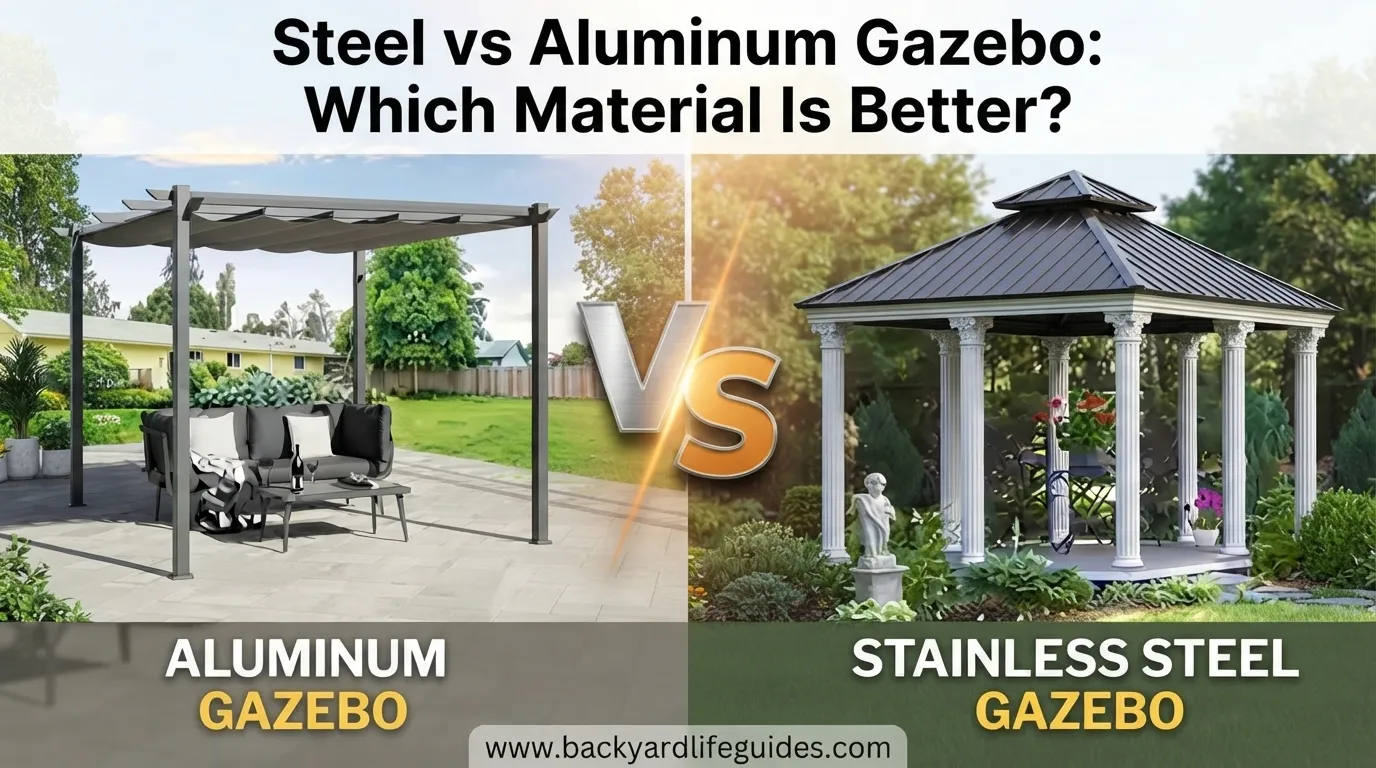
Steel vs Aluminum Gazebo: Which Material Is Better?
- Disclosure: This post may include affiliate links. If you click a link and complete a purchase, I may earn a commission. Additionally, as an Amazon Associate, I earn from eligible purchases.
Choosing between a steel gazebo and an aluminum gazebo is not simply a matter of picking the stronger material. The better option depends on how you plan to use the gazebo, the weather it will face, how often you will move it, and how much maintenance you are willing to handle.
Steel has a major advantage when strength and sturdiness are the priority. Aluminum stands out when low weight, corrosion resistance, portability, and easier maintenance matter more.
Both materials can provide a long-lasting outdoor structure when the frame, finish, construction quality, and maintenance are appropriate. One reports a typical lifespan of 10–15 years or longer for both steel and aluminum gazebos, although actual durability depends on several conditions.
The most useful way to make the decision is to compare the materials feature by feature rather than assuming one is always better.
Choosing the right gazebo material can be tricky — this guide below compares steel and aluminum side by side, so you can pick what’s best for your space.
Strength and Structural Stability
Steel Is the Stronger Option
Steel has a clear advantage when maximum structural strength is the main consideration.
Its density gives a steel gazebo a substantial, sturdy feel, and it is generally better suited to demanding conditions such as strong winds and heavy snow loads.
For homeowners who want a gazebo that feels permanent and robust, steel can be an attractive choice.
It is particularly useful when the structure is expected to remain in one location and portability is not important.
Aluminum Can Still Provide a Strong Frame
Aluminum is lighter than steel, but lightweight does not automatically mean weak.
One interesting comparison from My Backyard Life concerns frame thickness. The article gives an example of 2 mm aluminum bars, explaining that because aluminum is less dense, manufacturers can use more material while keeping the overall frame weight comparable.
This is an important distinction when comparing gazebos:
Material thickness and construction quality matter, not just the name of the metal.
A well-designed aluminum gazebo can provide useful structural performance while remaining much easier to handle than a similarly weighted steel structure.
Weight: Aluminum Has the Clear Advantage
Aluminum Is About One-Third the Weight of Steel
MASTERTENT makes one of the clearest numerical comparisons: aluminum weighs approximately 1/3 as much as steel, or is described as roughly 3× lighter.
That difference becomes especially important when a gazebo must be:
- Transported
- Installed
- Disassembled
- Stored
- Moved between locations
- Used for events or markets
For a permanent backyard structure that is assembled once, weight may not be a major concern.
For a folding gazebo that is regularly transported, however, the difference can significantly affect convenience.
When Weight Matters Most
Aluminum is especially practical when portability is part of the design.
A lightweight frame can make assembly and disassembly easier and reduce the physical effort required to move the structure.
This is one reason aluminum is particularly relevant for folding gazebos, trade fairs, markets, and event use.
Rust and Corrosion Resistance
Steel Can Rust
Steel contains iron, which means it can develop rust when exposed to moisture and oxygen.
The risk becomes more important when the protective finish is damaged.
A steel gazebo may use powder coating, galvanizing, paint, or another protective finish to help protect the underlying metal. However, scratches, chips, or peeling areas can expose the steel beneath the coating.
Once that protection is compromised, corrosion can become a maintenance concern.
Aluminum Does Not Rust Like Steel
Aluminum does not contain iron, so it does not develop conventional iron rust.
Instead, aluminum naturally forms an oxide layer that helps protect the underlying metal from further corrosion.
MASTERTENT emphasizes this natural protective characteristic and gives an approximate 0.5 mm oxide-layer figure.
The also describes the oxide layer as capable of renewing itself when scratched or penetrated.
This makes aluminum particularly attractive for outdoor environments where moisture is a regular concern.
Which Is Better for Rain and Humidity?
Aluminum Has a Strong Advantage in Moist Environments
Both materials can be used outdoors, but their maintenance requirements differ.
Aluminum’s natural corrosion resistance makes it a strong choice for:
- Rainy areas
- Humid climates
- High-moisture environments
- Coastal locations
- Outdoor structures exposed to frequent moisture
Steel can also perform well outdoors when properly protected, but damaged coatings require attention.
Coastal Areas
For coastal or high-humidity locations, aluminum is generally the easier material to live with because corrosion resistance is built into the material’s properties.
Steel can still be considered, but its protective coating becomes particularly important.
Wind Resistance
Steel Is Better for Heavy Wind
Steel’s greater density and structural strength make it a strong choice where heavy wind is a major concern.
Its additional weight can contribute to a sturdy structure, although proper anchoring remains important for any gazebo.
Aluminum Requires Appropriate Anchoring
Aluminum is considerably lighter.
That makes transportation easier, but it also means the gazebo should be appropriately secured when exposed to wind.
This does not make aluminum unsuitable for outdoor use. It simply means that frame design and anchoring become particularly important.
For areas regularly exposed to severe winds, a properly designed steel structure may be the more suitable choice.
Snow and Severe Weather
Choose Steel for Heavy Snow Loads
Heavy snow creates a different structural challenge from ordinary rain.
The consistently position steel as the stronger choice for heavy snowfall and demanding weather conditions.
Steel’s strength and robust construction make it more appropriate when snow loads are a major concern.
Aluminum for More Moderate Conditions
Aluminum can perform well under ordinary outdoor conditions, including rain and moderate wind.
However, the supplied content generally places steel ahead when heavy snow, extreme weather, or particularly demanding structural conditions are involved.
The important point is to consider the gazebo’s complete construction rather than judging the frame material alone.
Heat and Cold Performance
Aluminum Can Be Attractive in Hot Conditions
Dream Outdoor Living highlights an interesting difference in temperature behavior.
Aluminum is described as reflecting heat and helping the surrounding area remain cooler, while steel can retain more heat during very hot conditions.
For a gazebo located in a hot, sunny environment, this characteristic can make aluminum appealing.
Cold Weather Requires More Consideration
The comparison also presents steel as more stable for colder climates and demanding snow or ice conditions.
Therefore, climate should be part of the material decision.
Hot and humid: Aluminum becomes particularly attractive.
Cold with heavy snow: Steel generally has the advantage.
Maintenance Requirements
Aluminum Requires Less Maintenance
One of aluminum’s biggest practical advantages is low maintenance.
Because it does not rust like steel and naturally develops a protective oxide layer, aluminum generally does not require the same level of rust-prevention attention.
This can be valuable for homeowners who want to spend less time maintaining an outdoor structure.
Steel Needs More Attention
Steel generally requires more maintenance, particularly when its protective finish becomes damaged.
A sensible maintenance approach includes checking for:
- Scratches
- Chips
- Peeling coating
- Exposed metal
- Early corrosion
- Areas where moisture remains trapped
Damaged protective coating should be addressed before corrosion becomes a larger problem.
Powder Coating, Galvanizing, and Anodizing
Powder-Coated Steel
Powder coating provides steel with a protective surface finish and can also contribute to its appearance.
However, the coating is not indestructible.
If it becomes chipped or damaged, the exposed steel can become vulnerable to rust.
Galvanized Steel
Galvanized steel uses a protective zinc coating to improve resistance to corrosion.
This can be an important consideration when comparing different steel gazebos because not every steel frame has the same level of protection.
Anodized Aluminum
Aluminum may also receive additional protective finishing.
Anodizing creates a protective oxide layer and can enhance the material’s resistance and appearance.
The important lesson is that two gazebos made from the same basic material may have very different real-world durability because their finishes and construction quality can differ.
Installation and Portability
Aluminum Is Easier to Handle
If you are installing the gazebo yourself, aluminum’s lower weight can be a major advantage.
It is generally easier to:
- Carry
- Position
- Assemble
- Disassemble
- Transport
- Store
This is particularly useful for folding and temporary structures.
Steel Requires More Effort
Steel’s weight contributes to its sturdy feel, but it can make installation more demanding.
A larger steel gazebo may require additional tools, more people, or more effort during assembly.
For a structure that will stay assembled for years, this may be a minor disadvantage.
For a gazebo that needs to move regularly, it becomes much more important.
Cost: Which Gazebo Is Cheaper?
Steel Is Generally More Affordable
Several supplied position steel as the more affordable option, particularly for an initial purchase.
However, price should not be treated as a universal rule.
The final cost can vary according to:
- Gazebo size
- Frame thickness
- Construction quality
- Protective coating
- Roof system
- Design
- Accessories
- Brand
- Intended use
Aluminum Can Have a Higher Upfront Price
Aluminum commonly carries a premium because buyers are paying for characteristics such as low weight, corrosion resistance, portability, and reduced maintenance.
Therefore, the cheapest gazebo at purchase is not necessarily the cheapest over its entire useful life.
A better comparison is:
Initial price + maintenance + replacement risk + practical value.
Long-Term Value
A steel gazebo may provide excellent value when strength is the priority and the owner is prepared to maintain the protective finish.
An aluminum gazebo may provide better long-term convenience when low maintenance, corrosion resistance, and portability are more important.
This is why simply asking “Which material costs less?” does not give the complete answer.
Instead, ask:
Which material costs less for the way I will actually use my gazebo?
Lifespan: How Long Do They Last?
One of the supplied gives a useful benchmark of 10–15 years or longer for both steel and aluminum gazebos.
However, this should not be interpreted as a guaranteed lifespan.
Actual longevity can depend on:
- Construction quality
- Frame thickness
- Finish
- Weather exposure
- Maintenance
- Installation
- Use conditions
A poorly protected steel frame may deteriorate sooner than a high-quality aluminum frame, while a low-quality aluminum gazebo may not provide the same durability as a well-engineered structure.
Quality matters as much as material.
Appearance and Design
Steel Has a Traditional, Sturdy Look
Steel can create a more substantial appearance and works well with traditional, rustic, or robust outdoor designs.
It can also support a broad range of colors and architectural detailing.
Aluminum Creates a Modern Look
Aluminum is often associated with a modern, minimalist appearance.
Its formability also gives manufacturers flexibility when creating different designs and customized structures.
Neither appearance is objectively better.
The right choice depends on whether you want the gazebo to blend with a traditional outdoor setting or complement a more contemporary design.
Customization
Aluminum’s formability can make it particularly useful for customized gazebo designs.
MASTERTENT specifically highlights high form stability and custom-made aluminum gazebos among its reasons for using aluminum.
Steel also provides substantial design flexibility, especially where a heavier architectural appearance is desirable.
When customization matters, look beyond the material itself and examine the manufacturer’s available frame designs, roof systems, sizes, and accessories.
Sustainability and Recycling
Aluminum Is Highly Recyclable
MASTERTENT describes aluminum as 100% recyclable.
Aluminum’s low weight can also reduce transportation weight compared with heavier materials.
However, aluminum production still has environmental impacts, including those associated with mining and manufacturing.
Steel Is Also Recyclable
Steel can also be recycled multiple times without losing its basic material qualities.
Dream Outdoor Living points out that steel production generally involves greater energy use and greenhouse-gas emissions than aluminum in the comparison presented, while aluminum production has its own environmental costs.
Therefore, sustainability is more complicated than simply declaring one material “green.”
Recycling, manufacturing, transportation, product lifespan, and replacement frequency all matter.
Steel vs Aluminum for Different Situations
Best for Strong Winds
Steel is generally the stronger choice when strong winds are a major concern.
Look for a properly engineered frame and suitable anchoring rather than relying on material weight alone.
Best for Heavy Snow
Steel is generally better suited to heavy snow loads because of its structural strength.
Best for Coastal Areas
Aluminum is a particularly strong choice for coastal or humid environments because of its corrosion resistance.
Best for Portability
Aluminum wins clearly when the gazebo needs to be moved, transported, assembled, or stored regularly.
Best for Low Maintenance
Aluminum is generally the easier option because it does not rust like steel and requires less rust-prevention maintenance.
Best for a Permanent Gazebo
Steel can be a strong choice for a permanent structure where weight is not a major concern and maximum sturdiness is valued.
Best for Hot Weather
Aluminum may be preferable in very hot, sunny conditions because it is described as reflecting heat more effectively than steel.
Best Budget Choice
Steel is generally the more affordable starting option, although the actual price depends on construction, size, finish, and brand.
Which One Should You Buy?
The simplest decision comes down to your priorities.
Choose steel if you prioritize:
- Maximum strength
- Heavy-duty construction
- Strong winds
- Heavy snow
- A permanent installation
- A traditional or substantial appearance
- A generally lower initial purchase price
Choose aluminum if you prioritize:
- Lightweight construction
- Easy installation
- Portability
- Low maintenance
- Rust resistance
- Coastal or humid environments
- Modern styling
- Frequent transportation or storage
If your priorities are evenly divided, climate and intended use can be the deciding factors.
A permanently installed gazebo in a snowy region presents a different problem from a lightweight gazebo that is moved regularly for outdoor events.
A Practical Buying Checklist
Before purchasing either material, check these details rather than focusing only on the product title.
Frame
Check the frame thickness, construction, joints, and overall engineering.
Finish
For steel, pay close attention to the protective coating and how damaged areas can be repaired.
For aluminum, check whether the frame has an appropriate protective finish such as anodizing or powder coating.
Weather Conditions
Think about your actual environment:
- Strong wind?
- Heavy snow?
- Frequent rain?
- High humidity?
- Coastal exposure?
- Very hot sun?
Size
Compare the gazebo’s dimensions with the space available and the number of people who will regularly use it.
Installation
Consider whether you will assemble it once or repeatedly.
A lightweight aluminum structure becomes much more attractive when frequent setup and dismantling are involved.
Maintenance
Be honest about how much maintenance you are willing to perform.
If you prefer a low-maintenance structure, aluminum has an important advantage.
Final Verdict
There is no universal winner in the steel vs aluminum gazebo debate.
Steel wins on strength, especially when strong winds, heavy snow, and permanent installation are major considerations.
Aluminum wins on weight, corrosion resistance, portability, and maintenance, making it particularly attractive for humid or coastal locations and situations where the gazebo needs to be moved regularly.
Both materials can provide 10–15 years or longer of service when construction quality, finish, weather exposure, and maintenance are appropriate.
The smartest purchase is therefore not simply the gazebo with the strongest material or the lowest price. It is the one whose construction, finish, size, and material match your climate and intended use.
FAQs
Is steel or aluminum better for a gazebo?
Steel is better when strength, heavy wind resistance, and snow performance are priorities. Aluminum is better when low weight, corrosion resistance, portability, and low maintenance matter more.
Which gazebo material lasts longer?
Both steel and aluminum can last 10–15 years or longer, according to the supplied information. Actual lifespan depends on construction quality, frame thickness, finish, weather, and maintenance.
Does an aluminum gazebo rust?
Aluminum does not develop conventional iron rust because it contains no iron. It can still experience corrosion, but its naturally forming oxide layer provides protection.
Does steel gazebo rust?
Yes. Steel can rust when moisture reaches the underlying metal, particularly where a protective coating has been scratched, chipped, or damaged.
Is aluminum lighter than steel?
Yes. MASTERTENT states that aluminum weighs approximately 1/3 as much as steel, describing aluminum as about 3× lighter.
Which is better for strong winds?
Steel is generally the stronger option for heavy wind conditions. However, proper design and anchoring are essential regardless of the frame material.
Which is better for heavy snow?
Steel is generally better suited to heavy snow loads because it provides greater structural strength.
Is aluminum better for coastal areas?
Aluminum is generally a strong choice for coastal and humid environments because it is naturally resistant to rust and corrosion.
Which gazebo is easier to install?
Aluminum is generally easier to install because its lightweight frame is easier to carry, position, assemble, and disassemble.
Which gazebo costs less?
Steel is generally presented as the more affordable initial option, while aluminum often costs more because of its lightweight construction and corrosion-resistant characteristics.
Does aluminum require maintenance?
Aluminum generally requires less maintenance than steel because it does not rust like steel and naturally forms a protective oxide layer.
Can steel gazebos be used in humid areas?
Yes, but the protective finish becomes especially important. Scratches and coating damage should be addressed to reduce the risk of corrosion.
What is the best material for a permanent gazebo?
Steel can be an excellent choice for a permanent gazebo when sturdiness and strength are more important than portability.
What is the best material for a portable gazebo?
Aluminum is generally the better choice for portability because it is approximately 3× lighter than steel.
Is aluminum environmentally friendly?
Aluminum is highly recyclable, and MASTERTENT describes it as 100% recyclable. However, aluminum production still has environmental impacts related to mining and manufacturing.
Is steel recyclable?
Yes. Steel can be recycled multiple times without losing its fundamental material properties.
What is a 3 × 3 m gazebo?
A 3 × 3 m gazebo is one of the aluminum gazebo sizes specifically highlighted by MASTERTENT, which describes it as a bestseller.
What does 2 mm mean for an aluminum gazebo frame?
The 2 mm figure is an example of aluminum bar thickness mentioned by My Backyard Life. The article uses it to illustrate how aluminum’s lower density can allow a relatively thicker frame while maintaining a comparable overall weight.
Should I choose aluminum or steel for hot weather?
Aluminum can be attractive for hot, sunny conditions because it is described as reflecting heat and helping the area remain cooler. The exact performance also depends on the gazebo’s roof and overall design.
3 Comments