
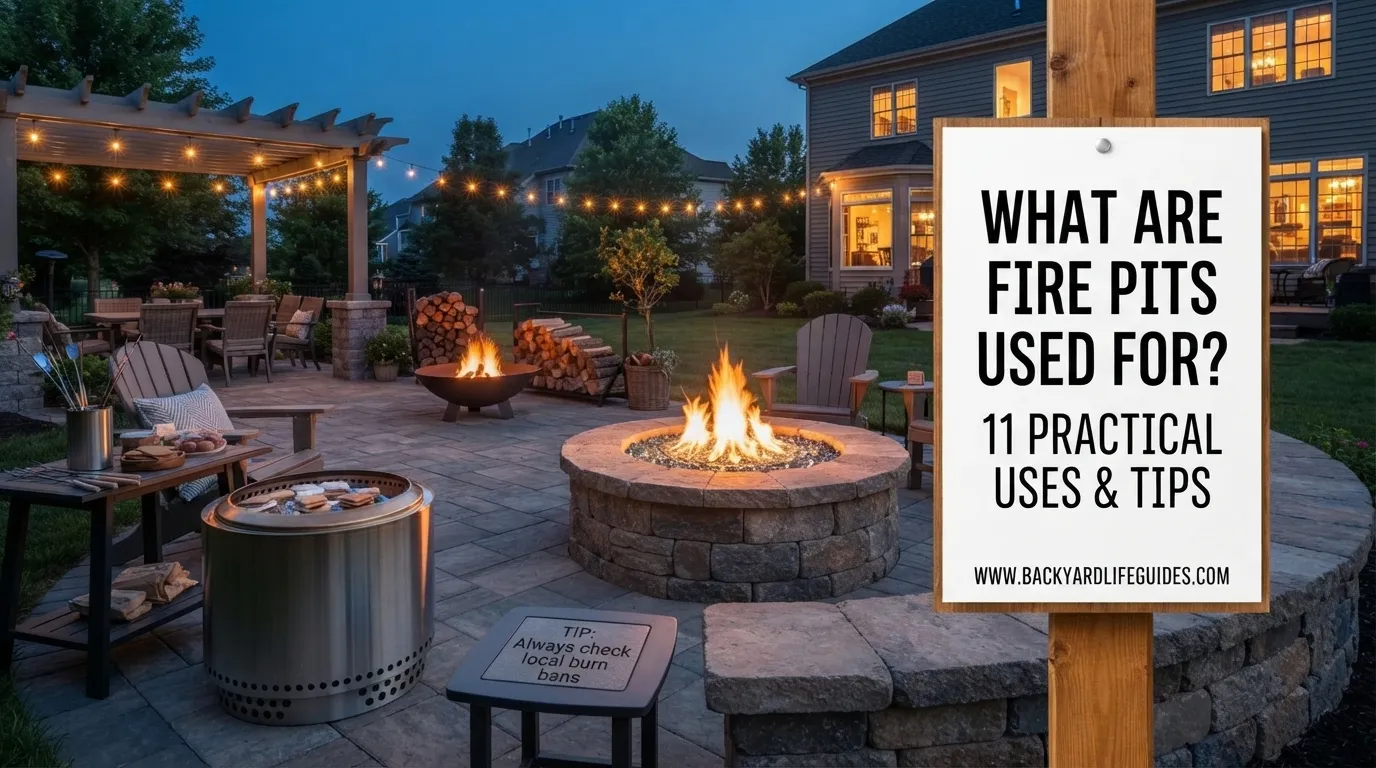
What Are Fire Pits Used For? 11 Practical Uses & Tips
- Disclosure: This post may include affiliate links. If you click a link and complete a purchase, I may earn a commission. Additionally, as an Amazon Associate, I earn from eligible purchases.
A fire pit can do much more than create a flame in the backyard. It can provide warmth, light, cooking space, atmosphere, and a natural gathering point for family and friends.
Depending on the design, a fire pit can also travel with you to a campsite, beach, tailgate, or other permitted outdoor location. Wood-burning, gas, propane, natural-gas, and gel-fuel models each offer different experiences, so the best choice depends on how you plan to use it.
The most useful way to think about a fire pit is as an outdoor living feature rather than simply a source of fire.
11 Practical Uses for a Fire Pit
1. Cooking and Grilling
One of the most enjoyable uses of a fire pit is outdoor cooking. With the appropriate grate or cooking accessory, you can prepare simple meals directly over the fire.
Popular options include:
- Hot dogs and sausages
- Steaks
- Skewers and kebabs
- Vegetables
- Fish or chicken
- Roasted marshmallows
- S’mores
- Soups, chili, and other pot-based meals
Hardwoods such as oak and maple are useful for cooking fires because they can provide a steady burn. Softwoods such as pine may burn differently and can produce more smoke or resin.
Always make sure your fire pit is specifically designed for cooking before placing cookware or food over it.
2. Staying Warm Outdoors
A fire pit can extend the amount of time you comfortably spend outside when temperatures drop.
The radiant heat is especially useful around:
- Patios
- Deck-adjacent outdoor areas
- Campsites
- Cabins
- Backyard seating areas
For a more comfortable experience, arrange seating around—not directly against—the fire and keep blankets or appropriate outdoor clothing nearby.
A larger fire does not automatically mean a safer or better fire. Controlled heat and proper spacing matter more than simply adding more fuel.
3. Creating a Social Gathering Point
Fire naturally draws people’s attention, which makes a fire pit an effective centerpiece for outdoor gatherings.
You can use it for:
- Family evenings
- Weekend gatherings
- Storytelling
- Casual dinners
- Conversations
- Birthday celebrations
- Small outdoor parties
Instead of arranging outdoor seating around a space, placing chairs around a properly positioned fire pit can create a more intentional social area.
4. Adding Light and Ambiance
A fire provides a warm, moving source of light that can make an outdoor area feel more inviting after sunset.
It can complement:
- Patio seating
- Outdoor dining
- Garden spaces
- Pathway areas
- Pergolas
- Outdoor movie setups
Unlike bright artificial lighting, firelight creates a softer atmosphere. However, it should never be treated as a replacement for adequate safety lighting around steps, paths, or other hazards.
5. Hosting a Backyard Movie Night
A fire pit can become part of an outdoor movie setup.
A simple arrangement can include:
- A suitable outdoor screen or sheet
- Comfortable lawn chairs
- A safe fire pit positioned away from the screen and combustible materials
- Appropriate lighting around walking areas
- Snacks and drinks
The fire provides warmth and atmosphere while people watch the movie.
Keep the fire far enough away that sparks, smoke, or heat do not interfere with the screen or seating.
6. Enjoying a Romantic Evening
A fire pit can also create a quieter setting for two people.
You can combine it with:
- Comfortable chairs
- Outdoor blankets
- Low-level lighting
- Music
- Simple food
- Conversation
The appeal is not necessarily the size of the fire. A small, controlled fire can create enough warmth and atmosphere without overwhelming the space.
7. Relaxation, Reflection, and Quiet Time
Not every fire-pit experience needs to be a party.
Sitting beside a fire can provide a simple way to slow down after a busy day. Some people use the time for reading, reflection, meditation, journaling, or simply watching the flames.
This makes a fire pit useful even when nobody is cooking or entertaining guests.
A comfortable chair, suitable distance from the fire, and a quiet outdoor setting may be all you need.
8. Camping and Outdoor Adventures
Portable fire pits can extend the traditional campfire experience beyond a permanent backyard installation.
Depending on local rules and the location, a portable model may be useful for:
- Camping
- Hiking trips
- Road trips
- Beach outings
- Tailgating
- Cabin stays
- Van-life trips
- Ski trips
Portability is especially valuable when the fire pit folds or packs into a manageable form.
However, portable does not mean permitted everywhere. Always check the fire regulations of the campsite, park, beach, or other location before using one.
9. Beach Picnics and Tailgating
A portable fire pit can turn an ordinary outdoor stop into a more comfortable gathering area.
For a beach picnic, it can provide a place for permitted cooking, warmth, and evening ambiance.
For tailgating, it can become a compact cooking and social area.
The important consideration is location. Some beaches, parks, parking areas, and public recreation sites prohibit open flames, so local regulations should be checked first.
10. Making a Comfortable Outdoor Living Area
A fire pit can help divide a large backyard into useful outdoor zones.
For example, you might create:
| Outdoor zone | Possible purpose |
|---|---|
| Fire-pit area | Conversation and relaxation |
| Patio | Dining |
| Lawn | Games and activities |
| Garden | Plants and decoration |
| Poolside area | Lounging |
The fire pit becomes a visual focal point while also giving the seating area a clear purpose.
For larger properties, multiple outdoor zones can make the space feel more organized instead of leaving one large unused area.
11. Reusing Wood Ash
If you use a wood-burning fire pit, the cooled ash may have practical household or garden uses.
Wood ash can contain minerals such as:
- Potassium
- Calcium
- Magnesium
Depending on the situation, properly handled ash may be useful in gardening or composting.
However, ash should only be reused when you know exactly what was burned. Do not use ash from fires containing treated, painted, coated, or otherwise unsuitable materials.
Never handle or store ash until you are certain it is completely cold.
What Are the Main Types of Fire Pits?
Fire pits are available in several configurations, and the fuel type strongly affects the experience.
Wood-Burning Fire Pits
Wood-burning models provide the traditional campfire experience.
They are particularly appealing for:
- Natural flame
- Wood aroma
- Cooking
- Roasting
- Outdoor gatherings
- Camping
Their disadvantages include smoke, ash, wood storage, and the need for more active fire management.
Gas Fire Pits
Gas models commonly use propane or natural gas.
They are convenient when you want:
- Quick ignition
- Easier flame control
- Less ash
- Less smoke
- A cleaner-looking patio installation
Propane models can be more flexible because the fuel supply can be moved with the unit, while natural-gas installations generally depend on a fixed gas connection.
Gel-Fuel Fire Pits
Gel-fuel models use a different type of fuel and are generally associated with smaller decorative or controlled-fire applications.
They can offer a simple alternative where the primary goal is atmosphere rather than producing a large traditional wood fire.
Which Fire Pit Is Best for Different Uses?
There is no single best type for everyone.
| Your main goal | Suitable fire-pit direction |
|---|---|
| Traditional campfire | Wood-burning |
| Outdoor cooking | Wood-burning cooking model |
| Easy backyard ambiance | Gas |
| Permanent patio | Natural gas or gas |
| Portable adventures | Portable wood-burning |
| Low-ash experience | Gas |
| Relaxation and decoration | Gas or suitable gel model |
| Camping | Portable wood-burning |
Your location, fuel availability, maintenance preference, and local regulations should influence the final choice.
How Much Space Does a Fire Pit Need?
Placement is one of the most important parts of using a fire pit safely.
The commonly used 10 feet is an important minimum separation figure, while one source recommends 10–20 feet from structures or flammable materials.
A safe setup should also consider:
- Trees
- Dry leaves
- Fences
- Sheds
- Buildings
- Overhanging branches
- Outdoor furniture
- Wooden structures
For a DIY in-ground fire pit, it describes an approximately 2-foot-wide and 2-foot-deep pit. That should not be treated as a universal construction specification, because soil conditions, local regulations, drainage, and the type of installation can change what is appropriate.
Before building a permanent fire pit, check your local fire and building requirements.
What Surface Should a Fire Pit Sit On?
A fire pit should be placed on a stable, fire-resistant, non-combustible surface appropriate for the particular model.
Common examples include:
- Concrete
- Brick
- Suitable stone
- Gravel
- Purpose-built fire-pit surfaces
Avoid placing a fire pit directly beside or underneath combustible structures.
Portable models with an elevated base can provide additional separation between the fire and the ground, but they still require proper placement.
How Do You Use a Fire Pit Safely?
A fire pit is useful only when it is managed responsibly.
Keep the fire away from combustibles
Use the 10..-foot rule as a minimum reference, unless your local requirements or the manufacturer’s instructions require greater clearance. Some of the guidance uses 10–20 feet for separation.
Never leave it unattended
Someone responsible should monitor the fire while it is burning.
Keep water or an extinguisher nearby
Have an appropriate method for dealing with an unexpected flare-up or emergency.
Watch wind conditions
Strong wind can carry sparks and embers well beyond the fire pit.
Use a spark screen when appropriate
A properly. fitted screen can help control flying embers on compatible wood-burning models.
Be careful around children and pets
Create a clear boundary around the fire and supervise children and animals.
Extinguish the fire completely
Do not assume a fire is out simply because visible flames have disappeared. Embers can remain hot.
How Often Should You Check a Fire Pit?
suggests checking or tending an overnight fire approximately every hour when trying to keep it burning.
However, this should not be interpreted as permission to leave a fire burning unattended between checks.
For safety, a person should remain responsible for the fire throughout its use and follow local regulations and the manufacturer’s instructions.
Can You Cook Directly on a Fire Pit?
Yes, if the fire pit is designed or equipped for cooking.
Useful cooking accessories can include:
- Cooking grates
- Grill surfaces
- Skewer supports
- Tripods
- Dutch ovens
- Suitable cookware
For the best results, establish a controlled cooking fire rather than placing food directly into uncontrolled flames.
Avoid using materials that may release harmful chemicals when heated, such as treated or painted wood.
Are Fire Pits Good for Small Backyards?
They can be, but size and placement matter.
A smaller fire pit may be more appropriate when:
- Seating space is limited
- You have a small patio
- You want a portable setup
- You primarily need ambiance
- You do not regularly host large groups
A large fire pit can dominate a small space and reduce the room available for seating.
For a compact backyard, think about the entire seating footprint, not just the diameter of the fire pit itself.
How Long Can a Fire Pit Last?
A quality fire pit can provide years of use when maintained properly.
Longevity depends on:
- Construction material
- Weather exposure
- Fuel type
- Frequency of use
- Cleaning
- Moisture
- Rust prevention
- Storage
Steel can require rust protection, while copper develops a natural patina over time. Stone installations can be durable but should still be selected for appropriate heat resistance and outdoor conditions.
Using a cover when the fire pit is not in use can help reduce unnecessary weather exposure.
What Should You Do With Fire-Pit Ash?
For a wood-burning fire pit, allow ash to cool completely before handling it.
Then:
- Confirm there are no remaining hot embers.
- Store ash in a suitable metal container if disposal is required.
- Keep the container away from combustible materials.
- Follow local disposal requirements.
- Only reuse ash when you know the burned material was safe.
Ash from treated, painted, plastic-containing, or contaminated materials should not be treated like clean wood ash.
FAQs
What is the main purpose of a fire pit?
The main purpose is to provide controlled outdoor fire for warmth, cooking, light, relaxation, and socializing. Different models can also support camping and other outdoor activities.
Can you cook on every fire pit?
No. Only use a fire pit for cooking when the manufacturer allows it or the unit is specifically designed for that purpose. Use suitable cooking accessories and appropriate fuel.
Is a wood or gas fire pit better?
It depends on your priorities. Wood offers a traditional campfire experience and is useful for cooking, while gas generally provides easier ignition, cleaner operation, and simpler flame control.
How far should a fire pit be from a house?
The guidance uses 10 feet as an important minimum reference, with one source recommending 10–20 feet from structures or flammable materials. Always follow your local regulations and the manufacturer’s instructions if they require more distance.
Can a fire pit be used for camping?
Yes, a suitable portable fire pit can be useful for camping where open fires are permitted. Always check the rules of the campsite or public land before lighting it.
Can fire-pit ash be used in a garden?
Clean wood ash can contain potassium, calcium, and magnesium, but it should only be used when the burned wood was suitable, and the ash is completely cool. Garden use should also match the needs of your soil and plants.
Can a fire pit provide enough heat for an outdoor area?
A fire pit can provide meaningful radiant heat nearby, but the amount depends on the fire, fuel, design, weather, and seating distance. Wind can significantly reduce how warm people feel.
Can you leave a fire pit burning overnight?
You should not leave a fire unattended. A fire that continues burning overnight requires responsible monitoring and must comply with local regulations. Completely extinguish it when it is no longer being actively used.
Final Thoughts
A fire pit can be a cooking station, gathering point, outdoor heater, light source, relaxation space, and portable adventure companion.
The best use depends on the type of fire pit you choose. A wood-burning model suits people who enjoy traditional flames, cooking, and the campfire experience. A gas model can be more convenient for a permanent patio or easy everyday ambiance. A portable model is useful when outdoor experiences extend beyond the backyard.
Whatever your goal, prioritize safe placement, suitable fuel, responsible supervision, and complete extinguishing. When those basics are handled properly, a fire pit can turn an ordinary outdoor area into a more functional and enjoyable place to spend time.

One Comment