
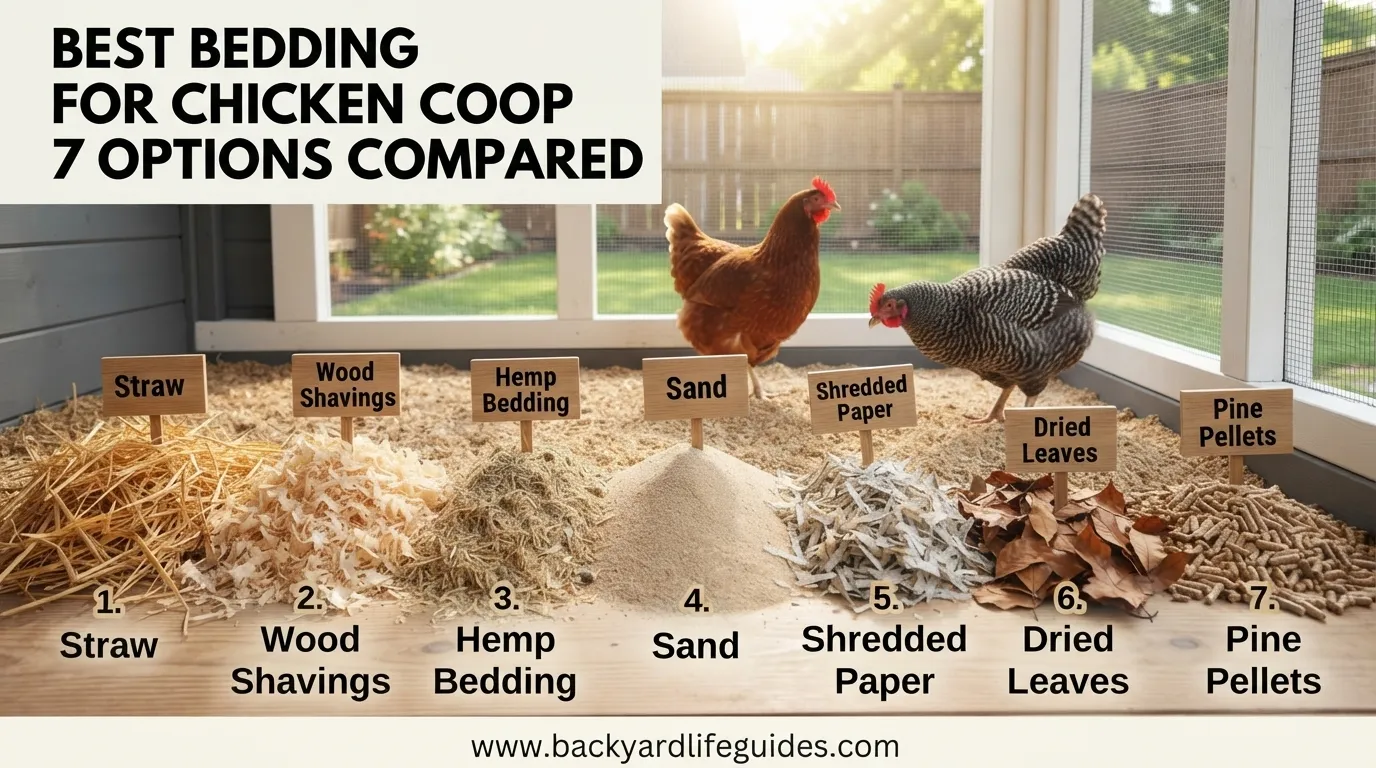
Best Bedding for Chicken Coop: 7 Options Compared
- Disclosure: This post may include affiliate links. If you click a link and complete a purchase, I may earn a commission. Additionally, as an Amazon Associate, I earn from eligible purchases.
Choosing chicken coop bedding is about much more than giving your hens a soft place to stand. The right material can help control moisture, odors, manure, dust, and cleaning time while making the coop more comfortable.
There is no single bedding material that works perfectly for every flock. A small backyard coop may benefit from a different material than a large run, while a nesting box has different requirements from an outdoor area exposed to rain.
The most useful way to choose bedding is to compare the material against the conditions where it will actually be used.
This guide compares 7 major bedding options and explains where each one works best, where it can cause problems, how deep to make the bedding, and how to maintain it.
What Makes Good Chicken Coop Bedding?
Good bedding should do several jobs at the same time. It should provide a reasonably comfortable surface while helping manage the waste produced by your flock.
The most useful characteristics are:
- Absorbency: Can it take up moisture from droppings and spills?
- Non-caking: Does it remain loose instead of forming a hard, wet mass?
- Safety: Is it free from harmful treatments, chemicals, or excessive dust?
- Odor control: Can it help keep unpleasant smells under control?
- Mold and bacteria resistance: Does it remain hygienic when properly managed?
- Comfort: Is it suitable for walking, scratching, and resting?
- Maintenance: Can you remove dirty sections without replacing everything?
- Compostability: Can used organic material become useful compost?
- Availability and cost: Can you obtain enough material without making maintenance unnecessarily expensive?
Talking Hens uses four core factors—absorbency, non-caking, non-toxicity, and resistance to mold and bacteria—to assess bedding materials.
1. Hemp Bedding
Hemp is one of the strongest choices when absorbency, odor control, and nesting-box hygiene are priorities.
Talking Hens rates hemp 5 stars and describes it as its top bedding option. Its article states that hemp can absorb 5 times more moisture than most other bedding materials. It also says the crop can grow in approximately 90 days without pesticides or insecticides.
Hemp can also break down and compost well, making the used material potentially useful for the garden after proper composting.
Why Choose Hemp?
- Excellent moisture absorption
- Good odor control
- Useful in nesting boxes
- Natural antibacterial properties are highlighted
- Can be composted
- Useful where hygiene is especially important
- Long-lasting performance can help offset its higher purchase price
The Main Disadvantage
The biggest drawback is cost and availability.
For a large coop, buying enough hemp may be considerably more expensive than using wood shavings. For a small flock or high-priority area such as nesting boxes, however, the extra cost may be easier to justify.
Best use: Nesting boxes and smaller coops.
2. Wood Shavings
Wood shavings offer one of the best combinations of price, comfort, absorbency, availability, and ease of maintenance.
Talking Hens gives wood shavings 4 stars, while My Backyard Life describes pine shavings as a popular choice and recommends dust-free coarse or medium flakes.
Talking Hens reports that wood shavings are approximately 3 times more absorbent than straw and says a dry layer around 10 cm deep can last over 12 months under suitable conditions.
Why Wood Shavings Are Popular
- Easy to find
- Relatively economical
- Comfortable underfoot
- Absorbent
- Useful for odor management
- Can be composted
- Chickens can scratch through them naturally
- Suitable for dry runs and areas beneath roosts
Choose the Right Type
Not all wood-based material should be treated as interchangeable.
Look for clean, untreated, low-dust material. Avoid bedding made from wood that has been chemically treated.
Damp shavings can cake together and lose some of their useful properties, so moisture management is essential.
Best use: Under roosts, inside the coop, and in a dry chicken run.
3. Wood Chips
Wood chips can be useful in outdoor or exposed areas, particularly where a softer fine bedding material would not be practical.
Talking Hens gives wood chips 3 stars.
Their major advantage is availability. They can often be obtained from garden or landscaping suppliers.
Advantages
- Easy to source
- Suitable for outdoor areas
- Can create a durable surface
- Useful where chickens spend time scratching
Problems to Watch For
Wood chips are less absorbent than wood shavings. Their larger and harder pieces may also create a rougher walking surface.
The source of the material matters too. Treated or chemically contaminated wood should not be used around chickens.
Best use: Exposed ranging or outdoor areas rather than as the primary indoor bedding.
4. Sawdust
Sawdust can work, particularly in a large coop or run, but it requires more careful selection than many beginners expect.
Talking Hens rates sawdust 3 stars and recommends a layer of at least 10 cm when it is used as bedding.
Benefits
- Absorbent
- Can help break down manure when kept dry
- Useful in larger areas
- Can eventually be composted
The Biggest Concern: Dust
Fine sawdust can become dusty, and excessive dust is undesirable for chicken respiratory health.
Choose a low-dust, untreated material and avoid sawdust from treated wood or unsuitable hardwood sources.
Wet sawdust can also cake quickly, reducing its usefulness.
Best use: Large runs or suitable large-coop environments where dust and moisture can be controlled.
5. Straw and Hay
Straw is one of the most familiar chicken-bedding materials, but familiarity does not necessarily make it the best option.
My Backyard Life highlights straw as particularly useful for winter insulation because its hollow structure can help trap warmth.
However, Talking Hens gives straw and hay only 2 stars, pointing to their poor absorbency and tendency to cake.
Why Some Chicken Keepers Still Use Straw
- Widely available
- Relatively inexpensive
- Soft compared with hard surfaces
- Useful for scratching
- Can provide additional insulation during colder periods
Problems With Straw
Straw does not behave like clumping bedding. It can mat together as manure and moisture accumulate.
Dirty sections can become difficult to remove, and damp hay or straw can create conditions favorable to mold.
The source also matters. Straw that has been exposed to agricultural chemicals may not be an appropriate choice for your flock.
Best use: Situations where insulation is important and the keeper can maintain it carefully.
6. Sand
Sand is probably the most divisive option in this comparison.
My Backyard Life describes firsthand use of sand and reports that daily removal of dehydrated droppings helped keep odor under control. It also stresses that not every type of sand is appropriate and specifically discusses medium, construction-grade sand rather than simply using play sand.
Talking Hens rates sand 2 stars.
Why Some Keepers Like Sand
- Droppings can be removed from the surface
- Chickens may enjoy dust bathing
- It can be useful in outdoor areas
- It does not provide organic material for composting
- It can be relatively easy to rake
Why Sand Has Limitations
Sand is non-absorbent, so it does not perform like hemp or wood shavings.
It can also become uncomfortable depending on weather conditions. Talking Hens describes it as potentially cold during winter and hot in sunny summer conditions.
If used, regular raking and manure removal are important.
Best use: A suitable rain-exposed chicken run where frequent cleaning is practical.
7. Gravel
Gravel is better thought of as a drainage material than conventional chicken bedding.
Talking Hens rates it only 1 star as bedding because it is rough, potentially sharp, cold, non-absorbent, and provides no composting benefit.
Where Gravel Can Help
Gravel can be useful:
- Around the coop
- Beneath drainage areas
- Around muddy sections
- Where waterlogging is a recurring problem
Its role is primarily to help keep the surrounding area drier, rather than provide comfortable bedding directly under chickens.
Best use: Drainage and moisture management around the coop.
What Bedding Should You Avoid?
Some materials deserve extra caution because their disadvantages can outweigh their convenience.
Cedar Shavings
My Backyard Life describes cedar bedding as controversial and takes the safer approach of recommending that keepers avoid cedar shavings.
Treated Wood
Do not assume that every wood product is suitable for chickens.
Treated construction or landscaping wood may contain chemicals that should not be used as bedding.
Very Dusty Material
Excessive dust is undesirable for a chicken coop. This is especially relevant when considering fine sawdust or other powdery materials.
Undried Grass Clippings
My Backyard Life specifically lists undried grass clippings among the materials it would avoid.
How Much Bedding Should You Put in a Chicken Coop?
For conventional bedding, My Backyard Life recommends approximately 3–4 inches so chickens can scratch without immediately exposing the floor.
The exact amount depends on:
- Coop dimensions
- Number of chickens
- Bedding material
- Moisture level
- Time spent inside
- Roost design
- Cleaning routine
Rather than filling the coop to a fixed height and forgetting about it, monitor the bedding as it becomes compressed or contaminated.
A Simple Way to Estimate the Amount
Measure:
Length × Width × Bedding Depth = Required Volume
If your bedding is sold by bag volume, compare your calculated volume with the manufacturer’s stated coverage.
Keep some extra material available for top-ups, because bedding gradually becomes compressed and dirty.
How Often Should Chicken Coop Bedding Be Changed?
There is no universal schedule.
A small flock in a well-ventilated coop may need a different routine from a heavily used coop.
My Backyard Life gives a practical starting schedule of:
- Daily: Remove obvious droppings where necessary.
- Weekly: Clean the coop and refresh bedding.
- About monthly: Consider a complete bedding change under a conventional system.
These are starting points rather than rigid rules.
Signs It Is Time to Change Bedding
Look for:
- Strong or worsening odor
- Wet patches
- Caked bedding
- Excessive manure
- Mold
- Bedding that remains damp
- Chickens avoiding certain areas
- Dust problems
- Pest activity
The condition of the bedding matters more than blindly following a calendar.
How Does the Deep Litter Method Work?
The deep litter method is a manure-management approach that allows suitable organic bedding to accumulate and gradually break down.
My Backyard Life recommends beginning with approximately 5–6 inches of organic, compostable bedding in the fall.
Suitable materials discussed by the include:
- Wood shavings
- Hemp
- Sawdust
Sand is not appropriate for this particular composting approach because it does not provide the organic carbon source required by the method.
Deep Litter Routine
- Start with approximately 5–6 inches of suitable material.
- Keep the bedding as dry as possible.
- Allow chickens to scratch and turn the material.
- Add fresh bedding as the layer becomes compressed.
- Monitor moisture and odor.
- Turn the material when needed.
- Maintain adequate ventilation.
- Move most of the material to the compost pile around spring.
- Clean the coop before beginning another cycle.
The goal is not simply to create a deeper pile. The bedding needs to remain manageable, dry, and biologically active.
What Is the Best Bedding for Nesting Boxes?
Nesting boxes have different requirements from the main coop floor.
They should remain clean, dry, comfortable, and hygienic because hens spend time laying eggs there.
Based on , hemp is a particularly strong option for nesting boxes. Talking Hens gives it 5 stars and specifically identifies nesting boxes as its best use.
Wood shavings are another practical choice when cost and availability are more important.
What Does the Customer Research Show?
Talking Hens conducted a customer survey in 2023 and received 165 detailed responses.
Among the reported results:
- More than 44% used wood shavings in their chicken-run area.
- 38% used hemp in nesting boxes.
- 31% used wood shavings in nesting boxes.
That makes the survey particularly useful because it shows how actual chicken keepers were using these materials rather than presenting only theoretical comparisons.
What Is Best for a Chicken Run?
The best choice depends heavily on whether the run is dry or exposed to weather.
Dry Run
Wood shavings are a strong option because they balance absorbency, comfort, availability, and cost.
Rain-Exposed Run
Sand can be considered where frequent raking and manure removal are practical.
Exposed Ranging Area
Wood chips can be useful where durability and availability matter more than maximum absorbency.
Muddy Area
Gravel can help with drainage, although it should not be confused with comfortable bedding.
How Can You Reduce Chicken Coop Odor?
Bedding alone cannot solve every odor problem.
Odor usually becomes noticeable when moisture, manure, poor airflow, and inadequate cleaning combine.
Focus on These Five Areas
1. Keep bedding dry
Wet bedding breaks down faster and can cake.
2. Remove concentrated manure
Droppings under roosts can build up quickly.
3. Improve ventilation
Good airflow helps moisture and ammonia escape.
4. Choose absorbent material
Hemp and wood shavings are particularly useful when moisture management is a priority.
5. Watch for caking
A hard, wet layer should not simply be covered with fresh bedding indefinitely.
How Can You Keep Bedding Safe?
Before adding any bedding, consider its source.
Ask:
- Is the wood untreated?
- Is the material excessively dusty?
- Could it contain chemicals?
- Has it become wet or moldy?
- Is it appropriate for poultry?
- Can it remain dry in your particular coop?
Talking Hens specifically warns that treated wood and unsuitable sawdust can introduce unwanted chemical risks.
When there is uncertainty about a material’s treatment or origin, choosing a clearly labeled, untreated poultry-appropriate bedding product is the safer approach.
Chicken Bedding and Respiratory Health
A good bedding system should support a healthy environment rather than create additional problems.
Potential concerns include:
- Excessive dust
- Mold
- Dampness
- Ammonia accumulation
- Poor ventilation
Sawdust deserves particular attention because very fine particles can become airborne.
If chickens develop signs of respiratory irritation, the bedding and overall coop environment should be reassessed promptly, and veterinary advice should be sought when appropriate. My Backyard Life also emphasizes ventilation and monitoring for respiratory irritation.
Can Used Chicken Bedding Be Composted?
Yes, suitable organic bedding can become a useful compost ingredient.
Materials such as hemp and wood shavings can combine with chicken manure to create a carbon-rich composting material.
The basic idea is simple:
Bedding + chicken manure + appropriate composting conditions → finished compost
Do not put chemically treated wood or questionable materials into your garden compost.
The specifically highlight the composting potential of hemp and wood shavings.
Which Bedding Is Best for Different Situations?
| Your Situation | Best Starting Choice |
|---|---|
| Small coop | Hemp |
| Nesting boxes | Hemp or wood shavings |
| Budget-conscious coop | Wood shavings |
| Dry chicken run | Wood shavings |
| Large run | Sawdust, where appropriate and low-dust |
| Outdoor ranging area | Wood chips |
| Winter insulation priority | Straw, with careful maintenance |
| Rain-exposed run | Sand, with frequent raking |
| Mud/drainage problem | Gravel around or beneath the area |
| Deep litter | Wood shavings, hemp, or suitable sawdust |
| Brooder box | Recycled paper |
The recommendations above synthesize the specific uses and limitations described by the four set, rather than treating one material as universally best.
A Simple Bedding Decision Guide
If you want the best overall balance, start with wood shavings.
If your priority is maximum absorbency, consider hemp.
If your priority is nesting-box hygiene, hemp is especially attractive.
If you need winter insulation, straw can help, but expect more maintenance.
If you want an outdoor surface, wood chips may be useful.
If you have a rain-exposed run, sand can work when you are willing to rake frequently.
If your main problem is mud and drainage, use gravel around or beneath the coop rather than treating it as the primary bedding.
Common Chicken Bedding Mistakes
Using Too Little Bedding
A very thin layer can expose the floor quickly and provides less protection from moisture and manure.
Allowing Bedding to Stay Wet
Adding fresh dry material on top of a wet layer does not solve the underlying moisture problem.
Choosing Material Without Checking Its Source
Untreated and poultry-safe material is preferable to an unknown wood product.
Ignoring Ventilation
Even excellent bedding cannot compensate for poor airflow.
Assuming More Bedding Means Less Cleaning
Deep litter can reduce cleaning frequency, but it still requires monitoring and management.
Using One Material Everywhere
The best material for a nesting box does not necessarily have to be the best material for a large outdoor run.
Frequently Asked Questions
What is the best bedding for a chicken coop?
Wood shavings are a strong all-around choice because they combine absorbency, comfort, availability, and relatively low cost. Hemp is another excellent option, particularly for nesting boxes.
How deep should chicken coop bedding be?
For conventional bedding, approximately 3–4 inches is a useful starting point. The deep litter method starts deeper, at approximately 5–6 inches.
How often should chicken coop bedding be changed?
A practical conventional schedule is daily spot cleaning, a weekly refresh, and a more complete change around once a month, depending on flock size and bedding condition.
Is hemp good for chicken bedding?
Yes. The comparison rates hemp 5 stars and highlights its high absorbency, odor control, compostability, and suitability for nesting boxes.
Are pine shavings good for chickens?
Dust-free pine or other suitable wood shavings can be a practical bedding choice. They are absorbent, comfortable, readily available, and relatively economical when kept dry.
Is straw good bedding for chickens?
Straw can provide useful insulation, especially in colder conditions, but it can mat, become damp, and require more frequent cleaning than more absorbent alternatives.
Can sand be used as chicken bedding?
Sand can be used in some chicken-run setups, but it is non-absorbent and requires frequent removal of droppings. It is better suited to situations where regular raking is practical.
Can I use sawdust in a chicken coop?
Sawdust can work when it is low-dust, untreated, and kept dry. Fine dusty material should be avoided because airborne particles can be problematic for respiratory health.
Is gravel good chicken bedding?
Gravel is not a good primary bedding material. It is better used around or beneath the coop to improve drainage and reduce muddy conditions.
Can chicken bedding go into compost?
Suitable organic bedding such as hemp and wood shavings can be composted with chicken manure. Avoid adding treated or chemically questionable materials to garden compost.
Final Verdict
For most backyard chicken keepers, wood shavings are the best starting point because they offer a practical balance between absorbency, comfort, availability, maintenance, and cost.
Hemp takes the lead when absorbency and nesting-box hygiene are the priority, while straw remains useful when insulation is particularly important. Sand can work in the right outdoor setup, but it demands more frequent manure removal. Wood chips are better suited to exposed areas, while gravel belongs primarily in the drainage strategy rather than directly underfoot.
The most important lesson is that bedding choice and bedding management go together. Keep the material dry, clean, appropriately deep, well-ventilated, and free from questionable treatments, and choose the material according to the specific area of your chicken setup.
A good bedding system should make daily chicken keeping easier—not create another problem to solve.





2 Comments