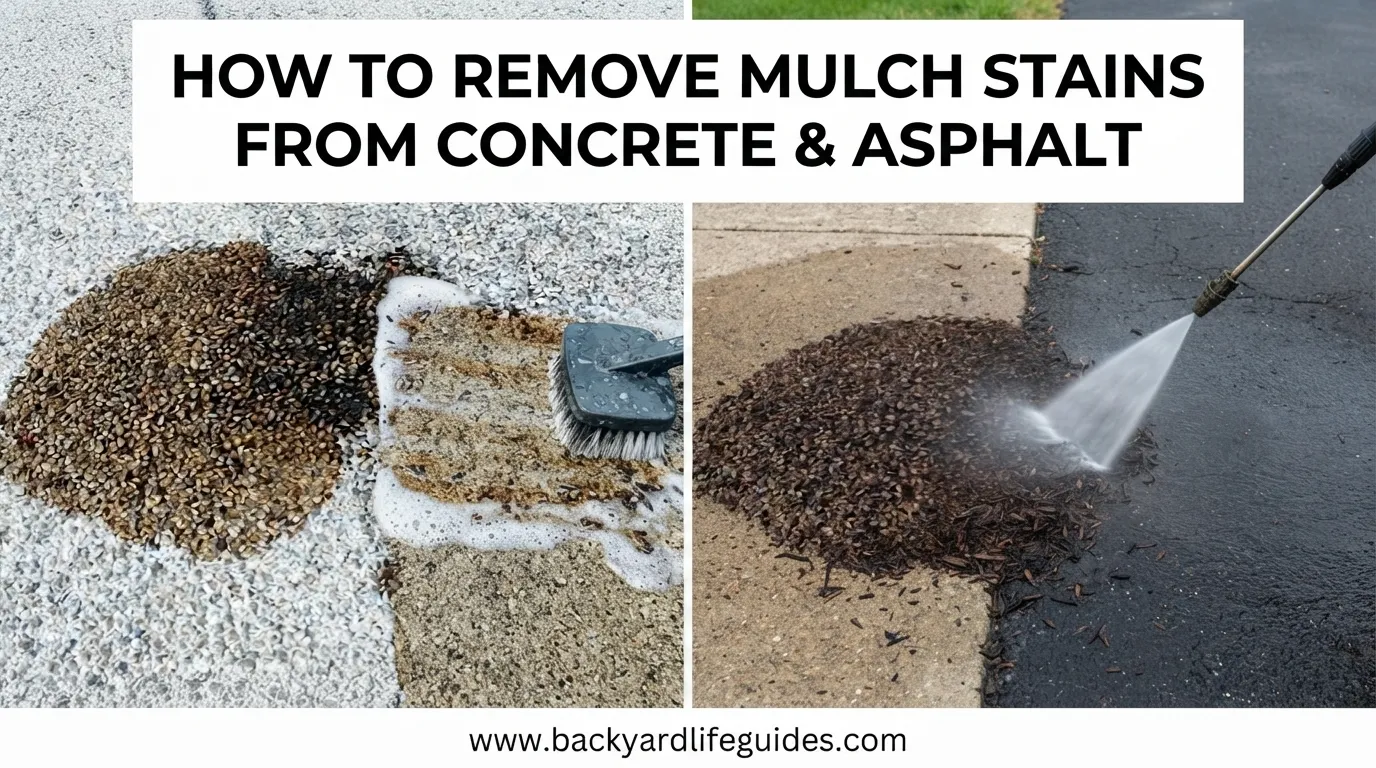
How to Remove Mulch Stains From Concrete & Asphalt
- Disclosure: This post may include affiliate links. If you click a link and complete a purchase, I may earn a commission. Additionally, as an Amazon Associate, I earn from eligible purchases.
Mulch helps gardens retain moisture and gives landscape beds a finished appearance, but it can leave stubborn-looking marks when wet mulch, dyes, pigments, or organic material comes into contact with nearby surfaces.
The good news is that most mulch stains can be treated without immediately reaching for an aggressive cleaner. The safest approach is to start with the mildest method, give it enough time to work, and only move to a stronger treatment if the stain remains.
This guide explains how to remove mulch stains from concrete, asphalt, clothes, hands, and car carpet, with practical measurements and waiting times so you know exactly what to do.
Why Does Mulch Stain Concrete and Asphalt?
Mulch can contain natural pigments, wood compounds, and added colorants that transfer onto surrounding surfaces. Wet mulch is particularly troublesome because moisture can help these materials spread and leave visible marks.
Dark or colored mulch may create red, black, purple, or brownish stains, depending on the material and surface.
Wood-based mulch can also contain tannins, which may contribute to discoloration as organic material breaks down.
The longer the material remains on a porous surface, the more difficult it may become to remove.
What You Need Before Cleaning a Mulch Stain
The exact supplies depend on the surface and severity of the stain, but you may need:
| Cleaning item | Best use |
|---|---|
| Water | First rinse |
| Dish soap | Mild surface cleaning |
| White vinegar | Light stains |
| Baking soda | Stubborn spots |
| Hydrogen peroxide | Difficult concrete stains |
| Bleach | Persistent concrete or asphalt stains |
| Stiff-bristled brush | Scrubbing |
| Hose | Rinsing |
| Putty knife | Removing dried mulch |
| Broom | Removing loose material |
| Microfiber cloth | Blotting |
| Toothbrush | Small or carpeted areas |
| Commercial cleaner | Persistent surface stains |
Tip: Gather everything before beginning so you can move from one treatment stage to the next without leaving the surface dirty for longer.
How to Remove Mulch Stains From Concrete
Concrete is porous, so avoid immediately using the strongest possible treatment. Begin with physical removal and a mild cleaning solution.
Step 1: Remove Loose Mulch
Sweep or brush away loose mulch, dirt, leaves, and other debris.
If dried pieces are stuck to the concrete, carefully lift them with a putty knife or another blunt tool.
Do not aggressively scrape the concrete because unnecessary force can spread the stain.
Step 2: Try Soap and Water
Mix water with several squirts of dish soap.
Apply the solution to the stained area and scrub with a stiff-bristled brush using circular movements.
This is a good first option for fresh or relatively light staining.
Step 3: Try a Vinegar Solution
For a stain that remains visible, combine equal parts water and white vinegar.
Apply the mixture to the affected area and allow it to sit for approximately 10–15 minutes.
Blot or scrub the area and rinse thoroughly.
For a small stain, avoid flooding the surrounding concrete unnecessarily.
Step 4: Treat a Persistent Stain
If the vinegar treatment does not remove the discoloration, a stronger option is:
- 1 part hydrogen peroxide
- 2 parts water
Apply the solution to the stain and leave it for approximately 10–15 minutes.
Then blot or scrub the area and rinse.
Repeat only when necessary rather than repeatedly applying stronger chemicals from the beginning.
Step 5: Use a Stronger Bleach Treatment Carefully
For particularly stubborn concrete stains, a diluted bleach solution can be used.
One concrete method uses:
- 1 cup bleach
- 1 gallon water
Apply the diluted solution, allow it to work for approximately 30 minutes, then scrub and rinse thoroughly.
Because bleach is a strong chemical, protect nearby plants and avoid allowing the solution to run into garden beds.
Step 6: Rinse and Dry
Rinse the concrete thoroughly with clean water.
Allow it to dry completely before deciding whether another treatment is necessary. A stain can look different while the concrete is still wet.
Should You Pressure Wash a Mulch Stain?
Not as your first step.
High-pressure water can force staining material deeper into porous concrete or asphalt rather than simply removing it from the surface.
Start with a normal hose rinse and manual cleaning.
If pressure washing is appropriate for the surface, use a low-pressure approach rather than immediately applying maximum pressure.
This is especially important when dealing with colored mulch stains on pavement.
How to Remove Mulch Stains From Asphalt
Asphalt requires a slightly different approach because aggressive cleaning can damage the surface.
Step 1: Rinse the Area
Use water to remove loose mulch and surface debris.
Avoid blasting the stain with excessive pressure.
Step 2: Apply Soap or Vinegar
Apply dish soap or a suitable vinegar solution to the affected area.
Scrub gently using circular motions and a suitable brush.
Step 3: Rinse With Low Pressure
Rinse away the cleaning solution and loosened dye using a low-pressure rinse.
Inspect the surface after rinsing.
Step 4: Escalate Only if Necessary
For a persistent asphalt stain, one documented method uses:
- 2 gallons of warm water
- 2 capfuls of bleach
Another paving-focused method uses:
- 2 gallons of water
- 2 cups of bleach
Because these quantities differ substantially, do not combine or improvise formulas. If using bleach on asphalt, follow the specific product instructions and protect nearby vegetation.
Allow the selected treatment to work for approximately 30 minutes, scrub as appropriate, and rinse using low pressure.
Step 5: Let the Asphalt Dry
Allow the driveway or parking area to dry before judging the result.
A remaining shadow may become less noticeable naturally with weathering, especially when the original mulch stain was relatively light.
How to Remove Mulch Stains From Clothes
Mulch can transfer color onto fabric, particularly when it is wet.
The key is to treat the stain as soon as possible.
Follow These 5 Steps
- Remove excess mulch carefully.
- Scrape dried material with a blunt edge, such as the back of a butter knife.
- Soak the clothing in cold water and dish soap overnight.
- Wash using the hottest water setting appropriate for the fabric.
- Air dry instead of using the dryer until you know the stain is gone.
Dryer heat can make a remaining stain more difficult to remove.
Always check the garment’s care label before using a cleaning treatment.
How to Remove Mulch Stains From Your Hands
If your hands become stained while spreading mulch, start with ordinary dish soap and water.
For more noticeable discoloration, several household approaches can be used.
One mixture combines:
- Sugar
- Baking soda
- Olive oil
Another option combines:
- 1 tablespoon lemon juice
- 1 tablespoon baking soda
The article also identifies diluted hydrogen peroxide and healing lotion as possible approaches.
After cleaning, rinse your hands thoroughly and apply moisturizer if your skin feels dry.
Do not aggressively scrub your skin simply to remove every trace of color. The stain can fade naturally as the outer layer of skin sheds.
How to Remove Mulch Stains From Car Carpet
For a fabric car carpet, first remove loose mulch and dirt.
A cleaning mixture can be made with:
- ¼ cup distilled white vinegar
- 1 tablespoon dish soap
- Hot water
Apply the solution carefully and allow it to sit for approximately 10 minutes.
Scrub gently with a toothbrush or suitable soft brush.
For a stubborn mark, another treatment uses:
- 2 tablespoons baking soda
- 1 tablespoon warm water
Leave the mixture for approximately 10 minutes, then scrub.
After cleaning, shampoo the carpet if necessary and remove excess moisture using microfiber towels or a suitable carpet-cleaning method.
What If the Mulch Stain Is Very Old?
Older stains may require several treatment stages rather than one aggressive application.
Use this progression:
| Stain condition | First approach | Next step |
|---|---|---|
| Fresh/light | Water + dish soap | Vinegar |
| Moderate concrete stain | Vinegar | Hydrogen peroxide |
| Persistent concrete stain | Hydrogen peroxide | Diluted bleach |
| Fresh asphalt stain | Water | Soap or vinegar |
| Persistent asphalt stain | Mild cleaner | Carefully selected stronger treatment |
| Clothing | Cold water + dish soap | Wash |
| Car carpet | Vinegar + dish soap | Baking soda |
Patience is important. Repeated gentle treatment is often preferable to immediately applying excessive pressure or concentrated chemicals.
How to Prevent Mulch Stains
Removing the stain is only half the solution. Preventing contact between mulch and the surrounding surface can make future maintenance much easier.
Keep Mulch Away From Pavement
Leave a small separation between mulch beds and concrete or asphalt where practical.
This reduces direct contact when mulch shifts after rain, watering, or gardening activity.
Use a Physical Barrier
Landscape fabric, a rubber mat, or another suitable barrier can help reduce contact between mulch and nearby hard surfaces.
Avoid Working With Wet Mulch
Wet mulch is more likely to transfer color.
If possible, schedule mulch installation or movement during dry weather.
Rain can also wash mulch dye onto nearby pavement.
Rake Regularly
Move stray pieces of mulch away from driveways, sidewalks, and parking areas before they become saturated by rain.
A few minutes of regular maintenance can prevent a much larger cleaning job later.
Clean Before Winter
Seasonal maintenance is especially useful for driveways and parking lots.
Removing mulch, oil, leaves, and other contaminants during fall helps keep the surface cleaner before winter moisture and weather arrive.
Mulch Stains vs. Oil Stains
Mulch and oil may both leave dark marks, but they should not be treated exactly the same way.
For oil, absorb as much of the fresh material as possible before washing.
Useful absorbent materials mentioned in the include:
- Sawdust
- Kitty litter
- Gravel
- Non-clumping cat litter
For more persistent oil contamination, cleaning approaches may include dish soap, baking soda, commercial degreasers, or TSP (Tri-Sodium Phosphate).
Do not automatically use an oil-stain treatment on a mulch stain.
Common Mistakes to Avoid
Using Maximum Pressure Immediately
A powerful pressure washer can drive staining material deeper into porous surfaces.
Start gently.
Leaving Mulch on the Surface
The longer colored or wet mulch remains against concrete or asphalt, the more opportunity there is for staining.
Remove loose material promptly.
Using Too Much Bleach
More chemical does not automatically mean better cleaning.
Use a properly diluted solution and follow the cleaner’s safety instructions.
Protecting the Stain but Forgetting the Plants
When treating outdoor surfaces, remember that runoff can reach grass, flowers, shrubs, and other vegetation.
Cover or protect sensitive plants before using stronger cleaning solutions.
Drying Clothes Before Checking the Stain
Do not automatically place stained clothing into a dryer.
Check the stain first. Heat can make remaining discoloration more difficult to remove.
People Also Ask
Are mulch stains permanent?
Usually, mulch stains are not necessarily permanent. Fresh stains are generally easier to address, while older or deeply absorbed stains may require repeated treatment.
What removes mulch stains from concrete?
Start with dish soap and water. If necessary, try equal parts water and white vinegar, followed by a stronger treatment such as diluted hydrogen peroxide for persistent stains.
Can vinegar remove mulch stains?
Yes. A mixture of equal parts water and white vinegar is one of the mild cleaning approaches described for concrete.
How long should vinegar sit on a mulch stain?
The documented concrete method recommends approximately 10–15 minutes before blotting, scrubbing, and rinsing.
How long should a bleach solution sit?
The documented methods use approximately 30 minutes for stubborn stains before rinsing. Always use a properly diluted solution and follow applicable product safety instructions.
Can I pressure wash mulch stains?
Pressure washing should not be the first choice. Excessive pressure can push staining material deeper into porous concrete or asphalt. Start with a normal rinse and manual cleaning.
How do I remove mulch stains from asphalt?
Start with water, then use soap or vinegar and scrub with circular motions. Rinse using low pressure. Persistent stains may require a carefully diluted stronger treatment.
Does black mulch stain more easily?
Dark or heavily pigmented mulch can transfer noticeable color onto hands, clothes, concrete, and other nearby surfaces. The visible result depends on the mulch and the surface.
How can I prevent mulch from staining my driveway?
Keep mulch away from the pavement where practical, use a barrier between landscaping and hard surfaces, avoid handling wet mulch unnecessarily, and remove stray pieces regularly.
Should I use bleach around plants?
Use extreme care. Bleach runoff can harm vegetation. Protect nearby plants and prevent cleaning solutions from entering garden beds or soil.
Final Thought
The safest way to remove mulch stains is to work gradually.
For concrete, begin with water and dish soap, then progress to vinegar and stronger treatments only when necessary. For asphalt, avoid excessive pressure and use a low-pressure rinse after cleaning. For clothing and carpet, early treatment is especially important because heat can make remaining stains more difficult to remove.
The most important numbers to remember are 10–15 minutes for several mild-to-moderate treatments and 30 minutes for certain stronger treatments. Dilution also matters: documented methods range from 1:1 water and vinegar to 1:2 hydrogen peroxide and water, while bleach mixtures vary by surface and method.
When in doubt, start mild, test carefully, protect nearby plants, and escalate only when the stain actually requires it.