
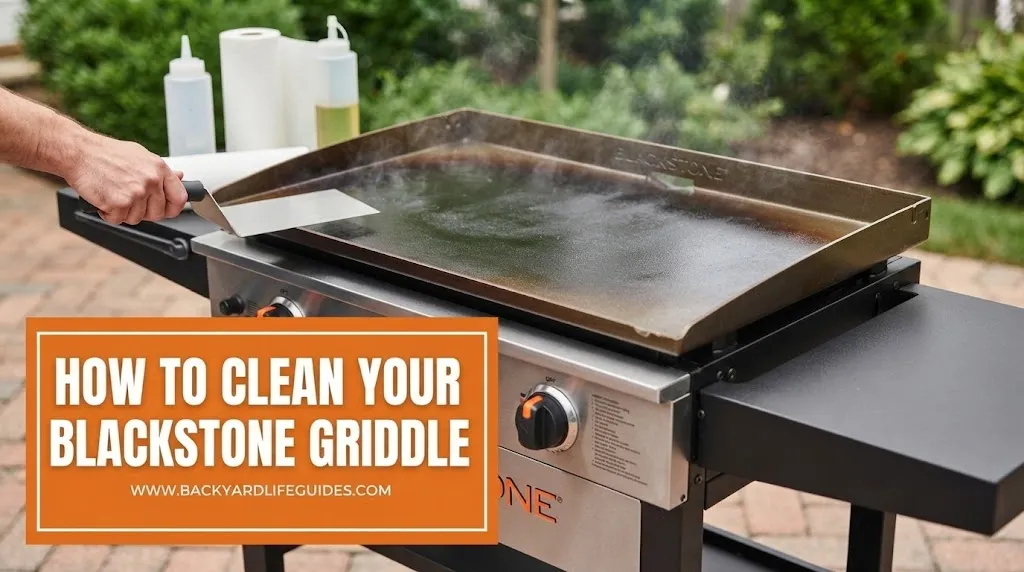
How to Clean Your Blackstone Griddle: Complete Cleaning & Maintenance Guide
How to Clean Your Blackstone Griddle
- Disclosure: This post may include affiliate links. If you click a link and complete a purchase, I may earn a commission. Additionally, as an Amazon Associate, I earn from eligible purchases.
A Blackstone griddle is relatively easy to maintain once you have the right routine. The key is not simply removing food—it is protecting the seasoned steel surface while keeping grease, burnt food, and moisture under control.
For most cooks, everyday cleaning takes only about 5–10 minutes. You generally need a scraper, paper towels, a little water, and cooking oil. More aggressive methods such as a griddle stone, steel wool, or sandpaper should be reserved for rust, heavy buildup, or damaged seasoning.
The most important rule is simple: clean your griddle after every cook and leave it lightly protected with oil.
What You Need to Clean a Blackstone Griddle
You don’t need a huge collection of cleaning products. A small set of tools can handle most situations.
Essential cleaning tools
- Metal griddle scraper or spatula
- Paper towels
- Cooking oil
- Plastic squeeze or squirt bottle
- Heat-resistant gloves
- Clean cloth or microfiber towel
Useful tools for tougher jobs
- Non-metallic scouring pad
- Griddle cleaning brick
- Pumice grill stone
- Steel wool
- Medium-grit sandpaper
- Small amount of mild dish soap for specific situations
A griddle scraper is arguably the most important tool because it removes most food and grease without requiring aggressive scrubbing.
A squeeze bottle is also inexpensive and useful. You can add a small amount of water to stubborn residue and use the resulting steam to loosen it.
How to Clean a Blackstone Griddle After Cooking
For normal maintenance, there is no need to make cleaning complicated.
1. Remove the food and grease
When cooking is finished, move leftover food and loose debris toward the grease-management opening.
Use your scraper or metal spatula to collect food particles and grease.
Don’t scrape aggressively back and forth like you’re cutting the surface. Keep the scraper controlled and reasonably flat against the griddle.
2. Scrape the cooking surface
Scrape the entire cooking area, paying particular attention to:
- Burnt food
- Grease
- Sauce residue
- Caramelized food
- Areas around the edges
Sugary sauces such as teriyaki and barbecue sauce can become particularly stubborn when cooked directly onto the hot surface.
3. Add a small amount of water if necessary
If residue remains, add a small amount of water to the warm surface.
You don’t need to flood the griddle. A few tablespoons at a time is usually enough for a stubborn area.
The water creates steam and helps loosen baked-on food.
4. Scrape again
Once the water has loosened the residue, use your scraper again.
For particularly stubborn food, a non-metallic scouring pad can provide additional cleaning power without immediately resorting to aggressive abrasives.
5. Wipe everything away
Use paper towels or a clean cloth to remove:
- Water
- Food particles
- Grease
- Loose seasoning debris
Continue wiping until the surface is completely dry.
This step matters because standing moisture can contribute to rust on a steel cooking surface.
6. Apply a very thin layer of oil
Once the griddle is clean and dry, spread a thin film of cooking oil over the cooking surface.
The goal is not to leave the surface visibly greasy.
Use a paper towel held with tongs if the surface is still warm.
Thin is better than thick.
A heavy layer of oil can become sticky, smoke excessively, or contribute to an uneven seasoning layer.
Should You Clean a Blackstone Griddle After Every Use?
Yes. Routine cleaning after every cook is one of the most consistent recommendations across the cleaning methods reviewed.
You don’t need to perform a complete deep clean every time. In fact, aggressive cleaning after every meal can unnecessarily disturb a good seasoning layer.
Think of maintenance in two levels:
Every cook:
Scrape → water if needed → wipe → dry → thin oil
Occasionally:
Deep clean → remove stubborn buildup → restore seasoning
This approach keeps routine maintenance quick while reserving abrasive cleaning for situations where it is actually necessary.
How to Clean a New Blackstone Griddle
A brand-new griddle is different from one that has already been seasoned and cooked on.
Before the first use, the surface may contain manufacturing or shipping residue. This is one of the situations where soap and water are appropriate.
Step 1: Prepare warm or hot soapy water
Use a bucket with water and a small amount of mild dishwashing liquid.
Step 2: Wash the cooking surface
Use a clean towel, cloth, or non-abrasive sponge to clean the griddle surface.
Don’t aggressively scour the steel.
Step 3: Rinse thoroughly
Remove the soap and any remaining residue with clean water.
Step 4: Dry completely
Use paper towels or a clean towel to remove all visible moisture.
You can also use heat to help evaporate remaining moisture.
Step 5: Season the griddle
After the initial cleaning, the surface needs to be seasoned.
The initial seasoning process commonly uses 3–5 thin coats of oil.
For a 36-inch griddle, approximately 2–3 tablespoons of oil can be used for a seasoning coat, spreading it extremely thinly across the surface.
Heat the oil until it smokes, allow the smoke to stop, and repeat the process.
Blackstone’s own guidance similarly recommends multiple thin seasoning coats and approximately 15 minutes of smoking time per coat.
How to Season a Blackstone After Cleaning
Cleaning and seasoning are closely connected.
Seasoning is essentially a protective layer formed when cooking oil bonds to the heated steel. It helps create a stick-resistant surface and protects the steel from moisture.
For routine maintenance, you don’t normally need to perform the complete initial seasoning procedure.
Instead:
- Clean the griddle.
- Remove all moisture.
- Apply a very thin layer of oil.
- Spread the oil evenly.
- Remove excess oil with a paper towel.
- Allow the griddle to cool and store it properly.
The surface should look protected—not wet or heavily coated.
Which oil should you use?
Common choices include:
- Canola oil
- Vegetable oil
- Avocado oil
- Flaxseed oil
- Peanut oil
- Olive oil
- Coconut oil
For high-heat cooking and seasoning, many griddle users prefer oils with higher smoke points. The most important part of routine maintenance, however, is applying a thin, even coat rather than using excessive oil.
How to Remove Stuck-On Food
Stuck food doesn’t automatically mean your griddle needs a deep clean.
Start with the least aggressive method.
Try this sequence
1. Warm the griddle.
A warm surface makes residue easier to loosen.
2. Scrape the area.
Use your griddle scraper and work toward the grease opening.
3. Add a few tablespoons of water.
Let the heat create steam.
4. Scrape again.
The loosened residue should come away more easily.
5. Wipe the surface.
Remove the remaining water and debris.
6. Use a scouring pad if necessary.
Only move to a stronger abrasive if the residue still refuses to come off.
This gradual approach helps prevent unnecessary damage to the seasoning.
How to Deep Clean a Blackstone Griddle
A deep clean is different from your normal post-cooking cleanup.
You may need one when you have:
- Heavy carbon buildup
- Flaking seasoning
- Persistent food residue
- Significant grease buildup
- Sticky seasoning
- Visible rust
A pumice grill stone or griddle cleaning brick is particularly useful for these situations.
Six-step deep-clean method
1. Warm the griddle
Heat makes stubborn buildup easier to loosen.
2. Scrape thoroughly
Remove as much loose food and seasoning as possible with a scraper.
3. Apply a small amount of water
Use water to loosen baked-on residue where appropriate.
4. Use a griddle stone if needed
Apply a small amount of oil and work the stone over stubborn areas using controlled pressure.
Avoid unnecessarily grinding the entire surface when only one area needs attention.
5. Wipe everything clean
Remove loosened carbon, oil, water, and debris.
6. Re-season
Apply fresh, thin coats of oil if the deep cleaning removed or damaged part of the seasoning.
A griddle stone does not need to be part of every cleaning session. Some maintenance guides suggest using one around every 6–8 weeks when buildup warrants it, while others recommend deep cleaning only a few times per year.
How to Remove Rust From a Blackstone Griddle
Rust generally appears when moisture reaches the steel surface.
If you see orange or reddish-brown spots, don’t simply cover them with more oil. The rust needs to be removed first.
Rust removal method
1. Heat the griddle
Heating the surface can help loosen rust and old seasoning.
Some cleaning methods recommend approximately 20 minutes of high heat before scraping, while restoration procedures can vary depending on the severity of the corrosion.
2. Turn off the heat
Allow the surface to cool enough to work safely.
Use heat-resistant gloves when handling hot equipment.
3. Scrape the rust
Use a metal scraper to remove loose rust and damaged seasoning.
4. Apply a small amount of oil
For stubborn rust, apply a little cooking oil to the affected area.
5. Use an abrasive
Depending on the severity, you can use:
- Griddle stone
- Pumice grill brick
- Steel wool
- Medium-grit sandpaper
Work carefully until the visible rust has been removed.
6. Remove all debris
Use paper towels or a clean cloth.
If water is necessary, use as little as possible and dry the surface immediately.
7. Re-season
Once the rust has been removed and the surface is clean and dry, rebuild the protective seasoning.
Blackstone’s current restoration guidance also recommends scraping rust, using oil with steel wool, sandpaper, or a griddle stone, removing the debris, and then re-seasoning.
What About White Vinegar for Rust?
White vinegar can be useful for stubborn rust, but it should not be treated as a routine cleaning solution.
One detailed cleaning method limits vinegar contact to approximately 5 minutes maximum.
If you use vinegar:
- Apply it only to the affected area.
- Keep the contact time short.
- Remove the residue thoroughly.
- Dry the steel completely.
- Re-season the surface.
For light rust, mechanical removal with a scraper and appropriate abrasive may be simpler.
7 Blackstone Cleaning Mistakes to Avoid
A lot of griddle problems come from over-cleaning or using the wrong technique, rather than from not cleaning enough.
1. Using soap after every cook
Routine soap washing can interfere with the seasoning layer.
Better: Scrape, wipe, dry, and lightly oil.
2. Leaving water on the surface
Water and exposed steel are a bad combination.
Better: Dry the griddle completely.
3. Using too much oil
A thick oil layer can become sticky and create uneven seasoning.
Better: Apply the thinnest practical layer.
4. Scraping too aggressively
Hard, uncontrolled scraping can disturb the seasoning.
Better: Keep the scraper controlled and use the correct angle.
5. Using ice to clean a hot residential griddle
Rapid temperature changes can create thermal stress and potentially contribute to warping or cracking.
Better: Use a small amount of water rather than ice.
6. Deep-cleaning too frequently
A complete restoration isn’t necessary after every meal.
Better: Use routine cleaning for normal residue and reserve aggressive methods for genuine buildup, rust, or damaged seasoning.
7. Storing the griddle without protection
A clean but completely unprotected steel surface can be vulnerable to moisture.
Better: Finish with a very thin oil layer and store it somewhere cool and dry.
How to Clean While You Are Still Cooking
You don’t always have to wait until the meal is finished.
If sauce or food residue begins accumulating on one section:
- Move the food to another area.
- Scrape the dirty section.
- Add a tiny amount of water if necessary.
- Wipe or scrape the residue away.
- Continue cooking.
This technique is especially helpful with sticky sauces that caramelize quickly.
It prevents a small dirty area from becoming a large cleanup job later.
How Often Should You Deep Clean a Blackstone?
There is no universal calendar date for deep cleaning.
Your cooking habits matter more than the number of days.
If you clean after every cook, keep the surface dry, and maintain the seasoning, a deep clean may only be necessary a few times per year—or even less frequently.
Some experienced griddle users report going approximately 4 years with only 1 major deep clean, while other maintenance schedules suggest checking or using a griddle stone around every 6–8 weeks when buildup requires it.
What Should You Never Use on a Blackstone?
Avoid making harsh cleaners your first solution.
For routine cooking-surface maintenance, avoid unnecessarily using:
- Household bleach
- Oven cleaner
- Strong degreasers
- Excessive soap
- Steel wool
- Excessive water
- Abrasive tools when they aren’t needed
This doesn’t mean every abrasive is permanently forbidden. Steel wool, sandpaper, and griddle stones have legitimate uses for rust and restoration, but they should not be your everyday cleaning tools.
Blackstone Cleaning Routine You Can Save
After every cook
1. Scrape
Remove food, grease, and debris.
2. Add water if needed
Use only a small amount for stubborn residue.
3. Scrape again
Lift the loosened food.
4. Wipe
Remove water, grease, and debris.
5. Dry
Make sure no moisture remains.
6. Oil
Apply a very thin protective layer.
That’s the complete everyday routine.
For a dirty or neglected griddle
Heat → Scrape → Water/steam → Scrub → Wipe → Dry → Re-season
For rust
Scrape rust → Abrasive + oil → Remove debris → Dry → Re-season
Keeping these three routines separate makes maintenance much easier.
FAQs
How long does it take to clean a Blackstone griddle?
A normal post-cooking cleanup generally takes around 5–10 minutes. If the surface is already in good condition, the process can be even quicker.
Should I clean my Blackstone while it is hot?
A warm surface is generally easier to clean because food and grease are less hardened. However, always use safe temperatures and appropriate tools. Don’t put yourself at risk by working on a dangerously hot surface.
How much water should I use?
Start with a few tablespoons at a time for stubborn areas. You don’t need to flood the cooking surface.
How much oil should I use?
For routine seasoning, use a very thin coating. For initial seasoning, approximately 2–3 tablespoons can be used on a 36-inch griddle, spread extremely thinly.
Can I use Dawn dish soap on my Blackstone?
For a brand-new griddle or certain restoration situations, mild soap can be useful. For routine post-cooking cleaning, frequent soap use isn’t recommended because it can interfere with the seasoning.
How often should I season my Blackstone?
Initial seasoning commonly involves 3–5 coats. After that, routine cleaning followed by a very thin protective oil layer usually maintains the surface. A complete re-seasoning is generally needed when the seasoning has been significantly damaged, removed, or restored after rust.
What is the best oil for a Blackstone?
Popular choices include canola, vegetable, avocado, flaxseed, peanut, and olive oil. Choose an oil appropriate for your cooking temperature and apply it thinly.
Can I use steel wool on my Blackstone?
Yes, but primarily for rust or restoration, not routine cleaning. Steel wool can remove seasoning along with rust, so the affected area may need to be re-seasoned afterward.
Why is my Blackstone surface sticky?
Sticky seasoning is often caused by applying too much oil or failing to properly heat/bond the oil layer. Remove the excess buildup and rebuild the seasoning with thinner coats.
How do I stop my Blackstone from rusting?
The most important steps are remove moisture, maintain the seasoning, apply a thin oil coating, and store the griddle in a dry, protected location.
Final Blackstone Cleaning Checklist
Before putting your griddle away, ask:
- Did I scrape away all food debris?
- Did I remove excess grease?
- Did I use only a small amount of water?
- Did I wipe the surface clean?
- Is the cooking surface completely dry?
- Did I apply a thin layer of oil?
- Did I avoid unnecessary soap?
- Is the griddle protected from rain and moisture?
- Is the cover properly positioned?
- Does the surface need restoration rather than another routine cleaning?
If you can answer yes to these questions, your Blackstone is ready for its next cook.
Helpful Official Resources
For a visual demonstration, you can watch the official Blackstone Griddles cleaning tutorial on YouTube. Blackstone Griddles: How to Clean a Blackstone Griddle
For detailed manufacturer instructions, see Blackstone’s official steel griddle cleaning guide. Blackstone Products: How to Clean a Steel Griddle Top
The Bottom Line
Cleaning a Blackstone griddle doesn’t need to be a major chore. The best routine is simple and consistent: scrape after every cook, use a little water only when necessary, wipe away all residue, dry the steel completely, and finish with a thin layer of oil.
Save the griddle stone, steel wool, sandpaper, and deeper restoration techniques for genuine buildup or rust. With this approach, you protect the seasoning instead of constantly removing it—and your everyday cleanup can usually stay within 5–10 minutes.




6 Comments