
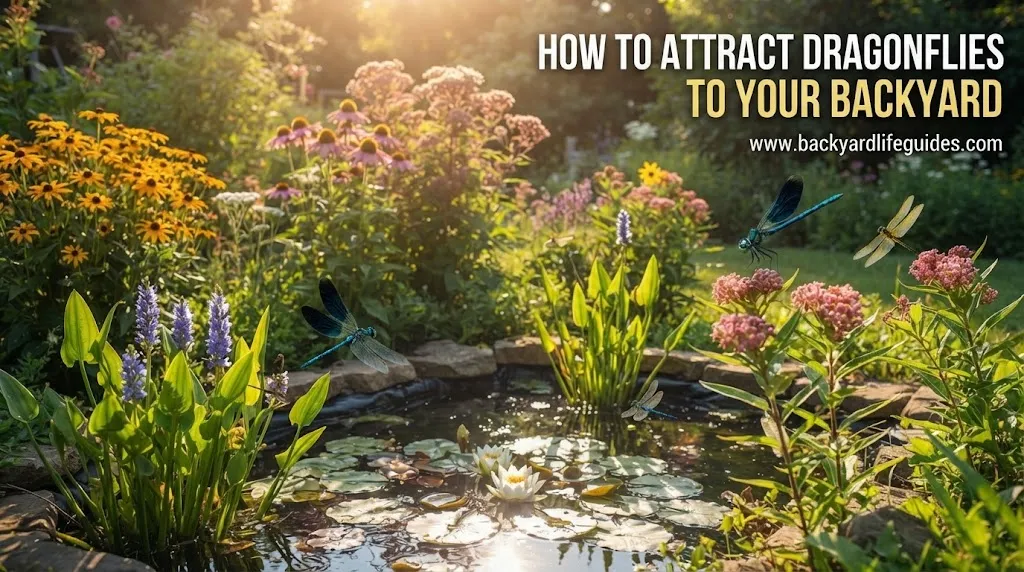
How to Attract Dragonflies to Your Backyard: 15 Proven Ways
How to Attract Dragonflies to Your Backyard
- Disclosure: This post may include affiliate links. If you click a link and complete a purchase, I may earn a commission. Additionally, as an Amazon Associate, I earn from eligible purchases.
Dragonflies are more than beautiful insects flying around a garden. They are natural predators that feed on mosquitoes, flies, gnats, aphids, midges, and other small insects. That makes them especially appealing if you want to encourage natural pest control in your backyard.
The most effective approach is not simply putting out one type of plant or adding a small container of water. A dragonfly-friendly yard combines water, aquatic plants, native vegetation, sunny areas, perches, shelter, and plenty of natural insect activity.
The ideas below bring together the most useful recommendations from the five sources reviewed and turn them into one practical backyard plan.
1. Add a Water Feature
If you want to make your backyard more attractive to dragonflies, start with water.
Dragonflies are aquatic during their early development. Their young, commonly called nymphs, live in water before emerging as adults. Because of this life cycle, a suitable water feature can provide something that flowers alone cannot.
A pond is the strongest option mentioned across.
How Deep Should a Dragonfly Pond Be?
A commonly recommended depth is at least 2 feet.
One source also recommends a pond width of at least 20 feet, while other sources emphasize depth, vegetation, sunlight, and undisturbed conditions rather than requiring a specific pond size.
If you have enough space, a larger natural-style pond can provide more habitat. If your backyard is small, you can still create a smaller water feature.
Small Backyard? Try a Container Pond
You do not necessarily need a large pond.
For a smaller yard, a container pond can be created using (see our small garden ideas for more inspiration):
- A large ceramic pot or suitable container
- Stones
- Water
- Aquatic plants
A small bubbler can also be added to the feature.
The important idea is to create a water source that can support a miniature aquatic habitat.
Keep the Water Feature Sunny
Place the water feature where it receives plenty of sunlight, particularly afternoon sun.
Dragonflies use sunny areas for temperature regulation and activity. Keeping the water feature exposed to appropriate sunlight can therefore make the area more useful to them.
2. Add Aquatic Plants
Water alone is not the whole habitat.
Aquatic vegetation gives dragonflies additional places to hide, hunt, lay eggs, and develop during their nymph stage.
| Aquatic Plant | Role in a Dragonfly Habitat |
|---|---|
| Water lilies | Provide water-surface habitat and egg-laying areas |
| Cattails | Provide structure and shelter |
| Arrowhead | Adds aquatic vegetation |
| Fanwort | Provides underwater habitat |
| Pickerelweed | Supports pond habitat |
| White bulrush | Adds vertical pond vegetation |
| Swamp milkweed | Useful around damp areas |
| Joe Pye weed | Provides additional vegetation around wet areas |
You do not need to plant every option. A mixture of suitable aquatic and moisture-loving plants can create a more varied environment.
3. Plant Flowers That Support Insect Activity
Adult dragonflies need food, and a backyard with healthy insect activity can help provide it.
Instead of trying to create a completely insect-free garden, allow some natural insect life to remain.
Flowering plants can help attract insects such as bees, butterflies, and other small insects, indirectly supporting the food web that dragonflies depend on.
Recommended Flowering Plants
The commonly mention:
- Black-eyed Susan
- Meadow sage
- Yarrow
- Borage
- Swamp milkweed
Black-eyed Susan appears repeatedly in the and is highlighted as a plant that attracts insects.
The goal is not simply to plant flowers because dragonflies eat flowers—they do not. The value is that vegetation can create a healthier habitat containing the insects dragonflies hunt.
4. Choose Native Plants
Native plants can make a backyard more useful to local wildlife.
The Canadian Wildlife Federation specifically recommends native plants for attracting beneficial insects, including bees, butterflies, and dragonflies.
Examples from the include:
- Black-eyed Susan
- White yarrow
- Meadow sage
- Native grasses
Native grasses mentioned by one include:
- Switchgrass
- Little bluestem
- Prairie dropseed
Rather than filling the entire yard with one plant, consider combining flowers, grasses, shrubs, and aquatic vegetation.
5. Stop Using Pesticides Around the Habitat
One of the clearest recommendations across the is to avoid pesticides where possible.
Pesticides can harm dragonflies directly, but there is another problem: they can also reduce the insects dragonflies rely on for food, and research from the Xerces Society shows similar risks to other beneficial insects.
They may affect beneficial insects such as:
- Bees
- Butterflies
- Beetles
- Spiders
- Other pollinators and insects
A yard with no insects may sound ideal for pest control, but it can actually remove an important part of the food chain.
Use Natural Pest Management Instead
The mentions alternatives such as:
- Handpicking pests
- Encouraging beneficial insects
- Companion planting
- Neem oil
- Using plants such as lavender or rosemary for specific pest-management purposes
The broader goal is simple: reduce unnecessary pesticide use and preserve a functioning backyard ecosystem.
6. Give Dragonflies Places to Perch
Dragonflies frequently land between flights.
Rocks around a pond can provide convenient places for them to rest and bask in the sun.
You can also use natural vegetation as perches.
Useful options include:
- Rocks
- Tall plants
- Grasses
- Reeds
- Shrubs
Place some perching locations close to the water feature so dragonflies have easy access between hunting and resting.
7. Create Shelter Near the Water
Dragonflies are active during the day, but they still need places to rest.
Tall grasses, reeds, shrubs, and other vegetation can provide shelter around the habitat.
One also suggests an insect hotel made from a birdhouse filled with materials such as:
- Bark
- Straw
- Twigs
Positioning natural shelter near the water can help create a more complete backyard habitat.
8. Leave Some Open Space for Flight
A dragonfly-friendly yard should not be completely crowded with plants.
Dragonflies need room to fly and hunt.
If vegetation becomes extremely dense, consider trimming back some overgrowth and maintaining open flight paths.
A useful balance is:
Open space + vegetation + water + shelter
You can inspect the garden at least once a month to see whether plants have become too dense.
9. Provide Plenty of Sunlight
Sunlight plays an important role in dragonfly activity.
The associates sunny areas with:
- Temperature regulation
- Hunting
- Mating activity
When planning a pond or garden, avoid placing the entire habitat in deep shade.
A sunny pond surrounded by vegetation and open flight space can provide several of the features dragonflies need in one location.
10. Do Not Add Fish to a Dragonfly Pond
If your goal is specifically to support dragonfly development, recommends avoiding fish in the pond.
The reason is straightforward: fish can prey on dragonfly larvae.
Dragonfly nymphs spend a substantial part of their development underwater, so introducing predators into a small habitat can work against your goal.
11. Understand the Dragonfly Life Cycle
Knowing how dragonflies develop makes it easier to understand why water matters so much.
The life cycle has 3 main stages:
| Stage | What Happens |
|---|---|
| Egg | Eggs are laid in or around water and eventually hatch |
| Nymph | The young dragonfly lives underwater and develops |
| Adult | The mature dragonfly emerges and becomes the familiar flying insect |
The egg stage can last a few weeks, while adult dragonflies generally live for a few weeks to several months.
This means the pond is not merely a drinking source. It can be an important part of the dragonfly’s development.
12. Create a Damp or Boggy Area
If installing a traditional pond is difficult, consider creating a wet or boggy section of the garden.
Moist soil combined with suitable vegetation can add another habitat type to your backyard.
Swamp milkweed is one plant mentioned in the for damp conditions.
A wet garden area can also increase the overall diversity of plants and insects around your property.
13. Encourage the Insects Dragonflies Eat
A common mistake is trying to eliminate every insect from the garden.
Dragonflies need prey.
The identify several types of insects that dragonflies can consume, including:
- Mosquitoes
- Flies
- Gnats
- Aphids
- Midges
- Other flying insects
Planting flowers and avoiding unnecessary pesticides can help maintain the insect activity needed to support predators.
14. Maintain the Habitat Through the Seasons
A dragonfly garden needs some maintenance, but it does not have to be complicated.
Spring
Focus on getting the habitat ready:
- Clean or install the water feature
- Add native plants
- Add aquatic vegetation
- Place rocks or other perches
Summer
This is the main active period.
- Keep the water feature clean
- Maintain sunny areas
- Preserve open flight space
- Avoid unnecessary pesticides
- Keep suitable vegetation around the pond
Fall
Prepare the habitat for the following season:
- Trim excessive plant growth
- Clean and protect the water feature
- Review which plants performed well
- Plan additional planting for spring
A monthly garden check can help prevent vegetation from becoming excessively dense.
15. Build a Complete Dragonfly Habitat
The strongest lesson from all five is that no single trick guarantees a dragonfly-friendly backyard.
Instead, combine several features, similar to the broader approach in our guide to creating a living garden.
A practical habitat can look like this:
Water → Aquatic plants → Native flowers → Insects → Perches → Shelter → Sunlight → Open flight space
The more of these elements you can reasonably provide, the more complete the habitat becomes.
How Many Mosquitoes Can a Dragonfly Eat?
The consistently describe dragonflies as effective mosquito predators.
One source states that a dragonfly can consume more than 100 mosquitoes per day, while several others use the broader description of hundreds of mosquitoes per day.
The Canadian Wildlife Federation source also states that mosquitoes make up approximately 90% of a dragonfly’s diet.
These figures are useful for understanding why dragonflies are often welcomed in gardens, but actual feeding behavior can vary according to species, availability of prey, and environmental conditions.
How Long Do Dragonfly Nymphs Live in Water?
The gives a range of approximately 1–5 years for the nymph stage.
Another source specifically states that dragonfly nymphs can spend their first 2 years of life in water.
The difference is not necessarily contradictory because development varies between species and environmental conditions.
This is why maintaining a suitable aquatic habitat can be important if you want to support dragonflies beyond simply attracting passing adults.
How Many Dragonfly Species Are There?
The Canadian Wildlife Federation source cited in the states that 154 species of dragonflies occur in Canada.
That figure demonstrates the diversity within dragonflies and also helps explain why habitat requirements can differ between species.
Rather than trying to create a habitat for one specific species, a diverse backyard containing water, plants, sunlight, shelter, and natural insect activity provides a broader range of useful conditions.
Common Mistakes to Avoid
Removing Every Insect
Dragonflies need insects for food. A completely insect-free garden does not provide the food web they depend on.
Using Too Many Pesticides
Pesticides can harm dragonflies and remove their prey.
Keeping the Pond Completely Bare
Water without vegetation provides less habitat than a pond containing appropriate aquatic plants.
Putting the Habitat in Deep Shade
Dragonflies use sunlight for warming and activity, so a completely shaded water feature may be less useful.
Filling the Yard With Dense Vegetation
Dragonflies also need open space to fly and hunt. Keep a reasonable balance between vegetation and open areas.
Adding Fish to a Dragonfly Pond
Fish may eat dragonfly larvae, which can reduce the suitability of the pond for developing nymphs.
FAQs
What is the best way to attract dragonflies to a backyard?
The strongest approach is to create a complete habitat with water, aquatic plants, native vegetation, sunlight, perches, shelter, open flight space, and natural insect activity.
How deep should a pond be for dragonflies?
The commonly recommend a pond depth of at least 2 feet. One source additionally recommends a pond width of at least 20 feet.
Can I attract dragonflies without a large pond?
Yes. A smaller backyard can use a container pond, such as a ceramic pot containing water, stones, and suitable aquatic plants. A bubbler is another option mentioned by the .
What plants attract dragonflies?
Plants mentioned across the include water lilies, cattails, arrowhead, fanwort, black-eyed Susan, meadow sage, yarrow, borage, and swamp milkweed.
Do dragonflies eat mosquitoes?
Yes. Dragonflies prey on mosquitoes along with flies, gnats, aphids, midges, and other insects. The sources reviewed describe consumption ranging from more than 100 to hundreds of mosquitoes per day.
Should I use pesticides if I want dragonflies?
It is better to avoid unnecessary pesticide use around a dragonfly habitat. Pesticides can harm dragonflies and reduce the insects they depend on for food.
Do dragonflies need sunlight?
Yes. The identifies sunlight as important for temperature regulation, hunting, and mating activity.
Do dragonfly larvae live in water?
Yes. Dragonfly nymphs are aquatic and can remain in water for approximately 1–5 years, depending on species and environmental conditions.
Should I put fish in a dragonfly pond?
If your goal is to support dragonfly larvae, avoid adding fish because fish can prey on dragonfly nymphs.
How often should I maintain a dragonfly garden?
One recommends assessing the garden at least once a month for overgrowth. Seasonal maintenance should also include cleaning the water feature, managing excessive vegetation, and planning future planting.
Final Words
Attracting dragonflies is less about finding one magical plant and more about creating the right backyard ecosystem. Start with water, ideally a pond around 2 feet deep, then add aquatic plants, native flowers, rocks, sunny areas, shelter, and open flight space. Avoid unnecessary pesticides so dragonflies and their prey can thrive.
Even if you cannot build a large pond, a smaller container water feature can be a useful starting point. With the right combination of habitat features, your backyard can become a much more welcoming environment for these natural predators.

One Comment