
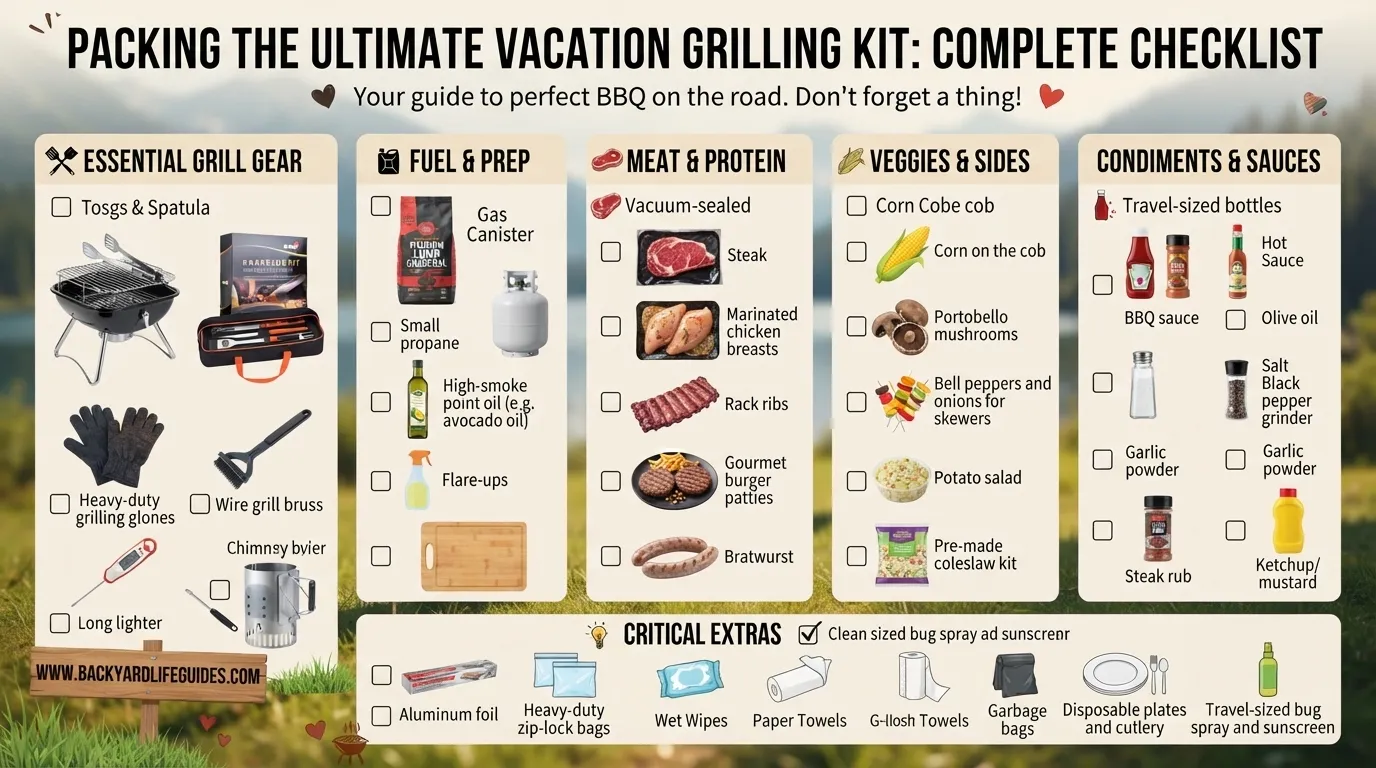
Packing the Ultimate Vacation Grilling Kit: Complete Checklist
- Disclosure: This post may include affiliate links. If you click a link and complete a purchase, I may earn a commission. Additionally, as an Amazon Associate, I earn from eligible purchases.
A vacation grill can turn an ordinary outdoor trip into a memorable meal, but only when the right equipment and supplies arrive with you. Forgetting fuel, utensils, food-storage containers, or a simple thermometer can quickly turn a relaxed barbecue into an inconvenient shopping trip.
The best approach is to pack for the whole grilling experience, not just the grill itself.
Whether you’re heading to a campsite, RV park, cabin, beach, or vacation home, this guide brings the most useful essentials together in one practical checklist. It covers your grill, cooking tools, food preparation, cooler organization, seasonings, safety supplies, cleanup, and a few easy ideas for making outdoor meals more enjoyable.
Start With the Right Portable Grill
The grill you take depends on where you’re going, what fuel is available, and how much cooking you plan to do.
There are 3 main portable grill options to consider:
| Grill Type | Best For | Main Advantage | What to Check |
|---|---|---|---|
| Gas grill | Quick vacation meals | Fast setup and temperature control | Propane supply and local rules |
| Charcoal grill | Traditional BBQ flavor | Smoky taste and high-heat cooking | Charcoal, starter, and ash disposal |
| Electric grill | Places where open flames aren’t allowed | Convenient and clean operation | Power source and outlet availability |
Gas Grill
A portable gas grill is useful when you want a quick setup. It eliminates the need to wait for charcoal to heat and makes temperature management relatively straightforward.
Before leaving, check the propane supply rather than assuming your destination will have a convenient refill option.
If you’re using a portable power station or generator with another cooking appliance, make sure the equipment is appropriate for the electrical load.
Charcoal Grill
Charcoal is a good choice when smoky flavor is part of the vacation experience.
Pack enough charcoal for the meals you expect to cook, along with matches or an appropriate fire starter. Remember that charcoal also creates ash that must be handled properly after cooking.
Electric Grill
Electric grills can be especially practical at locations where open flames or charcoal aren’t permitted.
The important question is whether your destination provides a suitable power source. If not, you may need an appropriate portable power station or generator.
Always check the destination’s rules before packing a particular grill.
Use This Vacation Grilling Checklist
A simple checklist makes packing much easier because grilling equipment is often spread across several areas of the kitchen, garage, or outdoor cooking space.
Grill Equipment
- Portable gas, charcoal, or electric grill
- Propane tank or charcoal
- Grill grate
- Fire starter or matches
- Lighter
- Portable power station or generator when appropriate
- Grill cover if needed
- Campfire grill grate when permitted
Cooking Tools
- Long-handled tongs
- Spatula
- Basting brush
- Grill brush
- Skewers
- Grilling gloves
- Meat thermometer
- Rotisserie basket
- Cutting board
- Knife
- Grill press
- Cast-iron skillet
- Aluminum foil
- Grill mats
A 4-in-1 BBQ tool can also reduce the number of separate utensils you need to carry.
Food Preparation Supplies
- Leak-proof containers
- Airtight containers
- Ziplock bags
- Mixing bowls
- Prep trays
- Paper towels
- Disposable plates
- Disposable cups
- Disposable utensils
Food and Flavor
- Meat
- Burgers
- Chicken
- Fish or shrimp
- Hot dogs
- Kabobs
- Vegetables
- Burger portions
- Salad ingredients
- BBQ sauce
- Marinades
- Finishing rubs
- Spice blends
- Salt
- Pepper
- Cooking oil
Cooling and Storage
- Portable cooler
- Ice or ice packs
- Separate food-storage containers
- Bags for cooked food
- Extra leak-proof containers
Cleanup
- Trash bags
- Dish soap
- Sponge
- Paper towels
- Grill brush
- Aluminum foil
- Containers for safely handling leftovers where appropriate
Pack Your Grilling Tools Before the Food
One of the easiest mistakes is spending most of your packing time on food while forgetting the equipment required to cook it.
A beautifully prepared steak doesn’t help if the tongs are still at home.
Keep your grilling tools together in one container or dedicated grilling bag. This makes the kit easier to find when you arrive and makes packing for the return trip much simpler.
A basic tool group should include:
- Tongs
- Spatula
- Basting brush
- Grill brush
- Meat thermometer
- Grilling gloves
- Knife
- Cutting board
- Skewers
- Aluminum foil
You don’t necessarily need every specialized tool for a short trip. Choose equipment according to the food you actually plan to cook.
Prepare Food Before Leaving Home
The biggest improvement you can make to vacation grilling is doing some preparation before you travel.
Instead of arriving with whole vegetables, large pieces of meat, sauces, and multiple ingredients that still need preparation, complete as much work as practical at home.
Prepare Proteins Ahead of Time
Depending on the meal, you can:
- Trim excess fat or silver skin.
- Peel and devein shrimp.
- Portion large pieces of meat.
- Prepare kabobs.
- Divide burger meat into portions.
- Season or marinate proteins.
- Prepare sauces separately.
This reduces the amount of cutting and preparation you’ll need to do at your destination.
For delicate seafood, avoid seasoning it excessively far in advance. A short preparation window can help preserve the texture and quality of the food.
Prepare Vegetables and Sides
Vegetables can also be cleaned and cut before departure.
Consider preparing:
- Skewered vegetables
- Chopped salad ingredients
- Grilling vegetables
- Potato salad
- Coleslaw
- Garnishes
Store prepared ingredients in leak-proof containers so liquids don’t spread throughout your cooler.
Build a Simple Vacation Menu
You don’t need an elaborate menu to make a vacation barbecue feel special.
Choose foods that share ingredients and can be cooked with the equipment you’re bringing.
Easy Main Dishes
Good low-preparation choices include:
- Burgers
- Hot dogs
- Kabobs
- Pre-marinated meats
- Chicken
- Grilled shrimp
- Fish
These options can reduce preparation time and make cooking easier when you’re outdoors.
Add Simple Sides
Sides can be prepared before the trip and transported in sealed containers.
Consider:
- Potato salad
- Coleslaw
- Grilled vegetables
- Fresh fruit
- Chips and dips
Preparing sides at home leaves you more time to enjoy the destination.
Keep Your Cooler Organized
Food storage deserves as much attention as the grill itself.
A cooler isn’t simply a large container for throwing everything together. Organizing it properly can make ingredients easier to find while helping keep food at a safe temperature.
Keep perishable food below 40°F / 4°C during transport and storage.
Separate Raw and Cooked Foods
Use separate containers or coolers for raw and cooked foods whenever practical.
This helps reduce the chance of cross-contamination and makes the cooler easier to organize.
Keep raw proteins sealed securely so their juices cannot contact ready-to-eat food.
Pack According to When You’ll Need Items
A simple packing strategy is:
| Cooler/Container Position | What to Pack |
|---|---|
| Bottom | Food or supplies needed later |
| Middle | Main ingredients |
| Top | Items needed first |
| Separate section | Raw proteins when practical |
| Separate container | Sauces, condiments, and small ingredients |
The idea is simple: pack later-use items lower and first-use items higher.
That way, you don’t have to empty the entire cooler just to find the ingredients for your first meal.
Don’t Forget Condiments and Seasonings
Small ingredients are easy to overlook because they’re not the main attraction.
Before leaving, check your supply of:
- Salt
- Pepper
- Spice blends
- BBQ rubs
- BBQ sauce
- Marinades
- Olive oil
- Vegetable oil
Rather than carrying large containers, transfer reasonable amounts into secure travel containers.
A small seasoning kit can provide plenty of variety without taking up much room.
Check the Destination Before You Travel
A portable grill isn’t automatically permitted everywhere.
Rules can vary between campsites, vacation homes, beaches, parks, and other outdoor locations.
Before departure, check:
- Whether grilling is allowed
- Whether charcoal is permitted
- Whether open flames are restricted
- Whether propane grills are allowed
- Whether a grill is already provided
- Whether electricity is available
- Whether there are designated grilling areas
- How charcoal or ash must be disposed of
This is particularly important when you’re staying at a cabin, campsite, or vacation property.
Check first, pack second.
Grilling at a Campsite
Camping meals benefit from simple ingredients and minimal preparation.
Burgers, hot dogs, kabobs, and pre-marinated meats are convenient choices because they don’t require a large preparation area.
If you’re using a campfire grill grate, confirm that fires and cooking over the fire are permitted.
Keep the cooking area organized and avoid placing food, packaging, or unnecessary equipment around the heat source.
Grilling at a Vacation Cabin
A cabin may already have an outdoor grill, but don’t assume it will be fully stocked.
Before your trip, find out:
- What type of grill is available
- Whether it is clean
- Whether charcoal is provided
- Whether propane is available
- Whether grilling tools are supplied
- Whether a grill brush is available
A quick confirmation can prevent you from carrying unnecessary equipment—or discovering that the one tool you need isn’t there.
Beach Grilling Requires Extra Planning
Beach grilling can be enjoyable, but sand, wind, and local restrictions can make it more complicated.
Bring only the equipment you actually need and keep smaller items contained so they don’t blow away.
A stable cooking surface is particularly important. Never place a grill where it could easily tip or where heat could contact flammable materials.
Also check whether beach grilling is permitted before bringing charcoal or another open-flame cooking setup.
Make Food Preparation Easier With a Prep Kit
A small grill prep kit can save considerable time.
Put the following together in one container:
- Cutting board
- Knife
- Tongs
- Spatula
- Basting brush
- Seasonings
- Cooking oil
- Foil
- Paper towels
- Meat thermometer
This creates a portable preparation station that can move from the kitchen to the outdoor cooking area.
Instead of searching through multiple bags, you have the essential items together.
Try More Than Burgers and Hot Dogs
Vacation grilling doesn’t have to mean repeating the same meal every day.
With a little preparation, a portable grill can handle breakfast, lunch, dinner, and even dessert.
Grill Breakfast
Outdoor breakfast ideas can include:
- Bacon
- Eggs
- Pancakes
A cast-iron skillet can be useful for foods that don’t sit directly on the grill grate.
Make Grilled Pizza
Grilled pizza can be prepared with:
- Pizza dough
- Sauce
- Cheese
- Toppings
Prepare toppings before leaving so the cooking process remains simple.
Add Grilled Desserts
Fruit can work particularly well on the grill.
Try:
- Peaches
- Pineapples
- Bananas
You can also finish a camping meal with s’mores when campfire rules permit.
Use Foil Packets
Foil packets are another practical vacation option because ingredients can be prepared in advance and cooked together.
They can also reduce the number of dishes and utensils needed.
Cook in Batches for Larger Groups
A crowded grill can make cooking slower and harder to control.
If you’re preparing food for a larger group, divide the meal into manageable batches rather than putting everything on the grill simultaneously.
This gives you more room to:
- Turn food safely
- Control cooking time
- Monitor temperatures
- Avoid overcrowding
- Keep finished food organized
A little patience can produce a much smoother outdoor meal.
Follow Basic Grilling Safety
Outdoor cooking requires the same attention to safety as cooking at home, with additional considerations around open flames and outdoor surroundings.
Choose a Stable Location
Set the grill on a flat, stable surface away from tents, cabins, dry materials, and other things that could catch fire.
Never Leave a Hot Grill Unattended
Keep an eye on the grill while it is operating.
Children and pets should remain at a safe distance from the cooking area.
Monitor Food Temperatures
An instant-read or meat thermometer is one of the most useful tools in a vacation grilling kit.
Don’t rely solely on appearance to decide whether meat is properly cooked.
Handle Charcoal Carefully
Allow charcoal and ash to cool properly and follow the destination’s disposal requirements.
Never assume that apparently cooled coals are ready to be discarded immediately.
Keep Cleanup in Your Packing Plan
Cleanup shouldn’t be an afterthought.
Include cleaning supplies in your original packing checklist:
- Grill brush
- Dish soap
- Sponge
- Paper towels
- Trash bags
- Aluminum foil
- Containers for leftovers
Cleaning the grill after cooking makes the next meal easier and helps leave the destination in good condition.
Follow Leave-No-Trace Principles
Whether you’re camping or staying at a vacation property, clean up your cooking area before leaving.
Dispose of waste properly, manage ashes according to local rules, and avoid leaving food scraps behind.
The goal is simple: leave the cooking area cleaner and safer than you found it.
A Compact Vacation Grilling Packing List
If you want a shorter checklist to save on your phone, use this version.
Grill
- Portable grill
- Propane or charcoal
- Matches/lighter
- Grill grate
- Power source if using an electric grill
Tools
- Tongs
- Spatula
- Basting brush
- Grill brush
- Thermometer
- Gloves
- Knife
- Cutting board
- Skewers
- Foil
Food
- Proteins
- Vegetables
- Burgers or hot dogs
- Prepared sides
- Snacks
- Sauces
- Marinades
- Rubs
- Seasonings
- Cooking oil
Storage
- Cooler
- Ice/ice packs
- Airtight containers
- Ziplock bags
- Leak-proof containers
- Separate raw/cooked food storage
Serving
- Plates
- Cups
- Utensils
- Napkins/paper towels
Cleanup
- Trash bags
- Dish soap
- Sponge
- Grill brush
- Ash-disposal supplies where required
What to Pack First
A useful packing order is to prioritize the items that would be hardest to replace at your destination.
First: grill and fuel.
Second: essential cooking tools.
Third: cooler and food.
Fourth: seasonings, sauces, and oils.
Fifth: serving supplies.
Sixth: cleaning and waste supplies.
This order helps you identify critical omissions before leaving home.
The 5-Minute Pre-Departure Check
Before closing the car, RV, or travel bag, run through these 5 questions:
- Do I have the right grill?
- Do I have enough fuel or power?
- Can I actually cook the food I’ve packed?
- Are perishable foods properly chilled?
- Can I clean and safely leave the cooking area afterward?
If all five answers are yes, your basic grilling setup is much less likely to have an unpleasant surprise waiting at the destination.
Vacation Grilling Kit: Quick Reference Table
| Category | Must-Have Items | Why It Matters |
|---|---|---|
| Grill | Portable grill + fuel | Provides the cooking setup |
| Tools | Tongs, spatula, thermometer | Makes cooking easier and controlled |
| Food | Proteins, vegetables, sides | Covers the main meal |
| Storage | Cooler + containers | Protects and organizes ingredients |
| Flavor | Rubs, sauces, spices | Adds variety |
| Serving | Plates, cups, utensils | Makes meals convenient |
| Safety | Gloves, stable setup | Helps manage outdoor cooking safely |
| Cleanup | Bags, soap, brush | Keeps the area clean |
Frequently Asked Questions
What should I pack for a vacation BBQ?
Pack a portable grill, fuel, essential cooking tools, thermometer, cooler, food, seasonings, serving supplies, and cleanup equipment. Always check destination rules before traveling.
What are the 3 main types of portable grills?
The three main types are gas, charcoal, and electric. Gas offers quick setup, charcoal provides traditional smoky flavor, and electric can work where open flames aren’t permitted.
What food is easiest to grill on vacation?
Burgers, hot dogs, kabobs, pre-marinated meats, chicken, shrimp, and prepared vegetables are convenient because they require relatively little preparation at the destination.
How cold should food stay in a cooler?
Keep perishable food below 40°F / 4°C during storage and transportation. Use enough ice or ice packs to maintain the temperature.
Should raw and cooked food be stored separately?
Yes. Keeping raw and cooked foods separated helps reduce the risk of cross-contamination. Secure raw proteins in leak-proof containers and keep ready-to-eat foods away from them.
What should I prepare before leaving home?
Trim and portion proteins, prepare kabobs, marinate suitable meats, cut vegetables, prepare sauces, and make side dishes ahead of time. This reduces work during the trip.
Can I grill breakfast on vacation?
Yes. Bacon, eggs, and pancakes are examples of foods that can be prepared outdoors. A cast-iron skillet can be useful for items that aren’t suited directly to the grill grate.
What can I make besides burgers?
You can make grilled pizza, shrimp, chicken, vegetables, foil packets, smoked meats, and grilled fruit such as peaches, pineapple, and bananas.
How should I pack a cooler?
Place items according to when you’ll need them, keeping later-use items lower and first-use items higher. Keep raw foods separated and use leak-proof containers.
Should I check local grilling rules?
Yes. Check whether grills, charcoal, propane, open flames, or campfires are permitted at your destination before traveling.
Final Vacation Grilling Checklist
The ultimate vacation grilling kit doesn’t have to be enormous. It needs to be complete for the trip you’re actually taking.
Start with the right portable grill, then add fuel, essential tools, prepared food, a properly organized cooler, seasonings, serving supplies, safety equipment, and cleanup materials.
The biggest time-saver is preparing as much as possible before leaving home. Portion proteins, cut vegetables, prepare sauces and sides, and organize your equipment into easy-to-find kits.
Finally, check the destination’s grilling rules before you travel and make food safety part of the plan.
With those basics covered, you’ll spend less time searching for missing supplies and more time enjoying the meal, the company, and the vacation itself.
One Comment