Blackstone Style Flatbreads and Griddle Melts: 5 Easy Ideas
- Disclosure: This post may include affiliate links. If you click a link and complete a purchase, I may earn a commission. Additionally, as an Amazon Associate, I earn from eligible purchases.
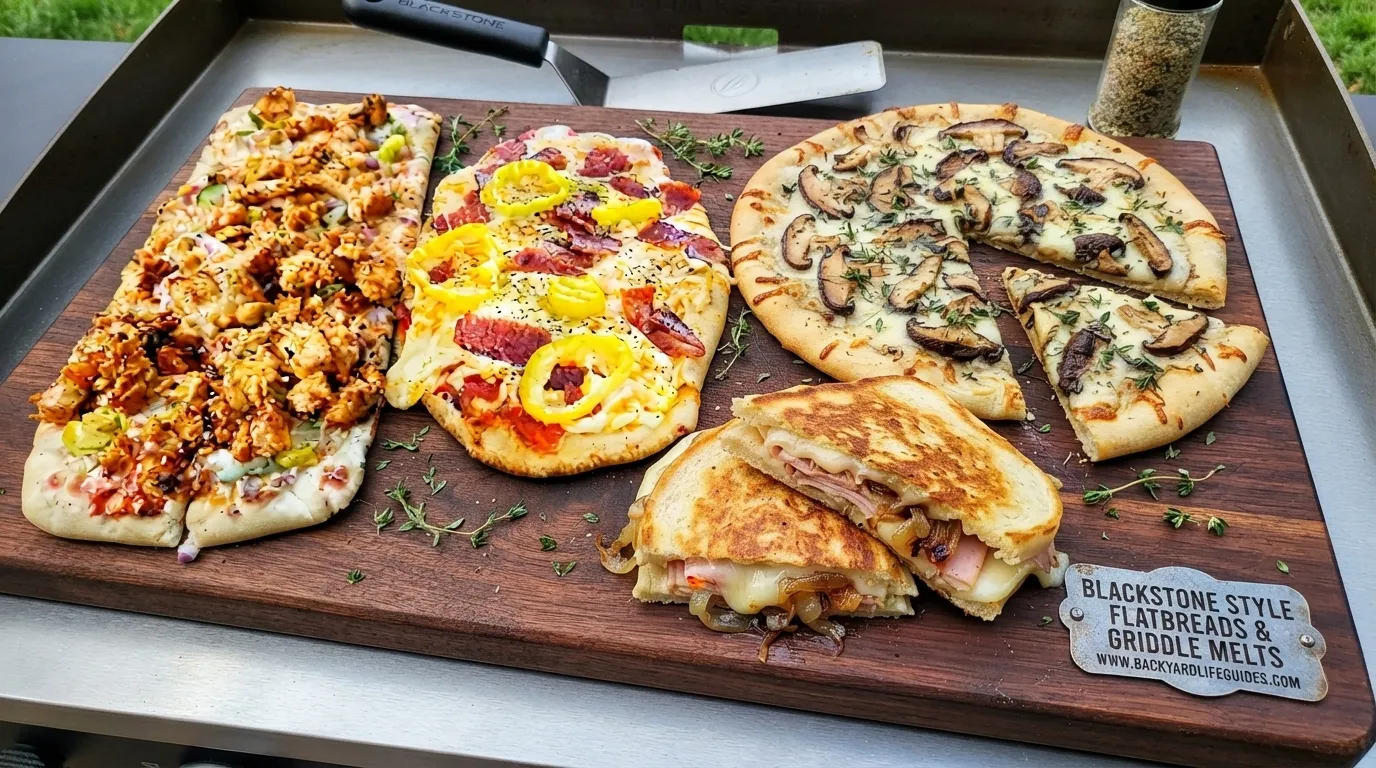
A Blackstone griddle gives flatbreads, melts, and sandwiches a hot cooking surface that can handle several parts of a meal at once. From a simple leftover lunch to a loaded breakfast flatbread or a diner-style patty melt, the same basic idea can produce very different meals.
The five approaches covered here share one useful principle: keep the process flexible. Flatbread can become pizza, a wrap, or a cheesy garlic meal, while thick bread can turn into a crisp patty melt. Leftover chicken, steak, meatballs, spaghetti, mac and cheese, turkey, vegetables, sauces, and different cheeses can all change the final result.
The recipes below bring those ideas together while keeping the original measurements and cooking numbers that make each preparation easier to follow.
Craving something quick and cheesy off the griddle? These 5 easy Blackstone-style flatbreads and melts are loaded with flavor and ready in minutes.
What Makes Blackstone Flatbreads and Melts Useful?
The biggest advantage is versatility. You do not need to treat every flatbread as one fixed recipe.
A naan, pita, sourdough-style flatbread, or another suitable flatbread can become the base for a quick pizza. Another flatbread can hold leftover protein and vegetables as a warm wrap. Pizza dough can be turned into a cheesy garlic flatbread with mozzarella and Parmesan.
For bread-based melts, thick bread such as sourdough, rye, Texas toast, brioche, or white Pullman loaf can work with the right filling. A classic patty melt uses ground beef, Swiss cheese, caramelized onions, and mayonnaise for a diner-style result.
This flexibility makes Blackstone cooking particularly useful when you want to transform ingredients rather than simply reheat them.
Blackstone Style Flatbread Pizza
Flatbread pizza is one of the simplest ways to turn a plain flatbread into a complete meal.
The basic version uses:
- 1 flatbread
- 1/4 cup tomato sauce
- 1 cup shredded cheese
Spread the tomato sauce over the flatbread, add the shredded cheese, and cook it on the griddle until the cheese melts and the base is properly heated.
The cooking time is approximately 3–4 minutes.
The important idea is not to overcomplicate the pizza. The flatbread already provides the base, while tomato sauce and cheese create the essential combination.
Leftover ingredients can also change the pizza. Chicken, steak, meatballs, rotisserie chicken, Thanksgiving turkey, peppers, onions, or other suitable leftovers can be used as toppings.
How to Turn Leftovers Into Flatbread Pizza
Leftovers do not have to remain in their original form. A small amount of leftover protein can become part of a completely different meal when combined with flatbread, sauce, and cheese.
For example, leftover chicken can be paired with cheese and a suitable sauce, while leftover meatballs can be incorporated into a pizza-style flatbread.
The same approach works with vegetables. Peppers and onions can add another layer of texture and flavor without requiring a completely separate meal.
The key is to keep the amount of topping manageable. A flatbread works best when the ingredients can be heated through without making the base difficult to handle.
Blackstone Style Flatbread Wrap
The wrap version is another practical way to use leftovers.
For one wrap, the collected measurements are:
- 1 flatbread
- 2 tablespoons spread
- 1 cup leftover protein
- 1/2 cup vegetables
- 1/4 cup cheese
Possible spreads include hummus, mayonnaise, mustard, or other suitable sauces. Leftover chicken and steak are especially useful protein choices, while lettuce, tomatoes, onions, and peppers can provide the vegetable component.
Warm the assembled wrap for approximately 30 seconds per side before moving into the final cooking stage.
The final cooking time is approximately 1–2 minutes per side.
This method is useful when you want something more substantial than plain leftovers but do not want to build a complicated recipe.
Building a Better Leftover Wrap
Start with the spread rather than adding every ingredient immediately. The spread helps create a consistent base and can change the character of the entire wrap.
Add approximately 1 cup of leftover protein, followed by around 1/2 cup of vegetables and 1/4 cup of cheese.
The ingredients can be adjusted within the same basic concept. Chicken, steak, vegetables, hummus, mayo, mustard, lettuce, tomatoes, onions, peppers, and cheese all fit naturally into this style of meal.
The goal is balance rather than quantity. A wrap overloaded with leftovers can become difficult to warm and eat, so keeping the filling controlled makes the process more practical.
Cheesy Garlic Flatbread
The cheesy garlic version takes a different route. Instead of using leftovers as the main idea, it builds the flatbread around garlic, mozzarella, Parmesan, and Italian herbs.
The ingredient measurements include:
- 1 tube pizza dough
- Approximately 12–16 oz homemade dough, if making the dough yourself
- 2 tablespoons olive oil or melted butter
- 2 cloves garlic
- 1 teaspoon garlic powder as an alternative
- 1 1/2 cups shredded mozzarella
- 1/4 cup grated Parmesan
- 1 teaspoon dried Italian herbs
- Optional pinch of chili flakes
The dough should be rolled to approximately 1/4 inch thick.
If using store-bought dough, allow it to rest for around 10 minutes before working with it.
Cooking the Cheesy Garlic Flatbread
Begin by preheating the Blackstone to medium heat.
Roll the dough to approximately 1/4 inch thickness and prepare the garlic and oil or butter mixture. Brush the mixture over the dough.
Cook the first side for approximately 2–3 minutes.
After flipping, add the mozzarella, Parmesan, and Italian herbs. Cover the flatbread and continue cooking for approximately 2–4 minutes, allowing the cheese to melt.
After cooking, let it rest for approximately 1 minute before slicing.
That short resting period gives you a cleaner finish when cutting the flatbread.
For additional texture, cornmeal can be used for extra crispiness. Optional additions mentioned for this style include pepperoni, jalapeños, and chopped spinach.
For serving, possible dipping options include garlic butter, ranch, or marinara.
Loaded Breakfast Flatbread
The breakfast version brings together flatbread, sausage gravy, eggs, cheddar, tomatoes, prosciutto, and a special sauce.
The recipe makes 2 servings, with approximately 10 minutes of preparation and 20 minutes of cooking.
The sausage gravy uses:
- 1/2 lb Jimmy Dean breakfast sausage
- 2 tablespoons butter
- 2 tablespoons flour
- 1 1/2 cups milk
The flatbread portion includes:
- 2 flatbreads
- 1 cup shredded cheddar
- 4 slices prosciutto
- 1 cup cherry tomatoes
- 2–4 eggs
- 1 tablespoon butter
- 1 tablespoon oil
The special sauce combines:
- 2 tablespoons mayonnaise
- 1 tablespoon sriracha
- 1 teaspoon honey
- 1 teaspoon lemon juice
How the Breakfast Flatbread Comes Together
Start by preheating the Blackstone to medium heat and cooking the sausage.
The sausage gravy is prepared with butter, flour, and milk. At the same time, the cherry tomatoes are blistered on the griddle.
Toast the flatbreads, then cook the eggs sunny-side up.
The special sauce combines mayo, sriracha, honey, and lemon juice.
Once the components are ready, layer the sausage gravy, cheddar, tomatoes, and eggs onto the flatbread.
One of the most useful techniques in this recipe is the dome. Covering the food helps melt the cheese, finish the eggs, and crisp the bottom of the flatbread.
Finish with prosciutto, sausage, chili crisp, and the special sauce.
This creates a much more loaded flatbread than the simple pizza or leftover wrap approach, but the preparation remains organized because each component has a defined job.
Blackstone Griddle Melt
A griddle melt is another way to use the Blackstone, especially when you have thick bread and a savory filling.
The collected patty melt recipe uses:
- 8 slices thick bread
- 1 pound ground beef
- 1 white onion
- 3 tablespoons butter
- 8 slices Swiss cheese
- 3/4 cup mayonnaise
- 1 teaspoon beef seasoning
The recipe makes 4 servings and takes approximately 20 minutes total, including 10 minutes of preparation and 10 minutes of cooking.
The cooking temperature is approximately 450°F.
Caramelizing the Onions
The onions are an important part of the griddle melt.
Cook them for approximately 3–5 minutes.
The goal is to develop a caramelized texture before assembling the sandwich.
Because the onions cook directly on the griddle, they can be prepared while other components are being handled. This is one reason the Blackstone works well for a meal with several individual stages.
Cooking the Beef Patties
Divide the 1 pound of ground beef into 4 balls, giving you approximately 4 ounces each.
Season the beef and place the portions on the hot griddle.
Use parchment paper and a burger press to smash the beef.
Cook the patties for approximately 2–3 minutes per side.
Add 2 slices of Swiss cheese to each patty and allow the cheese to melt.
The result is a thin, griddle-cooked beef component that fits naturally between the toasted bread.
Toasting the Bread
Spread mayonnaise on the bread before toasting.
The recipe allows approximately 2–3 minutes for toasting the bread.
Thick bread is especially suitable for this style of sandwich. Suggested choices include sourdough, rye, and Texas toast, while brioche and white Pullman loaf are also useful bread options for griddle melts.
Once the bread is toasted and the beef and onions are ready, assemble the sandwich and cut it in half before serving.
Why Swiss Cheese Works So Well Here
The patty melt specifically uses Swiss cheese, with two slices placed on each beef patty.
The cheese is not simply an extra topping. It helps connect the beef and bread while creating the melted texture expected from a griddle melt.
Other cheese choices mentioned in the collected material include provolone, cheddar, and American cheese, so the general melt concept can accommodate different cheese styles.
Choosing Between the Flatbread Ideas
If you have leftovers, the flatbread pizza and flatbread wrap are the most flexible choices.
The pizza needs only 1 flatbread, 1/4 cup tomato sauce, and 1 cup shredded cheese, while the wrap gives you a structured way to combine leftover protein, vegetables, spread, and cheese.
If you want something centered around garlic and cheese, the cheesy garlic flatbread is the more focused option.
For breakfast, the loaded breakfast flatbread combines sausage gravy, cheddar, eggs, tomatoes, prosciutto, and sauce.
If you want a classic sandwich instead of a flatbread, the Blackstone patty melt provides the strongest diner-style approach.
Blackstone Ingredients That Can Change the Result
One advantage of these recipes is that the ingredient list does not have to be treated as completely fixed.
For flatbreads, possible components from the collected recipes include:
Proteins: chicken, steak, meatballs, rotisserie chicken, Thanksgiving turkey, sausage, ground beef, and prosciutto.
Vegetables: lettuce, tomatoes, cherry tomatoes, onions, peppers, spinach, and jalapeños.
Cheeses: mozzarella, Parmesan, cheddar, Swiss, provolone, and American cheese.
Sauces and spreads: tomato sauce, hummus, mayonnaise, mustard, garlic butter, ranch, marinara, garlic aioli, chimichurri, sriracha, honey, and lemon juice.
This range makes it possible to move between completely different meal styles while keeping the same griddle-centered cooking approach.
Helpful Blackstone Cooking Numbers to Remember
The collected recipes use several important temperatures and times.
The patty melt cooks at approximately 450°F.
The cheesy garlic flatbread cooks its first side for 2–3 minutes, followed by approximately 2–4 minutes after the cheese is added.
The simple flatbread pizza takes approximately 3–4 minutes.
The flatbread wrap is warmed for around 30 seconds per side, followed by approximately 1–2 minutes per side for the final cooking stage.
The patty melt onions need approximately 3–5 minutes, while the bread takes approximately 2–3 minutes to toast.
The breakfast flatbread takes approximately 10 minutes to prep and 20 minutes to cook.
Keeping these numbers nearby makes the recipes easier to follow without repeatedly guessing at cooking stages.
Useful Tools for Griddle Melts
The patty melt preparation specifically identifies several useful tools:
- Burger press
- Metal griddle spatula
- Parchment paper
- Infrared thermometer
The burger press and parchment paper are particularly relevant when smashing the beef, while the infrared thermometer can help monitor the griddle temperature.
For the breakfast flatbread, the dome is an especially important tool because it helps melt the cheese, finish the eggs, and crisp the bottom.
How to Handle Leftover Ingredients
The leftover-focused approach is about transformation rather than simply reheating.
Chicken can become part of a flatbread pizza or wrap. Steak can be combined with vegetables and cheese. Meatballs can become a flatbread topping. Rotisserie chicken and Thanksgiving turkey can also be used in the same general concept.
Even leftovers such as mac and cheese or spaghetti can inspire a griddle-based flatbread or melt.
The most useful strategy is to decide what format suits the leftovers. Use flatbread pizza when you want an open-faced meal, a wrap when you want the ingredients enclosed, and a melt when thick bread and melted cheese make more sense.
Common Mistakes to Avoid
One common problem is adding too much filling. Flatbread and wraps have limited space, so excessive ingredients can make them difficult to warm and assemble.
Another issue is ignoring cooking stages. The recipes work because individual components receive their own cooking time. Onions need their 3–5 minutes, beef patties need approximately 2–3 minutes per side, and the cheesy garlic flatbread needs its separate first-side and cheese-melting stages.
It is also important not to overlook the finishing stage. The breakfast flatbread uses a dome for an important reason, while the cheesy garlic flatbread rests for approximately 1 minute before slicing.
Following these small details can make the final result much easier to manage.
Storage Notes for the Patty Melt
The collected patty melt guidance gives specific storage windows for its components.
The toasted bread can be stored for up to 2 days, while the beef patties and onions can be stored for up to 4 days.
Keeping the components separate can make reheating and assembly more practical than storing the completed sandwich.
FAQs
What can I make on a Blackstone with flatbread?
You can make flatbread pizza, flatbread wraps, cheesy garlic flatbread, and loaded breakfast flatbread using the approaches covered here.
How long does Blackstone flatbread pizza take?
The simple flatbread pizza takes approximately 3–4 minutes using 1 flatbread, 1/4 cup tomato sauce, and 1 cup shredded cheese.
What temperature is used for a Blackstone patty melt?
The patty melt recipe uses approximately 450°F for cooking the beef, onions, and bread on the Blackstone.
How long should I cook Blackstone patty melt onions?
The onions are cooked for approximately 3–5 minutes as part of the patty melt preparation.
How long do Blackstone patty melt patties cook?
The approximately 4-ounce beef patties are cooked for around 2–3 minutes per side before the Swiss cheese is added.
What cheese is used in a Blackstone patty melt?
The collected recipe uses 8 slices of Swiss cheese, with 2 slices placed on each of the 4 beef patties.
How thick should cheesy garlic flatbread dough be?
The dough should be rolled to approximately 1/4 inch thick before cooking on the Blackstone.
How long should store-bought dough rest?
The cheesy garlic flatbread approach recommends resting store-bought dough for approximately 10 minutes before preparing it.
How long does cheesy garlic flatbread cook?
The first side cooks for approximately 2–3 minutes, followed by 2–4 minutes after flipping and adding the cheese and herbs.
What can I use as a topping for leftover flatbread pizza?
The collected ideas include chicken, steak, meatballs, rotisserie chicken, Thanksgiving turkey, peppers, onions, and cheese.
How many servings does the loaded breakfast flatbread make?
The loaded breakfast flatbread recipe makes 2 servings and has approximately 10 minutes of prep time and 20 minutes of cooking time.
Why use a dome on a Blackstone breakfast flatbread?
The dome helps melt the cheese, finish the eggs, and crisp the bottom of the flatbread during the final cooking stage.
What bread works for a Blackstone griddle melt?
The collected suggestions include sourdough, rye, Texas toast, brioche, and white Pullman loaf, particularly when using thick bread for a melt.
Can leftover chicken be used on a Blackstone flatbread?
Yes. Leftover chicken is one of the proteins specifically suited to the leftover flatbread pizza and wrap concept.
Final Thoughts
Blackstone-style flatbreads and griddle melts do not need to follow one rigid recipe. The strongest idea across these approaches is flexibility.
A basic flatbread can become a 3–4 minute pizza, a leftover-filled wrap, or a cheesy garlic flatbread with mozzarella and Parmesan. A breakfast flatbread can combine sausage gravy, cheddar, eggs, cherry tomatoes, prosciutto, and special sauce in a 20-minute preparation. Thick bread can become a diner-style patty melt with 1 pound of ground beef, 8 slices of Swiss cheese, caramelized onions, and approximately 450°F cooking.
The best approach depends on what you already have available. Leftovers can become something new, while a few basic ingredients can create a completely different griddle meal.
With the right combination of flatbread, protein, cheese, vegetables, sauces, and controlled cooking times, the Blackstone becomes more than a surface for one recipe—it becomes a flexible way to turn simple ingredients into several different meals.