Mastering the Big Green Egg for Endless Possibilities
- Disclosure: This post may include affiliate links. If you click a link and complete a purchase, I may earn a commission. Additionally, as an Amazon Associate, I earn from eligible purchases.
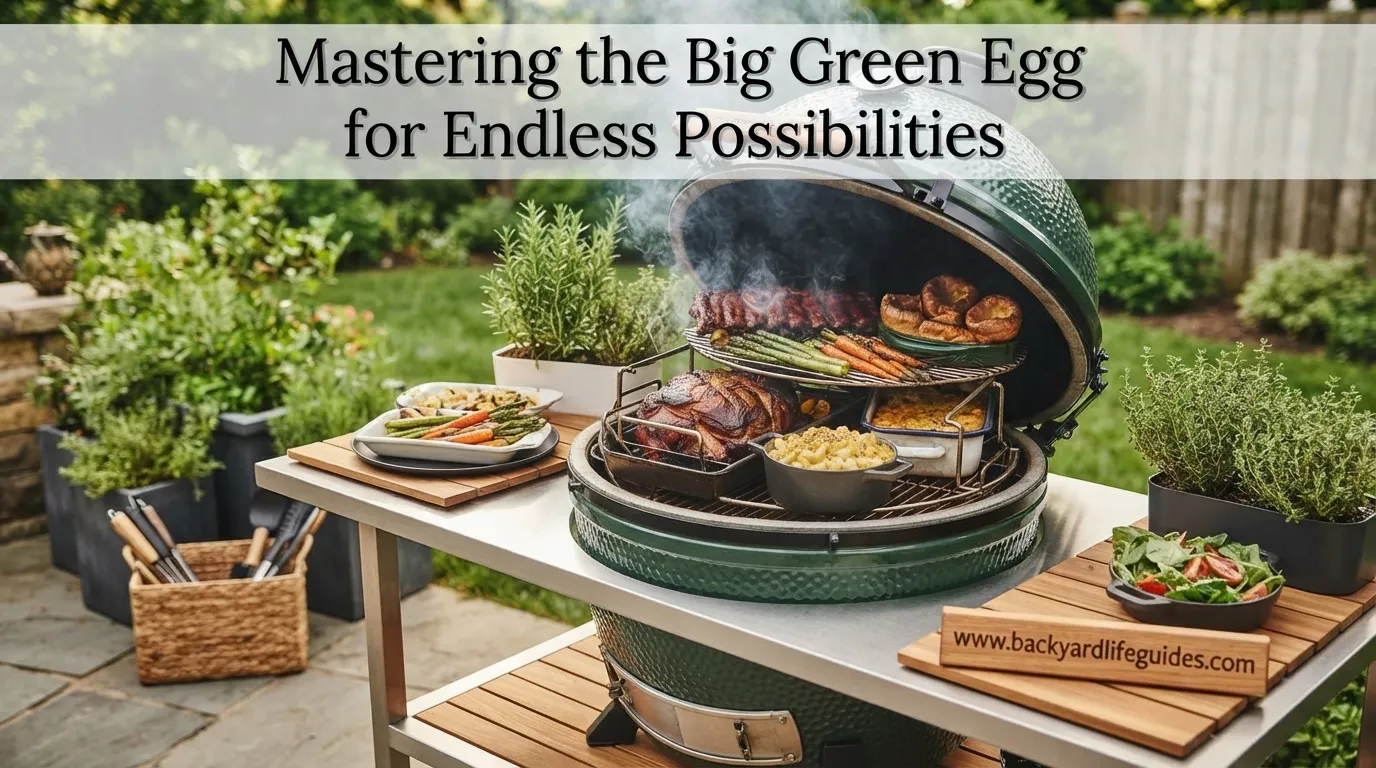
The Big Green Egg is more than a grill. Its design allows it to handle direct grilling, slow cooking, smoking, baking, steaming, stewing, and even stir-frying. The key to getting consistent results is learning how fire, airflow, temperature, accessories, and cooking position work together.
For a new user, the most important lesson is not to rush the process. Start the charcoal correctly, allow the Egg to heat, control the vents gradually, and choose the cooking setup according to the food.
Once the temperature becomes stable, the Egg can maintain a cooking environment for long periods while using relatively little charcoal.
Ready to take your Big Green Egg skills to the next level? This guide below reveals how to master it for truly endless cooking possibilities.
Start the Fire Without Lighter Fluid
A simple fire-starting method is to use a fire starter cube rather than lighter fluid.
Place the charcoal in the Egg and position the fire starter cube in the center. Initially, leave the lid and bottom draft door fully open so the fire receives plenty of airflow.
Allow approximately 10–15 minutes for the charcoal to become established. The coals should be glowing red before you move into the next stage.
This gives you a controlled starting point without introducing lighter-fluid flavor or residue.
Burp the Egg Before Opening the Lid
Safety becomes especially important when the Egg is operating at 400°F / 204°C or higher.
Before opening the lid fully, raise it only a few inches and lower it again. Repeat this 2–3 times to release accumulated hot air gradually.
This process, commonly called burping, should become a normal habit when opening a hot Egg.
The important point is simple: open slowly rather than suddenly.
Understanding Temperature and Airflow
Temperature control is one of the most important skills when using the Big Green Egg.
The Egg’s vents regulate airflow. Increasing airflow generally increases the fire’s heat, while restricting airflow reduces the heat.
The top and bottom vents therefore work together to help establish the desired cooking temperature.
How Airflow Changes the Heat
| Adjustment | General Effect |
|---|---|
| Open vents further | More airflow and higher heat |
| Close vents gradually | Less airflow and lower heat |
| Stable vents | More consistent cooking temperature |
| Opening the lid | Releases heat and smoke |
Avoid making large adjustments repeatedly. Give the Egg time to respond after changing the airflow.
A stable temperature is particularly important for slow cooking, smoking, and baking, where sudden changes can affect the cooking environment.
Keep the Lid Closed
Opening the lid unnecessarily allows heat and smoke to escape.
It can also reduce fuel efficiency and interrupt the stable cooking environment you have established.
A useful rule from the practical grilling approach is to avoid opening the lid more than 3 times when it is not necessary.
Instead, prepare ingredients and tools before cooking so you can work efficiently when the lid does need to be opened.
Big Green Egg Cooking Temperature Guide
Different foods and techniques require different temperature ranges. The following figures bring together the temperature references from the material into one practical guide.
| Food or Technique | Temperature |
|---|---|
| Steak | 450–650°F |
| Pork chops | 400–450°F |
| Whole chicken | 350–400°F |
| Ribs | 225–275°F |
| Brisket | 225–250°F |
| Fish | 250–350°F |
| Pizza | 500–600°F |
| Vegetables | 350–450°F |
| Direct grilling | 180–250°C |
| Slow cooking | 70–120°C |
| Smoking | 65–90°C |
| Grilling planks | 175–225°C |
| Stewing | Approximately 100°C |
| Pizza baking | 275–300°C |
These ranges should be treated as cooking-guide temperatures rather than a substitute for checking the food itself.
Choosing the Right Cooking Method
One of the biggest advantages of the Big Green Egg is that the same cooker can be configured for very different cooking styles.
The main difference is whether the food receives direct heat, indirect heat, smoke, steam, or oven-style heat.
Direct Grilling
Direct grilling places food directly above the glowing charcoal.
The general temperature range is 180–250°C. This method works particularly well for foods that benefit from direct high heat and visible grill marks.
Steaks and chops are examples of foods suited to direct cooking.
Because direct grilling uses stronger heat, stay close to the Egg and turn food as needed rather than leaving it unattended for long periods.
Slow Cooking
Slow cooking generally operates between 70–120°C.
This lower-temperature method is useful for larger pieces of meat, whole fish, and poultry. The convEGGtor can be used to create an indirect cooking environment that separates the food from the direct charcoal heat.
Slow cooking is particularly useful when the goal is gentle, extended cooking rather than rapid surface browning.
Low-and-Slow Smoking
Smoking brings wood and controlled heat together.
For smoking with the convEGGtor, the referenced temperature range is 65–90°C.
Shorter smoking sessions can use a handful of wood chips, while longer sessions can use wood chunks.
The amount of smoke should complement the food rather than overpower it.
Selecting Hardwood for Smoke
Different hardwoods produce different flavor characteristics.
The referenced materials highlight:
- Hickory — a prominent option for a stronger smoke character.
- Apple wood — useful when a milder fruitwood character is preferred.
- Mesquite — associated with a more pronounced smoky character.
- Oak — another hardwood option for smoking.
- Cherry wood — provides another fruitwood choice.
For someone learning the Egg, starting with 1–2 hardwood chunks provides a manageable starting point.
Cooking a Steak, Chicken, Ribs, and Brisket
The Big Green Egg can handle foods requiring dramatically different cooking environments.
Steak
The referenced temperature range for steak is 450–650°F.
The higher end provides the intense heat associated with direct grilling, while the exact cooking approach depends on the desired result.
Stay close to the Egg and turn the steak as needed rather than repeatedly opening the dome.
Pork Chops
Pork chops are listed at 400–450°F.
Because this is a higher-temperature cooking method, airflow should be established before placing the food on the Egg.
Whole Chicken
Whole chicken is associated with a range of 350–400°F.
This provides a moderate cooking environment compared with the higher temperatures used for steak.
Ribs
Ribs are listed at 225–275°F, making them a good example of a lower-temperature cooking application.
Maintaining a stable environment is more important here than repeatedly checking the food by opening the lid.
Brisket
Brisket is associated with 225–250°F.
This is firmly within the low-and-slow range. Using indirect heat with the appropriate accessory setup helps create the controlled environment needed for this style of cooking.
Using Big Green Egg Accessories
Accessories can change how heat reaches the food and expand what the Egg can do.
The most important accessories mentioned across the material include the convEGGtor, rEGGulator, EGGstander, cast iron grid, Dutch oven, Drip Pan, skillet, cast iron plancha, wok, Baking Stone, and grilling planks.
convEGGtor
The convEGGtor is central to indirect cooking.
It can be used for slow cooking, smoking, steaming, and baking configurations where the food needs separation from direct charcoal heat.
It is particularly important when working with large cuts or long cooking sessions.
rEGGulator
The rEGGulator is part of the temperature-control setup and works with the Egg’s airflow system.
Learning how the vents and airflow respond is more useful than constantly adjusting the cooker.
EGGstander
The EGGstander can support different cooking arrangements and is included among the accessories used to expand the Egg’s cooking possibilities.
Cast Iron Grid, Dutch Oven, and Other Tools
Different cooking techniques call for different equipment:
| Cooking Method | Useful Equipment |
|---|---|
| Direct grilling | Cast iron grid |
| Slow cooking | convEGGtor |
| Stewing | Dutch oven |
| Steaming | convEGGtor, Drip Pan, grid |
| Baking | Skillet, cast iron plancha, Baking Stone |
| Pizza | convEGGtor, grid, Baking Stone |
| Stir-frying | Wok |
| Smoking | Wood chips or wood chunks |
| Grilling planks | Grilling plank |
Choosing the correct accessory before starting makes the cooking process simpler and more predictable.
Baking Bread, Cakes, and Pizza
The Big Green Egg can also function as an oven-style cooking environment.
It can be used for bread, pastries, tarts, cakes, flammkuchen, and pizza.
Baking With Indirect Heat
Indirect heat helps create an oven-like environment.
The setup can be adapted depending on what is being baked, with accessories such as a skillet, cast iron plancha, or Baking Stone.
The goal is to create consistent heat rather than expose delicate baked foods directly to the charcoal.
Baking Pizza
Pizza is one of the clearest examples of the Egg’s high-temperature versatility.
The referenced pizza temperature is 275–300°C, equivalent to approximately 527–572°F.
A recommended configuration is:
convEGGtor → grid → Baking Stone
The Baking Stone provides the surface needed for a crisp pizza base, while the indirect setup helps create an oven-style cooking environment.
The material notes that pizza can cook in just a few minutes, so preparation should be completed before the pizza enters the Egg.
Stewing in a Dutch Oven
The Big Green Egg can also be used for stewing.
The process begins with higher heat for searing, around 200°C, before reducing the temperature to approximately 100°C for the stewing stage.
A Dutch oven provides the cooking vessel.
Leaving it uncovered or partially uncovered can allow smoke from the Egg to contribute additional flavor.
This demonstrates how the Egg can move beyond traditional grilling into slower, enclosed cooking.
Steaming Food
The Egg can function as a steam oven when configured correctly.
For steaming, the dome temperature needs to be above 100°C so that the water remains boiling.
The referenced setup uses:
convEGGtor + Drip Pan + grid
This method can be used for foods such as small shellfish and oysters. In the case of oysters, the shell itself provides protection from the direct heat.
The important distinction is that steaming relies on hot vapor rather than placing food directly over the charcoal.
Stir-Frying on the Big Green Egg
A wok can be placed directly on the grid or used with the 1-Piece convEGGtor Basket.
This creates another high-temperature cooking option and demonstrates the Egg’s ability to move beyond conventional barbecue techniques.
The basic concept is different from slow cooking: stir-frying requires strong heat and active cooking rather than a long, stable low-temperature session.
Cleaning and Maintenance
Good cooking results depend on keeping the cooker and its important components in reasonable condition.
The maintenance guidance from the broader material includes removing food debris, brushing ceramic surfaces, using warm water, and avoiding overly abrasive cleaners.
Check the Gaskets and Seals
Inspect the gaskets and seals periodically.
These components help maintain the controlled cooking environment, so visible wear deserves attention.
Also inspect ceramic surfaces for cracks.
Avoid Overly Abrasive Cleaning
The referenced maintenance approach recommends warm water and mild detergent where appropriate while avoiding overly abrasive cleaners.
The objective is to remove residue without unnecessarily damaging the surfaces.
Keep the Egg Properly Ventilated
Moisture buildup can become an issue when the cooker is stored incorrectly.
Keeping the Egg in a dry, covered location when it is not being used can help protect it from weather exposure.
Storing the Big Green Egg
The broader guide recommends keeping the Egg in a dry, covered area, such as a garage or shed, when it is not being used.
For outdoor installations, covers, protective equipment, windscreens, and permanent outdoor-kitchen arrangements can provide additional weather protection.
Storage should therefore be considered part of ownership rather than an afterthought.
Weather and Outdoor Use
The Egg is designed around outdoor cooking, but the surrounding environment still matters.
Wind can affect airflow, while moisture can contribute to storage problems.
A protected setup can make it easier to maintain a consistent cooking environment.
If the Egg is permanently installed outdoors, weather protection becomes especially useful.
Common Big Green Egg Mistakes
Even a capable cooker can produce inconsistent results when basic operating habits are ignored.
Opening the Lid Too Often
Frequent lid opening releases heat and smoke.
Better approach: prepare everything before cooking and keep the lid closed whenever possible.
Making Large Vent Adjustments
Rapidly changing airflow can make temperature control more difficult.
Better approach: make controlled adjustments and allow the Egg time to respond.
Ignoring the Burping Step
Opening a very hot Egg suddenly can be unsafe.
Better approach: at 400°F / 204°C or higher,
the Egg by raising the lid slightly 2–3 times before opening it fully.
Using Too Much Smoke Wood
More wood does not automatically mean better flavor.
Better approach: begin with 1–2 hardwood chunks and adjust according to the cooking session and desired smoke character.
Choosing the Wrong Cooking Setup
Direct heat is not appropriate for every food.
Better approach: use direct grilling for suitable high-heat foods and indirect configurations for low-and-slow cooking, smoking, and many baking applications.
What Makes the Big Green Egg So Versatile?
The most important takeaway is that the Big Green Egg should not be thought of as only a grill.
With the right temperature and configuration, it can provide:
- Direct grilling
- Slow cooking
- Smoking
- Stewing
- Steaming
- Baking
- Pizza baking
- Stir-frying
That versatility comes from controlling the relationship between charcoal, airflow, temperature, cooking position, and accessories.
A beginner can start with straightforward grilling and gradually move into more specialized techniques as temperature control becomes familiar.
FAQs
How long does it take to heat a Big Green Egg?
The referenced fire-starting process takes approximately 10–15 minutes for the charcoal to become glowing red before proceeding with cooking.
What temperature should I use for steak on a Big Green Egg?
The referenced steak range is 450–650°F. The Egg should be stabilized at the desired cooking temperature before the steak is placed inside.
What temperature is used for brisket?
The referenced brisket range is 225–250°F, placing it within the low-and-slow cooking range.
How hot should a Big Green Egg be for pizza?
The pizza guidance gives 275–300°C, or approximately 527–572°F. A convEGGtor, grid, and Baking Stone are used in the referenced setup.
How often should I burp the Big Green Egg?
When operating at 400°F / 204°C or higher, raise the lid a few inches and lower it again 2–3 times before opening fully.
Can you smoke food in a Big Green Egg?
Yes. The referenced smoking setup uses wood chips for shorter sessions and wood chunks for longer sessions, with a smoking temperature of 65–90°C when using the convEGGtor.
Can you bake in a Big Green Egg?
Yes. The Egg can be used for bread, pastries, tarts, cakes, flammkuchen, and pizza, using an appropriate baking configuration.
Can you steam food in a Big Green Egg?
Yes. The referenced steaming setup uses a convEGGtor, Drip Pan, and grid, with the dome temperature kept above 100°C.
How do you stew food in a Big Green Egg?
A Dutch oven can be used. The food can first be seared at around 200°C, followed by reducing the cooking environment to approximately 100°C for stewing.
How should a Big Green Egg be cleaned?
Remove food debris, brush ceramic surfaces, and use warm water with mild detergent where appropriate. Avoid overly abrasive cleaners and check the gaskets, seals, and ceramic surfaces regularly.
Final Thought
Mastering the Big Green Egg comes down to control and consistency.
Start the charcoal safely, allow around 10–15 minutes for the initial fire, learn how airflow affects temperature, and make burping the Egg a habit when cooking at 400°F / 204°C or higher.
From there, the same cooker can move between 225°F brisket, 450–650°F steak, 275–300°C pizza, 65–90°C smoking, and steaming above 100°C.
The real versatility comes from matching the temperature and cooking configuration to the food. With accessories such as the convEGGtor, rEGGulator, Dutch oven, Drip Pan, wok, and Baking Stone, the Big Green Egg can support far more than traditional grilling.