Navigating Apartment Grilling Regulations and Restrictions
- Disclosure: This post may include affiliate links. If you click a link and complete a purchase, I may earn a commission. Additionally, as an Amazon Associate, I earn from eligible purchases.
Grilling at an apartment can be enjoyable, but whether you can use a grill depends on where you live, what type of grill you have, and what your apartment community allows. A rule that applies to one apartment building may not apply to another.
Before bringing a grill onto a balcony, patio, or other outdoor space, check your local regulations, apartment rules, lease agreement, landlord or property manager requirements, and HOA restrictions where applicable.
Fire-safety rules can be especially important for apartment buildings because balconies, walls, railings, eaves, and other nearby materials may be combustible.
For many renters, the most important question is not simply whether grilling is allowed. It is whether the specific grill, location, distance, and storage method are permitted.
Start With Your Apartment Rules
Your first step should be to find out what your apartment community allows.
Check:
- Your lease agreement
- Apartment or community rules
- Property management requirements
- Landlord instructions
- HOA rules, if applicable
- Posted rules for shared grilling areas
- Local and state regulations
- City regulations
- Fire-safety requirements
Do not assume that a grill is permitted simply because you have a balcony or patio.
An apartment complex may have stricter rules than the local minimum requirements. This is particularly important with electric grills, because being an electric appliance does not automatically mean your apartment community permits it.
Why Apartment Grilling Rules Can Be Strict
Apartment grilling restrictions are largely connected to fire safety and the close proximity of combustible materials.
Unlike a detached one- or two-family dwelling, an apartment building can have multiple residences close together. Smoke, heat, flames, propane equipment, balconies, walls, railings, and neighboring units can create additional concerns.
The International Fire Code (IFC) is an important entity mentioned in the material. The stated restriction discussed there applies to condominiums, apartments, and townhouses rather than one- and two-family dwellings.
The exact requirements can still depend on the location and the rules being enforced, so renters should verify the requirements that apply to their own building.
The 10-Foot Grill Rule
One of the most important measurements in the material is 10 feet.
The stated IFC-related guidance says charcoal and gas grills cannot be used on combustible balconies or within 10 feet of combustible construction.
This measurement is especially important when considering:
- Apartment walls
- Combustible railings
- Eaves
- Overhanging materials
- Nearby structures
- Other combustible items
Wimmer Communities also gives a 10-foot distance for a gas grill from the building.
What Does 10 Feet Mean for an Apartment Grill?
The 10-foot measurement should not be treated as permission to grill anywhere as long as you can create that distance.
Your building may have additional restrictions.
For example, an apartment community may prohibit grills on balconies altogether, even when a resident believes there is enough space. A landlord, property manager, HOA, or local authority may also impose requirements that affect where or whether you can grill.
Distance is only one part of the decision.
Does an Automatic Sprinkler System Make Grilling Legal?
The material identifies an exception involving an automatic sprinkler system within 10 feet of the grilling location.
However, the presence of a sprinkler system does not automatically mean a resident can grill wherever they want.
The same guidance indicates that special permission from the Fire Marshal’s office may still be required.
That means residents should not rely on the sprinkler exception alone. Confirm the requirements with the appropriate authority and your apartment management before using a grill.
Which Types of Grills Are Restricted?
Different grill types can be treated differently under apartment and fire-safety rules.
Charcoal Grills
Charcoal grills fall into the restricted/open-flame category discussed in the material.
They also require careful charcoal handling and storage.
The provided guidance recommends removing charcoal from the grill and storing it separately.
Wood Grills and Wood-Burning Equipment
Wood grills and other open-flame equipment can create additional restrictions.
The material also mentions wood/coal-burning smokers and portable fire pits as equipment that may normally be prohibited in apartment settings.
Never assume that outdoor placement makes this equipment acceptable.
Gas and Propane Grills
Gas and propane grills are another important category.
The material specifically discusses restrictions involving combustible construction and the 10-foot distance.
Propane storage is also a separate concern. The provided guidance says propane tanks should be stored in a detached, fire-rated storage building and that storing propane tanks inside an apartment is prohibited when such a building is unavailable.
Outdoor propane storage can also involve risks from:
- Weather
- Accidental damage
- Tampering
- Nearby ignition sources
Always follow the rules established for your particular apartment community.
Electric Grills
UL-listed electric grills are presented differently from charcoal and gas grills because they do not fall into the same open-flame category described in the material.
Examples include:
- UL-listed electric grills
- Electric griddles
- Indoor grill pans
However, electric does not automatically mean allowed.
An apartment complex can still prohibit electric grills through its own community rules.
Read the electric grill’s instructions and confirm the apartment’s rules before using it.
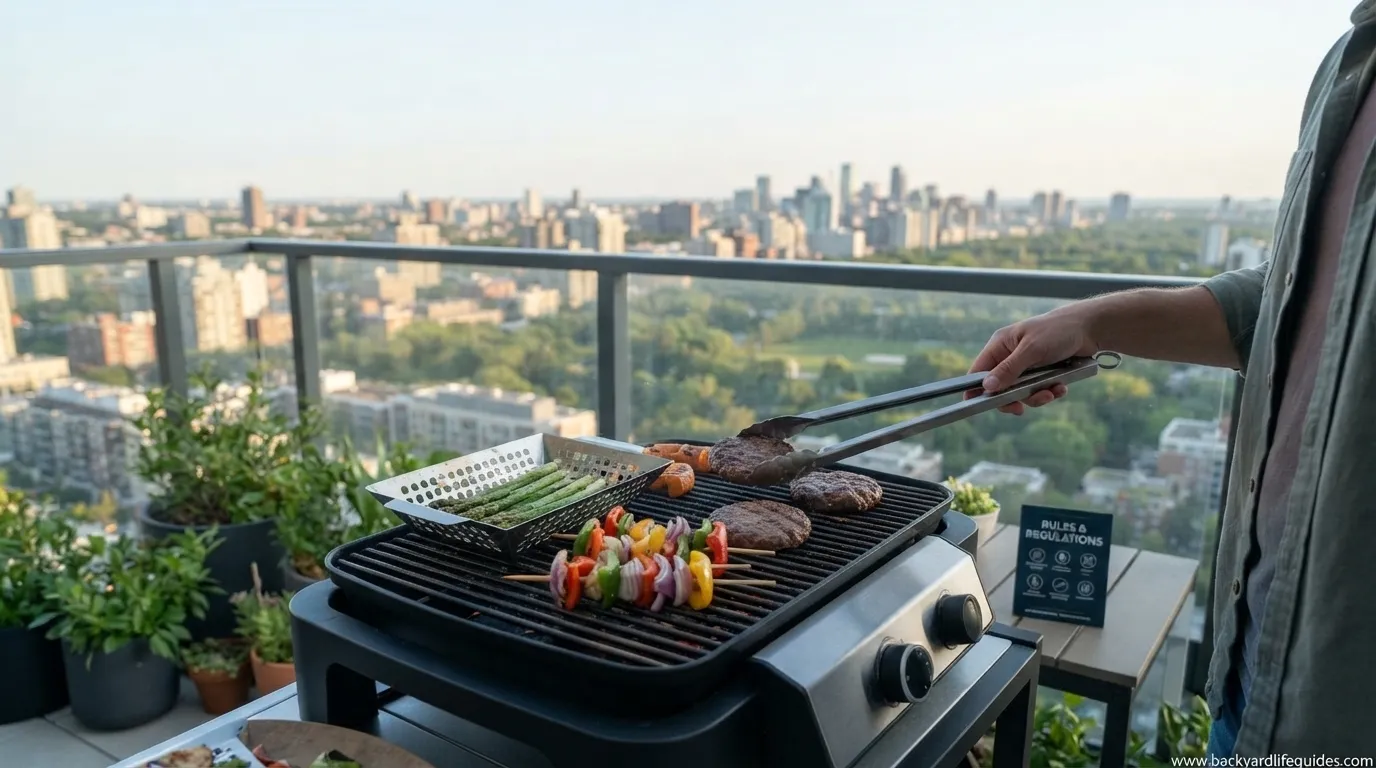
Can You Grill on an Apartment Balcony?
A balcony is one of the areas where residents need to be especially careful.
Before using a grill there, determine:
- Whether your apartment allows balcony grilling.
- Whether the specific grill type is permitted.
- Whether the required clearance can be maintained.
- Whether combustible walls or railings are nearby.
- Whether your lease contains additional restrictions.
- Whether local regulations impose additional requirements.
- Whether your property manager has separate instructions.
Some apartment communities prohibit grills on balconies regardless of floor level.
Wimmer Communities specifically states that the apartment communities discussed in its article prohibited grills on balconies.
What About a Ground-Floor Apartment?
Being on the ground floor does not automatically make grilling acceptable.
The material states that even on the ground floor, a gas grill is expected to be at least 10 feet from the building in the context discussed.
The same practical considerations remain important:
- Building proximity
- Combustible materials
- Overhangs
- Eaves
- Community rules
- Local requirements
- Safe access
- Storage
Apartment Patio Grilling
A patio can provide more room than a balcony, but it does not automatically eliminate restrictions.
Before setting up a grill, look around the entire cooking area.
Check for:
- Apartment walls
- Flammable railings
- Branches
- Eaves
- Overhanging materials
- Furniture
- Other combustible items
Keep a clear path between the grilling area and your apartment door.
The patio should provide enough room for the grill, cooking tools, food, and safe movement without creating unnecessary obstacles.
Keep Your Apartment Doorway Clear
Limited apartment patio space can make grilling more difficult.
Wimmer Communities recommends maintaining a clear walkway between the patio and kitchen.
The door should open smoothly, and ideally, you should be able to open it easily with one hand.
Avoid filling the patio with excessive furniture.
Useful space-saving approaches include:
- Folding tables
- Folding chairs
- Lighter furniture
- Furniture that can easily be moved indoors
The goal is simple: grilling should not block your route between the kitchen and outdoor cooking area.
Never Grill Inside the Apartment
An outdoor grill should never be moved indoors simply because the weather changes or outdoor space is inconvenient.
The material specifically warns against using an outdoor grill inside an apartment.
The same caution applies to moving outdoor grilling equipment into inappropriate enclosed areas.
Garages and areas beneath overhangs are also identified as locations where grills may be prohibited.
Grill Storage in an Apartment
Storage is an important part of apartment grilling that renters sometimes overlook.
Having permission to use a grill does not necessarily answer the question of where it can be stored.
Charcoal Storage
For charcoal grills, the provided guidance recommends:
- Remove charcoal from the grill.
- Store charcoal separately.
- Allow the grill to cool before storage.
- Follow apartment-specific storage requirements.
Propane Tank Storage
Propane requires particular attention.
The material states that propane tanks should be stored in a detached, fire-rated storage building and that storing propane tanks inside an apartment is prohibited when such a facility is unavailable.
Do not improvise indoor propane storage.
Outdoor Grill Storage
For permitted grills, outdoor storage can be practical where apartment rules allow it.
Wimmer Communities recommends keeping the grill:
- Near the balcony door when appropriate
- In a suitable outdoor storage position
- Covered when not being used
- In good repair
- Stored according to community requirements
For smaller spaces, vertical storage can help reduce the amount of patio space used.
Shared Apartment Grills Have Different Rules
Some apartment communities provide shared grilling areas rather than allowing residents to use personal grills.
Wimmer Communities refers to a central grilling area called BBQ Central, where some communities provide gas grills and picnic tables.
Shared grills introduce another issue: grill etiquette.
You are sharing the equipment and space with other residents, so cooking time and cleanup matter.
Follow the Grill Schedule
If reservations or signup schedules are required:
- Reserve your time.
- Arrive on time.
- Have your food ready.
- Finish within your scheduled period.
- Clean the area afterward.
Do not treat a shared grill as personal property.
Do Not Hog the Shared Grill
One of Zumper’s major apartment-grilling themes is considerate use of shared equipment.
Avoid monopolizing a grill when other residents are waiting.
Finish cooking and allow the next person to use the space.
If space is available, share it appropriately rather than blocking the entire grilling area.
Keep the Grill Area Open
A shared grill should remain accessible.
Avoid turning the grill into a party area or gathering around it in a way that blocks other residents.
If the property provides a designated eating area, use that space rather than crowding the cooking area.
Grill Smoke Can Affect Your Neighbors
Smoke is more than an inconvenience in an apartment environment.
Because apartments are close together, smoke can travel toward neighboring windows and outdoor spaces.
Zumper recommends paying attention to where smoke is going and reducing smoke when necessary.
You can help minimize smoke by:
- Scraping the grill grate.
- Controlling heat.
- Keeping the grill clean.
- Preventing food buildup.
- Using foil when appropriate for food that may fall apart.
Think about the people around you before starting to cook.
Good apartment grilling includes good neighbor etiquette.
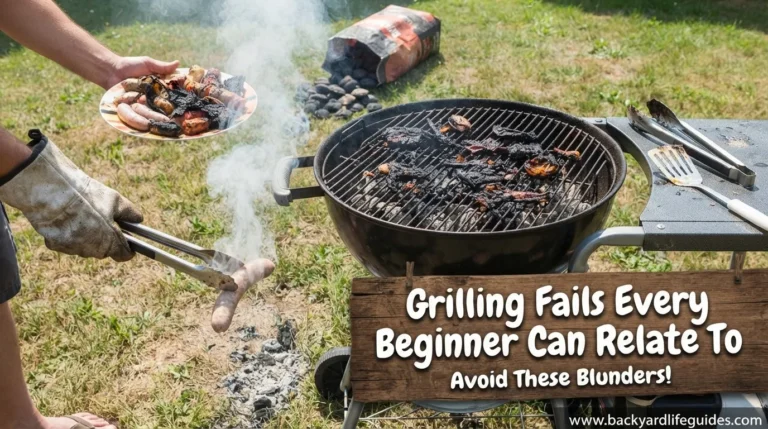
Clean the Grill After Every Use
Cleaning is both a practical and safety-related part of grilling.
The material recommends cleaning the grill after each use and removing:
- Grease
- Food particles
- Debris
A dirty grill can create flare-up risks and can also make a shared grilling area unpleasant for the next resident.
After cooking, clean the grates and surrounding surfaces as appropriate for the equipment.
For shared grills, cleaning becomes especially important because another resident will use the same equipment.
Basic Apartment Grill Safety Rules
A safe setup is more than choosing the right grill.
The combined material emphasizes several basic behaviors.
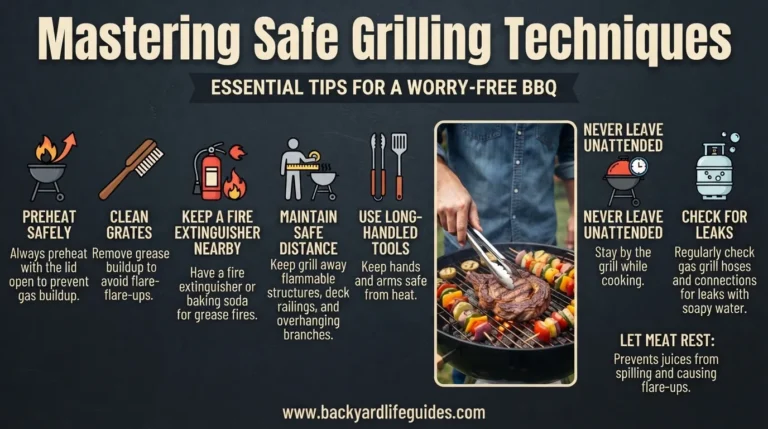
Never Leave the Grill Unattended
Stay attentive while grilling.
This applies particularly when children, pets, neighbors, or other distractions are nearby.
Keep Children and Pets Away
Children and pets should be kept away from the active cooking area.
Apartment patios and shared grilling spaces can be limited, making accidental contact with a hot grill easier.
Create enough separation for safe movement.
Avoid Horseplay and Distractions
Grilling requires attention.
Avoid activities that take your focus away from the grill.
Zumper specifically includes no horseplay, avoiding distractions, and not leaving the grill unattended among its main safety recommendations.
Do Not Drink While Grilling
Zumper also identifies drinking while grilling as a safety concern because it can reduce concentration and increase the likelihood of accidents.
Keep your attention on the cooking equipment and surroundings.
Keep a Fire Extinguisher Nearby
A fully charged fire extinguisher is one of the safety items recommended in the material.
A water spray bottle is also mentioned as an additional option.
The material additionally mentions water or dry sand as emergency measures.
Whatever equipment you keep nearby, know how it should be used and follow its instructions.
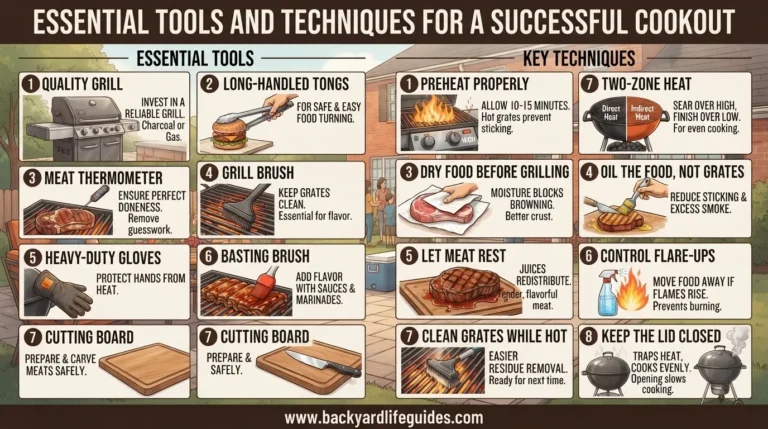
Use the Right Grilling Tools
Longer tools can help keep hands farther away from heat.
The material recommends equipment such as:
- Heat-proof stainless-steel tools
- Silicone tools
- Heat-protective gloves
- Nylon grill brushes
- Grill-cleaning tools
- Water spray bottles
- Fire extinguishers
Wimmer Communities specifically recommends heat-protective gloves that cover the forearms.
Choose tools suitable for your grill and follow the manufacturer’s instructions.
Read the Grill Owner’s Manual
Before using a grill in an apartment environment, read the owner’s manual.
This is particularly important for electric grills.
Check the manufacturer’s instructions for:
- Proper placement
- Operation
- Cleaning
- Storage
- Electrical requirements
- Cooling
- Maintenance
Do not assume that two grills with similar appearances have identical requirements.
Safe Electric Grill Practices
Electric grills can be convenient for apartment residents where they are permitted, but they still require careful handling.
The material recommends:
- Read the instructions.
- Never leave the grill plugged in and unattended.
- Allow it to cool before storage.
- Never clean it while plugged in.
- Clean it after each use.
- Remove grease and food debris.
Most importantly, verify that your apartment community permits the specific electric grill before using it.
Planning Makes Apartment Grilling Easier
Limited patio or balcony space means preparation matters.
Wimmer Communities recommends doing as much preparation in the kitchen as possible before going outside.
Prepare:
- Seasoned meat
- Cut vegetables
- Sauces
- Cooking tools
- Other necessary ingredients
This reduces the amount of time you need to move between the kitchen and the grill.
It also prevents the patio from becoming cluttered with unnecessary items.
Grill Size Matters
A larger grill can cook more food at the same time, but apartment residents need to consider available space as well as cooking capacity.
The right grill size depends partly on what you normally prepare.
Examples mentioned in the material include:
- Kabobs
- Ribs
- Burgers
- Hotdogs
Consider how much food you actually need to cook before selecting equipment.
A grill that is too large for your patio can create unnecessary space and clearance problems.
Plan Your Cooking Order
Wimmer Communities recommends thinking about cooking times in advance.
The sequence provided is:
Pork → Chicken → Steak → Salmon
Planning the cooking order can help you organize the meal and avoid unnecessary delays.
When apartment space is limited, preparation before going outside becomes even more useful.
Grilling for Apartment Parties
The number of guests affects more than the amount of food.
It can also affect:
- Grill capacity
- Patio space
- Safety
- Cooking time
- Movement around the apartment
For larger groups, the material suggests foods such as:
- Hot dogs
- Hamburgers
- Premade foods alongside grilled main dishes
When actively grilling, it can be safer and more practical to have guests remain inside when possible rather than crowding around the cooking area.
When Is the Best Time to Grill?
Apartment residents should consider the time required for:
- Setup
- Heating charcoal or pellets
- Cooking
- Cleaning
Wimmer Communities notes that weekday grilling can become inconvenient when all of these steps are considered.
Weekends or evenings may provide more preparation and cleanup time, depending on your schedule and apartment rules.
The important point is not simply choosing a particular day. Give yourself enough time to prepare, cook, and clean without rushing.
Nighttime Apartment Grilling
If grilling is permitted at night, visibility becomes important.
Wimmer Communities discusses lighting as a practical consideration.
Options include:
- String lights for atmosphere
- Brighter patio lighting for visibility
The purpose of better lighting is straightforward: you should be able to see your cooking area and surroundings clearly.
Lighting should improve visibility without creating an obstacle or violating apartment rules.
Choosing Between Gas, Propane, Charcoal, and Wood Pellets
The material discusses several grill choices:
| Grill Type | Main Consideration |
| Gas | Check apartment rules and required clearance |
| Propane | Pay close attention to tank storage requirements |
| Charcoal | Open-flame restrictions and charcoal storage matter |
| Wood-pellet | May be restricted by apartment or community rules |
| Electric | May have fewer open-flame concerns but can still be prohibited |
The best choice is therefore not simply the grill that cooks your food the way you prefer.
You also need to consider building rules, placement, storage, safety, and available space.
A Simple Apartment Grilling Checklist
Before grilling, run through this checklist:
| Check | What to Confirm |
| Permission | Is grilling allowed by your apartment? |
| Grill type | Is your specific grill permitted? |
| Location | Is the chosen location allowed? |
| Clearance | Can you maintain the required distance? |
| Building | Are combustible walls or materials nearby? |
| Lease | Does your agreement contain restrictions? |
| Management | Has the property manager provided additional rules? |
| Storage | Can the grill and fuel be stored safely and legally? |
| Safety | Do you have appropriate safety equipment nearby? |
| Cleanup | Can you clean the grill immediately afterward? |
This checklist can help you identify problems before you light or turn on the grill.
Apartment Grilling Rules: What to Check First
If you are unsure what applies to your apartment, use this order:
1. Check Your Lease
Look for language concerning grills, balconies, patios, propane, open flames, and outdoor cooking.
2. Ask Property Management
Your property manager or community manager can explain the building’s specific policy.
3. Check Local Regulations
Zumper recommends checking city and state regulations in addition to apartment rules.
4. Check Fire-Safety Requirements
Where applicable, confirm requirements involving the Fire Marshal’s office and relevant fire-code provisions.
5. Confirm the Exact Grill
Do not ask only, “Are grills allowed?”
Ask whether your specific grill type is allowed in the proposed location.
Common Apartment Grilling Mistakes
Several mistakes can turn a convenient outdoor meal into a safety or rule violation.
Assuming Every Outdoor Space Allows Grilling
A balcony or patio does not automatically mean grilling is permitted.
Assuming Electric Means Automatically Allowed
Electric grills can still be prohibited by apartment communities.
Ignoring the 10-Foot Requirement
Where the stated requirement applies, being too close to combustible construction can create a serious issue.
Storing Propane Indoors
The provided material specifically warns against storing propane tanks inside an apartment where the required detached, fire-rated storage facility is unavailable.
Blocking the Balcony Door
Furniture, tools, and cooking equipment should not obstruct the route between your kitchen and outdoor space.
Leaving the Grill Unattended
Stay focused on the grill throughout the cooking process.
Forgetting to Clean
Grease, food particles, and debris should be removed after grilling.
Moving a Shared Grill
Zumper recommends keeping shared grills in their designated locations rather than moving them.
Apartment Grilling Rules Can Vary
There is no single answer that applies identically to every apartment resident.
The material itself shows why.
One source emphasizes IFC restrictions and the 10-foot rule. Another focuses on renter etiquette and shared grills. Another combines restrictions with patio organization, storage, cooking preparation, and grill selection.
That means a helpful apartment-grilling decision should consider all of these areas rather than focusing on one rule.
Local requirements and property rules should always be confirmed before use.
Frequently Asked Questions
Can I grill on my apartment balcony?
It depends on your apartment rules, local requirements, grill type, and location. Some apartment communities prohibit balcony grilling entirely, so check your lease and property management rules first.
How far should a grill be from an apartment building?
The material identifies 10 feet from combustible construction and gives 10 feet for a gas grill from the building in the Wimmer Communities guidance. Verify the rule applicable to your property.
Can I use an electric grill on an apartment balcony?
An electric grill may fall outside the open-flame category discussed in the provided material, but an apartment complex can still prohibit electric grills. Check your building’s rules first.
Does a sprinkler system make balcony grilling legal?
Not automatically. The provided material describes an exception involving an automatic sprinkler system within 10 feet, but special Fire Marshal permission may still be required.
Can I store a propane tank inside my apartment?
The provided guidance says propane tanks should be stored in a detached, fire-rated storage building and that indoor apartment storage is prohibited when such a facility is unavailable.
Can I grill on the ground floor?
Ground-floor status does not automatically permit grilling. Wimmer Communities states that a gas grill should be 10 feet from the building in the situation discussed, while apartment-specific restrictions may be stricter.
Can I use a charcoal grill at an apartment?
Charcoal grills are included in the restricted/open-flame category discussed in the material. Check your local requirements and apartment rules before using one.
Can I use a grill under an apartment overhang?
The material warns against placing grills under overhangs, eaves, or near low-hanging branches. Choose only a location permitted by your property’s rules and applicable safety requirements.
Should I clean a grill after every use?
Yes. The provided guidance recommends cleaning the grill after each use and removing grease, food particles, and debris to reduce flare-up risks and keep the equipment ready for the next use.
What should I keep near an apartment grill?
The material recommends items such as a fire extinguisher, water spray bottle, heat-protective gloves, longer grilling tools, and appropriate grill-cleaning tools.
Can I leave an electric grill plugged in?
No. The provided safety guidance recommends never leaving an electric grill plugged in and unattended. Allow it to cool before storage and never clean it while plugged in.
What should I do if my apartment has a shared grill?
Follow the property’s schedule and posted rules, arrive on time, prepare your food beforehand, avoid monopolizing the grill, keep the area accessible, and clean up immediately after cooking.
Final Thought
Apartment grilling can be a great way to enjoy outdoor cooking, but permission and safe placement come first. Before buying or using a grill, check your lease, ask property management, review local requirements, and confirm the rules for your specific grill and location.
That extra few minutes of checking can help you avoid an unwanted violation and make your grilling experience safer for you and your neighbors.