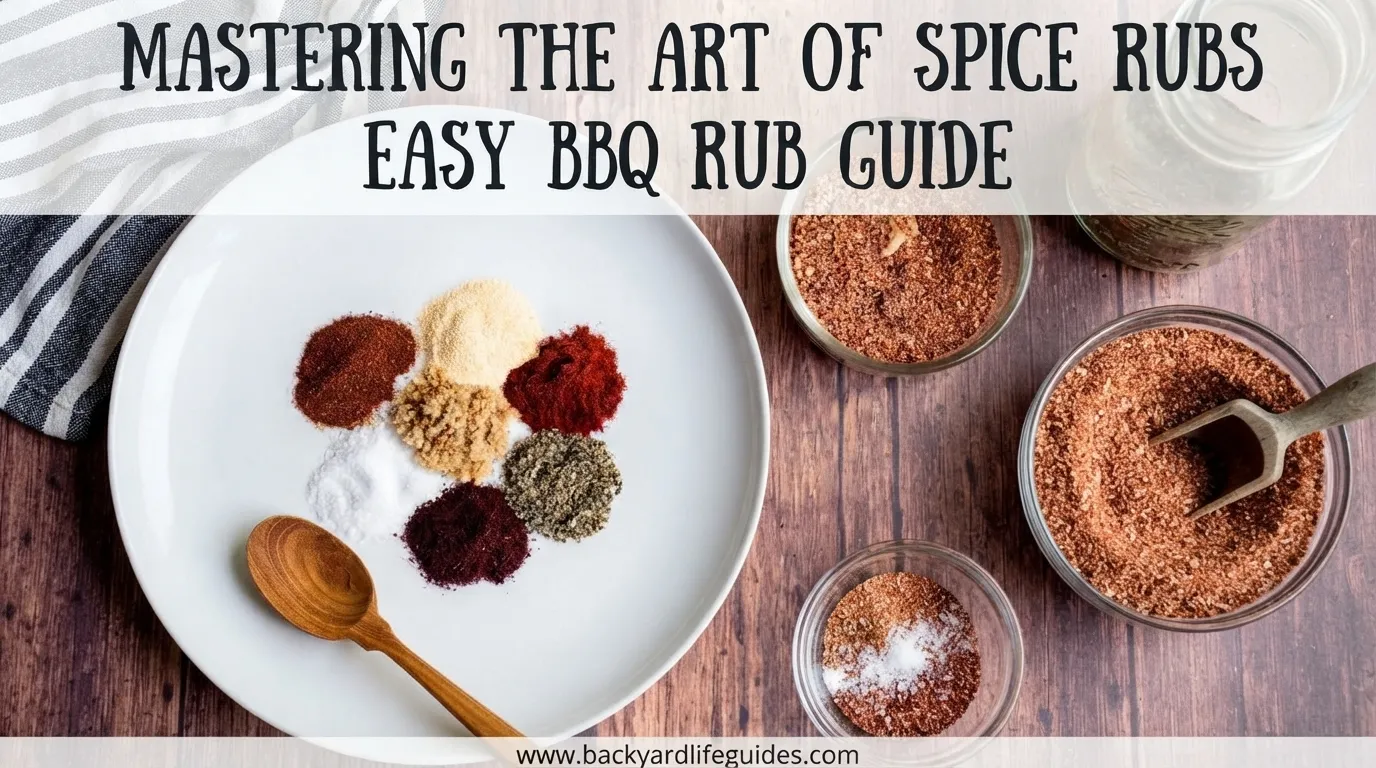
Mastering the Art of Spice Rubs: Easy BBQ Rub Guide
What Is a Spice Rub?
- Disclosure: This post may include affiliate links. If you click a link and complete a purchase, I may earn a commission. Additionally, as an Amazon Associate, I earn from eligible purchases.
A spice rub is a dry mixture of spices, herbs, salt, sugar, and other seasonings that is worked onto food before grilling, smoking, or roasting. Unlike a sauce, a rub stays mostly on the surface and helps build a flavorful exterior as the food cooks.
A good rub is not simply a large collection of spices. The goal is balance. Each ingredient should have a purpose, whether it contributes saltiness, sweetness, heat, aroma, earthiness, smokiness, or acidity.
Spice rubs are especially useful for beef, pork, chicken, lamb, seafood, and vegetables. They can also be adjusted easily, making them a practical way to develop your own signature BBQ flavor.
Why Use a Homemade Spice Rub?
Homemade rubs give you much more control than a pre-mixed seasoning. You can make the blend sweeter, hotter, smokier, saltier, or more aromatic depending on the food and cooking method.
A well-designed rub can:
- Add depth of flavor to grilled food.
- Create a flavorful outer crust.
- Complement the natural taste of the protein.
- Give different meats their own flavor identity.
- Allow you to control salt, sugar, and heat.
- Make it easier to experiment with regional flavor styles.
- Produce small or large batches according to your needs.
The most important principle is simple: the rub should improve the food, not hide it. This is particularly important with quality beef, seafood, and other ingredients with a strong natural flavor.
The 7 Main Flavor Groups for Spice Rubs
Understanding what each ingredient contributes makes creating a rub much easier.
| Flavor group | Examples | What it contributes |
|---|---|---|
| Herbs | Rosemary, thyme, oregano, sage | Fresh, aromatic character |
| Hot spices | Cayenne, chili powder, red pepper | Heat and intensity |
| Aromatic spices | Cumin, coriander, cardamom, cloves | Fragrance and complexity |
| Sweet spices | Cinnamon, ginger, nutmeg, allspice | Warmth and sweetness |
| Earthy spices | Turmeric, fennel, fenugreek | Deep, earthy notes |
| Citrusy ingredients | Lemon zest, orange zest, sumac | Brightness and acidity |
| Savory ingredients | Garlic powder, onion powder, celery salt | Savory depth and umami |
You do not need ingredients from all 7 groups in every recipe. Instead, choose the flavors that make sense for your protein and cooking method.
Start With the Protein
Before reaching for your spice jars, decide what you are cooking.
Different proteins respond to different flavor profiles.
Beef
Beef can handle stronger seasonings because its rich flavor pairs well with bold ingredients.
Try combinations involving:
- Black pepper
- Paprika
- Garlic
- Onion
- Cumin
- Chili powder
- Rosemary
For a first experiment, a rib eye is particularly forgiving because its fat content gives you some room to experiment with seasoning.
Chicken
Chicken has a relatively mild flavor, so herbs and aromatics can work especially well.
Consider:
- Oregano
- Thyme
- Rosemary
- Garlic
- Onion
- Paprika
- Black pepper
A mild chicken rub can also be made hotter by adding cayenne or chili flakes.
Fish and Seafood
Seafood generally benefits from lighter and brighter seasoning rather than an extremely heavy rub.
Consider:
- Lemon zest
- Dill or herbs
- Black pepper
- Garlic
- Thyme
- Sumac
- Mild paprika
A coarse rub can also feel unpleasant on delicate fish, so texture matters.
Lamb
Lamb can support earthy and aromatic flavors.
Good candidates include:
- Cumin
- Coriander
- Thyme
- Turmeric
- Black pepper
- Cardamom
- Chili flakes
The key is to create complexity without overwhelming the distinctive flavor of lamb.
Build a Balanced Rub
One of the easiest mistakes is adding too many strong spices at once.
Instead, build the blend in layers.
A practical approach is to begin with a base, add supporting flavors, and then introduce a smaller amount of heat or sweetness.
For example:
Base → savory → aromatic → sweet → heat → finishing note
This gives you a logical way to adjust the recipe instead of randomly adding ingredients.
Use the 3 + 1 Experiment
A useful method for beginners is to choose 3 familiar spices and 1 unfamiliar spice.
For example:
- Paprika
- Garlic powder
- Black pepper
- Coriander
The first three provide familiar flavors while the fourth introduces something new.
This approach makes experimentation easier because you are not trying to understand several unfamiliar flavors simultaneously.
Think About the 5 Basic Tastes
A balanced rub can be developed by thinking about these 5 basic taste categories:
- Sweet
- Salty
- Sour
- Bitter
- Umami
Not every rub needs a strong contribution from all five. However, considering them can help you identify why a blend tastes flat or overly aggressive.
For example, if a rub tastes overwhelmingly salty and spicy, it may benefit from a small sweet or aromatic component.
If it tastes heavy, a citrusy ingredient can provide brightness.
If it tastes sweet but lacks depth, black pepper, garlic, cumin, or another savory ingredient may provide better contrast.
How Much of Each Spice Should You Use?
There is no universal measurement that works for every rub because ingredient strength and personal taste vary.
However, beginners should make small adjustments instead of adding large amounts.
When developing a blend, test ingredients in increments such as:
- ⅛ teaspoon
- ¼ teaspoon
- ½ teaspoon
- 1 teaspoon
Taste between adjustments.
This is particularly important with powerful ingredients such as cayenne, cloves, chili flakes, and strong smoked spices.
A small amount can change an entire batch.
Choose the Right Texture
Texture is often overlooked when people make homemade rubs.
A rub can be:
- Fine
- Medium
- Coarse
- Powdery
- Flaky
The best texture depends on the food.
A very coarse mixture may work beautifully on a steak but feel distracting on delicate fish. A finer blend distributes more evenly over smaller or thinner pieces.
How to Change the Texture
You can modify a rub using:
- A spice grinder
- Food processor
- Mortar and pestle
- Blending
- Pulsing
- Crushing
- Chopping
- Toasting before grinding
Do not grind everything automatically. Sometimes keeping a little texture gives the finished food a more interesting surface.
Toasting Spices Before Grinding
Toasting can bring out deeper aromas in certain whole spices.
If you choose to toast ingredients, use controlled heat and watch them carefully. Spices can move quickly from fragrant to burnt.
After cooling, grind them to your preferred texture.
This technique can be especially useful when working with whole cumin, coriander, or other aromatic seeds.
When Should You Add Salt?
Salt deserves special attention because it can dominate a rub quickly.
Instead of treating salt as just another spice, think of it as a flavor amplifier.
Start conservatively, taste the mixture, and consider how heavily you intend to apply the rub.
If the food will be generously coated, an overly salty blend can become difficult to correct.
Different salts also have different crystal sizes, so volume measurements are not always directly interchangeable.
Add Sweetness Carefully
Sugar can help create color and caramelized flavor during grilling, but it also requires attention to heat.
Common sweet components include:
- Brown sugar
- White sugar
- Maple-based ingredients
- Honey-based flavoring
- Sweet spices such as cinnamon
For high-temperature grilling, avoid assuming that more sugar automatically means a better crust. Too much can burn before the meat is properly cooked.
How to Make a Basic Homemade Spice Rub
For a simple starting blend, combine:
| Ingredient | Purpose |
|---|---|
| Paprika | Color and mild pepper flavor |
| Black pepper | Heat and depth |
| Garlic powder | Savory flavor |
| Onion powder | Sweet-savory character |
| Salt | Flavor enhancement |
| Brown sugar | Sweetness and browning |
| Chili powder | Warmth and spice |
| Cumin | Earthy aroma |
Start with a modest batch rather than making a large quantity.
Mix the dry ingredients thoroughly, taste a tiny amount, and make adjustments before applying it to your food.
The important part is not following one rigid formula. It is learning how each ingredient changes the final profile.
Five Flavor Directions to Try
Once you understand the basic structure, you can move toward different flavor styles.
1. Sweet and Spicy
Combine sweet ingredients with chili-based heat.
Good choices include:
- Brown sugar
- Paprika
- Cayenne
- Chili powder
- Black pepper
This direction works particularly well with pork and chicken.
2. Smoky
For a deeper BBQ character, consider:
- Smoked paprika
- Chipotle
- Black pepper
- Garlic
- Smoked salt
Use smoky ingredients carefully because several strong smoky components can quickly dominate the food.
3. Mediterranean-Inspired
For a brighter herb-forward direction, consider:
- Oregano
- Thyme
- Lemon zest
- Sumac
- Garlic
This profile can work particularly well with chicken, fish, vegetables, and lamb.
4. Aromatic and Warm
Use spices such as:
- Cumin
- Coriander
- Cardamom
- Cinnamon
- Ginger
This style is useful when you want more fragrance and complexity rather than pure heat.
5. Fresh and Citrusy
For seafood or lighter foods, use ingredients such as:
- Lemon zest
- Lime zest
- Sumac
- Mild herbs
- Black pepper
Citrusy ingredients can make a heavy seasoning profile taste brighter.
How to Apply a Spice Rub Correctly
Good seasoning starts with proper preparation.
Step 1: Prepare the Food
Trim excessive fat when appropriate and pat the surface dry.
A dry exterior gives the seasoning a better surface to adhere to.
Step 2: Add a Thin Layer of Oil
A small amount of oil can help dry seasoning adhere to the food.
You do not need to soak the meat. The goal is simply to create enough surface moisture for the rub to stay in place.
Step 3: Apply the Rub Evenly
Sprinkle the seasoning across the entire surface.
Then gently massage it into the food.
Avoid creating a huge pile of seasoning in one area while leaving another section almost bare.
Step 4: Let It Rest
Depending on the food and recipe, allow the rub to sit for a few minutes up to about 1 hour before cooking.
This gives the seasoning time to adhere and develop on the surface.
For some preparations, longer seasoning periods may be appropriate, but do not assume that longer always means better.
How to Grill With a Sugar-Based Rub
Sugar-containing rubs require extra attention.
At excessive temperatures, sugar can burn before the food is finished.
Therefore:
- Watch the grill temperature.
- Avoid unnecessarily intense direct heat.
- Turn food according to your cooking method.
- Look for browning rather than blackening.
- Adjust the rub composition if burning repeatedly occurs.
A beautiful crust should look deeply browned and flavorful, not charred simply because the seasoning contained sugar.
How to Smoke With a Spice Rub
Smoking introduces another consideration: time.
A rub used for a long smoking session should contain flavors that remain pleasant during extended cooking.
Strong smoky spices can become overwhelming when combined with actual wood smoke, so balance matters.
Before smoking, consider:
- Protein type
- Cooking duration
- Smoke intensity
- Rub thickness
- Sugar content
- Spice strength
The goal is to create layers of flavor rather than letting the rub compete with the smoke.
A Practical Example: Long-Cooked Ribs
A classic long-cooking approach demonstrates why rub selection and cooking conditions need to work together.
One published technique uses short ribs with olive oil, rub, wine, carrots, onions, and herbs, then cooks the covered preparation for 4 hours at 285°F.
The useful lesson is not simply the exact recipe. It is that a rub should be selected with the entire cooking method in mind.
A seasoning that performs well during a quick high-heat steak cook may behave differently during a multi-hour preparation.
How to Store Homemade Spice Rubs
Once your blend is ready, storage becomes important.
Place unused rub in an airtight container and keep it somewhere:
- Cool
- Dry
- Away from direct sunlight
- Away from steam and moisture
Moisture can cause clumping and reduce the quality of dry seasoning.
Labeling the container with the name and preparation date is also a simple habit that makes your spice collection easier to manage.
Some dry rub blends can remain usable for several months to about 1 year when properly stored, although quality can decline before the seasoning becomes obviously spoiled.
Always inspect the blend before use.
How to Tell When a Rub Should Be Replaced
Do not rely only on the date.
Check for:
- Unusual odor
- Moisture
- Mold
- Major discoloration
- Insect contamination
- A significant loss of aroma
If the mixture looks or smells questionable, replacing it is the safer choice.
Remember that quality and safety are not exactly the same thing. A very old dry spice blend may still appear usable while having lost much of its flavor.
Common Spice Rub Mistakes
Using Too Many Spices
More ingredients do not automatically create more complexity.
A smaller number of well-balanced ingredients can produce a cleaner flavor.
Over-Salting
Salt can hide the other ingredients.
Add it carefully and consider the amount of rub you will actually use.
Ignoring the Protein
A seasoning that works beautifully with beef may overwhelm fish.
Always think about the food first.
Making the Rub Too Coarse
Large pieces can create an unpleasant texture, especially on delicate foods.
Using Too Much Sugar
Sweet rubs can burn under intense heat.
Applying Unevenly
Large piles of seasoning create inconsistent bites.
Never Tasting the Blend
Your palate is one of the best tools available.
Taste small amounts during development and make controlled adjustments.
Spice Rub Troubleshooting Guide
| Problem | Likely reason | Practical fix |
|---|---|---|
| Too salty | Excess salt | Increase the unsalted spice base |
| Too hot | Too much chili or cayenne | Add mild base ingredients |
| Too sweet | Excess sugar | Add savory or aromatic spices |
| Too smoky | Too many smoked ingredients | Reduce smoked components |
| Too bitter | Strong spices or over-toasting | Reduce the ingredient and avoid burning |
| Too bland | Insufficient aromatic depth | Add garlic, onion, herbs, or warm spices |
| Rub falls off | Surface too wet or insufficient adhesion | Pat food dry and use a thin oil layer |
| Rub burns | Excessive heat or sugar | Reduce heat or sugar content |
| Texture feels gritty | Grind is too coarse | Pulse or grind more finely |
A Simple Rub-Building Formula
Instead of memorizing a single recipe, use a building system.
Start with:
Base seasoning
Then add:
Aromatic ingredients
Then choose:
One flavor direction
Finally adjust:
Salt + heat + sweetness + brightness
This gives you a repeatable method for creating new combinations without starting from zero every time.
How to Develop Your Own Signature Rub
The best homemade rub is the one you understand well enough to modify.
Start with familiar ingredients.
Choose a protein you already know how to cook.
Make a small test batch.
Taste it.
Change one variable at a time.
If you change five ingredients simultaneously, it becomes difficult to know which adjustment actually improved the result.
Keep notes about:
- Ingredients
- Measurements
- Protein
- Cooking method
- Cooking temperature
- Cooking duration
- Your final opinion
After several attempts, you can develop a personal blend that is much more consistent.
Spice Rub Cheat Sheet
| Protein | Flavor direction | Useful ingredients |
|---|---|---|
| Beef | Bold and smoky | Paprika, black pepper, garlic, cumin |
| Pork | Sweet and smoky | Brown sugar, paprika, chili, garlic |
| Chicken | Herb-forward | Thyme, oregano, rosemary, garlic |
| Fish | Bright and light | Lemon zest, herbs, sumac, pepper |
| Lamb | Earthy and aromatic | Cumin, coriander, turmeric, thyme |
| Vegetables | Savory and smoky | Paprika, garlic, onion, herbs |
Frequently Asked Questions
What is the basic formula for a spice rub?
A basic rub can combine salt, pepper, sugar, and several complementary spices. From there, you can add herbs, citrusy ingredients, smoky flavors, or heat according to the protein and cooking method.
How long should a spice rub sit on meat?
A practical starting point is a few minutes to about 1 hour. The ideal time depends on the food, recipe, seasoning strength, and cooking method.
Can I use the same rub for every type of meat?
You can, but it is usually better to adjust the blend. Beef can handle bold flavors, while fish generally benefits from lighter, brighter seasoning.
Why does my spice rub burn?
The most common issue is excessive cooking heat, particularly when the rub contains sugar. Reduce the heat or lower the amount of sugar in the blend.
Should I put oil on meat before a dry rub?
A thin layer of oil can help the seasoning adhere more effectively. Avoid using so much oil that the surface becomes excessively wet.
How long does homemade dry rub last?
Properly stored dry rubs can remain usable for several months to around 1 year, although freshness and aroma may decline over time. Store the mixture in an airtight container in a cool, dry location.
Should spices be ground finely?
Not always. Fine grinding gives an even coating, while a somewhat coarser texture can provide more noticeable texture on foods such as steak. Delicate foods generally benefit from a finer blend.
How can I make a rub less spicy?
Reduce or remove strong heat sources such as cayenne and chili flakes. Increase milder ingredients instead of simply adding large amounts of another powerful spice.
What is the easiest way to create a new rub?
Start with 3 familiar spices and 1 unfamiliar spice. Build the blend gradually, taste small amounts, and change one ingredient at a time.
What makes a spice rub taste balanced?
Balance comes from controlling salt, sweetness, heat, aroma, earthiness, and brightness rather than allowing one strong ingredient to dominate.
Final Thoughts
Mastering spice rubs is less about memorizing a perfect recipe and more about understanding how ingredients work together.
Start with the protein, choose a clear flavor direction, measure carefully, and taste as you go. Think about texture as well as flavor, particularly when preparing delicate foods.
Most importantly, experiment in small batches. A rub that contains 7 different flavor categories does not necessarily need ingredients from all of them. Sometimes a handful of well-chosen spices produces a better result than a crowded seasoning blend.
With practice, you can move from simply following BBQ recipes to creating rubs that are balanced, repeatable, and genuinely your own.