
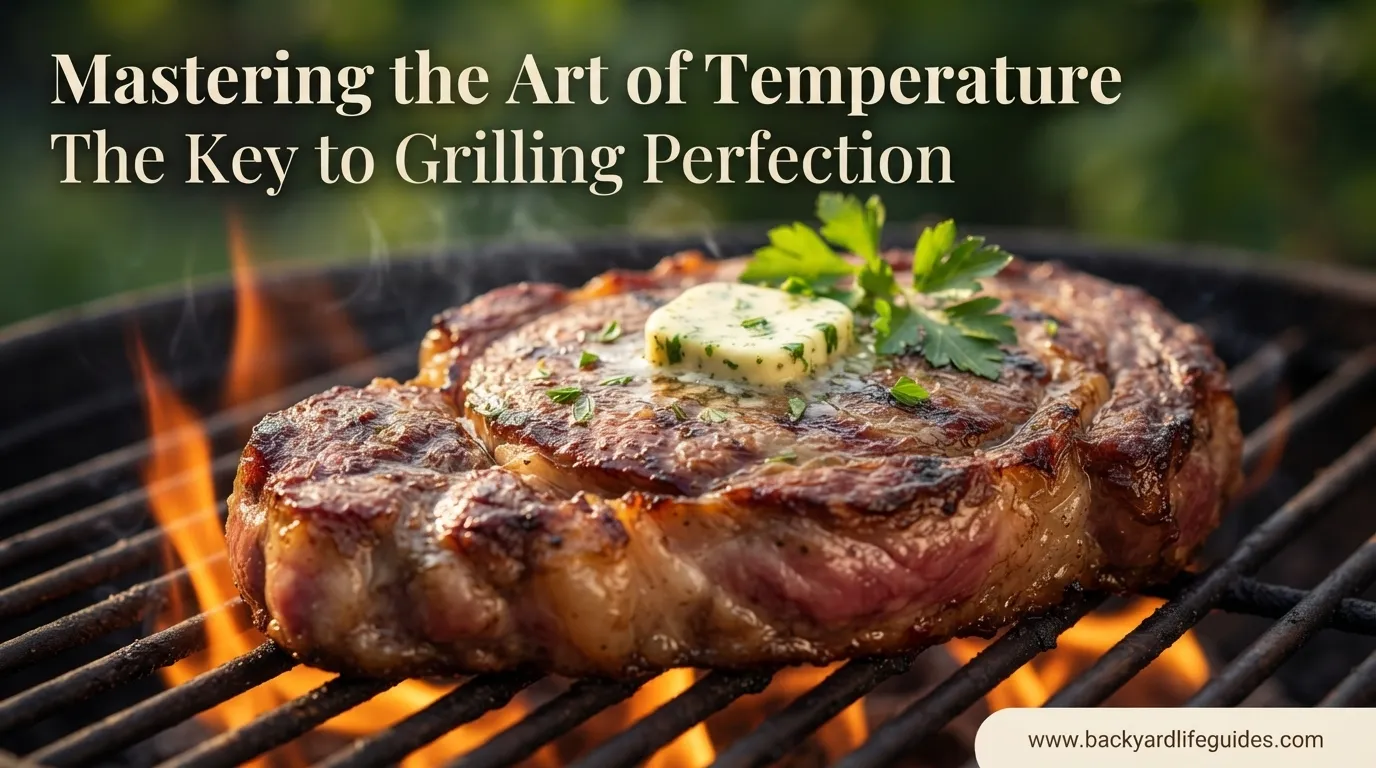
Mastering the Art of Temperature: The Key to Grilling Perfection
Mastering the Art of Temperature:
- Disclosure: This post may include affiliate links. If you click a link and complete a purchase, I may earn a commission. Additionally, as an Amazon Associate, I earn from eligible purchases.
Great grilling is not simply about putting food over a hot grill and waiting until it looks done. Temperature control is what separates evenly cooked, juicy food from meat that is burned outside and undercooked inside. Whether you are searing a steak, grilling vegetables, cooking chicken, or smoking a larger cut, knowing how to control heat gives you much more control over the final result.
A grill can create several different cooking environments, from gentle low heat around 200–250°F to very high heat reaching 500–550°F. Understanding what each temperature range is best suited for makes grilling easier and more predictable. The goal is not always to use the highest temperature. Instead, successful grilling comes from matching the heat, cooking method, and internal temperature to the food you are preparing.
Understanding Grill Temperature Levels
Grills are commonly divided into low, medium, and high-temperature ranges. Low heat generally falls around 200–300°F, although a more specific low-and-slow range is approximately 225–250°F. This lower temperature is useful when food needs to cook gradually, particularly when smoking or handling larger cuts that benefit from longer cooking.
Medium heat generally sits around 300–400°F, with 300–350°F being a common working range for general grilling. This level provides enough heat to cook food efficiently without exposing it to the extreme temperatures associated with searing.
High heat generally falls between 400–500°F, while some grills and direct-grilling setups can reach 450–550°F. Temperatures around 500–550°F are particularly useful when very intense heat is needed. At this level, food can brown and develop a strong crust quickly, so attention is important because the outside can become overcooked within minutes.
For smoking, a temperature around 225–275°F is commonly used. A narrower range of 225–250°F is especially associated with low-temperature smoking. Depending on the size and type of meat, this style of cooking can take several hours, while some large cuts may require much longer.
Why Preheating Your Grill Matters
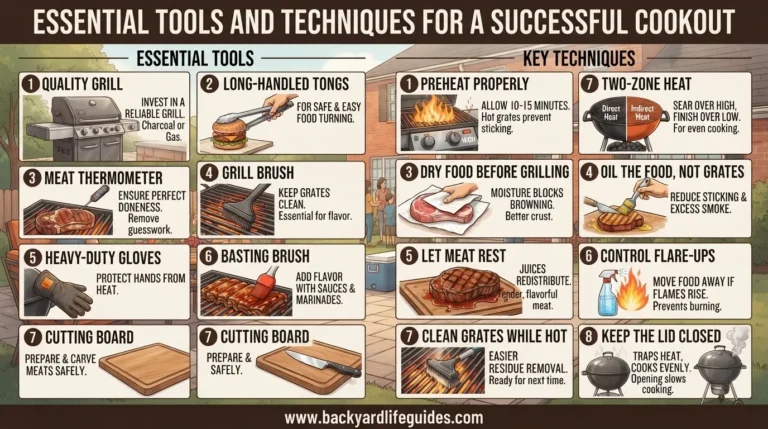
Preheating is one of the simplest ways to improve grilling consistency. A grill that has not reached its intended temperature can cook food unevenly, extend cooking time, and make it harder to develop the desired surface browning.
The recommendations place typical preheating time between 10 and 30 minutes, depending on the grill and cooking setup. A more common recommendation is around 10–15 minutes, while another approach suggests 15–20 minutes.
The important point is to allow the grill to reach a stable cooking temperature before adding your food. Instead of relying only on the clock, use the grill’s thermometer when available and pay attention to how the cooking surface behaves.
The Secret to Better Grilling: Use Heat Zones
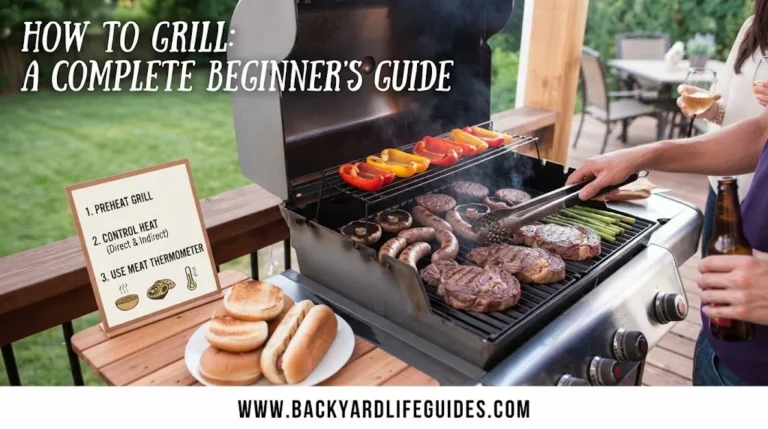
One of the most useful techniques for temperature control is creating two heat zones. Rather than keeping every part of the grill equally hot, divide it into a direct-heat area and an indirect-heat area.
The direct zone is positioned over the main heat source and is best for quick cooking, browning, searing, and developing grill marks. The indirect zone is away from the strongest heat and provides a gentler environment for foods that need more time.
On a charcoal grill, this can be created by placing the coals on one side and leaving the other side without coals. On a gas grill, the burners can be used to create different heat areas by keeping one side hot while turning the other side down or off.
This setup becomes particularly useful when food needs to move from intense heat to gentler cooking. For example, a thick steak can begin over direct heat and then move to indirect heat so the center can continue cooking without excessively darkening the outside.
Direct Heat vs. Indirect Heat
Direct heat is the better choice when food needs quick, intense cooking. Steaks, burgers, and many vegetables can benefit from this method. Steak searing, for example, is commonly associated with temperatures around 450–500°F, with approximately 1–2 minutes per side used for a quick sear.
Indirect heat is more suitable when food needs longer or gentler cooking. The guidance places indirect grilling around 275–350°F. This method is especially useful for larger cuts, ribs, whole chicken, and foods that could burn before their centers are properly cooked.
The real advantage comes from combining both methods. Instead of choosing between direct and indirect grilling, a two-zone setup lets you use each one when it is most useful.
How Hot Should You Grill Steak?
Steak requires both surface heat and internal temperature control. A grill can be very hot for searing, but the steak’s final doneness should be judged by its internal temperature, not simply by the temperature of the grill.
For rare steak, the extracted guidance places the target around 120–130°F. Medium-rare is approximately 130–135°F, while medium is around 140–145°F. Medium-well falls around 150–155°F, and well-done is approximately 160°F or higher.
For a normal sear, temperatures around 450–500°F can provide the intense heat needed to brown the exterior. A steak can be seared for roughly 1–2 minutes per side before being moved to indirect heat if additional cooking is required.
For thicker steaks, reverse searing provides another temperature-control approach. The steak begins over indirect heat and moves toward the final target gradually. When it is approximately 10–15°F below the desired internal temperature, it can be transferred to direct heat for a quick final sear. This approach helps reduce the difference between the outer and inner portions of a thick steak.
Internal Temperature Matters More Than Appearance
The temperature of the grill and the internal temperature of the food are two different things. A grill might be operating at 400°F, but that does not mean the food itself should reach 400°F internally.
For poultry and chicken, the extracted information consistently gives 165°F as the target internal temperature. Ground meat and burgers are generally placed around 160–165°F. Whole beef, lamb, fish, and pork are associated with an internal temperature of 145°F in the supplied material.
Using a digital meat thermometer makes this process much more reliable than judging doneness entirely by color or cooking time. The outside of a food can appear finished while the center is still below the intended temperature.
Grilling Fish and Vegetables
Fish and vegetables often need more moderate heat than a steak being aggressively seared. The material places fish and vegetable grilling in ranges such as 325–350°F, while fish-specific cooking can extend into the 300–400°F range depending on the desired result.
Vegetables can be handled differently according to their density. Faster-cooking vegetables such as zucchini, bell peppers, and asparagus can work well over direct heat. Denser vegetables such as potatoes, carrots, and whole onions benefit from the gentler environment of indirect heat because they need more time to cook through.
The same two-zone setup that helps with meat can therefore make vegetable grilling easier. Quick-cooking vegetables can stay closer to the direct zone, while denser vegetables can spend more time away from the strongest heat.
Getting the Right Temperature for Smoking
Smoking requires patience and a much lower grill temperature than traditional high-heat grilling. The supplied material places smoking around 225–275°F, with 225–250°F being another commonly specified range.
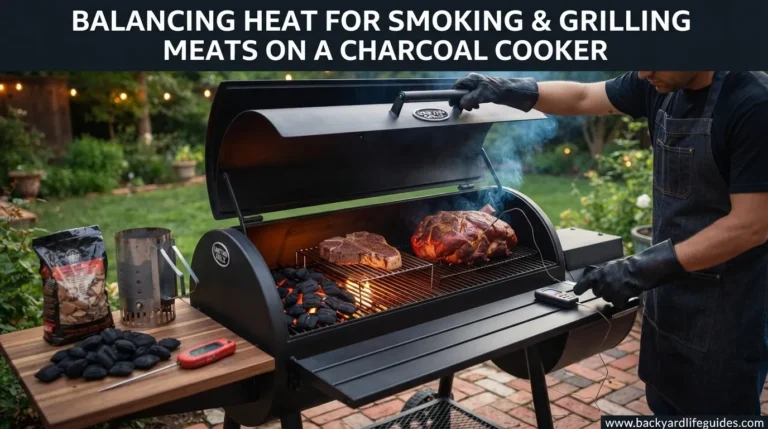
Wood chips or chunks can be used to create smoke, and one recommends soaking wood chips for approximately 30 minutes. Hickory, mesquite, and fruitwood are among the wood types mentioned in the supplied material.
At smoking temperatures, cooking can take several hours depending on the meat and its size. The key is maintaining a stable low temperature rather than repeatedly increasing the heat to speed things up.
Using the Maillard Reaction to Your Advantage
High grilling temperatures are useful for more than simply cooking food quickly. They also help create the browning, crust, flavors, and aromas associated with grilled foods through the Maillard reaction.
This is one reason high heat is particularly useful for steaks and burgers. Temperatures around 450–500°F can create the intense surface heat needed for strong browning. However, higher is not automatically better. At temperatures approaching 500–550°F, food can darken extremely quickly.
Good grilling therefore requires balance. Use high heat when you want surface browning and searing, then reduce the heat or move food to an indirect zone when the exterior is progressing faster than the center.
How to Control Grill Temperature
Temperature control depends on the type of grill, but the basic principle is the same: increase or reduce the amount of heat reaching the food.
With charcoal grills, airflow and vents play an important role. Opening vents allows more oxygen to reach the fire and can increase heat, while partially closing them can help reduce the temperature.
Gas grills provide more direct control through burner settings. Burners can be adjusted to create hotter and cooler sections, making it easier to establish a two-zone cooking environment.
A grill thermometer is one of the most useful tools for monitoring the overall cooking temperature. A digital meat thermometer serves a different purpose by measuring the internal temperature of the food.
It is also worth learning where the hottest and coolest areas of your own grill are. Even when a grill appears evenly heated, different areas can behave differently. Knowing these hot spots allows you to move food before it becomes overcooked.
The Hand Test for Estimating Grill Heat
A simple hand test is included in the material as a rough way to estimate heat when a thermometer is unavailable. The suggested timing is approximately 2 seconds for high heat, 4 seconds for medium heat, and 6 seconds for low heat.
This should be treated as an approximate technique rather than a replacement for a proper thermometer. A thermometer provides much more consistent information, particularly when cooking meat where internal temperature is important.
Another simple test mentioned is the parchment-paper method. The supplied material says that parchment browning in approximately 10 seconds can indicate high heat.
These tests can help someone understand the general heat level, but temperature measurement remains the more dependable approach.
Cooking Time Still Matters
Temperature tells you how hot the grill or food is, but cooking time still affects the final result. The supplied material gives burgers a general cooking time of 4–6 minutes per side at approximately 375–400°F.
Chicken breasts are listed around 5–7 minutes per side at approximately 350–375°F, while steaks are given around 5–7 minutes per side at approximately 400–425°F.
These numbers are useful starting points, but cooking time can vary with food thickness and the actual heat reaching the food. That is why cooking time should be used alongside temperature rather than as the only measure of doneness.
When to Move Food Around the Grill
Moving food is not necessarily a sign that something has gone wrong. It is one of the main benefits of using heat zones.
If the outside is becoming too dark while the inside needs additional cooking, move the food from direct heat to indirect heat. If the surface needs additional browning, it can be returned to the hotter zone.
This approach gives you control over both surface color and internal doneness. Instead of trying to find one perfect temperature for the entire cooking process, you can change the cooking environment as the food progresses.
Resting Meat After Grilling
Grilling does not necessarily end when the food comes off the heat. Resting is another important part of the process.
The supplied material gives resting recommendations ranging from 3 minutes to 5–10 minutes. The purpose is to allow the meat to settle before cutting and serving.
The exact resting time depends on the food and cooking situation, but the key lesson is simple: do not rush immediately from grill to plate. Giving grilled meat a short resting period can be an important final step in the cooking process.
Marinades, Rubs, and BBQ Sauce
Temperature control is only one part of the grilling process. Preparation also affects the final result.
The supplied material recommends marinating food for at least 30 minutes, with the option to continue for up to overnight. Common marinade components mentioned include oil, an acidic ingredient such as vinegar or citrus, herbs, and spices.
Dry rubs can include ingredients such as paprika, garlic powder, brown sugar, and chili powder. BBQ sauce is better applied during the last few minutes of grilling so that it has less opportunity to burn over high heat.
This is another situation where temperature control matters. A sugary sauce exposed to very high heat can darken quickly, so applying it near the end gives you more control over the finish.
Choosing the Right Heat for Different Foods
The most useful way to think about grilling temperature is not as one universal number but as a relationship between food type, cooking method, grill heat, and internal temperature.
A steak may benefit from 450–500°F direct heat for searing before moving to a cooler zone. Fish can be handled at more moderate temperatures around 300–350°F or higher depending on the preparation. Chicken requires attention to an internal temperature of 165°F, while ground meat is generally associated with 160–165°F in the supplied guidance.
Large cuts and smoking applications require a different approach. Temperatures around 225–275°F allow slower cooking, while larger foods can remain in the indirect zone for extended periods.
Once you understand this relationship, grilling becomes less about memorizing one number and more about controlling the cooking environment.
Common Temperature Mistakes to Avoid
One of the biggest mistakes is assuming that a hotter grill always produces better food. High heat has its place, particularly for searing, but temperatures around 500–550°F can quickly over-brown food.
Another mistake is relying entirely on cooking time. A steak, burger, or chicken breast can vary in thickness, which means two pieces cooked for the same number of minutes may not reach the same internal temperature.
Skipping preheating can also make temperature control difficult. Without a properly heated grill, cooking times and surface browning become less predictable.
Finally, avoiding heat zones can limit your ability to recover from uneven cooking. A two-zone setup gives you somewhere to move food when direct heat becomes too aggressive.
A Simple Temperature-Control Strategy
A practical grilling routine starts by deciding what kind of cooking the food requires. If the goal is quick browning or searing, prepare a hot direct zone around 400–500°F or higher when appropriate. If the food needs gentler cooking, establish an indirect area around 275–350°F.
For low-and-slow cooking, maintain approximately 225–275°F, with 225–250°F being a common smoking range. Preheat the grill for roughly 10–20 minutes in ordinary grilling situations, using the thermometer to confirm that the desired temperature has been reached.
During cooking, watch both the surface and internal temperature. Move food between direct and indirect zones when necessary, and use a digital thermometer to check doneness. Once the food reaches the appropriate internal temperature, remove it from the grill and allow it to rest for around 3–10 minutes, depending on the food and preparation.
This simple process gives you far more control than simply leaving everything over the hottest part of the grill.
FAQs
What temperature should a grill be for normal grilling?
A general medium grilling range is around 300–400°F, with 300–350°F being a common range. The best temperature depends on the food and whether you are cooking directly or indirectly.
What temperature is best for searing steak?
The supplied guidance places steak searing around 450–500°F. A quick sear of approximately 1–2 minutes per side can then be followed by indirect cooking if the steak needs additional time.
What temperature should I use for smoking?
A common smoking range is approximately 225–275°F, with 225–250°F being a more specific low-and-slow range. Smoking can take several hours depending on the size and type of food.
What internal temperature should chicken reach?
The extracted guidance gives 165°F as the target internal temperature for poultry and chicken.
What internal temperature is best for burgers?
The supplied information places ground meat and burgers around 160–165°F.
What temperature is medium-rare steak?
Medium-rare is approximately 130–135°F internally. Rare is around 120–130°F, medium is 140–145°F, medium-well is 150–155°F, and well-done is approximately 160°F or higher.
How long should I preheat my grill?
The guidance ranges from 10–30 minutes, with 10–15 minutes and 15–20 minutes also commonly suggested. The actual time depends on the grill and cooking setup, so checking the temperature is more useful than relying only on a fixed time.
Should I use direct or indirect heat?
Use direct heat for quick cooking and searing, while indirect heat is better for larger or slower-cooking foods. A two-zone grill lets you use both methods during the same cooking session.
How long should grilled meat rest?
The supplied recommendations range from 3 minutes to 5–10 minutes. Allowing the meat to rest before serving gives you a useful final step between cooking and cutting.
Can I check grill temperature without a thermometer?
A rough hand test uses approximately 2 seconds for high heat, 4 seconds for medium heat, and 6 seconds for low heat. However, a proper grill thermometer is more reliable, especially when precise temperature control matters.
Final Thoughts
Mastering grill temperature is less about finding one perfect number and more about learning how different temperatures behave. Low heat around 225–275°F is suited to smoking and slow cooking, medium heat around 300–400°F works for general grilling, and high heat around 400–500°F or higher is useful for searing and browning.
The biggest improvement comes from combining these ranges with two-zone cooking, a reliable thermometer, proper preheating, and attention to internal temperature. Once you know when to use direct heat, when to move food to indirect heat, and when to let it rest, grilling becomes much easier to control—and much more consistent from one cookout to the next.
4 Comments