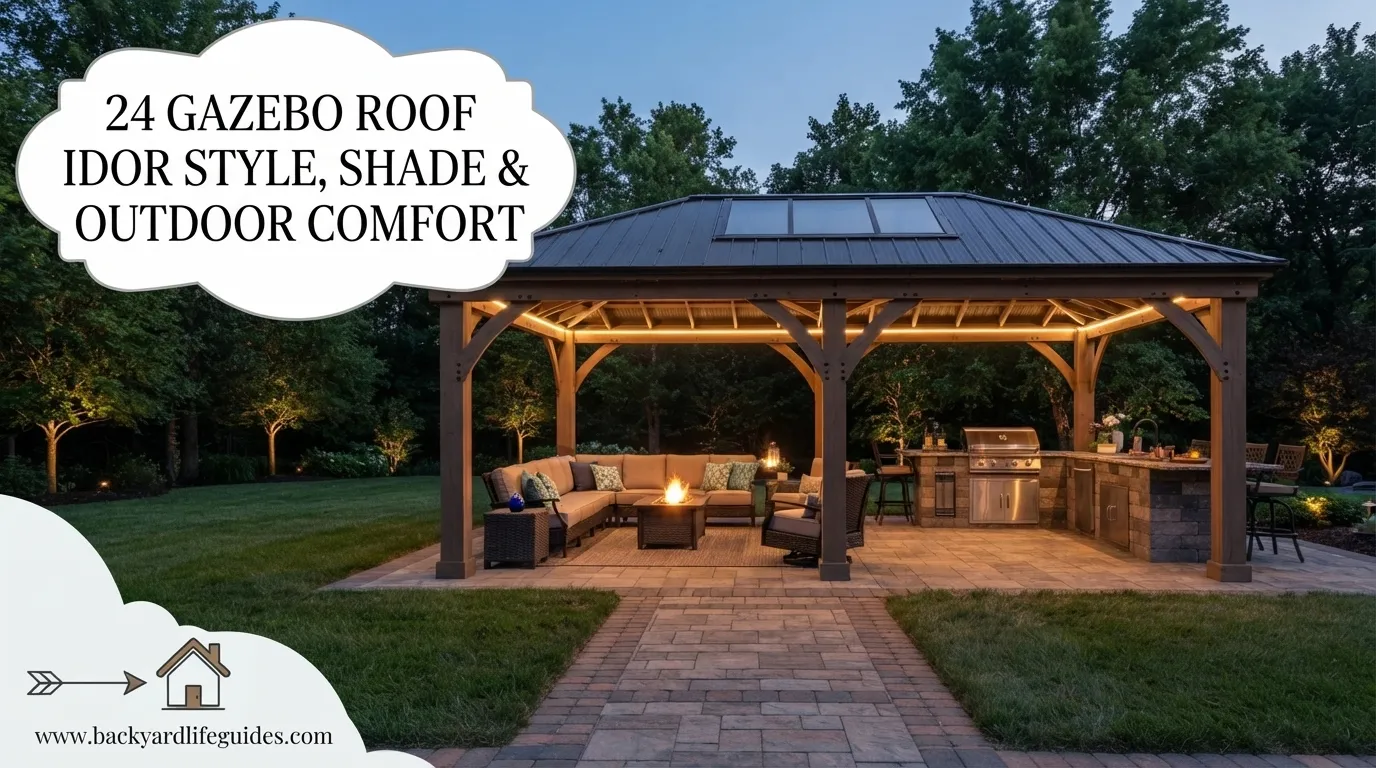
24 Gazebo Roof Ideas for Style, Shade & Outdoor Comfort
- Disclosure: This post may include affiliate links. If you click a link and complete a purchase, I may earn a commission. Additionally, as an Amazon Associate, I earn from eligible purchases.
Choosing the right gazebo roof is about more than picking a shape that looks attractive. Your roof affects shade, rain protection, airflow, natural light, durability, maintenance, and the overall character of your outdoor space.
The best choice depends on how you plan to use the gazebo, the weather it needs to handle, the appearance you want, and whether you prefer a permanent or flexible roof.
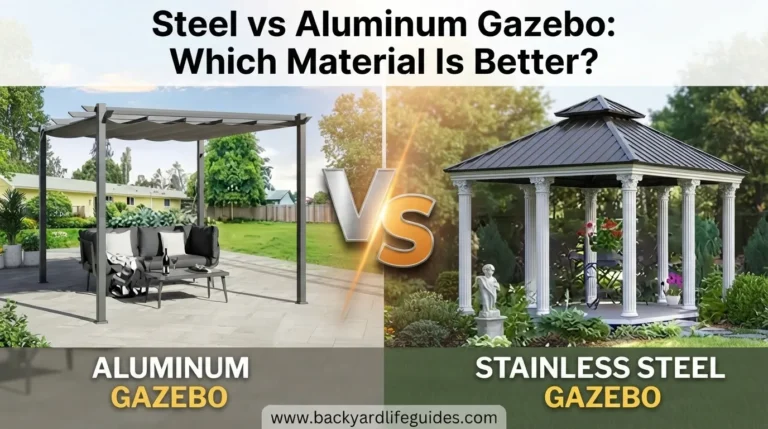
Across traditional and modern designs, popular options include hip, gable, tiered, fabric, louvered, metal, polycarbonate, wood, glass, green, curved, and solar roofs. Some designs prioritize classic appearance, while others focus on adjustable shade, natural light, or energy generation.
Here are 24 gazebo roof ideas to help you compare the possibilities and choose a design that fits your backyard.
1. Hip Roof
A hip roof slopes downward on all sides and creates a balanced, traditional appearance. On a square gazebo, it can produce a pyramid-like silhouette, while a rectangular structure gives it a more elongated appearance.
One major advantage is its combination of stability and drainage. Its sloping sides help rainwater move away from the roof instead of collecting on a flat surface.
Why choose a hip roof?
- Classic and symmetrical appearance
- Good water drainage
- Strong structure
- Suitable for traditional outdoor spaces
- Can complement lattice-style gazebo frames
- Works well when wind resistance is important
A hip roof is a strong choice when traditional style and practical weather protection are equally important.
2. Gable Roof
A gable roof has an A-shaped profile with two main sloping sides meeting at a ridge.
Its elevated design can create more visual height inside the gazebo and encourage airflow and natural light. It also provides a different architectural character from the four-sided slope of a hip roof.
Gable roof benefits
- Two primary sloping roof sides
- High-ceiling appearance
- Good airflow potential
- Allows natural light
- Classic architectural style
- Can provide additional upper roof space
A gable roof is particularly appealing when you want the gazebo to feel open, tall, and airy.
3. Tiered Roof
A tiered roof uses two roof levels or layered roof sections. Some designs incorporate a cupola, creating an architectural focal point at the top.
Besides its decorative appearance, the raised sections can help introduce ventilation and natural light.
Best features
- Eye-catching layered appearance
- Adds architectural height
- Can improve ventilation
- Can introduce additional natural light
- Works with decorative gazebo designs
This is a good option when the roof itself needs to become a major visual feature.
4. Fabric or Canopy Roof
A fabric canopy creates a softer and more casual appearance than a permanent hard roof.
It can provide shade and some rain protection while remaining relatively flexible. A retractable canopy gives you the ability to switch between open sunlight and covered shade.
Why consider fabric?
- Flexible design
- Softens a metal or timber frame
- Useful for seasonal structures
- Can work in smaller spaces
- Retractable versions provide adjustable shade
For homeowners who don’t want a permanently solid roof, fabric provides a practical middle ground between an uncovered gazebo and a hardtop structure.
5. Two-Toned Roof
A two-toned roof introduces visual contrast by combining different colors or materials.
For example, contrasting wood tones can add depth without requiring a completely different roofing system. Another approach is combining materials such as wood and slate for a more distinctive appearance.
Best for
- Adding visual depth
- Creating contrast
- Custom-looking outdoor spaces
- Matching the gazebo roof with surrounding furniture or framing
The main purpose of this design is visual rather than mechanical, making it useful when appearance is a major priority.
6. Round Roof
A round roof gives the gazebo a softer, balanced appearance.
Its curved geometry can work particularly well with circular or rounded gazebo layouts. Built-in seating and a matching table can reinforce the cohesive shape.
Design advantage
A round roof can make an outdoor structure feel welcoming and relaxed rather than sharply architectural.
7. Barrel-Top Roof
A barrel-top roof uses a continuous curved arch extending from one side of the gazebo to the other.
The curved profile can create an impression of additional interior volume while giving the structure a more dramatic appearance.
Consider this style if you want:
- A distinctive silhouette
- A curved architectural feature
- A larger-looking interior
- A rustic or dramatic appearance
Natural materials and earth-tone finishes can emphasize its rustic character.
8. Louvered Roof
A louvered roof is one of the most flexible modern options.
Its adjustable slats can open or close to control sunlight, shade, airflow, and rain protection. Motorized systems can make adjustment as simple as pressing a button.
Why louvered roofs stand out
| Feature | Benefit |
|---|---|
| Adjustable slats | Control sunlight |
| Open position | Increase airflow |
| Closed position | Increase shade and rain protection |
| Motorized operation | Easier adjustment |
| Modern appearance | Fits contemporary outdoor spaces |
If your weather and sunlight conditions change frequently, a louvered roof can provide considerably more control than a fixed roof.
9. Hybrid Roof
A hybrid roof combines different roofing materials or sections to create a customized solution.
One example combines wood beams, metal panels, and retractable fabric. This approach allows different materials to serve different purposes within the same gazebo.
Potential advantages
- Combines multiple visual styles
- Can balance shade and durability
- Allows flexible coverage
- Creates a customized appearance
- Can combine permanent and retractable sections
Hybrid roofing is useful when a single material doesn’t provide everything you want.
10. Shingled Roof
A shingled roof gives a gazebo a traditional, comfortable appearance and can provide all-season shelter when properly designed.
Cedar shingles are one material highlighted for this style, while roofing felt can be used as part of the underlying roof system.
Why choose shingles?
- Traditional appearance
- Strong visual connection with garden settings
- Suitable for year-round shelter
- Works well with wooden structures
- Can create a warm, natural aesthetic
This style is especially appropriate for homeowners who prefer a classic outdoor structure instead of a highly modern roof.
11. Flat Metal Roof
A flat metal roof gives a gazebo a clean, modern appearance.
Although the roof is visually flat, drainage still needs to be considered carefully so rainwater can move away from the structure.
Benefits
- Modern appearance
- Durable material
- Low-maintenance potential
- Strong weather protection
- Works well with minimalist outdoor furniture
A flat metal roof is particularly suited to a contemporary backyard where simple lines are part of the overall design.
12. Hardtop Metal Roof
A hardtop metal roof prioritizes durability and permanent protection.
Metal or aluminum construction can provide resistance against rain, wind, and strong sunlight, while requiring less maintenance than some softer roofing materials.
Best for
- Permanent gazebos
- Long-term outdoor use
- Strong weather protection
- Modern designs
- Homeowners who prefer lower maintenance
If durability is your first priority, a hardtop metal roof deserves serious consideration.
13. Polycarbonate Roof
A polycarbonate roof offers an attractive balance between protection and natural light.
The material can be lightweight while remaining durable, and it can provide UV protection without completely blocking daylight.
Advantages
- Natural light
- UV protection
- Lightweight construction
- Durable material
- Modern appearance
- Low-maintenance potential
This makes polycarbonate especially useful when you want a gazebo that remains bright during the daytime.
14. Wooden Roof
A wooden roof brings natural warmth to the gazebo and works particularly well with garden surroundings.
Wood can provide useful insulation and a rustic appearance, but it requires maintenance against moisture, pests, and weather-related wear.
Choose wood if you want:
- Natural appearance
- Rustic character
- A garden-friendly design
- Warm visual texture
- A cohesive timber structure
Wood looks excellent, but its maintenance requirements should be part of the decision.
15. Glass Roof
A glass roof is designed primarily around natural light and visual openness.
It can create a modern appearance and provide an open-sky feeling while still maintaining a roofed outdoor structure.
Important considerations
- Natural light can be maximized
- Shading may be necessary
- Regular cleaning is important
- Heat and glare should be considered
- Works particularly well with contemporary architecture
Glass is best when daylight and visual openness matter more than low maintenance.
16. Skylight Roof
Instead of making the entire roof transparent, a gazebo can incorporate skylight panels into a more traditional roof.
This provides a compromise between a solid roof and a fully glazed design.
The result
You can maintain the shelter of a conventional roof while introducing focused natural daylight from above.
This approach works well when you want brightness without turning the entire roof into glass.
17. Cedar Lattice Roof
A cedar lattice roof creates patterned shade rather than completely blocking sunlight.
As sunlight passes through the lattice, it produces a dappled effect across the gazebo floor and furniture.
Advantages
- Filtered shade
- Natural wood appearance
- Decorative pattern
- Garden-friendly appearance
- Works well above outdoor dining areas
A lattice roof is ideal for users who want some sunlight without sitting directly beneath full sun.
18. Living Green Roof
A living roof turns the roof into part of the landscape.
Plants such as succulents and moss can be incorporated into a properly prepared green-roof system. The concept can provide natural cooling and help the gazebo blend into a garden environment.
What makes it different?
- Adds greenery overhead
- Creates a natural appearance
- Can support biodiversity
- Can provide natural cooling
- Works well with wild-style gardens
A green roof requires careful structural and waterproofing planning, so this is not simply a matter of placing plants on top of an existing roof.
19. Draped Fabric Roof
A draped fabric roof focuses on atmosphere and softness.
Fabric panels can be combined with curtains, tiebacks, and lighting to create a more intimate outdoor retreat.
Good for
- Relaxed outdoor seating
- Decorative gazebos
- Privacy
- Soft lighting
- Evening entertaining
This style is particularly useful when the gazebo is intended to feel like an outdoor room rather than a purely functional shelter.
20. Retractable Roof
A retractable roof gives you the ability to adjust the amount of coverage throughout the day.
Open it when you want more sunlight and close it when shade or rain protection is needed.
Main benefits
- Flexible coverage
- Adjustable shade
- Better control over sunlight
- Useful for changing weather
- Suitable for outdoor dining and lounging
A retractable system is a strong choice when you don’t want to commit to either a permanently open or permanently covered gazebo.
21. Thatched Roof
A thatched roof gives a gazebo a tropical or relaxed garden character.
Natural thatch can create a softer appearance than metal, glass, or polycarbonate and can be paired with elements such as mosquito netting and solar lighting.
Style benefits
- Tropical appearance
- Rustic character
- Natural texture
- Suitable for poolside or garden settings
- Creates a vacation-like atmosphere
This roof is mainly attractive to homeowners who want the gazebo to feel like a private outdoor retreat.
22. Curved Metal Roof
A curved metal roof gives the gazebo a strong architectural silhouette while allowing rainwater to move along the curved surface.
It can be combined with clear polycarbonate sections when additional natural light is desired.
Why choose it?
- Distinctive profile
- Modern appearance
- Strong rain-shedding potential
- Can combine metal and transparent panels
- Creates a dramatic focal point
This is one of the better options when you want the roof itself to become a statement feature.
23. Solar Roof
A solar gazebo roof combines shelter with electricity generation.
Solar-integrated roofing can potentially provide energy for outdoor lighting, fans, or small appliances, depending on the system and its capacity.
One example described by GuterBoden uses solar panels to power string lights and a mini fridge for outdoor entertaining. Arka Energy similarly presents solar roofing as a way to combine shade with energy generation.
Benefits
- Generates renewable energy
- Can support outdoor lighting
- Can power selected appliances
- Combines functionality with shelter
- Fits modern outdoor designs
Solar roofing is especially interesting for homeowners who want their gazebo to perform more than one job.
24. Modern Mixed-Material Roof
A mixed-material roof combines materials such as metal, wood, and glass to create a customized appearance.
The approach can balance different strengths: metal for durability, wood for warmth, and glass for daylight.
Why it works
A mixed-material design gives you more freedom than choosing one material for every part of the roof.
It can also create a more sophisticated architectural appearance while allowing different roof sections to perform different functions.
How to Choose the Right Gazebo Roof
Before choosing a roof, think about how you actually use your gazebo.
A beautiful roof that doesn’t suit your weather, maintenance preferences, or daily use can become frustrating over time.
Consider Your Weather
Rain, wind, strong sunlight, and seasonal changes should influence your decision.
For stronger weather protection, consider hardtop metal, hip, gable, or other permanent roof systems.
For flexibility, consider louvered, retractable, or fabric options.
Think About Sunlight
If you want a bright gazebo, consider:
- Polycarbonate
- Glass
- Skylights
- Tiered designs
- Open lattice
If you prefer stronger shade, consider:
- Solid metal
- Wood
- Shingles
- Fabric canopy
- Louvered systems
Decide How Much Maintenance You Want
Maintenance varies considerably between materials.
| Roof Type | Main Strength | Maintenance Consideration |
|---|---|---|
| Metal | Durability | Generally low maintenance |
| Polycarbonate | Light + protection | Keep panels clean |
| Wood | Natural appearance | Requires weather protection |
| Glass | Maximum daylight | Cleaning and shading |
| Fabric | Flexibility | Fabric may need care/replacement |
| Green roof | Natural appearance | Plants and waterproofing need attention |
| Louvered | Adjustable control | Moving components need maintenance |
| Solar | Energy generation | Panels and electrical components require care |
Gazebo Roof Ideas by Your Main Goal
| Your Priority | Roof Ideas to Consider |
|---|---|
| Traditional style | Hip, gable, shingled |
| Modern appearance | Flat metal, glass, curved metal |
| Maximum flexibility | Louvered, retractable, fabric |
| Natural daylight | Glass, polycarbonate, skylight |
| Natural appearance | Wood, cedar lattice, green roof |
| Strong weather protection | Hardtop metal, hip, gable |
| Sustainability | Solar, green roof, eco-friendly materials |
| Tropical atmosphere | Thatched, draped fabric |
| Architectural statement | Barrel-top, curved, tiered |
| Adjustable shade | Louvered, retractable canopy |
Gazebo Roof Cost Considerations
Roof cost varies according to the material, size, structure, installation requirements, and level of customization.
One provides these example material/design ranges:
| Roof Type | Example Cost Range |
|---|---|
| Fabric / Canopy | $200–$1,000 |
| Polycarbonate | $800–$3,000 |
| Metal | $1,500–$6,000 |
| Custom Hardtop | $5,000–$15,000+ |
| Solar | Premium investment |
These figures should be treated as example ranges rather than universal prices, because the final cost can change substantially with gazebo dimensions, labor, structural requirements, and local conditions.
Which Gazebo Roof Is Best for Rain?
For rain protection, prioritize a roof with an effective slope and drainage system.
Hip and gable roofs naturally provide sloping surfaces for water runoff. Metal, polycarbonate, and properly constructed shingle roofs can also provide strong protection.
A flat roof can work, but drainage planning becomes especially important.
Which Gazebo Roof Is Best for Shade?
For fixed shade, solid roofs such as metal, wood, shingles, or hardtops are strong choices.
For adjustable shade, a louvered roof or retractable canopy offers more control.
A cedar lattice roof creates filtered, dappled shade instead of complete coverage.
Which Gazebo Roof Lets in the Most Light?
For maximum natural light, glass provides the clearest roof surface.
Polycarbonate is another useful option because it can allow daylight through while providing UV protection.
Skylights provide a more controlled way to introduce light without replacing the entire roof with transparent material.
Which Roof Is Best for a Modern Gazebo?
For a modern appearance, consider:
- Flat metal
- Hardtop metal
- Glass
- Curved metal
- Polycarbonate
- Louvered
- Solar
- Mixed-material roofs
The best option depends on whether you prioritize appearance, shade control, natural light, durability, or energy generation.
Which Gazebo Roof Requires the Least Maintenance?
A hardtop metal roof is generally a strong low-maintenance choice.
Polycarbonate can also be relatively easy to maintain, although its transparent surface needs cleaning.
Wood requires more ongoing protection, while glass needs regular cleaning. Fabric and green roofs can also require more attention depending on the material and installation.
Gazebo Roof Comparison
| Roof | Style | Shade | Light | Flexibility | Maintenance |
|---|---|---|---|---|---|
| Hip | Traditional | High | Medium | Low | Low–Medium |
| Gable | Classic | High | Medium–High | Low | Low–Medium |
| Fabric | Casual | High | Medium | High | Medium |
| Louvered | Modern | Adjustable | Adjustable | Very High | Medium |
| Metal | Modern | High | Low | Low | Low |
| Polycarbonate | Modern | Medium | High | Low | Low |
| Wood | Rustic | High | Low | Low | Medium–High |
| Glass | Modern | Low | Very High | Low | Medium |
| Green | Natural | High | Low | Low | High |
| Retractable | Flexible | Adjustable | Adjustable | Very High | Medium |
| Thatched | Tropical | High | Low | Low | Medium–High |
| Solar | Modern | High | Low–Medium | Medium | Medium |
Before Installing a Gazebo Roof
Use this quick checklist before committing to a design:
- Measure the gazebo accurately.
- Check the existing frame’s structural condition.
- Determine how much shade you actually need.
- Consider your area’s rain and wind exposure.
- Decide whether natural light is important.
- Check drainage requirements.
- Compare long-term maintenance.
- Consider whether the roof is permanent or seasonal.
- Check whether the structure can support heavier materials.
- Plan lighting before closing the roof.
- For solar systems, plan the electrical requirements before installation.
- For green roofs, plan structural support and waterproofing carefully.
A roof should be selected as part of the whole gazebo system, not as an isolated decorative feature.
Final Thoughts
The best gazebo roof is the one that matches your weather, outdoor habits, design preference, and maintenance expectations.
A hip or gable roof works well for classic architecture. A louvered or retractable roof provides greater control over changing conditions. Polycarbonate and glass are useful when natural light is important, while metal and hardtop roofs emphasize durability.
For a natural appearance, consider wood, cedar lattice, or a green roof. If you want something more distinctive, a barrel-top, curved, tiered, or mixed-material roof can turn the gazebo into a visual centerpiece.
And if you want your outdoor structure to do more than provide shelter, a solar roof can combine outdoor comfort with renewable energy generation.
The most important step is to choose the roof based on how you will actually use the gazebo—not simply on which design looks best in a photograph.
Frequently Asked Questions
What are the most popular gazebo roof ideas?
Popular options include hip, gable, tiered, fabric, louvered, metal, polycarbonate, wood, glass, retractable, and solar roofs.
What is the most durable gazebo roof?
A hardtop metal roof is one of the strongest options for long-term outdoor use because it can provide resistance against rain, wind, and sunlight with relatively low maintenance.
Is a hip roof good for a gazebo?
Yes. A hip roof provides a classic appearance, slopes on all sides, and offers good drainage and wind resistance.
Is a gable roof better than a hip roof?
Neither is universally better. A gable roof can provide a taller, airier appearance, while a hip roof offers slopes on all sides and a balanced traditional shape.
Are louvered gazebo roofs worth it?
A louvered roof can be worthwhile if you want adjustable shade, airflow, sunlight, and rain protection from the same roof system.
Is polycarbonate good for a gazebo roof?
Polycarbonate can be a strong choice when you want natural light, UV protection, durability, and a relatively lightweight roofing material.
Can a gazebo have a glass roof?
Yes. A glass roof can create a modern appearance and maximize natural light, although shading, heat, and regular cleaning should be considered.
What is the cheapest gazebo roof option?
Among the cost ranges listed by the fabric/canopy roofing has the lowest example range at $200–$1,000, although actual costs depend on size, materials, installation, and local conditions.
Can you put solar panels on a gazebo roof?
Yes. Solar gazebo roofs can combine shelter with electricity generation and may support outdoor lighting, fans, or selected appliances depending on system capacity.
What gazebo roof is best for natural light?
Glass, polycarbonate, and skylight designs are strong choices when daylight is a priority.
Can a gazebo have a green roof?
Yes, but a green roof needs appropriate structural support, waterproofing, drainage, and suitable plants. Succulents and moss are examples highlighted.
How many gazebo roof ideas should I consider?
There is no required number, but comparing several roof types before deciding helps you balance style, weather protection, light, shade, flexibility, and maintenance. This guide covers 24 options to make that comparison easier.