Big Green Egg vs Weber: Price, Heat, Size & Cooking Compared
- Disclosure: This post may include affiliate links. If you click a link and complete a purchase, I may earn a commission. Additionally, as an Amazon Associate, I earn from eligible purchases.
Choosing between a Big Green Egg and a Weber comes down to more than appearance or brand recognition. The two grilling systems use different construction methods and behave differently when you cook, move, clean, or store them.
The Big Green Egg uses thick ceramic construction, while the traditional Weber kettle uses a metal body with a porcelain coating. That difference affects heat retention, temperature stability, weight, portability, fuel use, and the type of cooking each system is particularly suited to.
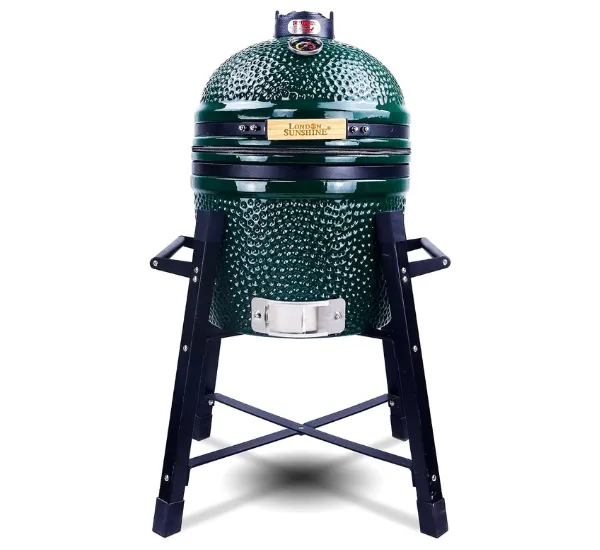
The numbers also show a substantial difference in cost and size. One comparison lists a Big Green Egg XL at $1,399 and a 26-inch Weber Original Standard at about $389, while another comparison places a Weber Kettle Premium 22-inch model around $165 and a Large Big Green Egg around $1,200. These figures demonstrate why comparing similar models and included equipment is important.
Big Green Egg vs Weber
| Feature | Big Green Egg | Weber Kettle |
|---|---|---|
| Main construction | Thick ceramic | Metal/porcelain-coated steel |
| Maximum temperature cited | 750°F | 550°F |
| Example price | $1,399 XL | $389 26-inch model |
| Example weight | 219 lbs XL | 56.6 lbs Standard |
| Example cooking area | 262 sq in Large | 363 sq in Premium 22-inch |
| Smallest size mentioned | 10 inches | 14 inches in listed range |
| Largest size mentioned | 29 inches / 2XL | 37-inch Ranch Kettle |
| Portability | Low | High |
| Heat retention | Excellent | Good |
| Low-and-slow cooking | Excellent fit | Possible with more fire management |
| High-heat cooking | Excellent | Strong |
| Fuel efficiency | High | Moderate |
| Warranty example | Lifetime | Up to 10 years on bowl/lid |
| Best suited to | Long cooks and temperature control | Convenient everyday grilling |
The figures above come from the supplied comparisons and refer to different models, so they should not be treated as a single standardized laboratory test.
Construction Makes the Biggest Difference
The Big Green Egg’s thick ceramic walls provide substantial insulation. Once the cooking chamber becomes hot, the ceramic retains heat and helps maintain a steady environment.
This design is particularly useful when cooking for extended periods. The supplied material repeatedly connects the Egg’s construction with heat retention, moisture retention, fuel efficiency, and stable low-temperature cooking.
A Weber kettle takes a simpler approach. Its metal and porcelain-coated construction makes it considerably lighter and easier to move. Airflow through the kettle remains an important part of temperature management, and the simpler construction makes the grill approachable for routine cooking.
In practical terms, the construction creates two different experiences:
- Ceramic: heavier, highly insulated, steady heat.
- Steel/porcelain: lighter, easier to move, simpler handling.
- Ceramic: better suited to extended temperature-controlled cooking.
- Kettle: convenient for everyday grilling and outdoor gatherings.
Price: The Difference Can Be Significant
Price is one of the clearest differences.
One supplied comparison gives these examples:
| Example | Price |
|---|---|
| Big Green Egg XL, 24-inch | $1,399 |
| Weber Original Standard, 26-inch | ~$389 |
| Big Green Egg Large | ~$1,200 |
| Weber Kettle Premium 22-inch | ~$165 |
The comparisons use different models and configurations, so the figures illustrate the general price gap rather than representing an exact model-to-model retail comparison.
The $1,399 XL Egg example does not include accessories, while the approximately $389 Weber example includes a complete setup and stand.
For anyone working with a fixed budget, it is therefore important to check not only the grill price but also what comes with the purchase.
What Should You Check Before Comparing Prices?
Look at:
- Grill size
- Cooking area
- Stand or cart
- Included accessories
- Cooking grate
- Warranty
- Replacement parts
- Intended cooking style
A lower initial price can also matter when you are simply looking for a straightforward grill rather than a larger cooking system.
Weight and Portability
This is another area where the difference is dramatic.
The supplied figures give:
- Big Green Egg XL: 219 lbs
- Weber Standard: 56.6 lbs
- Weber Kettle Premium 22-inch: 32 lbs in another comparison
That makes the traditional Weber format far easier to reposition.
The Big Green Egg is better thought of as a permanent backyard cooking station. Moving a large ceramic unit requires planning, and the supplied information notes that an XL model can require more than one person for installation.
A Weber is much more convenient when you need to:
- Move the grill around a patio
- Take it camping
- Bring it to a tailgate
- Reposition it in the yard
- Store it between uses
Size Matters Too
The supplied material mentions Big Green Egg sizes ranging from a 10-inch Mini to a 29-inch 2XL.
For Weber, the listed kettle range includes approximately 14–26 inches, with a 37-inch Ranch Kettle also mentioned.
Cooking area can tell a different story from exterior size. One comparison gives the Weber Kettle Premium 363 square inches of cooking space versus 262 square inches for the Large Big Green Egg.
That is why shoppers should compare actual cooking area, not just the diameter printed in a model name.
Temperature Control and Maximum Heat
The supplied comparisons give the following maximum temperatures:
| Grill | Maximum temperature cited |
|---|---|
| Big Green Egg | 750°F |
| Weber | 550°F |
The Big Green Egg can reach approximately 750°F, and one source says it can heat up within about 20 minutes.
Its airflow system uses upper and lower vents to regulate oxygen reaching the charcoal. Once you understand how those vents respond, small adjustments can produce controlled temperature changes.
The Weber kettle also relies heavily on airflow, but its thinner construction provides less insulation than the ceramic body of the Egg.
This difference becomes particularly noticeable during longer cooks or in colder weather.
Low-and-Slow Cooking
The Big Green Egg is especially suited to cooking where temperature stability matters.
The supplied material specifically discusses foods such as:
- Brisket
- Ribs
- Pork shoulder
- Other slow-smoked foods
One comparison describes maintaining approximately 225°F for around 12 hours with minimal temperature movement.
That type of cooking benefits from insulation because the grill does not need constant intervention once the fire is properly established.
A Weber kettle can also handle long cooks. Techniques such as a two-zone setup or snake method can be used, but the supplied comparisons describe the Weber as requiring more active fire management.
For someone who enjoys managing charcoal and airflow, that may be part of the experience rather than a problem.
Everyday Grilling and Searing
The Weber’s straightforward design works particularly well for conventional grilling.
Think about meals such as:
- Burgers
- Steaks
- Chicken
- Sausages
- Weekend cookouts
- Larger family gatherings
The Weber’s cooking area can also be useful when you need space for several items at once.
The Big Green Egg can handle these foods too. Its ability to reach high temperatures makes it suitable for searing, while its insulation gives it an additional advantage for longer cooking sessions.
Baking and Pizza
The Big Green Egg’s sealed ceramic cooking chamber gives it capabilities beyond ordinary grilling.
The supplied material specifically discusses:
- Pizza
- Bread
- Baking
- Roasting
- Grilling
- Smoking
Its ability to reach approximately 750°F also makes high-temperature cooking possible.
A Weber can be adapted for pizza and indirect cooking with appropriate accessories, including a pizza stone, but the supplied comparisons present the Big Green Egg as naturally suited to this broader cooking range.
Fuel and Efficiency
The Big Green Egg uses lump hardwood charcoal, while the Weber comparison includes briquettes and other fuels.
The ceramic construction is associated with better fuel efficiency because less heat escapes from the cooking chamber.
One supplied comparison estimates that the Big Green Egg can use approximately 40% less charcoal per cook.
The exact consumption will depend on cooking temperature, duration, weather, fuel, airflow, and cooking method, so this figure should be treated as the cited comparison rather than a universal result.
Weather and Outdoor Use
The Big Green Egg’s thick ceramic body is designed to retain heat even when outdoor temperatures change.
The supplied information describes it as usable in rain, snow, cold weather, and heat, although moisture should not be allowed to collect inside the cooking chamber.
A ventilated cover can also help protect the setup.
Weber grills are weather-resistant, but the manufacturer recommends covering the grill and protecting it from prolonged exposure, particularly during colder months.
This makes storage and maintenance part of the ownership decision.
Durability and Potential Weak Points
Both designs have different durability considerations.
Big Green Egg
The ceramic body:
- Does not rust like steel.
- Provides strong heat retention.
- Can remain useful for a very long time.
- Requires careful handling.
- Can crack if dropped or tipped over.
The stand and accessories can also have different durability characteristics from the ceramic cooking body.
Weber
The metal construction:
- Is comparatively lightweight.
- Can be affected by rust when neglected.
- Uses replaceable components.
- Can be maintained over many years.
- Offers practical replacement options for parts such as grates and handles.
This creates an interesting distinction: the Big Green Egg has a highly durable ceramic cooking body, while Weber’s replaceable components can make ongoing maintenance practical.
Warranty Comparison
Warranty coverage is another useful number to examine.
| Component / Grill | Warranty mentioned |
|---|---|
| Big Green Egg | Lifetime |
| Weber bowl and lid | 10 years |
| Weber One-Touch cleaning system | 5 years |
| Other Weber parts | 2 years |
The warranty figures come from the supplied material and may vary by model, component, or current warranty terms. Always verify the applicable warranty for the exact grill before purchasing.
Cooking Experience: Which Design Feels Different?
The Big Green Egg requires more familiarity with airflow.
The upper and lower vents work together, and changes should generally be made carefully because ceramic retains heat extremely well.
That creates a learning curve, particularly for someone coming from a simple open charcoal grill.
The Weber kettle is more straightforward. Its lighter body, familiar shape, airflow controls, and simple charcoal setup make it approachable for everyday cooking.
Experience
Choose the Big Green Egg style of cooking if you value:
- Long cooking sessions
- Stable temperatures
- High-heat searing
- Smoking
- Baking
- Roasting
- Strong heat retention
- Fuel efficiency
Choose the Weber kettle style if you value:
- Easy movement
- Straightforward grilling
- Lower initial cost
- Camping or tailgating
- Large cooking space
- Simple maintenance
- Everyday convenience
Accessories and Expandability
Accessories can significantly change what either grill can do.
The supplied information mentions Big Green Egg accessories such as:
- Wok systems
- Rotisserie systems
- Modular wheels
- Tables
- Grill dividers
- Drip pans
- Ash-management accessories
Weber accessories mentioned include:
- Griddles
- Pizza stones
- Rotisserie attachments
- Grill dividers
- Drip pans
Before buying accessories, check compatibility with your exact model and size.
Big Green Egg vs Weber
For quick reference, here are the most useful figures gathered from the supplied material:
| Measurement | Big Green Egg | Weber |
|---|---|---|
| Example price | $1,399 XL | ~$389 Standard |
| Example weight | 219 lbs XL | 56.6 lbs Standard |
| Maximum temperature | 750°F | 550°F |
| Example cooking area | 262 sq in | 363 sq in |
| Smallest cited size | 10″ | 14″ |
| Largest cited size | 29″ | 37″ Ranch |
| Long-cook example | 225°F / ~12 hours | Requires more fire management |
| Charcoal-use estimate | ~40% less in one comparison | Not specified |
| Example warranty | Lifetime | 10 years / 5 years / 2 years by component |
These values come from different models and comparison methods, so the table should be used as a buying guide rather than a laboratory-standard test.
Pros and Cons
Big Green Egg
Pros
- Excellent heat retention
- Up to 750°F
- Strong temperature control
- Excellent for smoking
- Suitable for baking and pizza
- Good fuel efficiency
- Strong weather performance
- Lifetime warranty cited
- Broad cooking capability
Cons
- High purchase price
- Very heavy
- Difficult to transport
- Ceramic requires careful handling
- Learning curve for airflow control
- Accessories can increase total cost
Weber Kettle
Pros
- Lower purchase price
- Much lighter
- Easy to move
- Convenient for everyday grilling
- Strong cooking capacity
- Suitable for camping and tailgating
- Straightforward operation
- Replaceable parts
- Wide range of configurations
Cons
- Less heat retention than thick ceramic
- More affected by cold weather
- Long cooks can require more fire management
- Metal can rust if poorly maintained
- Warranty varies by component
FAQs
Is the Big Green Egg hotter than a Weber?
The supplied comparison lists the Big Green Egg at up to 750°F, compared with approximately 550°F for the Weber kettle.
Is a Big Green Egg heavier than a Weber?
Yes. An XL Big Green Egg is listed at 219 lbs, while one Weber Standard example is 56.6 lbs.
Which has more cooking area?
It depends on the models being compared. One supplied comparison lists 262 square inches for a Large Big Green Egg and 363 square inches for a Weber Kettle Premium 22-inch model.
Can you smoke meat on a Weber?
Yes. The supplied material describes techniques such as two-zone cooking and the snake method for longer cooks.
Can you bake pizza on a Big Green Egg?
Yes. The supplied information specifically describes the Big Green Egg as suitable for pizza and baking, helped by its high temperature capability.
Does the Big Green Egg use less charcoal?
One supplied comparison estimates approximately 40% less charcoal per cook. Actual consumption depends on cooking conditions and technique.
Can a Big Green Egg stay outside?
The supplied material says it can handle outdoor conditions including rain and snow, but recommends preventing water from pooling inside and using appropriate protection.
Which is easier to move?
The Weber is considerably easier to move because of its lighter construction. The difference is especially clear when comparing 219 lbs for the cited XL Egg with 56.6 lbs for the cited Weber Standard.
How long is the Big Green Egg warranty?
The supplied material lists a lifetime warranty for the Big Green Egg.
Does Weber have a Kamado-style grill?
Yes. The supplied material specifically mentions the Summit Kamado E6, which uses insulated steel rather than the traditional ceramic construction described for the Big Green Egg.
Final Thoughts
The Big Green Egg and Weber represent two distinctly different approaches to outdoor cooking.
The Big Green Egg emphasizes thick ceramic insulation, heat retention, temperature control, high-temperature cooking, smoking, baking, and long cooking sessions. Its 750°F maximum temperature, 219-lb XL example, and lifetime warranty illustrate the premium nature of the system.
The Weber kettle emphasizes simplicity, portability, accessible pricing, and everyday grilling. A cited Standard model weighs 56.6 lbs, while the Kettle Premium comparison provides 363 square inches of cooking area.
The most useful way to make the decision is therefore to start with your cooking habits.
If your priority is long, temperature-controlled cooking and a broad range of cooking techniques, pay close attention to the ceramic system’s heat retention, weight, price, and learning curve.
If your priority is easy movement, everyday grilling, a simpler setup, and a lower initial cost, focus on Weber’s portability, cooking area, maintenance, and price.
Rather than choosing based only on brand or appearance, compare the exact model, cooking area, included equipment, warranty, weight, and intended cooking style. That gives you a much clearer picture of what you are actually buying.