
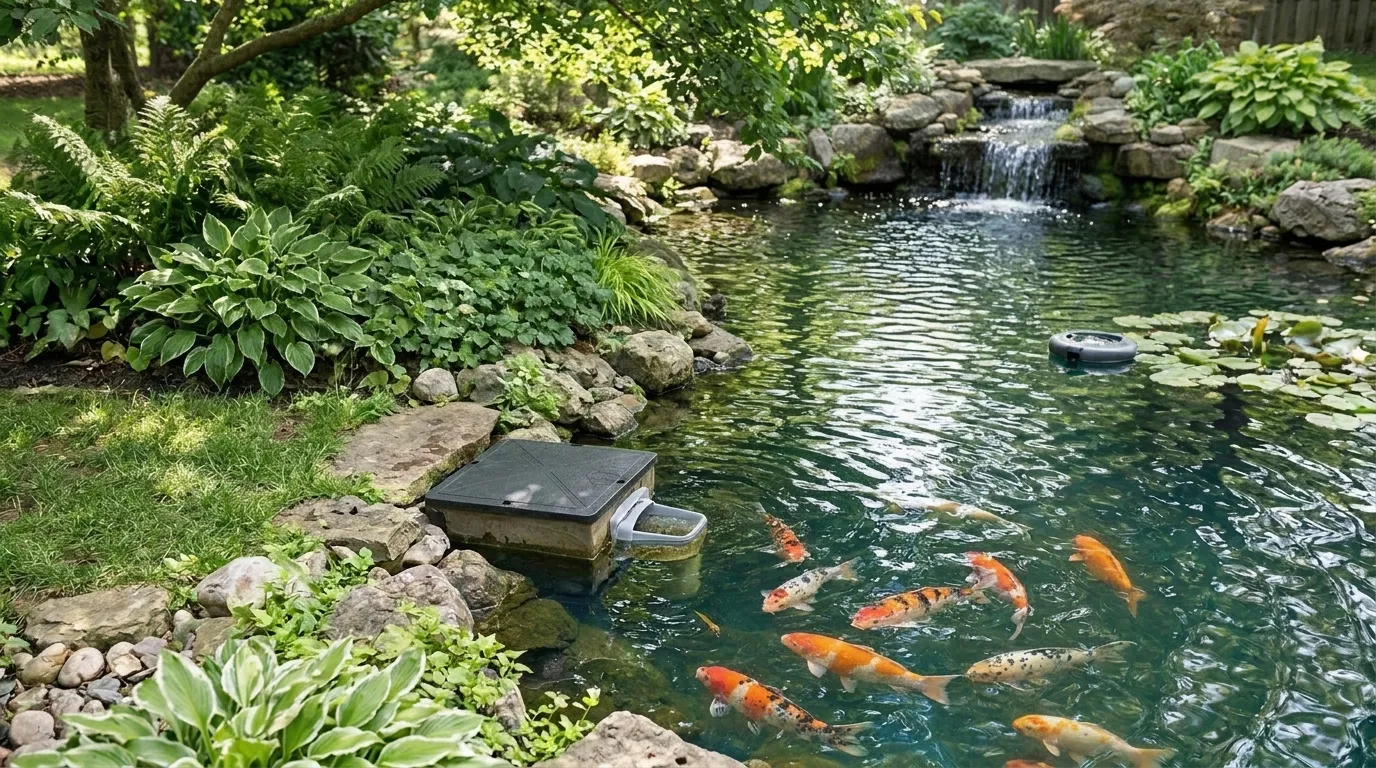
How Do Pond Skimmers Work? Types, Benefits & Maintenance
- Disclosure: This post may include affiliate links. If you click a link and complete a purchase, I may earn a commission. Additionally, as an Amazon Associate, I earn from eligible purchases.
A clean pond requires more than occasional water changes and manual cleaning. Leaves, insects, pollen, dust, and other floating debris can quickly collect on the surface. When this material sinks and decomposes, it contributes to organic waste and can affect water quality. A pond skimmer helps prevent this problem by continuously collecting unwanted material before it reaches the bottom.
Pond skimmers work by drawing surface water through an intake opening. Floating debris enters a collection basket or net, where larger particles are trapped. Some models also include fine filter pads that capture smaller contaminants before water moves toward the pump and filtration system.
Whether you have a small backyard pond or a larger water feature, understanding how skimmers work can help you choose suitable equipment and maintain a healthier aquatic environment. For this purpose, we have details provided below.
What Is a Pond Skimmer?
A pond skimmer is a mechanical filtration device designed to remove floating debris from the water surface. It acts as an early stage of the pond’s filtration process by collecting unwanted materials before they sink and break down.
Common materials collected by pond skimmers include leaves, pine needles, twigs, insects, pollen, and floating organic matter.
Most systems contain an intake opening, a weir door, a collection basket, and a pump. Some also include a filter pad or mat for capturing smaller particles.
Unlike equipment that primarily filters water already circulating through the pond, a skimmer focuses on the surface, where much of the floating debris first appears.
How Do Pond Skimmers Work?
A pond skimmer generally operates through 3 main stages: surface collection, debris filtration, and water circulation. Each stage contributes to keeping the pond cleaner.
1. Surface Water Collection
The process begins when the pump creates suction that draws surface water toward the skimmer’s intake. A component called a weir door helps control the water entering the opening.
As water moves toward the intake, floating leaves, insects, and other debris travel with it. The weir door also helps prevent collected materials from returning to the pond when the pump stops.
Some weir doors are hinged, while others use a floating design that can adjust to changing water levels.
2. Debris Collection and Filtration
Once water enters the skimmer, it passes into a collection chamber containing a removable basket or net.
The basket traps larger materials, such as leaves, twigs, and other solid waste. Smaller particles may pass through the initial collection stage and reach a finer filter pad or mat.
This additional filtration helps capture smaller contaminants before water reaches the pump.
Regularly emptying the basket is important because accumulated debris can restrict water movement and reduce the skimmer’s performance.
3. Clean Water Circulation
After passing through the collection and filtration stages, water moves toward the pump and continues through the pond’s circulation system.
Depending on the setup, it may pass through additional mechanical or biological filtration before returning through a waterfall, fountain, or other water outlet.
This continuous movement helps distribute oxygen and supports overall water circulation.
What Are the Different Types of Pond Skimmers?
Pond skimmers are available in 3 common designs. Each has different installation requirements and is suitable for particular pond setups.
1. Floating Pond Skimmers
Floating skimmers sit on the water surface and move with changing water levels. Many models include a built-in submersible pump that draws floating debris into a collection basket.
They are generally easier to install because they do not require the same permanent construction as fixed skimmer boxes.
Floating models can be useful for smaller backyard ponds and existing ponds where major modifications are not practical.
2. Submersible Pond Skimmers
Submersible skimmers operate underwater and are positioned near the pond bottom or within the submerged filtration area, depending on their design.
They collect debris through an intake and help protect connected pump and filtration equipment from unwanted materials.
Their installation and performance depend on the specific model and pond configuration.
3. Pond Skimmer Boxes
A pond skimmer box is a fixed unit usually installed along the pond edge. It has an opening through which surface water enters, while a removable basket collects larger debris.
These units are commonly incorporated into the pond liner during construction and can connect to an external filtration system or pump.
They are particularly useful for larger ponds and setups that need a permanent filtration arrangement.
What Are the Benefits of a Pond Skimmer?
Installing a pond skimmer offers several practical benefits beyond making the water surface look clean.
Improved Water Clarity
Leaves and other organic materials can release unwanted substances as they decompose. Removing them early helps reduce organic waste and supports clearer water.
Reduced Algae Growth
Decomposing organic matter can contribute nutrients to pond water. By collecting floating debris before it sinks, skimmers help reduce one potential source of excess nutrients that encourage algae growth.
However, a skimmer alone cannot eliminate algae because sunlight, nutrient levels, and overall pond conditions also influence algae development.
Less Manual Cleaning
Without a skimmer, pond owners may need to remove floating leaves and other materials manually. A functioning skimmer collects much of this debris automatically, reducing routine cleaning effort.
Better Protection for Filtration Equipment
Removing larger materials before they enter the circulation system helps reduce the risk of clogged pipes, blocked pump intakes, and overloaded filters.
A Healthier Aquatic Environment
Cleaner water and effective circulation support fish and aquatic plants. When combined with appropriate biological filtration and aeration, a skimmer contributes to a more balanced pond environment.
How to Choose the Right Pond Skimmer
Selecting the correct skimmer depends on your pond’s size, depth, debris levels, and existing filtration equipment.
A smaller pond may need a compact unit, while a larger pond generally requires equipment with greater collection capacity and suitable pump performance.
As a general sizing reference, the supplied pond-sizing guidance distinguishes between ponds of approximately 1,000–3,000 gallons and larger ponds of 3,500 gallons or more. These figures should be treated as broad examples, not universal equipment limits. Always check the manufacturer’s recommended pond volume and pump specifications before purchasing.
Also consider the following factors:
- Basket capacity: A larger basket can hold more debris before requiring emptying.
- Pump compatibility: Make sure the pump provides suitable flow for the skimmer.
- Pond depth: Check whether the model is compatible with your water depth.
- Fish population: Consider the filtration needs of ponds containing fish.
- Installation requirements: Decide whether a floating or permanently installed design is more suitable.
- Maintenance access: Choose a location where you can easily remove the basket and clean the equipment.
Where Should You Install a Pond Skimmer?
Correct placement helps a skimmer collect floating debris more effectively.
Consider the prevailing wind direction when choosing a location. Wind naturally pushes leaves and other floating materials across the pond, so positioning the intake where debris tends to accumulate can improve collection.
If your pond has a waterfall or another water-return outlet, placing the skimmer on the opposite side can help create directional water movement across the surface.
You should also ensure that the basket remains accessible for regular cleaning. Avoid placing the unit somewhere that makes maintenance difficult.
How to Maintain a Pond Skimmer
Regular maintenance keeps the skimmer working efficiently and helps prevent circulation problems.
Follow these 5 practical maintenance steps:
1. Empty the Collection Basket
Remove collected leaves, twigs, insects, and other debris before the basket becomes overloaded.
2. Clean the Filter Pad
Rinse the filter pad or mat when it becomes dirty. Follow the manufacturer’s cleaning recommendations to avoid damaging the filtration material.
3. Inspect the Pump
Check the pump for unusual noise, reduced suction, or visible damage. Also inspect electrical connections safely and follow the manufacturer’s instructions.
4. Check Pipes and Intake Openings
Remove algae, duckweed, and trapped materials that could restrict water movement.
5. Prepare for Seasonal Changes
Autumn can bring increased leaf accumulation, so inspect and empty the basket more frequently. During winter, protect equipment from freezing conditions according to the manufacturer’s guidance.
Common Pond Skimmer Problems and Their Solutions
Even a properly installed skimmer can experience operational problems. The following 4 common issues are worth checking.
1. Clogged Collection Basket
Problem: Accumulated leaves and debris restrict water movement.
Solution: Empty the basket and clean the screen. Check it more frequently during periods of heavy debris accumulation.
2. Pump Failure
Problem: The skimmer stops drawing water because of a pump malfunction or electrical connection problem.
Solution: Check the power supply, inspect the pump, and follow the manufacturer’s troubleshooting instructions.
3. Blocked Pipes or Intake
Problem: Algae, duckweed, or trapped debris obstructs water movement.
Solution: Inspect the intake and connected pipes. Remove visible blockages and clean the affected areas carefully.
4. Low Water Level
Problem: The water level falls below the skimmer’s operating requirements, reducing its ability to collect surface debris.
Solution: Restore the appropriate water level and check the skimmer’s positioning and weir-door movement.
Final Thoughts
A pond skimmer is an important part of a well-maintained pond filtration system. It collects floating debris, helps prevent organic waste from accumulating, and supports effective water circulation.
Understanding the 3 main stages of operation, comparing the different skimmer designs, and following regular maintenance practices can make pond care easier. Choose equipment that matches your pond’s size and filtration requirements, and keep the collection basket and pump in good condition for consistent performance.
Frequently Asked Questions
1. How does a pond skimmer remove leaves?
A pond skimmer uses pump suction to draw surface water through an intake. Floating leaves enter a collection basket or net, where they remain trapped while water continues through the filtration system.
2. Does a pond skimmer help prevent algae?
Yes, it can help reduce one source of algae-promoting nutrients by removing organic debris before it decomposes. However, it does not replace proper biological filtration, nutrient management, or adequate pond maintenance.
3. How often should I clean my pond skimmer?
Check the collection basket regularly and empty it whenever debris starts accumulating. Weekly cleaning may be suitable for routine maintenance, while heavy leaf-shedding periods may require daily checks.
4. Can a pond work without a skimmer?
Yes. A pond can operate without a skimmer, but floating debris will need to be removed manually or managed through other suitable methods. A skimmer makes surface cleaning easier.
5. Which pond skimmer is best for a small pond?
A floating skimmer is often a convenient option for smaller existing ponds because it is relatively easy to install. However, the best choice depends on pond volume, pump compatibility, debris levels, and filtration requirements.
6. Where should a pond skimmer be placed?
Position the skimmer where floating debris naturally collects, taking prevailing wind direction and water circulation into account. If the pond has a waterfall, placing the skimmer on the opposite side can help encourage surface movement toward the intake.
7. Does a pond skimmer oxygenate water?
A skimmer supports water movement, which can improve oxygen exchange at the surface. However, it is not a replacement for dedicated pond aeration equipment when additional oxygenation is required.