Unconventional Ingredients for Next-Level Barbecue Sauces
- Disclosure: This post may include affiliate links. If you click a link and complete a purchase, I may earn a commission. Additionally, as an Amazon Associate, I earn from eligible purchases.
A good barbecue sauce does more than add sweetness or heat. The right combination of sweet, smoky, acidic, spicy, and savory flavors can turn a basic sauce into something memorable.
You do not need a complicated recipe to get there. A few unexpected ingredients can add depth, improve texture, and create a sauce that works especially well with ribs, chicken, pork, brisket, steak, vegetables, and grilled foods.
The best approach is to add one unusual ingredient at a time, taste as you go, and adjust the balance rather than throwing everything into the pot at once.
Why Use Unconventional Ingredients in BBQ Sauce?
Traditional barbecue sauces often rely on familiar ingredients such as tomato, sugar, vinegar, mustard, and spices. Those ingredients create a dependable foundation, but they do not have to define the entire flavor.
An unusual ingredient can contribute a completely different characteristic.
Fruit can bring natural sweetness and acidity.
Coffee and cocoa can provide darker, roasted notes.
Miso and soy sauce can introduce umami.
Chipotle can add smoky heat.
Vinegar can brighten an overly sweet sauce.
The goal is not to make the sauce strange. The goal is to make it more balanced and interesting.
Fruit Can Make BBQ Sauce More Complex
Fruit is one of the easiest ways to experiment because it can provide sweetness, acidity, color, and aroma at the same time.
Pineapple for Sweet-Tangy Flavor
Pineapple works particularly well with pork and chicken because its tropical sweetness contrasts with savory grilled flavors.
For a pineapple-jalapeño sauce, a useful starting formula is:
- 1 cup pineapple chunks
- 1/2 cup pineapple juice
- 1/4 cup brown sugar
- 1 jalapeño
- 1 tablespoon tomato paste
- 1 teaspoon garlic powder
- 1/2 teaspoon onion powder
- 1/4 teaspoon cayenne
- 1/4 teaspoon salt
- 1/8 teaspoon black pepper
Simmer the mixture for about 15 minutes, allowing it to thicken slightly.
The jalapeño prevents the fruit from becoming overly sweet, while cayenne adds another layer of heat.
Mango for Tropical Sweetness
Mango brings a softer, sweeter flavor than pineapple. Pairing it with chipotle and lime creates a useful contrast between fruitiness, smokiness, acidity, and heat.
This combination works especially well as a marinade or finishing sauce for chicken.
Tart Fruits for Richer Sauces
You can also experiment with:
- Cherries
- Blueberries
- Blackberries
- Pomegranate
- Dates
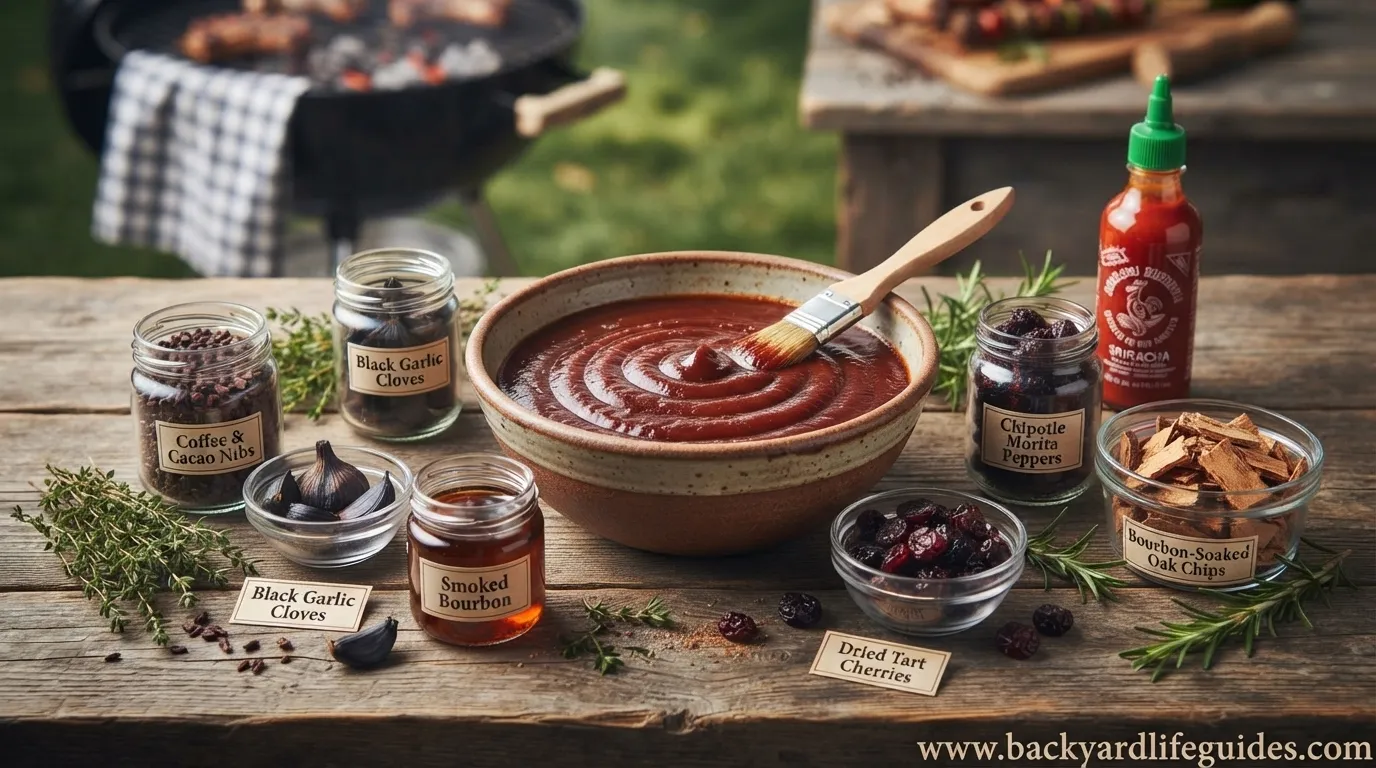
Dark fruits can complement rich meats particularly well because their sweetness and acidity help balance smoky flavors.
Add Coffee or Cocoa for Deep, Roasted Flavor
Coffee and cocoa may sound unusual in barbecue sauce, but small amounts can add remarkable depth.
Unsweetened Cocoa Powder
Start with 1–2 tablespoons of unsweetened cocoa powder.
Cocoa should support the sauce rather than make it taste like chocolate. It can add an earthy, slightly bitter, roasted character that works especially well with beef and ribs.
Coffee or Espresso
Dark coffee can add bitterness and roasted depth.
Add it gradually and taste between additions. Too much coffee can overwhelm the sauce, while a small amount can balance excessive sweetness.
Tip: Coffee is particularly useful when your sauce already contains sweeteners such as brown sugar, honey, or maple syrup.
Use Vinegar to Brighten Sweet BBQ Sauce
Acidity is one of the easiest ways to correct a sauce that tastes heavy or overly sweet.
Instead of relying only on standard vinegar, experiment with different varieties.
| Vinegar | Flavor Character |
| Apple cider vinegar | Fruity and sharp |
| Balsamic vinegar | Sweet and rich |
| Red wine vinegar | Bold and acidic |
| Rice vinegar | Mild and delicate |
| Plum vinegar | Fruity and tart |
| White vinegar | Clean and sharp |
The important principle is balance. Add a little, taste, and increase gradually.
A highly sweet sauce often becomes much more enjoyable once its acidity is properly adjusted.
Chipotle Adds Smoke and Heat
Chipotle is made from smoked jalapeño peppers, making it useful when you want both heat and smokiness.
You can use:
- Chipotle powder
- Chipotle paste
- Chipotle peppers
A good starting point is 1 chipotle pepper or a small amount of powder or paste.
Chipotle pairs naturally with:
- Honey
- Maple syrup
- Pineapple
- Cherry
- Blackberry
- Tomato
This makes it particularly useful for creating sweet-and-smoky sauces.
Miso and Soy Sauce Add Umami
If your BBQ sauce tastes flat even though it already has sweetness, acidity, and heat, the missing element may be umami.
Miso
Miso can provide a concentrated savory character.
For a steak marinade, miso can be combined with ingredients such as:
- Mirin
- Soy sauce
- Honey
- Brown sugar
A useful marinating range is 15 minutes to 1 hour, depending on the cut and desired intensity.
Soy Sauce
Soy sauce can increase savory depth without requiring a large quantity.
It also works particularly well with:
- Ginger
- Garlic
- Honey
- Sesame oil
For a ginger-soy marinade, a 1–2 hour marinating period can provide substantial flavor.
Try Mustard for Tang and Heat
Mustard is not exactly unknown in barbecue, but it can be used in more creative ways than simply spreading yellow mustard on meat.
Dry mustard can contribute both tang and gentle heat.
A useful starting quantity is 1 tablespoon.
Experiment With Maple Syrup, Honey, and Molasses
Sweeteners do more than make BBQ sauce sweet. They can change its texture, color, aroma, and overall character.
Molasses
Molasses provides a darker, deeper sweetness with caramel-like notes.
Maple Syrup
Maple syrup adds a distinctive woody sweetness that works nicely with smoky flavors.
Honey
Honey creates a smooth sweetness and can help produce a glossy finish when the sauce is cooked down.
For a more complex sauce, combine sweetness with an acidic ingredient instead of continually adding more sugar.
Soda Can Become a Surprisingly Useful Ingredient
Root beer and Dr. Pepper can contribute sweetness and layers of flavor.
A 16-ounce soda can be used as a substantial liquid component in a sauce.
Dr. Pepper is particularly interesting because it is marketed around 23 flavors, giving the sauce a broader flavor foundation than plain sugar water.
However, soda contains substantial sweetness, so adjust additional sugar carefully.
Best pairing: soda + tomato + vinegar + mustard + smoky spices.
Alcohol Can Add Depth
Certain alcoholic drinks can contribute distinctive flavors to BBQ sauce.
Possible options include:
- Bourbon
- Whiskey
- Beer
- Wine
- Tequila
- Hard cider
A practical starting point is about 1 drink per batch, such as a full beer, a glass of wine, or a shot of stronger alcohol.
Always cook the sauce properly rather than treating alcohol as a last-minute flavoring.
Bourbon, for example, can complement brown sugar, molasses, mustard, and smoky spices.
Herbs Can Move BBQ Sauce Beyond Traditional Flavors
Herbs are useful when you want a fresher profile.
Rosemary
Rosemary works particularly well with lamb.
A rosemary marinade can combine:
- Rosemary
- Garlic
- Olive oil
- Salt
- Black pepper
Allow lamb to marinate for at least 2 hours for a pronounced herbal character.
Basil
Basil pesto can also be used as a finishing element for grilled vegetables, adding freshness and richness after cooking.
Build Flavor With Aromatics and Spices
Unusual ingredients work best when the basic flavor foundation is strong.
Consider using:
- Garlic
- Onion
- Cumin
- Smoked paprika
- Cayenne
- Black pepper
- Cinnamon
- Allspice
- Thyme
- Mexican oregano
A useful technique is to cook aromatics first.
Start by softening onions, add garlic, then introduce spices before adding the liquid components. This can create a deeper flavor base than simply mixing everything together cold.
The Sauce’s Consistency Matters
Flavor is only half the equation. A BBQ sauce should also have a texture that works with the food.
A watery sauce can slide off meat, while an excessively thick sauce can become difficult to spread.
For thickening, one starting mixture is:
- 2 tablespoons flour
- 1/4 cup water
Mix the flour and water before incorporating it to reduce the risk of lumps.
For a naturally concentrated sauce, however, reducing it slowly can often produce better flavor.
Cook the Sauce Slowly for Better Flavor
A sauce can taste completely different after reduction.
Simmering allows:
- Excess liquid to evaporate
- Flavors to concentrate
- Sweetness to become more pronounced
- Tomato flavors to deepen
- Savory notes to develop
A useful minimum cooking period for reducing a sauce is around 1 hour when the recipe calls for a long reduction.
Keep the heat low and stir occasionally.
Do not rush the reduction by using extremely high heat, especially when the sauce contains sugar.
How to Balance an Experimental BBQ Sauce
When experimenting, think in terms of five major flavor groups:
| Flavor | Ingredients to Consider |
| Sweet | Honey, maple syrup, molasses, fruit |
| Acidic | Vinegar, lemon, lime |
| Spicy | Jalapeño, chipotle, cayenne |
| Smoky | Chipotle, smoked paprika, coffee |
| Savory | Miso, soy sauce, Worcestershire |
If your sauce tastes:
Too sweet: add a small amount of vinegar or citrus.
Too acidic: introduce a little sweetness.
Too spicy: increase the sauce’s sweet or savory components.
Too bitter: reduce coffee/cocoa and add balancing sweetness.
Too flat: consider umami from miso, soy sauce, or Worcestershire sauce.
Too thick: add liquid gradually.
Too thin: continue reducing or use an appropriate thickener.
A Simple Formula for Creating Your Own BBQ Sauce
Instead of following a rigid recipe every time, use a flavor-building framework.
Start With a Base
Choose one:
- Tomato sauce
- Ketchup
- Tomato paste
- Fruit puree
Add Sweetness
Choose one or two:
- Brown sugar
- Honey
- Maple syrup
- Molasses
- Fruit
Add Acidity
Choose:
- Apple cider vinegar
- Balsamic vinegar
- Lemon
- Lime
Add Savory Depth
Choose:
- Worcestershire sauce
- Soy sauce
- Miso
Add Heat
Choose:
- Chipotle
- Jalapeño
- Cayenne
- Mustard
Add One Unusual Ingredient
This is where experimentation becomes interesting.
Try:
- Coffee
- Cocoa
- Pomegranate
- Bourbon
- Root beer
- Mango
One unusual ingredient is often enough. You do not need to use five unconventional ingredients in the same batch.
Flavor Combinations Worth Trying
| Combination | Flavor Profile | Best Pairing |
| Pineapple + jalapeño | Sweet & spicy | Pork |
| Mango + chipotle | Tropical & smoky | Chicken |
| Coffee + cocoa | Dark & roasted | Beef |
| Miso + honey | Savory & sweet | Steak |
| Cherry + chipotle | Fruity & smoky | Ribs |
| Maple + mustard | Sweet & tangy | Pork |
| Pomegranate + balsamic | Tart & rich | Lamb |
| Bourbon + molasses | Deep & caramelized | Beef |
| Root beer + vinegar | Sweet & tangy | Pork |
| Rosemary + garlic | Herbal & savory | Lamb |
How Long Should You Marinate BBQ Meat?
The ideal time depends on the marinade and protein.
| Marinade | Reference Time |
| Lemon-herb | At least 1 hour |
| Ginger-soy | 1–2 hours |
| Miso steak | 15 minutes–1 hour |
| Rosemary lamb | At least 2 hours |
| Mango-chipotle | A couple of hours |
Longer is not always better. Strong acidic marinades can eventually affect texture, so avoid assuming that an overnight marinade is automatically superior.
Practical Tips for Better Homemade BBQ Sauce
Add Ingredients Gradually
Start conservatively. It is much easier to add more chipotle, coffee, vinegar, or cocoa than to correct an overpowering sauce.
Taste After Each Major Addition
Give the sauce time to combine before making another adjustment.
Consider the Meat
A sauce for fatty ribs does not necessarily need the same balance as one for chicken or vegetables.
Keep a Record
When experimenting, write down quantities. This makes it possible to reproduce a successful batch.
Let the Sauce Rest
A short resting period after cooking can allow individual flavors to become more integrated.
Do Not Chase Complexity
A sauce containing 10 unusual ingredients is not automatically better than one containing three.
The best sauce is the one where each ingredient has a clear purpose.
Common Mistakes to Avoid
Adding Too Much Sugar
Sweetness can quickly overpower acidity, spice, and smoke.
Using Too Much Coffee or Cocoa
Both ingredients are powerful. Small quantities can add depth, while excessive amounts can create unpleasant bitterness.
Overloading With Heat
Chipotle, jalapeño, and cayenne can build quickly. Add them progressively.
Ignoring Acidity
A sweet and smoky sauce without enough acidity can taste heavy.
Reducing Too Aggressively
High heat can cause sugar to scorch before the sauce reaches the desired consistency.
Adding Every Interesting Ingredient
Experimentation should be controlled. Choose one or two standout ingredients and build around them.
Best Unconventional Ingredients by BBQ Food
| BBQ Food | Ingredients to Try |
| Ribs | Cherry, bourbon, cocoa, chipotle |
| Brisket | Coffee, cocoa, chipotle |
| Pulled pork | Apple cider vinegar, pineapple, mustard |
| Chicken | Mango, pineapple, honey, chipotle |
| Steak | Miso, coffee, soy sauce |
| Lamb | Rosemary, pomegranate, balsamic |
| Grilled vegetables | Basil, miso, balsamic |
| Corn | Jalapeño, lime, butter |
Frequently Asked Questions
What is the best unusual ingredient for BBQ sauce?
Pineapple, coffee, cocoa, chipotle, miso, and pomegranate are excellent starting points because each introduces a distinct flavor without requiring a complicated recipe.
Can you put coffee in BBQ sauce?
Yes. Dark coffee or espresso can add roasted bitterness and depth, especially to sauces served with beef. Add it gradually so it does not overpower the other ingredients.
How much cocoa powder should I add to BBQ sauce?
Start with 1–2 tablespoons of unsweetened cocoa powder. The purpose is to add earthy depth rather than create a chocolate flavor.
What fruit is good in barbecue sauce?
Pineapple, mango, cherries, blueberries, blackberries, dates, and pomegranate can all work well. Choose fruit according to the meat and desired balance of sweetness and acidity.
How can I make BBQ sauce less sweet?
Add acidity gradually. Apple cider vinegar, lime juice, lemon juice, or another suitable vinegar can help counter excessive sweetness.
Can I use soda in homemade BBQ sauce?
Yes. Root beer and Dr. Pepper can provide sweetness and additional flavor. A 16-ounce soda can be used as a substantial liquid component, but additional sugar should be adjusted accordingly.
What makes BBQ sauce taste smoky?
Chipotle, smoked paprika, and small amounts of coffee can contribute smoky or roasted characteristics. Wood-smoking the meat itself can also provide smoke independently of the sauce.
How long should homemade BBQ sauce cook?
For a deeper, concentrated sauce, a 1-hour reduction can be useful when the recipe is designed for extended cooking. Keep the heat low enough to prevent sugary ingredients from burning.
What gives BBQ sauce umami?
Ingredients such as miso, soy sauce, and Worcestershire sauce can add savory umami depth. They are particularly useful when a sauce tastes sweet but lacks complexity.
Should I use several unconventional ingredients at once?
Usually, no. Start with one unusual ingredient, taste the result, and then decide whether another addition is necessary. This gives you much more control over the final flavor.
Final Thoughts
The most interesting BBQ sauces often begin with familiar foundations and one unexpected idea.
Pineapple can brighten pork. Mango and chipotle can create a sweet-smoky chicken sauce. Coffee and cocoa can deepen beef flavors, while miso and soy sauce can bring savory complexity. Vinegar, citrus, mustard, and fruit can then help keep those stronger flavors balanced.
The key is controlled experimentation.
Start with a small quantity, taste frequently, and keep the sweet, acidic, spicy, smoky, and savory elements balanced. Once you understand what each ingredient contributes, creating your own signature barbecue sauce becomes much easier—and much more rewarding.