
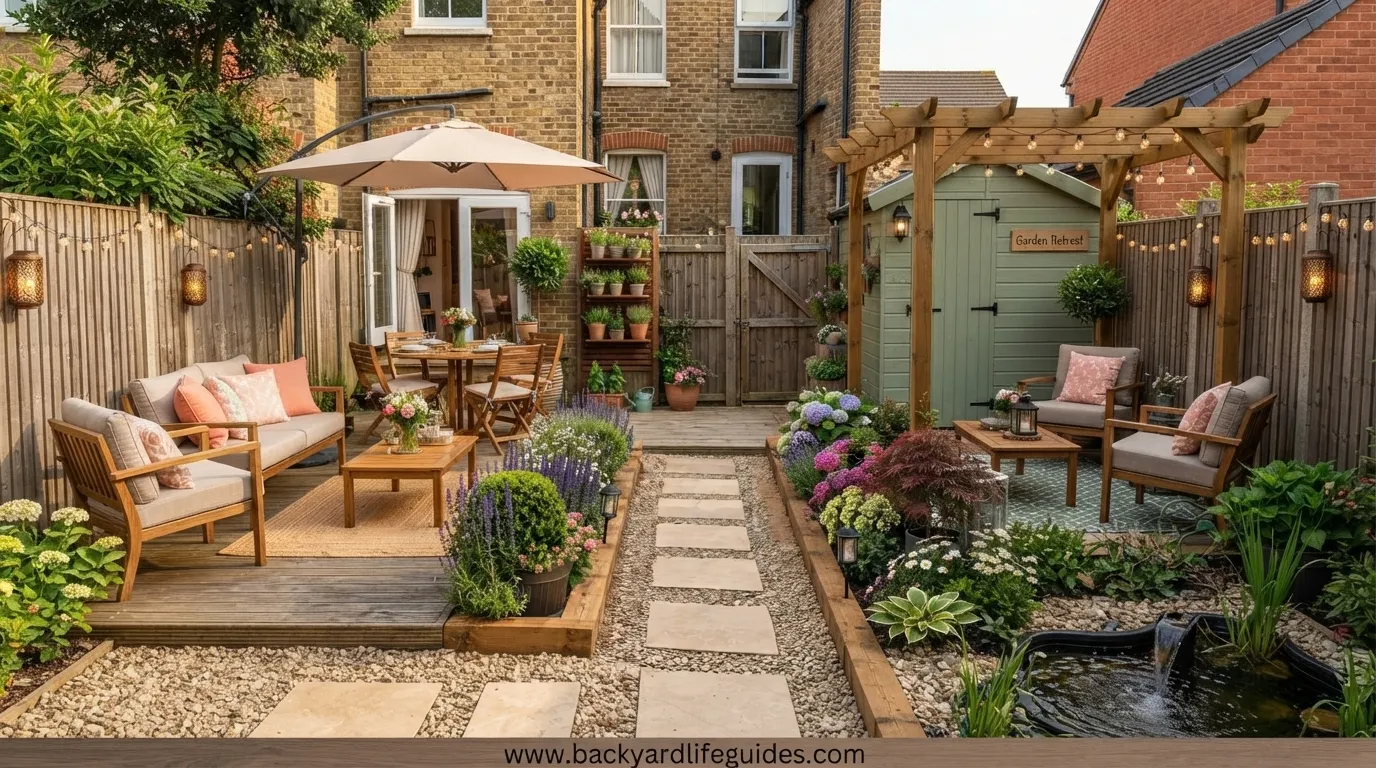
27 Small Garden Ideas to Make the Most of Every Inch
- Disclosure: This post may include affiliate links. If you click a link and complete a purchase, I may earn a commission. Additionally, as an Amazon Associate, I earn from eligible purchases.
A small garden can still feel beautiful, useful, and spacious when every part of the available area has a purpose. The key is not simply squeezing more plants into a limited space. Instead, combine vertical growing, smart containers, raised beds, practical furniture, lighting, privacy features, and carefully chosen plants.
Whether you have a tiny backyard, narrow garden, balcony, patio, or compact outdoor corner, these 27 small garden ideas can help you create a space that feels more organized and enjoyable without requiring a large budget.
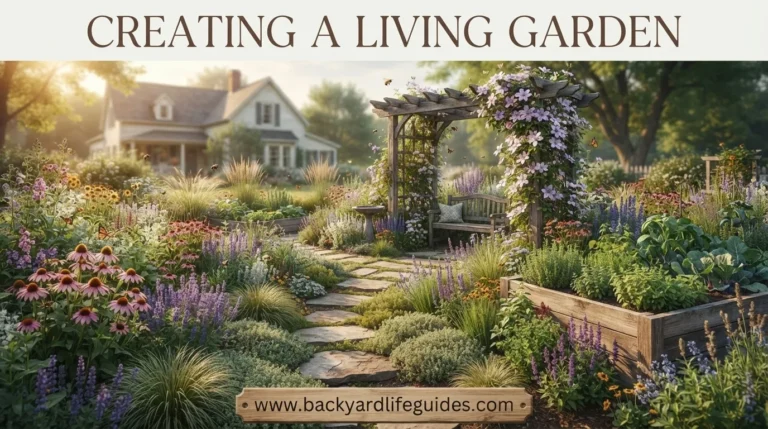
1. Add an Arch Trellis
An arch trellis is one of the easiest ways to use vertical space instead of taking more room from the ground.
Train climbing plants and vines over the structure to create height and visual interest. Ivy and other climbers can soften hard surfaces while producing a lush appearance.
Tip: Leave enough space around the trellis so climbing plants do not overwhelm the garden.
2. Grow Plants Upward
When floor space is limited, think vertically.
Wall-mounted planters, trellises, vertical gardens, and tiered shelving allow you to grow more plants without expanding the footprint of your garden.
Good options include:
- Herbs
- Climbing flowers
- Small vegetables
- Trailing plants
- Compact ornamental plants
A vertical arrangement can also turn an otherwise plain wall or fence into a living feature.
3. Use Colorful Garden Furniture
Furniture can become part of the garden’s visual design rather than simply providing somewhere to sit.
Light-colored chairs and tables can help a compact garden feel brighter and more open, while a carefully selected colorful piece can provide a focal point.
Keep furniture proportional to the available space. A small garden usually benefits more from one useful table and a few comfortable chairs than from oversized outdoor furniture.
4. Arrange Terracotta Pots Creatively
Terracotta pots provide a simple way to add plants without committing to permanent garden beds.
Instead of placing every pot in a straight line, experiment with different heights and groupings. Combine several containers with flowers in contrasting colors to create a more interesting display.
An elevated planter can also bring plants closer to eye level while making better use of vertical space.
5. Hang Planters From Walls and Fences
Hanging planters are particularly useful when the ground is already crowded.
You can attach them to:
- Fences
- Trellises
- Suitable walls
- Railings
- Other secure vertical structures
Trailing flowers can spill over the edges and create a layered appearance.
For an evening garden, small fairy lights can be incorporated around the planting area to add gentle illumination.
6. Build Raised Garden Beds
Raised beds can make a small garden feel more structured while separating different growing areas.
Use them for flowers, herbs, or compact vegetables. Their defined edges make it easier to organize the available space and prevent the garden from looking cluttered.
Reclaimed wood can also provide a rustic appearance while helping keep construction costs down.
7. Create a Container Garden
Containers are among the most flexible solutions for small outdoor spaces.
You can move them around as your garden changes, group them together for a stronger visual display, or separate them when plants need different conditions.
Try combining:
- Flower pots
- Herb containers
- Vegetable planters
- Hanging baskets
- Elevated planters
The important thing is to avoid filling every available surface with containers. Spacing matters just as much as the number of plants.
8. Turn a Balcony Into a Mini Garden
A balcony does not need a large footprint to become a productive growing area.
Use railing planters, compact containers, hanging baskets, and vertical structures where appropriate.
Herbs and smaller plants are particularly useful because they can provide greenery without requiring large planting areas.
Always make sure containers and hanging planters are securely installed and suitable for the space.
9. Grow Herbs in a Small Space
Herbs are a practical choice because they can fit into relatively small containers.
Create a compact herb garden using pots, railing planters, tiered shelves, or a dedicated raised bed.
Popular choices include:
- Basil
- Cilantro
- Parsley
- Dill
- Oregano
Keeping herbs close to an outdoor seating or cooking area can make the garden both decorative and useful.
10. Make Room for Fast-Growing Vegetables
A small garden can produce food when you select plants carefully and use the available space efficiently.
Compact vegetable choices can include:
- Radishes
- Lettuce
- Spinach
- Bush beans
- Tomatoes
Growing from seeds can also reduce costs compared with purchasing established plants.
For example, the supplied notes that seed packets may cost around $2–$6, while some individual herb seed packets can cost under $3.
11. Use Recycled Containers as Planters
You do not always need expensive garden containers.
Suitable household items can sometimes be repurposed into planting containers, including larger plastic bottles, wooden crates, and other safe containers.
Before using a recycled container, make sure it is clean and provides adequate drainage.
This approach can be especially useful when starting a garden on a limited budget.
12. Build a Simple Compost System
A small garden can benefit from homemade compost.
Kitchen scraps, fallen leaves, and other suitable organic materials can be turned into compost instead of being discarded.
One budget-oriented approach discussed is a three-bin compost system, with an estimated cost of under $50.
A balanced compost mixture can also use a roughly 3:1 ratio of brown to green materials.
The result can provide useful organic material for future planting.
13. Create a Vertical Herb Wall
A vertical herb wall combines two important small-garden principles: space efficiency and accessibility.
Mount several small planters on a suitable wall or vertical structure and label each herb. This creates a compact feature that can also become a practical part of an outdoor cooking area.
Keep plants that need similar conditions together so maintenance remains straightforward.
14. Add a Narrow Planting Border
A narrow border can transform unused edges into productive planting areas.
Instead of allowing plants to spread randomly across the garden, define a slim planting zone along a suitable fence or wall.
Use compact flowers, herbs, or carefully selected shrubs to create a clean visual boundary.
This technique works particularly well in narrow gardens where central floor space needs to remain open.
15. Use Climbing Plants for Privacy
A small garden can feel much more comfortable when surrounding views are softened.
Climbers trained over a trellis, fence, or suitable screen can create a natural privacy layer without using as much ground space as a large hedge.
The goal is to create privacy while maintaining enough light and airflow for the rest of the garden.
16. Divide the Garden Into Small Zones
Instead of treating the entire garden as one area, divide it into simple functional sections.
For example:
| Zone | Purpose |
|---|---|
| Seating area | Relaxing and entertaining |
| Planting area | Flowers and ornamental plants |
| Raised bed | Vegetables or herbs |
| Vertical wall | Climbers and hanging plants |
| Corner | Storage or decorative feature |
This makes even a small garden feel more intentional and organized.
17. Create a Sense of Depth
A small garden can sometimes appear larger when planting and hardscape elements are arranged to create visual depth.
Use different heights rather than placing everything at the same level.
For example:
Tall: trellis or climbing plants
↓
Medium: shrubs or elevated planters
↓
Low: flowers and ground-level containers
This layered arrangement draws the eye through the garden rather than making the entire space appear flat.
18. Try a Curved or Diagonal Layout
Straight lines are not your only option.
A curved path or diagonal arrangement can make a compact garden more visually interesting and encourage the eye to travel across the space.
One design approach highlighted in the uses a 45-degree diagonal axis to influence how a small garden is perceived.
You do not need to rebuild the entire garden around this idea. Even a diagonal planter arrangement or pathway can introduce a different sense of movement.
19. Keep the Color Palette Simple
Too many competing colors can make a small garden feel visually busy.
Choose a limited group of complementary colors and repeat them throughout the space.
For example, you might coordinate:
- Flower colors
- Pots
- Furniture
- Fence details
- Decorative accessories
A consistent palette creates visual continuity, which can make the garden feel more cohesive.
20. Add Evening Lighting
Lighting can make a small garden useful after sunset while highlighting its best features.
Consider placing lighting around:
- Seating areas
- Paths
- Trellises
- Planting beds
- Garden boundaries
Fairy lights and solar lights can provide decorative illumination without requiring large lighting fixtures.
Avoid excessive lighting. A few carefully positioned points can be more effective than covering every surface.
21. Grow Flowers in Layers
Flowers do not have to occupy one large bed.
Use containers, raised beds, hanging baskets, and vertical structures to create several planting levels.
Colorful flowers such as tulips, daffodils, poppies, peonies, lilies, violets, zinnias, marigolds, and cosmos can contribute different colors and forms depending on growing conditions.
Choose plants according to your local climate and the amount of sunlight available.
22. Make a Tiny Water Feature
A water feature can become a focal point without requiring a large pond.
A small container-based water feature can provide visual interest in a compact garden. The also references water lilies growing in only a few square feet of water.
The feature should remain proportional to the garden. A huge installation can consume valuable space that could otherwise be used for seating or planting.
23. Use Mirrors and Reflective Features Carefully
A garden mirror can visually extend a compact outdoor area by reflecting plants and light.
Positioning matters. The mirror should reflect an attractive part of the garden rather than an unattractive wall, storage area, or clutter.
Use outdoor-suitable materials and secure the mirror properly.
The goal is visual expansion, not simply adding another decorative object.
24. Choose Compact Plants
Large plants can quickly overwhelm a small garden.
Before buying a plant, consider its mature size rather than judging it only by its appearance at the garden center.
Columnar plants, compact shrubs, perennials, herbs, and appropriately sized trees can help maintain balance.
Think long term: a plant that looks small today may eventually dominate the available space.
25. Replace Unnecessary Lawn
A small lawn can consume a surprisingly large percentage of limited garden space.
Ask whether you actually need it.
If the lawn is rarely used, part of the area could potentially become:
- A raised bed
- Seating
- Container planting
- A small path
- A decorative garden zone
Removing unnecessary lawn can create additional usable space without making the garden physically larger.
26. Use Multi-Purpose Garden Features
In a compact garden, one feature can serve several purposes.
For example:
- A bench can provide seating and storage.
- A trellis can support plants and improve privacy.
- A raised bed can divide zones and grow food.
- A fence can support hanging planters.
- A pergola can provide structure for climbing plants.
This is one of the most effective principles for small gardens: make each feature earn its space.
27. Start Small and Improve Gradually
You do not need to transform the entire garden in one weekend.
Start with the areas that will make the biggest difference.
A practical order is:
- Measure the available space.
- Decide how you want to use it.
- Remove unnecessary clutter.
- Establish seating or functional zones.
- Add vertical structures.
- Introduce containers or raised beds.
- Select suitable plants.
- Finish with lighting and decorative details.
This approach helps prevent unnecessary spending and makes it easier to adjust the garden as you learn what works.
How to Plan a Small Garden
Before buying plants or furniture, make a simple plan.
Measure First
Record the approximate length and width of the available area. Also note fences, walls, doors, paths, existing trees, and other permanent features.
A small garden does not need a complicated landscape plan. Even a basic sketch can prevent expensive mistakes.
Decide What the Garden Must Do
Ask yourself what matters most.
Do you want:
- A place to sit?
- Flowers?
- Fresh herbs?
- Vegetables?
- Privacy?
- A children’s area?
- A decorative garden?
- A combination of several uses?
Once the priorities are clear, you can allocate space accordingly.
Use Vertical Space Before Adding More Floor Space
If the ground is already crowded, look upward.
Trellises, hanging baskets, wall planters, and climbing plants can increase the amount of greenery without consuming additional floor area.
Leave Breathing Room
A common mistake is trying to fill every empty section.
Empty space is not wasted space. It provides visual breathing room, makes paths easier to use, and allows plants to grow without competing for attention.
See Budget-Friendly Small Garden Ideas
| Budget Solution | How It Helps |
|---|---|
| Start from seeds | Lower-cost way to grow plants |
| Reuse containers | Creates inexpensive planters |
| Reclaimed wood | Useful for simple raised beds |
| Compost kitchen waste | Produces useful organic material |
| Plant swaps | Can provide plants at little or no cost |
| Vertical planting | Increases growing capacity |
| DIY trellis | Adds height without expensive structures |
| Simple lighting | Improves evening atmosphere |
The biggest savings often come from planning before purchasing.
Small Garden Planting Guide
Use the available space according to plant type rather than simply choosing plants because they look attractive.
| Garden Area | Suitable Approach |
|---|---|
| Wall | Vertical planters or climbers |
| Fence | Hanging baskets or trellis |
| Sunny corner | Containers or raised bed |
| Balcony | Railing planters and compact pots |
| Narrow border | Compact flowers and herbs |
| Seating area | Decorative containers |
| Small raised bed | Vegetables and herbs |
Always check the plant’s mature size, sunlight requirements, watering needs, and suitability for your local growing conditions.
How to Make a Small Garden Look Bigger
You can improve the perceived size of a garden without physically increasing it.
Use Height
Tall trellises and climbing plants draw attention upward.
Create Clear Sightlines
Avoid blocking every view with dense planting or oversized furniture.
Repeat Materials and Colors
Consistent pots, furniture, paving, or plant colors can create visual unity.
Add Layers
Combining low, medium, and tall planting gives the garden greater depth.
Keep the Center Open
Where possible, maintaining some open floor space can make the surrounding planting feel more generous.
Small Garden Mistakes to Avoid Must
Even good ideas can become ineffective when the space is overloaded.
Avoid:
- Buying plants without checking their mature size
- Using oversized furniture
- Filling every surface with pots
- Creating too many unrelated colors
- Blocking pathways
- Ignoring drainage
- Overcrowding climbing plants
- Installing features that are too large for the garden
- Choosing plants without considering sunlight
- Spending heavily before making a basic plan
A successful small garden is not necessarily the one with the most features. It is the one where every feature works well together.
Simple Question
What is the best way to maximize a small garden?
The most effective approach is to combine vertical growing with compact planting, containers, raised beds, and clearly defined zones. Using walls and fences can provide additional planting space without taking more ground area.
How can I make my small garden look bigger?
Use vertical elements, layered planting, light-colored furniture, simple color schemes, clear sightlines, and carefully positioned paths. Avoid overcrowding the space with plants and furniture.
Are raised beds good for small gardens?
Yes. Raised beds can divide a garden into organized growing areas while providing dedicated space for vegetables, herbs, or flowers.
What can I grow in a very small garden?
Compact vegetables, herbs, flowers, and appropriately sized ornamental plants can work well. Herbs such as basil, cilantro, parsley, dill, and oregano are particularly useful for containers.
How can I create a small garden on a budget?
Start with seeds, reuse suitable household containers, build simple structures from reclaimed materials, make compost, and look for plant swaps or other free resources.
Can I grow vegetables vertically?
Yes. Trellises and vertical structures can help make better use of limited space, particularly for suitable climbing or vining plants.
How many plants should I put in a small garden?
There is no universal number. The correct amount depends on the mature size of the plants, container dimensions, available sunlight, and how much open space you want to maintain. Avoid overcrowding simply to maximize plant count.
How do I create privacy in a small garden?
Use climbing plants on trellises, suitable screens, fences, or carefully selected hedges. Vertical privacy solutions generally consume less ground space than large spreading plants.
Is a small garden worth designing carefully?
Absolutely. Good planning can make a compact space more functional, easier to maintain, and more attractive. The limited size simply means that each planting area and garden feature needs to have a clear purpose.
Final Thoughts
A small garden does not have to feel restrictive. With 27 practical ideas, you can use vertical space, containers, raised beds, furniture, lighting, privacy features, and carefully selected plants to create a garden that feels both attractive and useful.
Start with the essentials: measure the space, decide how you want to use it, and identify where vertical or unused areas can provide additional opportunities. Then add plants and decorative features gradually. A thoughtful layout will usually make a bigger difference than simply adding more things.
5 Comments