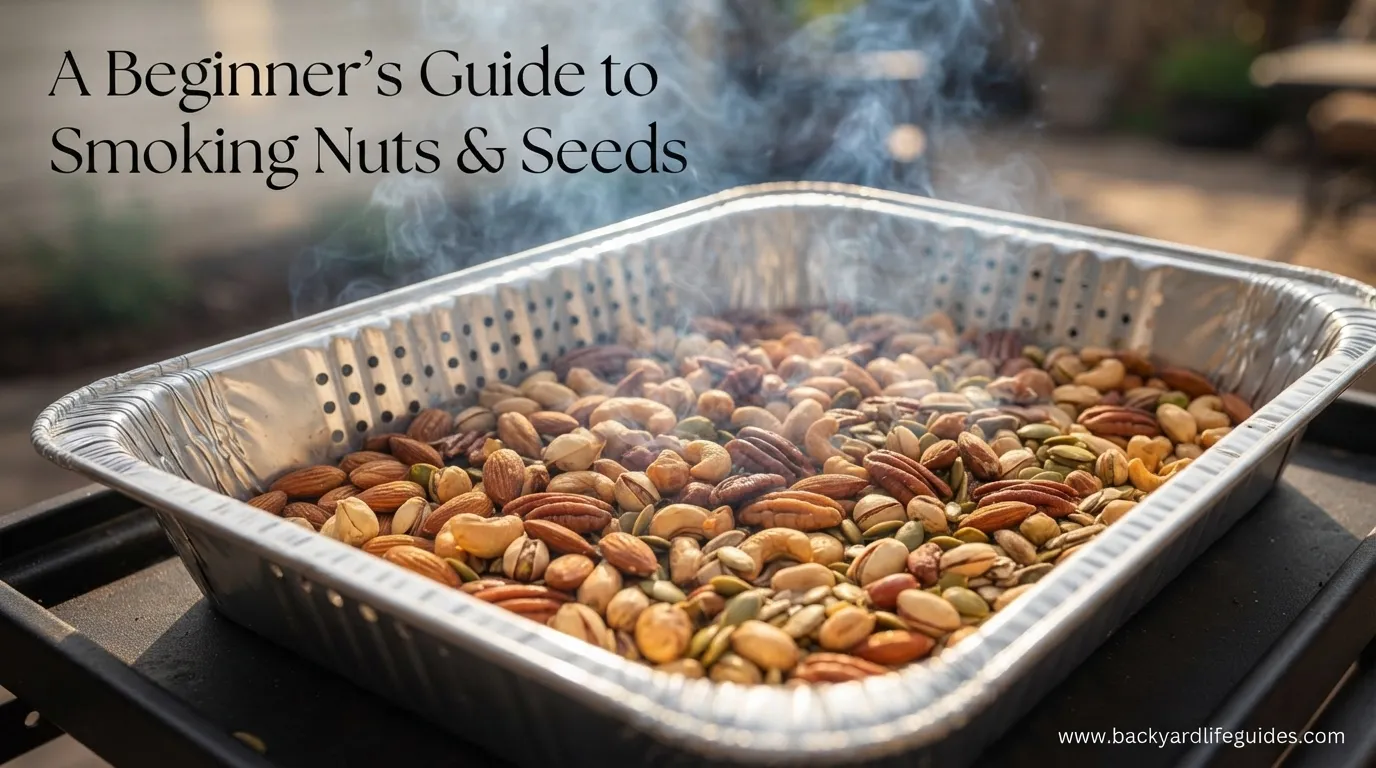
A Beginner’s Guide to Smoking Nuts and Seeds
- Disclosure: This post may include affiliate links. If you click a link and complete a purchase, I may earn a commission. Additionally, as an Amazon Associate, I earn from eligible purchases.
Smoking nuts and seeds is an easy way to turn everyday snacks into something with a deeper, richer flavor. You do not need a complicated setup to get started. A grill or smoker, a few basic ingredients, and careful temperature control are enough for a successful first batch.
Almonds, pecans, cashews, walnuts, peanuts, pumpkin seeds, and sunflower seeds can all work well with smoke. The key is controlling heat, choosing a suitable seasoning, and giving the nuts enough time to develop flavor without burning.
For beginners, a smoking temperature around 200°F to 250°F provides a useful starting range. Different recipes and equipment can require different settings, so use the process below as a practical framework rather than treating one exact time as universal.
Quick Answer: How Do You Smoke Nuts and Seeds?
Start by cleaning and, when appropriate, soaking the nuts or seeds. Drain and dry them, then coat them lightly with oil or another binder before adding seasoning.
Prepare your grill or smoker for indirect heat. A temperature between 200°F and 250°F is a practical starting range for beginners. Once clean smoke is developing, place the seasoned nuts in a single layer and smoke them while monitoring the temperature.
For a more specific starting point, some established smoking methods use 225°F for about 90 minutes, while another detailed method uses 230°F for 2 hours of smoke, followed by additional cooking. The exact finish time depends on the nut, seed, smoker, and desired flavor.
Let the finished nuts cool before judging their final texture and flavor.
Best Nuts and Seeds for Smoking
Not every nut behaves exactly the same way. Some have a naturally mild flavor that allows smoke and seasoning to stand out, while others have a stronger or creamier character.
| Nut or Seed | What Makes It Useful for Smoking |
|---|---|
| Almonds | Firm texture and mild flavor |
| Pecans | Naturally rich flavor that works well with smoke |
| Walnuts | Smoky flavor can soften their natural bitterness |
| Cashews | Creamy texture and mild sweetness |
| Peanuts | Take seasoning and smoke well |
| Pumpkin seeds | Small, crunchy snack with strong seasoning potential |
| Sunflower seeds | Another practical option for a smoky snack |
Almonds, pecans, walnuts, cashews, and pumpkin seeds are highlighted as beginner-friendly choices, while peanuts and sunflower seeds are also specifically used in detailed smoking methods.
What You Need
You can keep the equipment simple.
Basic equipment:
- Grill or smoker
- Grill basket, mesh topper, or suitable smoking pan
- Heat-resistant bowl
- Paper towels
- Tongs or a spatula
- Accurate thermometer
- Airtight storage container
For a smoker setup, a slotted pan can allow smoke to reach the nuts from underneath as well as above. One practical setup uses a Weber Smokey Mountain, charcoal, and wood chunks.
Ingredients for a Simple Batch
The seasoning can be as simple or creative as you want.
Useful ingredients include:
- Nuts or seeds
- Olive oil
- Butter
- Salt
- Garlic powder
- Onion powder
- Paprika
- Cinnamon
- Chipotle powder
- Honey
- Maple syrup
- Soy sauce
- Worcestershire sauce
Oil or butter can help dry seasoning adhere to the nuts. Liquid ingredients such as soy sauce or Worcestershire sauce can also work as binders, while honey or maple syrup can add sweetness.
How to Smoke Nuts and Seeds Step by Step
1. Choose and Inspect the Nuts
Start with fresh nuts or seeds.
Remove any visible debris or unwanted pieces. If you are smoking multiple varieties, keep them separated because different nuts can have different cooking requirements.
For a first attempt, almonds or cashews are particularly straightforward choices.
2. Decide Whether to Soak or Brine
Soaking is one approach used in beginner smoking methods. It can help prevent the nuts from becoming excessively dry during smoking.
A basic approach is to place the nuts in water for a few hours, then drain and pat them dry. Salt and seasonings can also be incorporated into the soaking liquid.
A more measured brine uses:
- ½ gallon water
- ½ cup kosher salt
- 2 tablespoons seasoning rub
One detailed method recommends soaking the nuts in the brine for 2–4 hours.
You do not necessarily need to use a wet brine for every batch. If you prefer a simpler process, lightly oiling and seasoning the nuts before smoking is another practical approach.
3. Give Pumpkin Seeds Special Treatment
Pumpkin seeds can benefit from a slightly different preparation.
One detailed method combines:
- 2 cups water
- 4 tablespoons kosher salt
The pumpkin seeds are simmered for approximately 8–12 minutes before being drained.
This approach helps salty water reach the inside of the shells before smoking.
After draining, allow the seeds to dry briefly before seasoning.
4. Add a Binder
A small amount of oil or butter helps dry spices stick to the surface.
For a savory batch, try:
- Olive oil
- Garlic powder
- Onion powder
- Paprika
For a sweeter, spicier almond variation, cinnamon and chipotle powder can create a sweet-heat profile. A practical batch method pairs almonds with cherry wood and this seasoning combination.
Avoid drowning the nuts in oil. You only need enough to lightly coat the surface.
5. Season Evenly
Add seasoning gradually rather than dumping everything in at once.
Sprinkle, stir, inspect, and add more if necessary.
For one measured approach, approximately 1 heaping tablespoon of rub per 1 cup of nuts or seeds is used.
This is a useful starting ratio, but you can reduce or increase the seasoning according to the ingredients and your taste.
6. Prepare the Grill or Smoker
For a beginner-friendly setup, aim for approximately 200°F–250°F.
A commonly used middle range is around 225°F–230°F.
If using charcoal, arrange the coals so the nuts sit over indirect heat rather than directly above the hottest section.
If using a gas grill, place the nuts over an area where the burner is turned off while another burner provides the heat.
Allow your wood to begin producing smoke before putting the nuts on the grill.
7. Choose Your Smoking Wood
Wood choice changes the character of the finished snack.
One practical smoking setup uses:
| Nut | Wood |
|---|---|
| Cashews | Hickory |
| Almonds | Cherry |
Hickory gives cashews a stronger smoky character, while cherry is paired with almonds for a sweeter-style profile.
Start with a moderate amount of smoke. Nuts are smaller and can take on smoke flavor relatively quickly.
8. Arrange the Nuts in a Single Layer
Spread the seasoned nuts or seeds so they have room around them.
A single layer helps expose more surface area to the smoke and heat.
Depending on your equipment, you can use:
- A mesh grill topper
- A suitable smoking pan
- A slotted pan
- Another smoker-safe surface designed for small foods
Do not use materials that your smoker manufacturer warns against.
9. Smoke at a Controlled Temperature
This is where consistency matters most.
A useful beginner range is 200°F–250°F.
One practical batch method uses 225°F for approximately 90 minutes, with stirring every 30 minutes.
Another detailed method maintains 230°F, applies smoke for 2 hours, and then continues cooking until the desired result is reached.
These differences are important: there is no single smoking time that works identically for every nut, seed, smoker, and batch size.
10. Stir Regularly
Do not simply put the nuts in the smoker and forget about them.
Stirring helps:
- Reduce the chance of scorching
- Expose different pieces to heat
- Distribute smoke more evenly
- Prevent the bottom layer from overheating
For the 225°F method, stirring every 30 minutes is recommended.
11. Use Taste and Appearance as Final Checks
After the initial smoking period, inspect the batch.
One detailed method recommends beginning taste checks after approximately 2 hours and then checking every 30 minutes until the flavor and appearance are right.
Do not rely on crunch alone while the nuts are still hot.
Peanuts, in particular, can remain soft when they first come out and become firmer as they cool.
12. Cool Completely Before Storing
Cooling is not just a storage step.
It can also change the eating experience.
Cashews may taste noticeably different while warm, so allow them to cool completely before deciding whether the flavor and seasoning are right.
Once cooled, transfer the nuts or seeds to a suitable airtight container.
Smoking Time and Temperature Guide
The following table combines the specific timings reported in the detailed methods:
| Food | Temperature | Smoke Time | Total Time |
|---|---|---|---|
| Cashews | 225°F | About 90 min | About 90 min |
| Almonds | 225°F | About 90 min | About 90 min |
| Pecans | 230°F | 2 hrs | 4 hrs |
| Almonds | 230°F | 2 hrs | 4 hrs |
| Pumpkin seeds | 230°F | 2 hrs | 4 hrs |
| Sunflower seeds | 230°F | 2 hrs | 4 hrs |
| Peanuts | 230°F | 2 hrs | About 5 hrs |
The figures are starting points from the specific methods rather than universal guarantees. Smoker performance, batch size, weather, airflow, and personal taste can change the final result.
How Much Can You Smoke in One Batch?
Batch size matters because overcrowding can make heat and smoke distribution less consistent.
One practical setup uses:
- 32 oz of cashews per batch
- 3 lb of almonds per batch
The same source describes completing as many as 6 batches in one day—4 cashew batches followed by 2 almond batches.
For a beginner, however, starting with a smaller batch can make temperature and seasoning easier to manage.
Three Easy Flavor Combinations
Garlic-Paprika Cashews
Combine cashews with a light coating of olive oil, then season with:
- Garlic powder
- Onion powder
- Paprika
Smoke with hickory around 225°F for approximately 90 minutes, stirring every 30 minutes.
Sweet-Heat Almonds
For almonds, use:
- Olive oil
- Cinnamon
- Chipotle powder
Pair the almonds with cherry wood and smoke at approximately 225°F for 90 minutes, stirring every 30 minutes.
Savory Mixed Nuts and Seeds
For a mixed batch, use a light oil or butter binder and a savory seasoning blend.
Almonds, pecans, peanuts, sunflower seeds, and pumpkin seeds can all be prepared for smoking, but monitor them individually because their cooking times may differ.
Common Mistakes to Avoid
Using Too Much Heat
Nuts contain oils that can scorch. Higher heat may brown the outside before the desired smoky flavor develops.
Stay within a controlled smoking range and monitor your smoker.
Adding Too Much Oil
A binder should help seasoning stick. It should not leave the nuts heavily coated.
Use a light coating.
Overloading the Pan
A crowded pan can make it harder for heat and smoke to reach every piece evenly.
Spread the nuts into a relatively even layer whenever possible.
Forgetting to Stir
The bottom layer can receive more heat than the top.
Stirring every 30 minutes is a useful habit for the 225°F method.
Judging the Batch While It Is Still Hot
Some nuts change noticeably after cooling.
Cashews are a particularly good example: they can taste wrong when sampled immediately after smoking but improve once cooled.
Treating Every Nut the Same
Pecans, almonds, peanuts, cashews, pumpkin seeds, and sunflower seeds do not necessarily finish at the same time.
Use the published timings as starting points and adjust according to the specific batch.
Food-Safe and Equipment-Safe Practices
Smoking nuts is relatively simple, but safe equipment use still matters.
Always follow the manufacturer’s instructions for your smoker and accessories.
If your smoker manufacturer warns against foil-lined racks or foil pans, follow that warning. For example, the detailed Smoking-Meat.com method specifically notes a serious fire risk associated with foil-lined racks or pans in a Bradley smoker.
Also:
- Keep combustible materials away from hot equipment.
- Use heat-resistant tools.
- Monitor the smoker rather than leaving a hot setup unattended.
- Allow the finished nuts to cool before sealing them.
- Keep stored nuts dry and protected from moisture.
How to Store Smoked Nuts and Seeds
Allow the batch to cool completely first.
Then place it into an airtight container and keep it in a cool, dry environment.
One beginner guide states that properly stored smoked nuts and seeds can remain good for up to 9 months in a cool, dry place.
For best quality, however, pay attention to smell, appearance, moisture, and texture before eating any stored batch.
A Simple First-Batch Plan
If this is your first time smoking nuts, keep the process uncomplicated.
Beginner Method
Choose: 1–2 cups of almonds or cashews.
Season: Add a small amount of olive oil and your preferred dry seasoning.
Prepare: Set the grill or smoker for indirect heat.
Temperature: Start around 225°F.
Smoke: Plan for approximately 90 minutes.
Stir: Every 30 minutes.
Check: Inspect the nuts near the end of the cooking period.
Cool: Allow them to cool completely.
Taste: Evaluate the final flavor and texture after cooling.
Store: Place leftovers in an airtight container.
This approach gives a beginner fewer variables to manage while still following the key principles demonstrated by the detailed smoking methods.
FAQs
What is the best temperature for smoking nuts and seeds?
A practical beginner range is 200°F–250°F. More specific methods use 225°F or 230°F, depending on the recipe and equipment.
How long does it take to smoke nuts?
It varies by nut and method. A cashew or almond batch can take about 90 minutes at 225°F, while another method uses 2 hours of smoke and 4–5 hours total cooking at 230°F for several varieties.
Do nuts need to be soaked before smoking?
Not always. Some methods soak nuts for a few hours, while a measured brining method uses 2–4 hours. Other approaches simply coat and season the nuts before smoking.
Can you smoke pumpkin seeds?
Yes. Pumpkin seeds are specifically used in smoking methods. One approach boils them in 2 cups of water with 4 tablespoons of kosher salt for 8–12 minutes before smoking.
Should you stir nuts while smoking?
Yes. Stirring helps distribute heat and reduces the chance of scorching. A practical method recommends stirring every 30 minutes.
What wood is good for smoking nuts?
Hickory and cherry are two practical options. One established method uses hickory for cashews and cherry for almonds.
Why do smoked cashews taste different when hot?
Cashews can taste different immediately after smoking. Allow them to cool completely before evaluating their flavor.
Can peanuts still be soft when they are done?
Yes. Peanuts can remain soft while hot and become firmer as they cool, so crunchiness alone should not determine whether they are finished.
How long can smoked nuts be stored?
One beginner guide states that smoked nuts and seeds can remain good for up to 9 months when kept in a cool, dry place in an airtight container.
Can you smoke different nuts together?
You can, but different varieties may require different cooking times. For more predictable results, smoke similar nuts together or remove individual varieties when they reach the desired result.
Final Thoughts
Smoking nuts and seeds does not require an elaborate recipe. The most important skills are temperature control, even seasoning, regular stirring, and patience.
For a first batch, 225°F for about 90 minutes, with stirring every 30 minutes, is a practical starting method for cashews or almonds. If you move to pecans, peanuts, pumpkin seeds, or sunflower seeds, expect the timing to change.
Start small, record what works, and adjust your next batch. Once you understand how your smoker handles nuts, you can experiment with different woods, seasonings, and combinations while keeping the process simple and repeatable.