
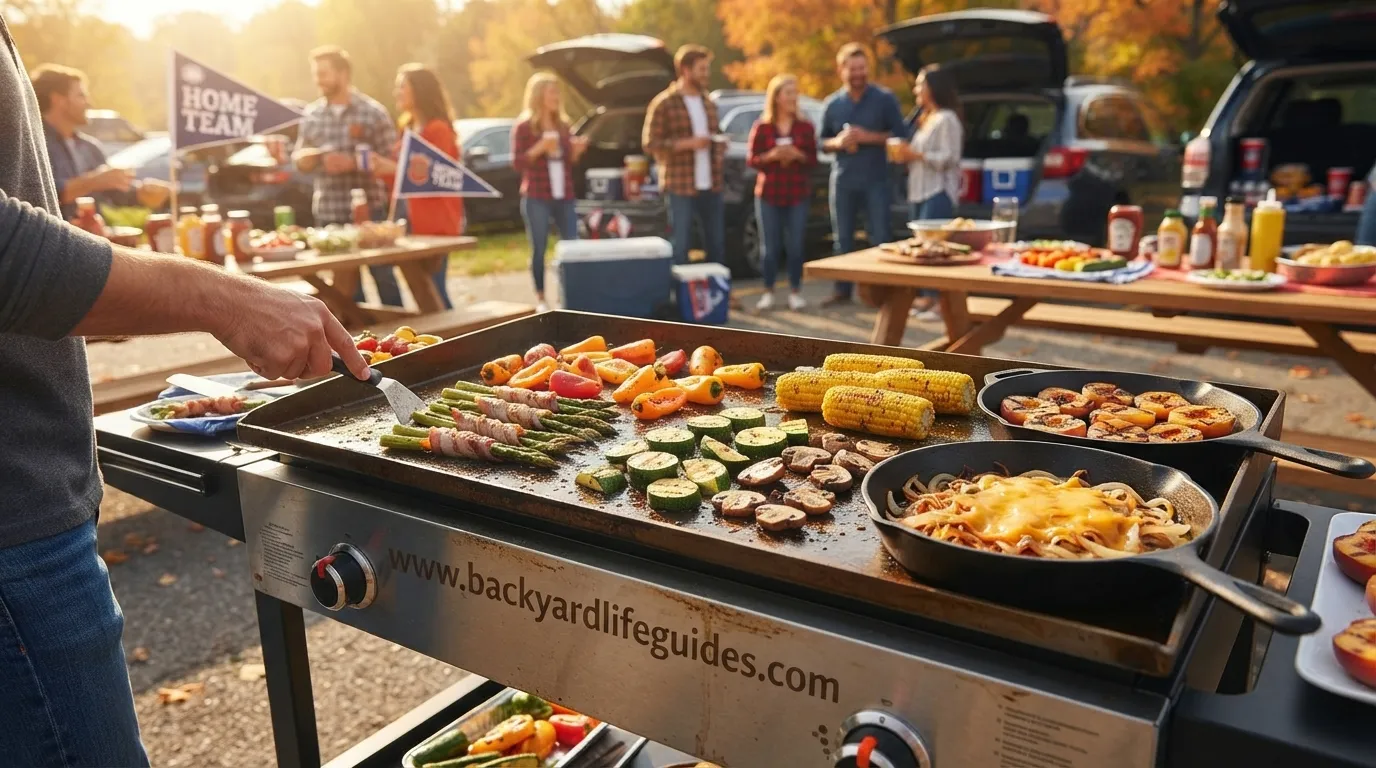
3 Griddle-Grilled Sides That’ll Elevate Your Tailgate Menu
- Disclosure: This post may include affiliate links. If you click a link and complete a purchase, I may earn a commission. Additionally, as an Amazon Associate, I earn from eligible purchases.
A good tailgate is about more than burgers and hot dogs. The right side dishes can turn a simple outdoor meal into something everyone remembers. A flat-top griddle makes that easier because you can prepare several foods on one large cooking surface while keeping control over the heat. From creamy lobster macaroni and cheese to smoky stuffed peppers, crispy potatoes, grilled vegetables, and sweet corn, there are plenty of ways to make your next outdoor gathering more exciting.
The biggest advantage of griddle cooking is versatility. You can cook comfort food, vegetables, potatoes, and even fruit without constantly moving between different pans or cooking appliances. With a little preparation at home and the right temperature at the tailgate, these sides can be cooked efficiently and served fresh.
Get ready to impress at your next tailgate — these 3 griddle-grilled sides are the secret to turning an ordinary menu into a game-day favorite.
Why a Griddle Works So Well for Tailgating
A Blackstone-style griddle gives you a broad, flat cooking surface that can handle multiple foods at once. One 22-inch tabletop model mentioned by Foodiosity provides 361 square inches of cooking space and is described as having enough capacity for up to 14 burgers, 10 pancakes, or 60 hot dogs. Its two independently controlled H-shaped burners also make it possible to create different heat zones.
That flexibility matters when preparing a complete tailgate meal. One section can stay hotter for browning or crisping while another area cooks food more gently. Instead of treating the griddle as something reserved only for burgers, think of it as an outdoor cooking station capable of handling almost the entire meal.
A larger griddle can provide even more room, with another model referenced in the research offering approximately 470 square inches of flat-top cooking area. The exact size you need depends on your group, but having enough surface area makes a noticeable difference when several dishes need attention at the same time.
Grilled Lobster Mac and Cheese
Lobster mac and cheese is an excellent choice when you want one side dish to feel like the star of the tailgate. It combines creamy cheese, tender lobster, and pasta in a rich cast-iron skillet preparation that works particularly well on a griddle.
For a generous batch, use 1 package of elbow macaroni, 2 lobster tails, ½ cup of butter, 1 small onion, 3 cloves of garlic, ¼ cup of flour, 2 cups of milk, 3 cups of cheddar, 2 cups of Gruyere, and 1 cup of Romano cheese.
The easiest way to make this practical for a tailgate is to cook the macaroni at home. That removes one time-consuming step from the outdoor cooking process and leaves you with more time to enjoy the event.
Heat the griddle to about 450°F and cook the lobster tails for approximately 5–6 minutes per side, depending on their size. Meanwhile, the cheese sauce can be prepared in a cast-iron skillet. Once the pasta, sauce, and lobster are combined, allow roughly 20 minutes for the mac and cheese portion to finish cooking.
The result is creamy, cheesy, and substantial enough to pair with grilled meats. For a tailgate, it also offers something different from the usual potato or vegetable sides.
Mashed Sweet Potatoes
Sweet potatoes may not be the first thing you associate with a flat-top griddle, but they can become a surprisingly satisfying outdoor side. Their natural sweetness works especially well with grilled and smoky foods.
For this preparation, you need 6 sweet potatoes, ¾ cup of milk, 2 tablespoons of butter, and 2 teaspoons of fresh thyme.
Wrap the sweet potatoes individually in aluminum foil and cook them on a griddle at approximately 325°F. The cooking process takes around 90 minutes, so this is a side that benefits from starting early.
Turn the potatoes occasionally so they cook evenly. Once tender, remove them from the heat and let them cool for a few minutes before peeling. Mash the soft centers with milk, butter, and fresh thyme until you reach the texture you prefer.
This method is especially useful when you’re feeding a crowd because most of the cooking happens without constant stirring. The finished potatoes are soft, naturally sweet, and pair well with grilled chicken, burgers, steak, or barbecue.
Smoky Stuffed Peppers
Stuffed peppers bring color and plenty of flavor to a tailgate spread. They can also be prepared ahead of time, making them a convenient choice when you want to reduce the amount of work required once everyone arrives.
The basic filling uses 6 medium bell peppers, ½ pound of Spanish chorizo, 1 small onion, 2 cloves of garlic, 2 tomatoes, ½ cup of Picante sauce, 2 cups of cooked white rice, and 1 cup of cheddar cheese.
Start by preparing the rice and chorizo mixture with the onion, garlic, tomatoes, and Picante sauce. Let the mixture simmer for about 5 minutes so the flavors come together.
Cut and prepare the peppers, then fill them with the mixture and finish with cheddar cheese. Cook them on the griddle at approximately 300°F for around 30 minutes, or until the peppers become tender.
The lower cooking temperature gives the filling time to heat through while allowing the peppers to soften without becoming overly charred. The combination of chorizo, cheese, rice, and peppers also makes this side considerably more filling than a basic vegetable dish.
Crispy Potatoes Belong on the Griddle
Potatoes are among the most flexible choices for outdoor cooking. They can be smashed, roasted, grilled, or combined with cheese and herbs, which makes them easy to adapt to different tailgate menus.
The identified several potato variations, including cheesy smashed potatoes, classic smashed potatoes, herb-roasted potatoes, bacon ranch potatoes, grilled baby potatoes with rosemary, grilled cheesy garlic potatoes, and potatoes au gratin prepared in foil packets.
The appeal is simple: potatoes develop a crispy exterior when they have enough direct contact with the hot cooking surface while remaining soft inside. Adding garlic, rosemary, cheese, bacon, ranch seasoning, or other familiar flavors lets you create a side that matches the rest of your menu.
If you’re serving a large group, potatoes are also practical because they are inexpensive, filling, and easy to prepare in batches.
Grilled Vegetables for a Lighter Side
Not every tailgate side needs to be rich and heavy. A hot griddle can quickly transform ordinary vegetables into flavorful sides with browned edges and a lightly charred surface.
The cover vegetables such as asparagus, zucchini, Brussels sprouts, mushrooms, cauliflower, carrots, eggplant, tomatoes, and mixed vegetable skewers. Grilled corn is another particularly useful option for summer gatherings because its natural sweetness becomes more pronounced as it cooks.
Vegetables also give you an easy way to accommodate guests who want something lighter or meat-free. A simple combination of oil, salt, pepper, garlic, herbs, or lemon can be enough to bring out their flavor without covering up the natural taste.
For something more substantial, cauliflower can be cut into thick “steaks,” zucchini can be stuffed or prepared in foil packets, and mushrooms can be cooked until deeply browned.
Grilled Asparagus With Lemon Butter
Asparagus is one of the simplest sides to prepare when you want something fresh alongside heavier tailgate foods. The vegetable cooks quickly and develops a pleasant grilled flavor while remaining slightly crisp.
A little lemon butter adds richness without making the dish feel overly heavy. You can also finish it with herbs, garlic, Parmesan, or a squeeze of fresh lemon.
This type of side works particularly well next to steak, burgers, chicken, or grilled seafood because its bright flavor helps balance richer foods.
Grilled Corn With a Smoky Finish
Corn on the cob is practically made for outdoor cooking. The griddle provides enough direct heat to brown the kernels and create a deeper roasted flavor.
You can keep the seasoning simple with butter, salt, and pepper or make it more interesting with garlic, chili, herbs, cheese, or a spicy sauce. Corn can also be removed from the cob and turned into a salad with ingredients such as jalapeño and other fresh vegetables.
For a crowd, corn is particularly convenient because several ears can be prepared during the same cooking session.
Brussels Sprouts With Crispy Edges
Brussels sprouts can become completely different vegetables when properly grilled. Instead of soft, boiled sprouts, the griddle can create browned and crispy surfaces while the inside becomes tender.
Halve the sprouts before cooking so more surface area comes into contact with the hot griddle. A little oil helps with browning, while garlic, bacon, maple mustard, or Parmesan can change the overall flavor.
They are a good choice when you want a vegetable side that feels more substantial and works with both barbecue and grilled meats.
Bacon-Wrapped Asparagus and Other Crowd-Pleasers
Some sides are popular because they combine familiar ingredients in a slightly more exciting format. Bacon-wrapped asparagus is one example: the vegetable provides freshness while bacon contributes smoky, salty flavor and crispness.
Other ideas identified in the include garlic bread, grilled mushrooms, grilled pineapple, garlicky tomatoes, creamy coleslaw, baked beans, zucchini fritters, glazed carrots, Caprese salad, grilled eggplant, and grilled vegetable skewers.
These options show just how broad a griddle menu can become. You don’t have to prepare complicated recipes to create variety. Changing the seasoning, texture, or sauce can make the same basic ingredients feel completely different.
Grilled Pineapple for a Sweet-Savory Twist
A tailgate menu doesn’t have to end with traditional dessert. Grilled pineapple can work as a simple sweet side or a lighter finish after a heavier meal.
The heat caramelizes the fruit’s natural sugars and creates browned edges while the inside remains juicy. A little cinnamon, honey, lime, or chili seasoning can change the flavor depending on the rest of your menu.
It is also an easy option when you want something that requires very little preparation.
Garlic Bread Straight From the Griddle
Garlic bread is another practical side because the griddle can toast the exterior while warming the inside. Butter, garlic, herbs, and Parmesan can give it plenty of flavor without requiring a separate oven.
It is particularly useful alongside cheesy dishes, grilled vegetables, steak, or saucy barbecue foods. Cut the bread into portions before serving so guests can easily grab a piece.
How to Get Better Results on a Griddle
The first important habit is to preheat the griddle. Putting food onto a cold or unevenly heated surface can lead to poor browning and inconsistent cooking. Give the cooking surface enough time to reach the temperature you need before adding ingredients.
Use oil appropriately rather than relying on an almost dry surface. A thin, even coating can help prevent sticking and encourage better browning. Different foods may require different amounts, so avoid flooding the surface unnecessarily.
Learn to use the hot zone. A griddle does not have to be treated as one uniform temperature. If one area is hotter, use it for searing, browning, or crisping and move delicate foods to a cooler section.
Finally, clean the cooking surface between batches when necessary. Removing burnt food and excess grease helps prevent unwanted flavors from transferring between dishes. It also makes the next cooking stage easier and keeps the surface in better condition.
Plan Your Tailgate Cooking Before You Arrive
One of the easiest ways to make outdoor cooking stressful is trying to prepare everything from scratch after arriving. A little preparation can save a significant amount of time.
Cook ingredients such as macaroni and white rice at home when the recipe allows it. Chop onions, garlic, vegetables, and herbs beforehand. Prepare fillings and sauces in advance and transport them in sealed containers.
You should also think about cooking order. Foods that require longer cooking times, such as the 90-minute sweet potatoes, should begin first. Faster foods can follow later while the longer-cooking dishes finish.
Keeping the griddle divided into different heat zones also allows you to cook several components without constantly stopping to adjust everything.
How Many Sides Should You Make?
For a small gathering, 2–3 sides are usually enough to create variety without creating unnecessary preparation. For a larger tailgate, you can expand the selection by combining one filling side, one vegetable, and one fresh or sweet option.
For example, lobster mac and cheese can provide a rich comfort-food component, grilled asparagus can add freshness, and grilled pineapple can provide a sweet contrast.
The key is balance rather than simply making as many dishes as possible. A menu containing several heavy cheese-and-potato dishes may feel repetitive, while a combination of textures and flavors gives guests more interesting choices.
Can You Make These Sides Ahead of Time?
Yes, and some are particularly well suited to preparation. Cooked macaroni and white rice can be prepared at home, while stuffed-pepper filling can also be assembled ahead of time.
Vegetables can be washed and cut before leaving home, and potatoes can be prepared so they require less work at the tailgate. Sauces, seasonings, and toppings should also be portioned in advance.
The goal is not necessarily to cook every dish completely beforehand. Instead, prepare the components so the griddle handles the final cooking, browning, reheating, and finishing.
What Temperature Should You Use?
There isn’t one universal griddle temperature because different foods require different levels of heat. The researched recipes demonstrate this clearly.
The lobster mac and cheese preparation uses approximately 450°F, while the sweet potatoes are cooked around 325°F. The stuffed peppers use a lower temperature of approximately 300°F.
These differences are important. High heat is useful when you want strong browning or fast cooking, while lower temperatures are better for longer cooking and foods that need time to become tender without burning.
Always consider the thickness and starting temperature of your ingredients rather than relying on a number alone.
FAQs
What are the best griddle sides for a tailgate?
The best choices depend on your menu and group size, but potatoes, grilled vegetables, stuffed peppers, mac and cheese, corn, asparagus, and garlic bread are all versatile options. A mixture of rich, fresh, crispy, and sweet sides creates a more balanced spread.
Can I cook more than one side at the same time?
Yes. A large flat-top cooking surface is one of the biggest advantages of griddle cooking. With multiple heat zones, you can cook foods requiring different temperatures during the same session.
What temperature is best for griddle cooking?
There is no single ideal temperature. The researched examples range from 300°F for stuffed peppers to 450°F for lobster and mac and cheese. Choose the temperature based on the specific food and cooking method.
How long do sweet potatoes take on a griddle?
The researched foil-wrapped preparation takes approximately 90 minutes at 325°F. Cooking time can vary depending on the size of the potatoes and the consistency of the heat.
How long should stuffed peppers cook?
The stuffed pepper preparation takes approximately 30 minutes at 300°F, or until the peppers become tender.
Should I pre-cook ingredients for a tailgate?
Pre-cooking certain ingredients can make outdoor cooking much easier. Pasta and rice are particularly useful examples because preparing them at home reduces the amount of work required at the event.
What should I clean between different foods?
Remove burnt pieces, excess food residue, and heavy grease when necessary, particularly before moving from strongly flavored foods to delicate ingredients. Keeping the surface clean helps reduce unwanted flavor transfer and makes cooking more consistent.
Final Thoughts
A griddle can turn a basic tailgate into a much more flexible outdoor kitchen. Instead of limiting yourself to burgers and hot dogs, you can prepare creamy lobster mac and cheese, tender sweet potatoes, smoky stuffed peppers, crispy potatoes, grilled vegetables, corn, asparagus, mushrooms, garlic bread, and even caramelized pineapple.
The biggest lesson is to use the griddle strategically. Preheat it, create different heat zones, prepare ingredients before leaving home, and keep the cooking surface clean. With those simple habits, you can serve several flavorful sides without turning your tailgate into a complicated cooking project.
2 Comments