
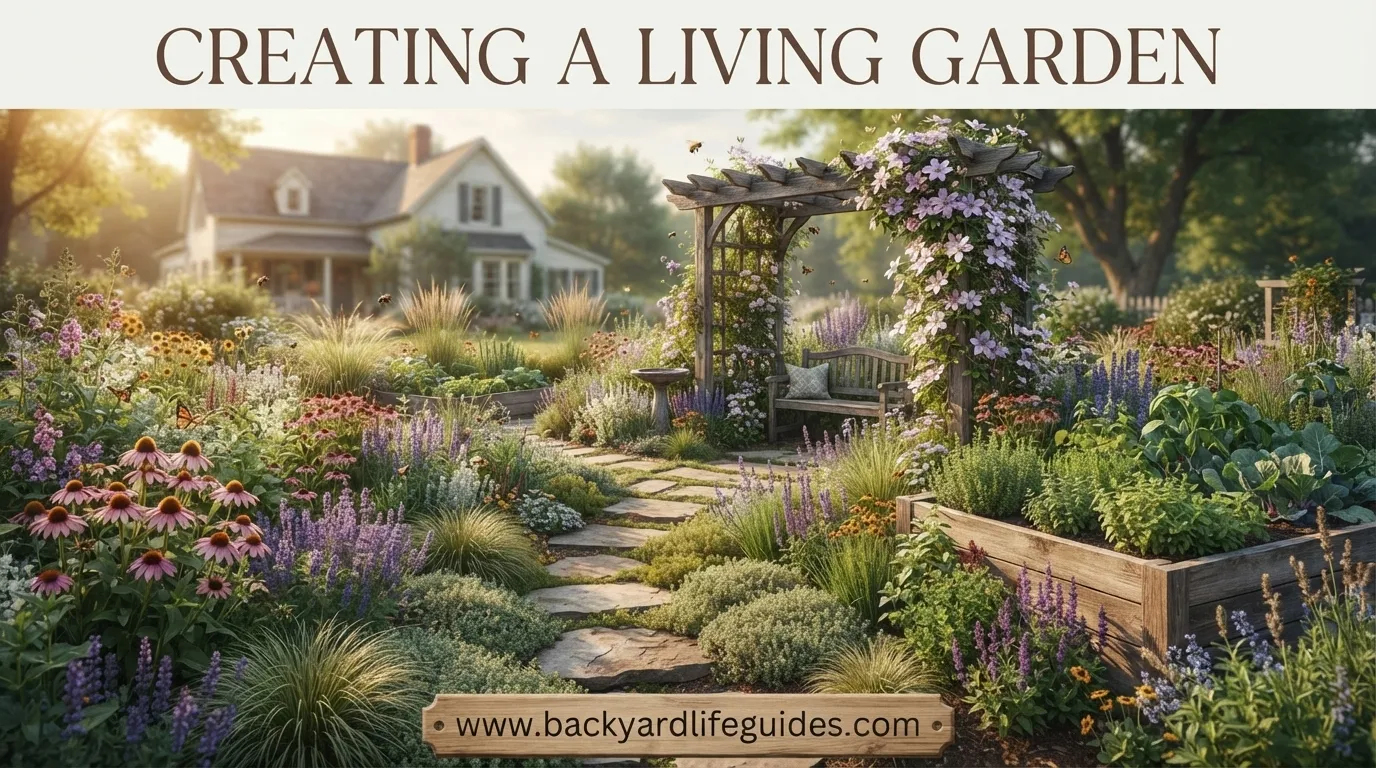
Creating a Living Garden: 9 Practical Steps, Ideas & Plants
Creating a Living Garden: 9 Practical Steps, Ideas & Plants
- Disclosure: This post may include affiliate links. If you click a link and complete a purchase, I may earn a commission. Additionally, as an Amazon Associate, I earn from eligible purchases.
A living garden can be much more than a collection of plants. It can become a green extension of your home, a relaxing outdoor room, a vertical garden, a productive workspace, or a carefully designed space that feels alive throughout the day and night.
The best approach combines the ideas found across different styles of living gardens: choosing plants that suit your space, creating comfortable areas for seating and entertaining, using lighting effectively, adding vertical greenery, and selecting plants that provide texture, scent, height, privacy, or year-round interest.
Whether you have a balcony, patio, backyard, terrace, or a larger garden, the goal is simple: create a space where plants and living areas work together naturally.
What Is a Living Garden?
A living garden is a garden designed to feel like an active part of your living environment rather than a separate decorative area.
It can include:
- Outdoor seating and dining
- Vertical or living walls
- Container gardens
- Raised beds
- Privacy planting
- Decorative and unusual plants
- Lighting for nighttime use
- Cooking and BBQ areas
- Firepits
- Greenery around a home office
- Plants selected for texture, scent, height, or seasonal interest
The idea can work both indoors and outdoors. A living wall, for example, can bring greenery into a home office, while a contemporary backyard can function as an outdoor room connected directly to the house.
Why Create a Living Garden?
A thoughtfully planned garden can make your living environment greener while giving you another place to relax, work, eat, entertain, or spend time outdoors.
A greener living space
Plants naturally become the visual focus of the space. Different heights, textures, colors, and forms can make an otherwise plain area feel more welcoming.
A healthier-feeling environment
Some living-garden approaches combine plants with workspaces and relaxation areas. One cited classroom study discussed in the research showed 70% greater attentiveness in the presence of greenery.
The same research also connects working from home with environmental benefits, including a reported reduction of at least 25% in carbon dioxide and ground-level ozone associated with telecommuting.
An extension of the home
A garden can become an outside room rather than simply an area containing plants.
You might use one section for dining, another for seating, and another for gardening. Adding lighting allows the space to remain useful after sunset.
A more attractive home
Plants can soften hard surfaces and complement a property’s architectural style. The right combination can create a contemporary, cottage, tropical, Mediterranean, Zen, or other garden atmosphere.
How to Create a Living Garden
The following 9-step approach combines the practical living-wall process with the broader garden-design principles found across.
1. Decide How You Will Use the Space
Before choosing plants, decide what you want the garden to do.
Common functions include:
- Seating
- Dining
- Cooking
- BBQ
- Recreation
- Gardening
- Relaxation
- Privacy
- Working
- Entertaining
- Creating a decorative focal point
A small garden may only need one main function, while a larger space can be divided into several zones.
For example, a garden could contain a seating area, cooking space, gardening area, privacy planting, and a firepit.
Start with function, not decoration.
2. Match the Garden to Your Available Space
The size and character of your space should influence the design.
A small balcony does not need the same treatment as a large backyard. Vertical gardening and containers can make limited areas more useful without requiring a large footprint.
Consider spaces such as:
| Space | Useful Living-Garden Approach |
|---|---|
| Balcony | Containers and vertical greenery |
| Terrace | Seating, plants and lighting |
| Patio | Outdoor living and container planting |
| Small garden | Vertical gardens and carefully selected focal points |
| Backyard | Seating, dining, planting and recreation |
| Home office | Living wall and low-light plants |
The objective is to make the greenery fit the space, rather than overcrowding it.
3. Choose Plants According to Their Conditions
Plant selection should not be based only on appearance.
Consider:
- Available light
- Soil conditions
- Exposure
- Space available
- Desired height
- Privacy requirements
- Texture
- Scent
- Seasonal interest
- Maintenance needs
A contemporary outdoor garden, for example, can use plants that provide year-round interest, screening, ground cover, texture, and drama.
Plants should suit the aspect, soil, and exposure of the location.
4. Add Vertical Greenery
Vertical gardening is particularly useful where floor space is limited.
A living wall can turn an otherwise empty vertical surface into a major garden feature.
One DIY living-wall approach uses a 9-step construction process, including measuring the framed wall system, filling it with soil, adding fertilizer, arranging plants, watering, mounting the planter, and installing an irrigation and collection system.
For a low-light living wall, examples include:
- Arrowhead vine
- Cast iron plant
- Chinese evergreen
- Dracaena
- Peace lily
- Peperomia
- Philodendron
- Pothos
- Snake plant
- Spider plant
- ZZ plant
These plants can help bring greenery into areas where direct sunlight may be limited.
5. Create Comfortable Living Zones
A living garden becomes more useful when plants are combined with places to actually spend time.
Depending on available space, consider:
- Comfortable seating
- Dining space
- BBQ area
- Firepit
- Hot tub
- Outdoor speakers
- Cooking area
- Gardening space
- Shelter
- Privacy screens
You do not need to include everything.
A compact garden might only require one seating area and a few carefully positioned plants.
A larger garden could be divided into multiple zones connected by planting and pathways.
6. Use Hard Surfaces Carefully
The ground surface contributes strongly to the appearance of an outdoor living space.
Possible materials include:
- Gravel
- Real stone
- Indian stone
- Contemporary paving slabs
- Porcelain tiles
- Granite
- Grey granite
- Thin granite pavers
The surface should support the way you intend to use the garden.
For example, an entertaining area may need a stable surface for furniture, while planting areas can introduce softer textures around it.
7. Design the Garden for Day and Night
Lighting can transform a living garden after sunset.
Useful outdoor lighting options include:
- Uplighters
- Downlighters
- Bollards
- Garden feature lighting
- Lighting around seating areas
- Lighting along pathways
An outdoor lighting plan should also consider the position of electrical points.
The goal is not simply to make the garden bright. Lighting should help create depth, safety, atmosphere, and visual focus.
A well-designed garden can therefore remain useful day or night.
8. Add Plants With Different Roles
A strong living garden uses plants for specific design purposes rather than putting similar plants everywhere.
Plants for privacy
The research highlights Elaeagnus × ebbingei, also known as oleaster, as a privacy tree option.
Ground-cover plants
Examples include:
- Geranium ‘Blue Cloud’
- Geum ‘Cooky’
- Geum ‘Totally Tangerine’
- Geum ‘Lemon Drops’
- Erigeron karvinskianus
Plants for texture
Examples include:
- Carex ‘Comans Bronze’
- Festuca glauca ‘Elijah Blue’
- Helictotrichon sempervirens
- Nepeta ‘Walker’s Low’
- Stachys bizantina
Statement plants
For stronger visual impact, examples include:
- Eryngium ‘Blue Hobbit’
- Eryngium ‘Big Blue’
- Eryngium giganticum ‘Miss Wilmott’s Ghost’
- Eryngium alpinum
- Salvia nemorosa ‘Caradonna’
- Verbascum ‘Gainsborough’
Using plants with different purposes creates layers instead of a flat planting arrangement.
9. Give the Garden Seasonal and Sensory Interest
A living garden can become more interesting when plants respond to different times, senses, and environmental conditions.
One unusual approach is to use plants with fascinating behaviors.
Examples include:
- Sensitive plant
- Walking iris
- Walking ferns
- Telegraph plant
- Resurrection plant
- Carnivorous plants
- Moonflower
- Daylily
- Four o’clocks
- Morning glory
The day-and-night concept can be especially interesting.
Daylilies, moonflowers, four o’clocks, and morning glories can introduce different time-based characteristics into a garden.
Other unusual plant concepts discussed in the research include plants associated with movement, sensory responses, carnivorous behavior, and unusual visual characteristics.
Living Garden Ideas for Small Spaces
You do not need a large backyard to create a living garden.
Use vertical space
A vertical garden or living wall can move the planting upward rather than outward.
Use containers
Container gardening makes it easier to introduce greenery into patios, balconies, and other restricted spaces.
Create one focal point
Instead of filling every available area, choose one strong feature such as:
- A statement plant
- Living wall
- Raised bed
- Small seating area
- Lighting feature
This keeps the space visually organized.
Keep pathways clear
Plants should support movement through the garden rather than block it.
A smaller garden benefits from simple visual organization.
Living Garden Ideas for Outdoor Living
For larger spaces, think of the garden as an extension of the home.
A contemporary outdoor-living garden can combine:
Seating + dining + cooking + planting + lighting + privacy
Possible features include:
- BBQ
- Hot tub
- Firepit
- Outdoor speakers
- Dining area
- Movable BBQ
- Raised bed
- Privacy planting
- Shelter
- Gardening area
A coastal planting theme, for example, can be combined with seating, a hot tub, cooking space, raised planting, firepit, and lighting.
The important principle is to make each feature serve a purpose.
Choosing Plants for a Living Wall
Living walls can bring greenery into areas such as:
- Home offices
- Balconies
- Terraces
- Patios
- Indoor spaces
- Vertical garden zones
For lower-light locations, the following plant group provides a useful starting point:
| Plant | Useful Garden Role |
|---|---|
| Arrowhead vine | Living-wall greenery |
| Cast iron plant | Low-light planting |
| Chinese evergreen | Indoor greenery |
| Dracaena | Vertical greenery |
| Peace lily | Decorative greenery |
| Peperomia | Compact planting |
| Philodendron | Living-wall planting |
| Pothos | Green vertical coverage |
| Snake plant | Low-light greenery |
| Spider plant | Decorative planting |
| ZZ plant | Low-light greenery |
Plant selection should still be based on the actual conditions of your space.
Garden Styles to Explore
A living garden does not have to follow one particular design style.
Garden-design inspiration can include:
- Cottage gardens
- Zen gardens
- Rock gardens
- Moon gardens
- Meadow gardens
- Tropical gardens
- Mediterranean gardens
- Desert gardens
- English gardens
- Contemporary gardens
Other specialized concepts include:
- Butterfly gardens
- Bee-friendly gardens
- Pollinator gardens
- Bird gardens
- Native gardens
- Rain gardens
- Eco-friendly lawn alternatives
The best style is the one that matches your home, available space, plants, and intended use.
How to Make a Living Garden Feel More Natural
A garden can feel more cohesive when the elements appear connected rather than individually placed.
Combine different plant heights
Use taller plants toward the back or around privacy areas, medium plants around the central zones, and lower plants near edges and pathways.
Mix textures
Combine grasses, foliage, flowers, and ground-cover plants to avoid a repetitive appearance.
Repeat materials
If you use a particular paving material, container style, or garden feature, repeating it can make the overall design feel more connected.
Create visual flow
Paths, planting beds, seating, and focal points should guide the eye naturally through the space.
Leave breathing room
More plants do not automatically mean a better garden. Empty space can help important plants and features stand out.
How to Add a Living Garden to a Home Office
A living garden can also be connected with a work environment.
A living wall can provide a strong green feature behind or near a workspace, while an outdoor work area can create a direct connection with nature.
The Mother Earth News research discussed 34 million Americans working from home at the time of the article and presented outdoor work as practical for three seasons of the year.
The basic concept is simple:
Work zone + greenery + natural surroundings = a more connected workspace
For a small indoor workspace, low-light plants can be particularly useful where direct sunlight is limited.
Simple Living-Garden Maintenance Plan
A beautiful garden still needs regular attention.
Regularly
- Check plant moisture.
- Remove damaged growth.
- Observe plants for signs of stress.
- Keep seating and pathways clear.
- Check containers and living-wall systems.
Seasonally
- Review which plants are performing well.
- Replace plants that do not suit the conditions.
- Refresh planting arrangements.
- Check outdoor lighting.
- Review privacy and screening.
- Adjust garden features according to how the space is being used.
The exact maintenance requirements will depend on the plants and garden design you choose.
Common Living Garden Mistakes to Avoid
Choosing plants only because they look attractive
A beautiful plant can still fail if its growing conditions are unsuitable.
Overcrowding a small garden
Too many features can make a compact space feel uncomfortable.
Ignoring lighting
If the garden is intended for evening use, lighting should be part of the design rather than an afterthought.
Forgetting function
A garden filled with attractive plants may still be inconvenient if there is nowhere comfortable to sit, walk, eat, or relax.
Using the same height everywhere
Different plant heights create more visual depth.
Ignoring privacy
If the garden is overlooked, privacy planting or screening can make the space considerably more comfortable.
FAQs
What is the main idea behind a living garden?
A living garden treats greenery as part of the living environment. Instead of separating plants from everyday activities, it combines planting with spaces for seating, dining, working, relaxing, entertaining, or recreation.
Can I create a living garden in a small space?
Yes. Small gardens, balconies, terraces, and patios can use containers, vertical gardens, living walls, and carefully selected focal points to maximize available space.
What plants are suitable for a living wall?
Examples discussed in the research include arrowhead vine, cast iron plant, Chinese evergreen, dracaena, peace lily, peperomia, philodendron, pothos, snake plant, spider plant, and ZZ plant.
How many steps are involved in the DIY living-wall process?
The Mother Earth News approach describes a 9-step construction process covering measuring, soil, fertilizer, plant arrangement, watering, mounting, irrigation, and collection.
How can I make my garden useful at night?
Outdoor lighting such as uplighters, downlighters, and bollards can help illuminate pathways, seating areas, plants, and focal points. A planned lighting system can allow the garden to remain useful after dark.
What plants can provide privacy?
The garden-design research highlights Elaeagnus × ebbingei (oleaster) as a privacy tree option. Other plants can also be selected for screening depending on local conditions.
Can a living garden be used as an outdoor office?
Yes. A garden can incorporate a dedicated work zone or connect a home office with greenery through a living wall, patio, terrace, or outdoor workspace.
What garden styles can I use?
Living gardens can be adapted to many styles, including cottage, Zen, rock, moon, meadow, tropical, Mediterranean, desert, English, and contemporary designs.
How do I make a living garden more interesting?
Combine plants with different heights, textures, scents, seasonal characteristics, and visual forms. Unusual plants with movement or sensory characteristics can also create a more engaging garden experience.
Final Thoughts
Creating a living garden is ultimately about making greenery part of the way you live. A successful design does not need to be huge or complicated. It needs to match the available space, the conditions, and the activities you want to enjoy there.
Start with the function, choose plants that suit the environment, add layers of texture and height, and then introduce seating, surfaces, privacy, and lighting where they genuinely improve the space.
Whether you create a small vertical garden, a productive home-office corner, or a complete outdoor room, the strongest living garden is one that feels natural, useful, and enjoyable throughout the seasons.


4 Comments