
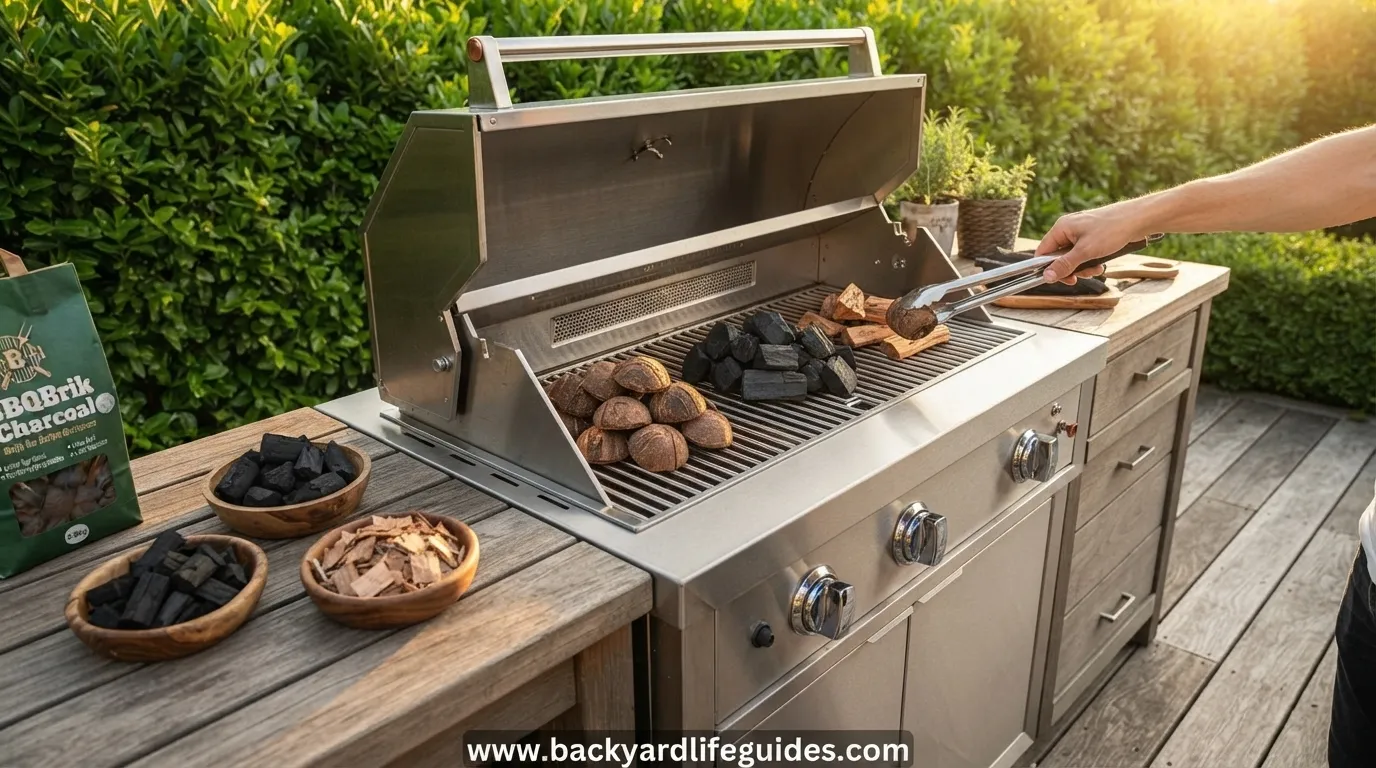
Best Alternative Grilling Fuels: 5+ Options for Better BBQs
Best Alternative Grilling Fuels:
- Disclosure: This post may include affiliate links. If you click a link and complete a purchase, I may earn a commission. Additionally, as an Amazon Associate, I earn from eligible purchases.
Choosing the right fuel can completely change your grilling experience. It affects how quickly your grill heats, how much attention the fire needs, the flavor of your food, cleanup, and even the type of cooking you can comfortably do. While charcoal briquettes remain a familiar choice, they are far from your only option.
Depending on your priorities, lump charcoal, wood pellets, hardwood, propane, natural gas, or electricity may be a better fit. Some options are designed for intense heat and smoky flavor, while others focus on speed and convenience. Below, we compare the alternatives using the practical details and numbers that matter most when you’re deciding what to use for your next BBQ.
What Are the Best Alternative Grilling Fuels?
There isn’t one fuel that is perfect for every grill or every cooking style. The best choice depends mainly on the flavor you want, how quickly you need to cook, how much temperature control you prefer, and how much cleanup you’re willing to handle.
The six sources reviewed for this guide cover several different approaches. One focuses on five alternatives to briquettes, another compares charcoal, propane, and natural gas, while broader guides also include wood pellets, hardwood, and electric grilling.
The most commonly discussed alternatives are lump charcoal, wood pellets, hardwood, natural gas, propane, and electricity. Each has a different balance of heat, smoke, convenience, and maintenance.
Lump Charcoal
Lump charcoal is one of the simplest alternatives if you still want the traditional charcoal-grilling experience without using standard briquettes. It is described as natural charcoal made from wood burned in an oxygen-free environment until it becomes carbon.
One of its biggest advantages is heat. Lump charcoal can burn hotter than briquettes, making it particularly useful when you want strong searing temperatures. It also responds quickly to oxygen, which gives you more direct control over the fire. Compared with briquettes, it generally produces less ash and can be easier to light.
The trade-off is consistency. Lump pieces don’t have the uniform shape of briquettes, so the size can vary considerably. It can also cost more. That irregularity isn’t necessarily a problem, but it means you may need to pay closer attention to how the charcoal is arranged in the grill.
For someone who wants high heat, natural smoky flavor, and less ash, lump charcoal is one of the strongest alternatives to conventional briquettes.
Lump Charcoal vs. Briquettes
Briquettes are manufactured into relatively uniform blocks, which helps them provide a predictable and consistent burn. Lump charcoal, on the other hand, tends to ignite faster and reach higher temperatures.
The choice therefore comes down to what you value most. If predictable burning and longer cooking are your priority, briquettes remain useful. If high heat, faster ignition, and a more natural charcoal experience matter more, lump charcoal deserves consideration.
Wood Pellets
Wood pellets offer an interesting middle ground between traditional wood-fired flavor and modern grilling convenience. They are produced by processing natural wood materials such as shavings, chips, slabs, and sawdust into small particles and compressing them into pellets.
The type of wood can influence the flavor. The sources specifically mention options such as cherry, maple, mesquite, and hickory, allowing you to experiment with different smoke profiles.
One important point is often overlooked: not every wood pellet is intended for cooking. The distinction between 2 types of wood pellets: grilling pellets and heating pellets. For food preparation, you should use pellets specifically identified as food-safe grilling fuel.
Pellets are also smaller and lighter than traditional pieces of charcoal or wood, which can make storage more convenient. Pellet grills take this convenience further by automatically feeding pellets to help maintain consistent heat.
Why Wood Pellets Are Popular
Wood pellets are especially attractive if you want wood-fired flavor without manually managing individual pieces of wood throughout the cook. They can also be a good choice for people who want to experiment with different flavors.
Hickory can provide a stronger flavor, while maple can introduce a sweeter character. Cherry and other fruit woods are also discussed as options for distinctive, sweeter flavors.
Hardwood
If your priority is authentic smoke flavor, hardwood is another strong alternative. Instead of using processed briquettes, you can grill or smoke with selected types of wood.
The sources identify several popular choices, including oak, pecan, hickory, cherry, apple, and mesquite. Each brings a different character to the food, so hardwood isn’t simply a matter of choosing whichever wood happens to be available.
Oak is described as relatively mild and suitable for longer cooking periods. Pecan has a distinctive aroma with some sweetness, while cherry and apple are associated with a milder, sweeter flavor. Hickory provides a distinctive and stronger profile, while mesquite is associated with a strong Texas-style BBQ character and high heat.
Hardwood does require more attention than a simple gas grill. The sources warn that wood can create flare-ups, so fire management becomes an important part of the cooking process.
Which Hardwood Should You Choose?
For long, slower cooking, oak is a practical choice when you want a milder flavor. Pecan works when you want noticeable aroma and some sweetness, while cherry or apple can provide a gentler sweet character.
If you prefer a stronger BBQ profile, hickory or mesquite may be more suitable. The key is matching the wood to the flavor intensity you actually want rather than assuming every hardwood produces the same smoke.
Propane Gas
Propane is one of the easiest alternatives when convenience matters more than a heavy smoky flavor. A propane grill uses a tank and can be started almost instantly using its ignition system.
The emphasize how quickly propane grills can become ready for cooking. One source gives a concrete figure of about 15 minutes to reach full temperature.
That speed can make propane especially useful for weeknight meals or gatherings when you don’t want to wait for charcoal to heat. Temperature can also be adjusted using a dial, making it easier to make quick changes while cooking.
Another advantage is cleanup. Unlike charcoal, propane doesn’t leave the same type of ash, soot, or dust behind.
The main compromise is flavor. Propane doesn’t naturally provide the same smoky character associated with charcoal or hardwood. It can also cost more than some charcoal options, and the tank needs to be refilled or replaced when empty.
When Does Propane Make Sense?
Propane is a strong choice when speed, convenience, and temperature control are more important to you than intense smoke flavor.
If you often grill after work, host busy gatherings, or simply don’t want to spend time managing a charcoal fire, propane can make the process considerably simpler.
Natural Gas
Natural gas offers many of the same convenience benefits as propane but works differently. Instead of relying on a portable tank, the grill connects to the home’s main gas line.
The biggest attraction is the continuous fuel supply. You don’t have to manage a propane tank during every grilling session, provided the grill is properly connected to a natural gas line.
Natural gas also offers relatively easy temperature control and produces less smoke than charcoal or wood. Cleanup is consequently simpler because you’re not dealing with charcoal ash.
However, portability is a major trade-off. A natural-gas grill is tied to the gas connection, while propane grills can be moved more easily. Installation can also involve a higher initial setup cost because a gas line may need to be installed.
Propane or Natural Gas?
Both are convenient gas-fueled choices, but their practical strengths differ.
Propane is more flexible when portability matters because the fuel is stored in a tank. Natural gas is attractive for a permanent grilling location where a suitable home gas connection already exists.
If you regularly grill in the same location, natural gas can be convenient. If you want more flexibility around where the grill is used, propane has the advantage.
Electric Grills
Electricity adds another option to the list, particularly for people with limited outdoor space. The specifically associate electric grills with apartments, small spaces, quick meals, and rainy conditions.
An electric grill doesn’t require combustible charcoal, wood, or gas. It can also offer adjustable temperature settings, making it relatively straightforward to operate.
The major limitation is flavor. Electric grilling doesn’t produce the same charbroiled or smoky character associated with charcoal and wood.
For someone living where traditional fuel storage is inconvenient, however, electricity can be a practical solution. It focuses on simplicity and accessibility rather than traditional BBQ smoke.
Charcoal vs. Gas vs. Wood Pellets vs. Electric
The major difference between these fuels comes down to what you want from the grilling experience.
Charcoal is the traditional option for smoky flavor and high-temperature cooking, but it takes longer to heat and requires more attention. It is also useful for low-and-slow cooking and smoking.
Gas, including propane and natural gas, prioritizes quick heating and precise temperature control. It generally produces less smoke flavor and requires less maintenance.
Wood pellets combine convenience with wood-fired flavor. Pellet grills can automatically feed pellets to help maintain consistent heat, while different wood varieties allow you to change the flavor profile.
Electric grills are particularly useful when space, simplicity, or weather conditions make traditional fuels less practical.
How Much Charcoal Do You Need?
The Lowe’s provides some of the most useful charcoal numbers for planning a cook.
For direct grilling of foods such as burgers, steaks, and chops for 20 minutes or less, it gives a range of approximately 30–150 briquettes, depending on the grill’s diameter.
Longer cooking requires a different approach. For cooks lasting more than 20 minutes, the source recommends using indirect heat, starting with more charcoal during the first hour and adding approximately half of the initial amount for each additional hour.
A 20-pound bag is described as containing roughly 120–130 briquettes, depending on the size and weight of individual briquettes. The same source estimates that such a bag can last approximately 2–6 hours.
These numbers are useful as planning estimates rather than a universal formula because grill size, cooking temperature, weather, and the type of charcoal can all affect actual fuel consumption.
How Long Does Propane Take to Heat?
Propane is considerably more convenient when you don’t want to wait for charcoal.
One of the reviewed sources gives a specific estimate of 15 minutes for a propane grill to reach full temperature. This makes propane particularly appealing for quick meals and weeknight grilling.
Instead of waiting for charcoal to ignite and develop an appropriate cooking bed, you can turn on the grill, ignite it, and adjust the temperature with the control dial.
Which Fuel Gives the Most Smoky Flavor?
If smoky flavor is your top priority, charcoal and hardwood are the strongest choices among the fuels covered by these sources.
Lump charcoal provides a natural smoky character, while hardwood allows you to influence the flavor through your choice of wood. Wood pellets also provide wood-fired flavor and offer several varieties for experimentation.
Gas and electric grilling prioritize convenience instead. Propane and natural gas generally produce less smoky flavor, while electric grills don’t create the same charbroiled flavor associated with charcoal and wood.
Which Grilling Fuel Is Easiest to Use?
For pure convenience, propane and natural gas are among the simplest options covered in the material.
Propane heats quickly, starts easily, and allows temperature adjustments with a dial. Natural gas provides a continuous supply when the grill is connected to a home’s gas line.
Electric grills are also simple to operate, particularly where space is limited. Charcoal and hardwood require more involvement because the fire needs to be monitored and controlled throughout the cooking process.
What About the Environmental Impact?
The Grilling Dude source provides two specific emissions figures, although the measurements use different bases and therefore shouldn’t be treated as a direct apples-to-apples comparison.
It reports approximately 19.2 pounds of CO₂ for every 100 pounds of charcoal burned and around 12.4 pounds of CO₂ per 100,000 BTUs used for gas.
The same source describes wood pellets as a middle-ground option because of their renewable characteristics and recommends considering sustainable charcoal, natural wood, and pellets made from wood scraps or waste materials.
The important takeaway is that fuel choice involves more than flavor and convenience. If environmental considerations matter to you, the source and composition of the fuel are worth considering as well.
Can You Mix Different Grilling Fuels?
Hybrid grills can combine different fuel approaches. The Lowe’s source mentions combinations such as charcoal + propane and charcoal + natural gas, while other grill configurations can incorporate different heating methods.
However, you shouldn’t assume that every grill can safely use every type of fuel. Wood pellets, in particular, should only be used when the grill is designed for them or the manufacturer specifically permits their use.
The reviewed material specifically warns against replacing pellets with wood chips when the grill isn’t designed for that fuel because doing so could damage grill components.
Grilling Fuel Safety Tips
Whatever fuel you choose, safe operation should come before convenience or flavor. The Lowe’s source highlights 5 basic safety recommendations: follow the manufacturer’s instructions, keep children and pets away, never leave a lit grill unattended, keep a fire extinguisher or baking soda nearby for grease fires, and completely extinguish the fuel after cooking.
Fuel compatibility is equally important. Don’t experiment by putting an unfamiliar fuel into a grill unless the manufacturer says it is appropriate. This is particularly important with pellet grills and heating pellets.
For cooking, always distinguish food-grade grilling fuel from fuel intended for heating or other purposes.
How to Choose the Right Alternative Grilling Fuel
Start with your cooking style rather than choosing fuel simply because it is popular.
If you want strong smoke and high heat, lump charcoal is an excellent direction. If you want to experiment with smoke flavors, hardwood or food-grade wood pellets give you more variety.
If your biggest concern is speed, propane is highly practical, with one reviewed source estimating about 15 minutes to reach full temperature. Natural gas offers similar convenience when a permanent gas connection is available.
If you’re working with a small outdoor area or need a simple setup, electricity can be more practical than traditional combustible fuels.
And if you’re cooking for longer periods, the charcoal figures from the reviewed sources can help you estimate how much fuel you’ll need before you start.
FAQs
What is the best alternative to charcoal briquettes?
There isn’t one universal replacement. Lump charcoal is the closest alternative when you still want a traditional charcoal experience with higher heat and less ash. Wood pellets and hardwood are better choices if you want to explore different wood-smoke flavors, while propane or natural gas are better for convenience.
Is lump charcoal better than briquettes?
Lump charcoal burns hotter, lights more easily, produces less ash, and reacts quickly to oxygen. Briquettes offer a more uniform shape and predictable, consistent burning. Your better choice depends on whether you prioritize heat and responsiveness or consistency and longer cooking.
Are wood heating pellets safe for grilling?
The reviewed sources make an important distinction between grilling pellets and heating pellets. Heating pellets are not necessarily suitable for cooking and may contain substances that aren’t intended for food preparation. Use pellets specifically identified as food-safe grilling fuel.
How many charcoal briquettes do I need?
For direct grilling lasting 20 minutes or less, the reviewed Lowe’s information gives approximately 30–150 briquettes, depending on grill diameter. Longer cooks require additional charcoal, with approximately half the initial amount added for each additional hour according to that source.
How long can a 20-pound bag of charcoal last?
The reviewed source estimates that a 20-pound bag can last approximately 2–6 hours and may contain around 120–130 briquettes, depending on briquette size and weight.
Is propane better than charcoal for quick grilling?
For speed and convenience, propane has a clear advantage in the reviewed material. One source estimates that a propane grill can reach full temperature in approximately 15 minutes, while charcoal takes longer to heat and requires more fire management.
Which wood is best for smoking?
The sources mention several options rather than one universal winner. Oak is described as mild and suitable for longer cooking, pecan offers aroma and slight sweetness, cherry and apple provide milder sweet flavors, while hickory and mesquite offer stronger profiles.
Is natural gas better than propane?
It depends on your setup. Natural gas provides a continuous supply when connected to a home’s gas line, while propane uses a tank and offers greater portability. For a permanent grill location, natural gas can be convenient; for flexibility, propane is generally the more practical option based on the reviewed comparisons.
Final Thoughts
The best alternative grilling fuel depends on the experience you want. Lump charcoal is a strong choice for high heat and natural smoky flavor, while wood pellets and hardwood give you more control over smoke characteristics. Propane and natural gas focus on fast, convenient grilling, and electricity can be particularly useful where space or traditional fuel storage is a concern.
The numbers also help put the choices into perspective: direct charcoal grilling may use 30–150 briquettes, a 20-pound bag may contain around 120–130 briquettes and last 2–6 hours, while propane can reach full temperature in roughly 15 minutes. Choose the fuel that best matches your cooking style, grill, available space, and desired flavor rather than simply choosing the most familiar option.
5 Comments