
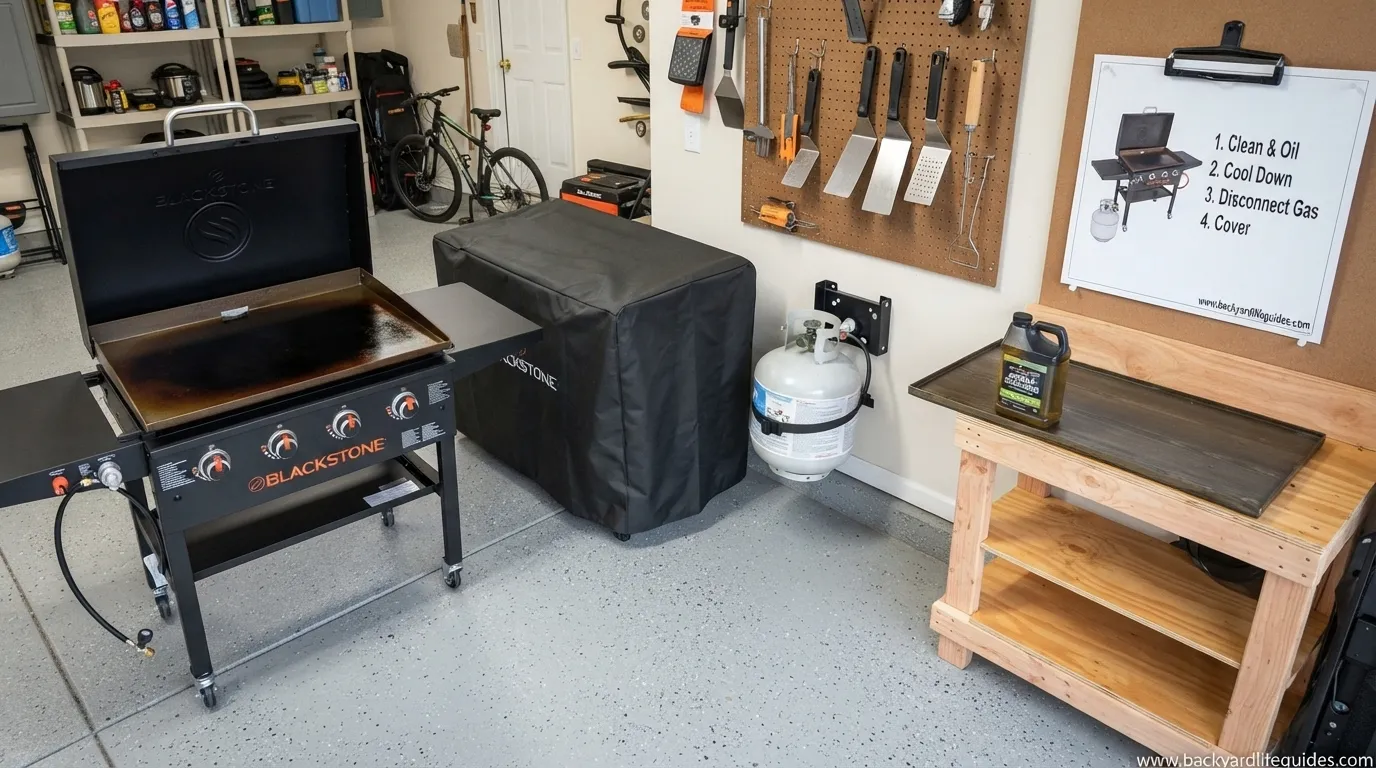
How to Store Your Blackstone Griddle: 4 Easy Methods for Winter
How to Store Your Blackstone Griddle Best Guide
- Disclosure: This post may include affiliate links. If you click a link and complete a purchase, I may earn a commission. Additionally, as an Amazon Associate, I earn from eligible purchases.
Storing a Blackstone griddle correctly is about more than simply putting a cover over it. Before storing it for winter or several months, you need to clean it, dry it, protect the cooking surface with a light layer of oil, and keep moisture away.
The best storage location is usually a cool, dry garage, shed, or other protected area. If outdoor storage is your only option, a properly fitted waterproof and breathable cover becomes especially important.
With the right preparation, you can reduce the risk of rust, corrosion, moisture damage, and deterioration while keeping your griddle ready for the next cooking season.
How Should You Store a Blackstone Griddle?
For most owners, the safest storage routine is:
- Let the griddle cool completely.
- Scrape away food and grease.
- Clean the cooking surface.
- Dry it thoroughly.
- Apply a thin layer of cooking oil.
- Let the oil sit for around 10–15 minutes, or follow the seasoning process appropriate for your griddle.
- Cover the griddle with a properly fitted cover.
- Store it somewhere cool, dry, and protected from moisture.
- Check it periodically during long-term storage.
If you are storing it outdoors, add protection from rain, snow, condensation, and dust, and inspect it more frequently.
Why Proper Storage Matters
Moisture is one of the biggest problems when storing a Blackstone griddle. Water left on the metal surface, condensation trapped under a cover, or exposure to rain and snow can eventually lead to rust and corrosion.
A good storage routine therefore has three main goals:
- Remove food and grease.
- Keep the metal surface dry.
- Prevent moisture from reaching the griddle during storage.
A quality cover helps, but it should not be treated as a substitute for cleaning and drying. Covering a wet griddle can actually trap moisture underneath.
Step 1: Clean the Griddle Before Storage
Cleaning should always come before long-term storage.
Start by allowing the griddle to cool enough to handle safely. Remove remaining food and residue with a spatula or scraper. Wipe the surface thoroughly so that grease, crumbs, and cooking debris do not remain underneath the cover for months.
For a deeper cleaning, use warm water and a sponge where appropriate, then remove all remaining moisture.
The most important part is the final drying stage.
A Simple Cleaning Routine
1. Cool it down
Do not immediately cover or store a hot griddle. Allow it to cool completely.
2. Scrape the cooking surface
Use a suitable griddle scraper or spatula to remove stuck-on food and residue.
3. Wipe the surface
Remove remaining grease and debris with a suitable cloth or paper towel.
4. Dry completely
Use a clean towel to remove visible moisture. For long-term storage, the surface should be completely dry before oiling and covering.
For additional guidance on maintaining the cooking surface, consult Blackstone’s official support resources.
Step 2: Apply a Thin Layer of Oil
Once the griddle is clean and completely dry, protect the cooking surface with a thin layer of cooking oil.
Several of the storage methods reviewed recommend oil because it helps protect the metal from moisture and reduces the chance of rust developing during storage.
One practical approach is to spread a small amount of vegetable or canola oil across the surface with a clean paper towel or cloth.
Some storage guidance recommends approximately 1–2 teaspoons for this protective layer, while another method allows the oil to sit for around 10–15 minutes before excess oil is wiped away.
The goal is not to leave the surface dripping with oil. You want a thin, even coating.
What About Seasoning?
Storage is also a good time to make sure the cooking surface has an adequate seasoning layer.
If the griddle needs additional seasoning, one reviewed method recommends heating it for approximately 10 minutes after applying cooking oil, then wiping away excess oil.
For ordinary storage, however, avoid creating a thick pool of oil. Excess oil can become sticky and make the surface harder to maintain.
Step 3: Let Everything Dry Before Covering
This step is easy to overlook.
A griddle may look dry while small amounts of moisture remain around edges, corners, or other areas. If that moisture becomes trapped under a cover, condensation can contribute to rust.
For extended storage, one storage method recommends allowing the griddle to dry for as long as 24–48 hours before wrapping or covering it, particularly when conditions are humid.
The exact drying time depends on the environment, but the principle is simple:
Never seal moisture underneath the cover.
Step 4: Choose the Right Cover
A cover is one of the most important pieces of Blackstone storage equipment, especially when the griddle remains outside.
A good cover should provide:
- Water resistance
- A secure fit
- Protection from dust and debris
- Durable construction
- Some ventilation or breathability where appropriate
- Protection against outdoor exposure
One reviewed example is the Blackstone 5483 cover, described as a 600D polyester cover for a 28-inch griddle.
You do not necessarily need that exact cover. The important thing is choosing a cover that fits your particular griddle and provides appropriate moisture protection.
Waterproof vs. Breathable
There is an important balance here.
A cover should keep rain and snow away from the griddle, but completely trapping humid air against cold metal can create condensation.
For outdoor storage, a water-resistant or waterproof cover with appropriate ventilation can therefore be preferable to simply wrapping the griddle tightly in plastic.
4 Practical Ways to Store a Blackstone Griddle
There is no single storage method that works for every owner. Your available space, climate, griddle size, and whether you use propane all make a difference.
Method 1: Store It in a Garage
A garage is one of the simplest storage locations.
After cleaning, drying, oiling, and covering the griddle, place it somewhere protected from rain, snow, and direct moisture.
Keep it away from:
- Water leaks
- Extremely humid areas
- Unnecessary temperature extremes
- Items that could fall onto it
- Rodents and other pests
If the garage floor is concrete, elevating the griddle can also help reduce contact with moisture coming from the floor.
Method 2: Use a Garden Shed or Outbuilding
A dry garden shed can work well when a garage is unavailable.
The same preparation rules apply: clean, dry, oil, cover, and protect.
Make sure the shed itself does not have roof leaks or excessive condensation. A cover cannot compensate for an environment that stays damp throughout winter.
Method 3: Store It Outdoors Under Protection
Outdoor storage is possible, but it requires more attention.
Ideally, place the griddle under a roof overhang or another sheltered area. Use a properly fitted outdoor cover that protects it from rain and snow.
Do not simply place a loose plastic sheet over the griddle and assume it is protected.
If you use a tarp or plastic covering as an additional barrier, secure it carefully and make sure water cannot collect around the cooking surface.
Outdoor storage should be checked about once a week, particularly during wet or snowy periods.
Look for:
- Condensation
- Rainwater
- Snow
- Dust
- Cover movement
- Early signs of rust
Remove moisture and make sure the cooking surface remains protected.
Method 4: Use a Protected Storage Container
If the griddle must remain outdoors, a suitable waterproof storage box or outdoor container can provide another layer of protection.
This can be particularly useful when combined with a proper griddle cover.
In humid environments, moisture control becomes even more important. One storage approach recommends using a dehumidifier system when the griddle is stored inside an appropriate enclosed container.
The important point is to avoid creating a sealed, humid environment where condensation can accumulate.
How to Store a Blackstone Griddle for Winter
Winter storage usually means the griddle will remain unused for a few months, so preparation matters more than normal day-to-day storage.
Before putting it away:
Clean it thoroughly.
Remove food, grease, and residue from the cooking surface.
Dry it completely.
Do not leave water underneath the cover.
Protect the cooking surface.
Apply a thin layer of oil and maintain the seasoning.
Disconnect the propane supply when appropriate.
If the griddle is being stored for an extended period, follow safe propane-storage practices and the manufacturer’s instructions.
Cover it properly.
Use a cover designed for the griddle or another suitable protective cover.
Choose the driest location available.
An indoor, dry location generally offers better protection than exposed outdoor storage.
How Winter Conditions Affect Storage
Not every winter presents the same storage challenge.
Dry and Mild Winter
A clean, dry, properly seasoned griddle under a suitable cover may be adequately protected in a relatively dry environment.
Cold and Humid Winter
Humidity increases the risk of condensation and rust. Inspect the griddle more frequently and pay particular attention to moisture under the cover.
Harsh or Very Humid Conditions
When winter conditions are particularly wet or humid, indoor storage is the safer choice whenever practical.
The key issue is not simply cold temperature. Moisture and condensation are the bigger concerns for the metal cooking surface.
What If Your Blackstone Griddle Gets Rust?
Rust does not necessarily mean the griddle is ruined.
If rust appears after storage, the affected area can generally be cleaned and the cooking surface re-seasoned.
One restoration method reviewed for this topic recommends heating the griddle for approximately 20 minutes, then using a metal scraper to remove loosened rust.
Wear appropriate heat-resistant gloves while working with a hot surface.
After scraping, use a suitable grill stone or steel wool to work on remaining rust. Wipe away the residue, apply a small amount of oil, and repeat the cleaning process as necessary.
Once the rust has been removed, the cooking surface should be re-seasoned before normal cooking resumes.
The important lesson is to address rust early rather than allowing it to continue spreading.
How Often Should You Check a Stored Griddle?
Inspection frequency depends on where the griddle is stored.
| Storage situation | Suggested inspection |
|---|---|
| Indoor dry storage | At least once a month |
| Outdoor storage | About once a week |
| Wet or humid conditions | More frequently if needed |
| After heavy rain or snow | Check promptly |
Common Storage Mistakes to Avoid
Covering a Wet Griddle
This is one of the easiest ways to create a moisture problem. Always dry the surface before covering it.
Storing It Without Oil Protection
A completely unprotected metal cooking surface can be more vulnerable to rust during long periods of inactivity.
Using a Poorly Fitted Cover
A cover that moves in wind or allows rain to enter provides much less protection.
Leaving It Exposed to Snow
Snow eventually introduces moisture. Outdoor storage should include protection from direct precipitation.
Ignoring Condensation
Even when rain never reaches the griddle, condensation can develop under a cover. Check for it during inspections.
Forgetting About Rodents
Long-term storage areas such as sheds and garages can attract rodents. Keep the griddle and its accessories protected from pests.
How to Store Smaller Blackstone Griddles
Smaller models can be easier to move and store.
The reviewed storage guide specifically discusses 17-inch and 22-inch Blackstone models and notes that their compact size can make locations such as closets, cabinets, RVs, or other suitable storage spaces practical.
A carrying case can also help protect a portable griddle from dust, scratches, and accidental impacts.
Regardless of size, the same basic rule applies:
Clean it, dry it, protect it, and keep moisture away.
How Long Can a Blackstone Griddle Last?
Storage quality can have a significant effect on the usable life of a griddle.
One reviewed guide estimates that a properly stored griddle can potentially last 10–15+ years, while poorly protected equipment may need replacement much sooner.
These figures should be viewed as estimates rather than guarantees because lifespan also depends on cooking frequency, maintenance, climate, materials, and how the griddle is used.
Still, the principle is straightforward: spending a few minutes preparing the griddle for storage is far cheaper than dealing with preventable corrosion.
Frequently Asked Questions
Can I leave my Blackstone griddle outside during winter?
Yes, outdoor winter storage is possible, but it requires proper protection. Use a fitted weather-resistant cover, keep the griddle in a sheltered location when possible, and inspect it regularly for condensation, rain, snow, and rust.
Should I oil my Blackstone before storing it?
Yes. A thin layer of cooking oil can help protect the metal surface from moisture and rust during long-term storage.
How much oil should I use before storage?
One reviewed storage method recommends approximately 1–2 teaspoons for protecting the cooking surface. The important thing is to spread the oil into a thin, even layer rather than leaving excess oil pooled on the griddle.
Should I cover my Blackstone when it is wet?
No. Dry the griddle completely before covering it. Trapped moisture can contribute to condensation and rust.
Is a waterproof cover enough for outdoor storage?
Not by itself. A good cover is important, but the griddle should also be clean, dry, properly oiled, and positioned away from direct rain and snow whenever possible.
How often should I check my Blackstone outside?
A practical recommendation is once a week, especially during wet or snowy weather. Indoor dry storage can generally be checked less frequently, such as once a month.
What should I do if rust appears after winter?
Heat the griddle as appropriate, carefully remove the rust with a suitable scraper and cleaning tool, wipe away the residue, apply oil, and re-season the cooking surface before using it again.
Can I store a Blackstone griddle in a garage?
Yes. A dry garage is one of the preferred storage locations. Keep the griddle away from leaks, excessive humidity, and other sources of moisture.
Last Word about Blackstone Griddle
The best way to store a Blackstone griddle is surprisingly simple: clean it, dry it completely, protect the cooking surface with a thin layer of oil, cover it properly, and keep it somewhere dry.
For indoor storage, a garage, shed, basement, or similarly protected area can work well. For outdoor storage, use additional weather protection and inspect the griddle more frequently.
The biggest mistake is treating the cover as the entire storage solution. The cover protects against the outside environment, while proper cleaning, drying, seasoning, and moisture control protect the griddle itself.





2 Comments