
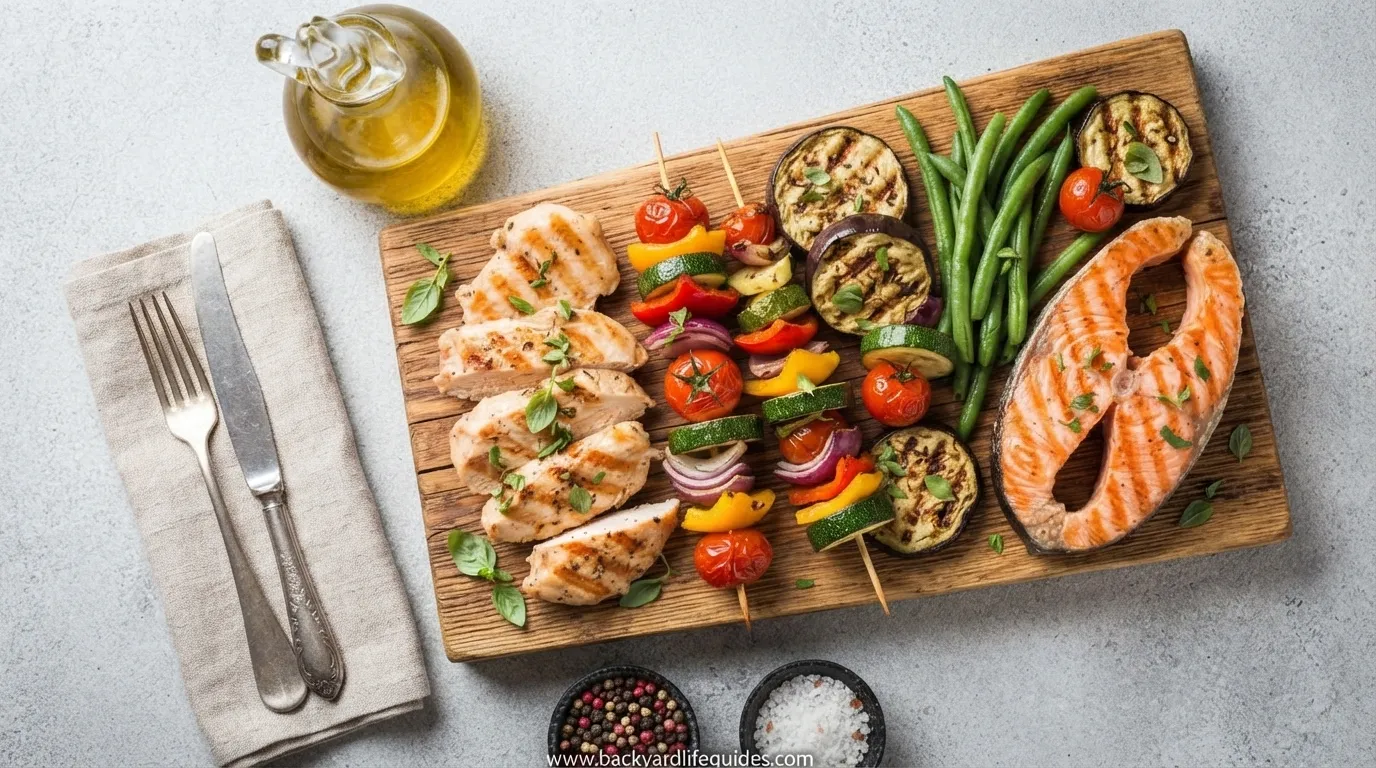
How Grilling Can Fit Into a Balanced Diet
- Disclosure: This post may include affiliate links. If you click a link and complete a purchase, I may earn a commission. Additionally, as an Amazon Associate, I earn from eligible purchases.
Grilling does not have to mean filling your plate with burgers, sausages, fatty cuts of meat, or heavy sauces. With the right choices, a barbecue meal can include lean protein, colorful vegetables, sensible portions, whole-grain sides, and lighter sauces.
The key is not simply what you grill, but also how you prepare it, how much you serve, and what you put alongside it.
High-temperature cooking deserves particular attention. Grilling red meat above 300°F can contribute to the formation of heterocyclic amines (HCAs) and polycyclic aromatic hydrocarbons (PAHs). Choosing appropriate cooking methods, reducing excessive charring, controlling portions, and adding more plant-based foods can make a grilled meal more balanced.
A useful starting point is to build your plate around vegetables, a moderate portion of protein, and a sensible serving of starch.
Build a Balanced Grill Plate
One of the simplest ways to make a barbecue meal more balanced is to divide your plate into three sections.
Aim for:
- ½ plate: vegetables and fruits
- ¼ plate: protein
- ¼ plate: starch such as rice, pasta, potatoes, or bread
Another practical serving guide recommends around 3 oz of protein, which is approximately the size of a deck of cards.
For vegetables, aim for 1½ cups or more when building the meal. Fruits and vegetables can also make up roughly half of the overall plate.
This approach helps prevent the protein portion from becoming the entire meal while leaving room for fiber-rich vegetables and a satisfying side.
Keep Protein Portions Reasonable
Protein is an important part of a balanced meal, but more is not automatically better.
One grilling guide suggests around 3 oz of protein and advises avoiding more than 6 oz of protein in a meal. For a group of 3 people, another practical example uses approximately 300 grams of food per person, or about 900 grams total.
The exact amount you need can vary, but these numbers provide a useful reference when planning a barbecue rather than automatically buying or serving oversized portions.
Choose Leaner Proteins for the Grill
A healthy grilling menu does not need to revolve around red meat.
Good options highlighted in the supplied grilling guidance include:
- Chicken breast
- Turkey
- Salmon
- Tuna
- Cod
- Trout
- Mackerel
- Sardines
- Fish
- Leaner cuts of beef
- Leaner pork
Chicken breast, fish, and turkey can help create variety while keeping the menu focused on leaner protein choices.
If you are preparing beef, lamb, or veal, trimming visible fat can reduce the amount of excess fat being served.
You can also remove excess poultry skin and select leaner cuts such as flank steak.
Consider Different Protein Sources
A balanced grill does not have to contain meat at every stage of the meal.
The supplied guidance also identifies foods such as eggs, beans, lentils, peas, and spinach as protein-containing choices.
Adding variety can make a barbecue more interesting while preventing every course from depending on red meat.
Fill More of the Grill With Vegetables
Vegetables should be more than a small side dish placed next to the main protein.
Grilling can bring variety to vegetables and make them an important part of the meal. Options highlighted in the supplied sources include:
- Zucchini
- Bell peppers
- Onions
- Mushrooms
- Eggplant
- Squash
- Tomatoes
- Potatoes
- Garlic
- Corn
- Asparagus
- Avocado
- Endive
Colorful vegetables can make the plate more appealing while helping you follow the ½-plate vegetable approach.
The guidance also uses 2½ cups per day as a reference for fruits and vegetables.
Do Not Forget Grilled Fruit
The grill can be useful for dessert too.
Pineapple and mango are particularly suitable choices because their natural sweetness works well with grilling.
Grilled fruits provide a different way to finish a barbecue without making dessert the center of the meal.
Grill at a Sensible Temperature
How you cook food is just as important as what you choose.
The supplied guidance specifically warns about cooking red meat above 300°F because higher-temperature grilling can contribute to HCA and PAH formation.
To reduce excessive exposure to direct high heat:
- Cook meat away from direct heat when appropriate.
- Avoid excessive charring.
- Consider reverse searing.
- Pay attention to internal cooking temperatures.
- Prevent dripping fat from creating unnecessary flames.
- Avoid allowing food to become heavily blackened.
Moving food away from direct flames can also help when flare-ups occur.
Know the Recommended Internal Temperatures
The supplied grilling guidance gives these internal temperature references:
- Beef, lamb, and veal rare: 125–130°F
- Beef, lamb, and veal medium rare: 130–140°F
- Beef, lamb, and veal medium well: 150–160°F
- Hamburgers: 160°F
- Poultry: 165°F
- Fish: 145°F minimum
- Pork: 145–155°F
Using an appropriate internal temperature is more useful than judging doneness only by the outside appearance of grilled food.
Use Marinades Before Grilling
Marinades can add flavor without requiring a heavy sauce at the end of the meal.
The supplied sources discuss ingredients such as:
- Oil
- Vinegar
- Oregano
- Rosemary
- Thyme
- Soy sauce
- Honey
- Worcestershire sauce
- Mustard
- Ketchup
- Mayonnaise
One recommendation is to marinate food for around 30 minutes, while another approach allows an overnight marinade depending on the recipe or preparation.
The supplied guidance also discusses marinades in relation to HCAs, particularly combinations containing acidic or antioxidant-rich ingredients.
Keep the Marinade Simple
You do not need a complicated recipe to create a flavorful marinade.
A simple combination of oil, vinegar, herbs, and other flavoring ingredients can provide plenty of taste.
Oregano, rosemary, and thyme are particularly useful examples because they can add strong flavor without requiring a large amount of sauce afterward.
Another practical guideline uses approximately ½ cup of marinade, while an alternative is 1 tablespoon of spice per 1 pound of food.
Trim Visible Fat Before Grilling
Grilling can cause fat to drip away, but that does not mean every fatty cut automatically becomes a healthy choice.
When excess fat drips onto the heat source, it can contribute to flames. Those flames can expose food to smoke and compounds associated with high-temperature grilling.
Before cooking, consider trimming visible excess fat.
For poultry, removing unnecessary skin can also help reduce excess fat in the finished meal.
Choosing leaner chicken breasts or cuts such as flank steak can make the protein portion more suitable for a balanced meal.
Choose Whole-Grain Starches
A barbecue meal can become unbalanced when the plate contains large portions of refined bread, pasta, or other heavy sides.
The supplied guidance recommends choosing whole-grain options when possible.
Potential choices include:
- Whole-grain buns
- Whole-wheat pasta
- Brown or whole-grain-style rice options
- Whole-grain breads
- Potatoes
- Couscous
Whole grains are highlighted as sources of fiber and nutrients including B vitamins, iron, and calcium.
A useful portion reference for starch is approximately 1 cup.
Rethink Traditional BBQ Sides
You do not have to remove familiar barbecue foods completely.
Instead, consider making them lighter or preparing homemade versions.
The supplied guidance specifically discusses healthier versions of:
- Coleslaw
- Baked beans
- Macaroni
Other suggested sides include:
- Fruit salad
- Green salad
- Bean salad
- Whole-wheat pasta
- Grilled vegetables
Using homemade versions also gives you more control over the ingredients.
Be Careful With Sauces and Dressings
A meal that starts with lean protein and vegetables can quickly become heavier when large amounts of sugary condiments, salty sauces, or rich dressings are added.
Instead, consider using smaller amounts of flavorful ingredients such as:
- Olive oil
- Lemon juice
- Balsamic vinegar
- Fresh herbs
- Homemade marinades
- Vinegar-based sauces
One particularly useful substitution from the supplied guidance is choosing a North Carolina-style vinegar-based sauce instead of automatically reaching for a heavier Kansas City-style barbecue sauce.
The goal is not to eliminate flavor. It is to let herbs, acids, spices, and the grilled ingredients themselves contribute more of the taste.
Read Nutrition Labels When Buying BBQ Foods
Packaged sauces, dressings, marinades, and sides can vary significantly.
The supplied guidance recommends checking the food label for:
- Serving size
- Number of servings
- Calories
- Fat
- Saturated fat
- Trans fat
- Cholesterol
- Sodium
- Carbohydrates
- Vitamins
The label guidance uses 2,000 calories as the typical adult diet reference for percentage calculations.
The most important detail is the serving size. A bottle may appear to contain a small amount of calories or sodium per serving, but your actual portion may be larger than the listed serving.
Keep the Grill Clean
Healthy meal preparation also involves basic grill hygiene.
Before using the grill again, clean the cooking surface rather than allowing old residue to build up.
The supplied cleaning process includes:
- Wipe the surface with a damp cloth.
- Rinse it with running water.
- Dry it completely with paper towels.
- Give stainless-steel surfaces additional attention when needed.
- Use a grill cleaner appropriate for the grill material.
A clean cooking surface provides a better starting point for preparing your next meal.
Grill Smarter Instead of Simply Grilling Less
Healthy grilling does not require abandoning the barbecue.
Instead, small changes can make the meal more balanced.
Think about the complete plate rather than just the main food.
Choose a lean protein, add plenty of vegetables, include a sensible starch, control the portion size, and use flavorful herbs or lighter sauces.
At the same time, pay attention to temperature, charring, marinades, and grill cleanliness.
This combination creates a more practical approach than focusing on a single ingredient.
A Simple Healthy BBQ Formula
If you want an easy method to remember, use this sequence:
1. Choose the protein.
Start with chicken, fish, turkey, or a leaner cut of meat.
2. Add vegetables.
Aim for approximately ½ of the plate to contain vegetables and fruit.
3. Add a starch.
Keep it around ¼ of the plate, with approximately 1 cup as a useful reference.
4. Control protein.
Around 3 oz is a practical serving reference.
5. Add flavor.
Use herbs, vinegar, olive oil, lemon, or a homemade marinade.
6. Control the heat.
Avoid unnecessary high-temperature cooking and excessive charring.
7. Check doneness.
Use the appropriate internal temperature rather than relying only on appearance.
8. Finish with fruit if desired.
Try grilled pineapple or mango for dessert.
This formula keeps the process simple enough to use during a real barbecue.
What a Balanced Grilling Menu Could Look Like
A balanced grill meal could start with salmon, chicken breast, turkey, or another lean protein.
Add grilled asparagus, zucchini, bell peppers, mushrooms, corn, or another combination of vegetables.
For the starch, choose a moderate portion of rice, pasta, potatoes, or a whole-grain bun.
Use a simple herb-based marinade before cooking, then add lemon juice, balsamic vinegar, or a small amount of homemade sauce for additional flavor.
For dessert, grilled pineapple or mango can provide a naturally sweet option.
The important point is that the meal contains several different food groups instead of making a large portion of meat the entire meal.
Common Grilling Mistakes to Avoid
Making Meat the Whole Meal
A plate dominated by meat leaves less room for vegetables, fruit, and sensible starch portions.
Use the ½ / ¼ / ¼ plate approach instead.
Cooking With Excessive Heat
Very high heat and excessive charring can increase concerns around HCAs and PAHs.
Keep an eye on the temperature and avoid unnecessary blackening.
Ignoring Portion Size
Large servings can make an otherwise balanced menu less balanced.
Use the 3 oz protein reference and keep the overall plate proportions in mind.
Choosing Heavy Sauces Automatically
Sugary, salty, and heavy sauces can add more than expected.
Try herbs, vinegar, lemon juice, olive oil, or homemade alternatives first.
Forgetting Vegetables
Vegetables should not be an afterthought.
Put them directly into your grilling plan so they receive as much attention as the main protein.
Reusing a Dirty Grill
Old residue can remain on the cooking surface.
Clean the grill between uses and dry it properly before storing or using it again.
Frequently Asked Questions
Is grilling compatible with a balanced diet?
Yes. The supplied grilling guidance presents grilling as compatible with balanced eating when you choose appropriate portions, leaner proteins, vegetables, sensible starches, and practical cooking methods.
What temperature should I avoid when grilling red meat?
The supplied guidance specifically warns against cooking red meat above 300°F, because high-temperature grilling can contribute to HCA and PAH formation.
How much protein should I eat at a barbecue?
A practical reference from the supplied guidance is around 3 oz of protein, approximately the size of a deck of cards. Another recommendation advises avoiding more than 6 oz in a meal.
How should I divide my plate?
Use ½ plate vegetables and fruits, ¼ protein, and ¼ starch. For starch, approximately 1 cup is another useful reference.
What vegetables are good for grilling?
Popular choices from the supplied guidance include zucchini, bell peppers, onions, mushrooms, eggplant, squash, tomatoes, corn, asparagus, potatoes, garlic, avocado, and endive.
How long should I marinate food before grilling?
The supplied guidance mentions around 30 minutes as one option and also discusses overnight marinating depending on the preparation.
Can marinades help when grilling?
The supplied guidance discusses marinades as a way to add flavor and notes their potential role in reducing HCA formation. Examples include vinegar, herbs, oil, oregano, rosemary, and thyme.
What is a healthier alternative to heavy BBQ sauce?
The supplied guidance suggests simpler options such as vinegar-based sauces, homemade marinades, herbs, olive oil, balsamic vinegar, and lemon juice.
What temperature should fish reach?
The supplied temperature guidance gives 145°F minimum for fish.
What temperature should poultry reach?
The supplied guidance lists 165°F for poultry.
Final Takeaway
Grilling can fit into a balanced diet when the entire meal is considered—not just the food placed on the grill.
Build the plate around ½ vegetables and fruits, ¼ protein, and ¼ starch. Keep protein portions reasonable, with 3 oz as a practical reference. Choose leaner proteins, add colorful vegetables, use whole-grain sides, and keep sauces and dressings lighter.
Just as importantly, manage the cooking process. Avoid excessive heat and charring, remember the 300°F warning for red meat, use appropriate internal temperatures, and keep the grill clean.
A good barbecue does not need to be complicated. With thoughtful portions, varied ingredients, and smarter grilling techniques, you can keep the experience flavorful while making the overall meal more balanced.