
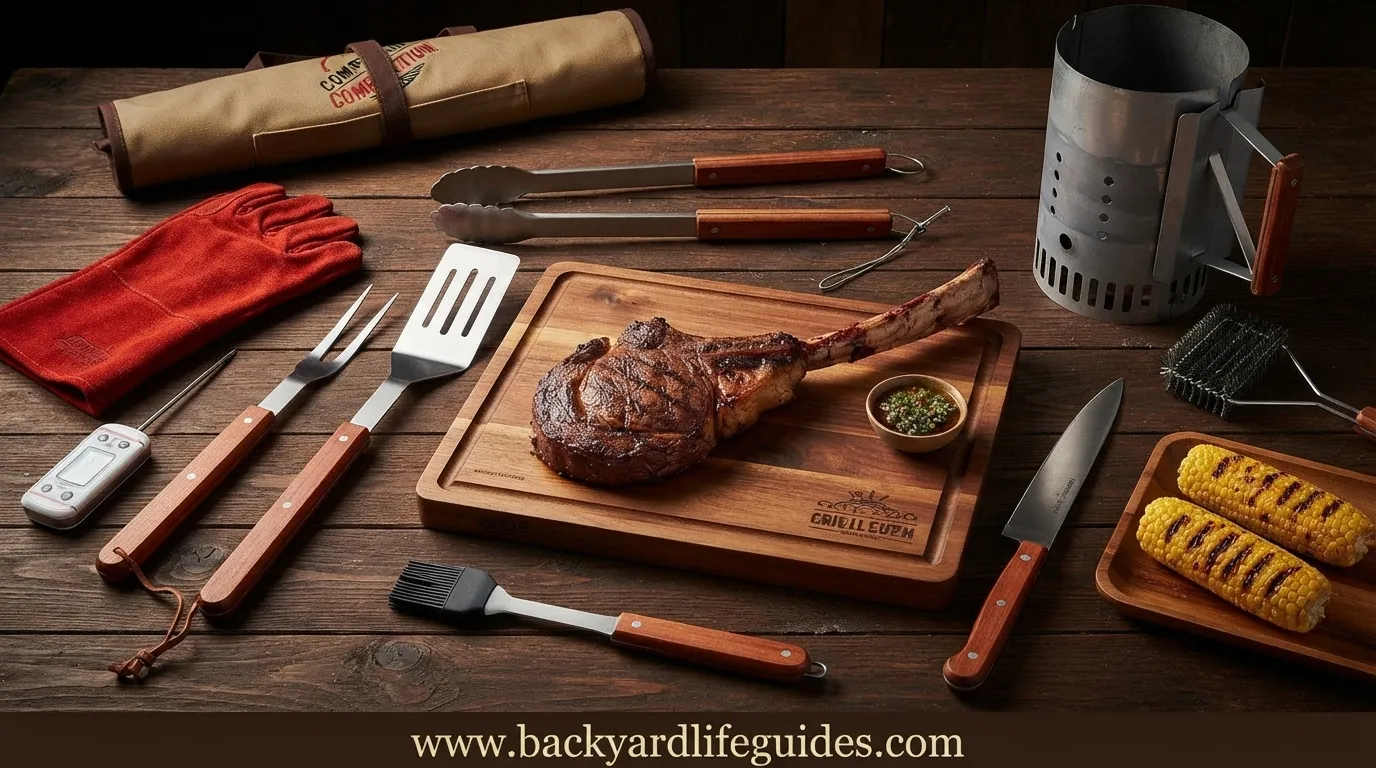
Essential Tools Every Competition Griller Needs
- Disclosure: This post may include affiliate links. If you click a link and complete a purchase, I may earn a commission. Additionally, as an Amazon Associate, I earn from eligible purchases.
Competition grilling is about much more than putting meat over a hot grill. Temperature control, consistency, timing, preparation, presentation, and safety can all affect the final result. Having the right equipment makes each part of the process easier and helps you work more precisely when every detail matters.
A serious competition setup does not necessarily mean buying every grilling gadget available. Instead, focus on dependable tools that help you control heat, monitor food, handle ingredients safely, prepare seasonings accurately, and present finished food professionally.
Here are the essential tools worth having in a competition grilling setup.
1. Choose the Right Grill or Smoker
Your cooking equipment is the foundation of your entire setup. Different grills and smokers provide different levels of heat control, cooking flexibility, and convenience.
The main options include Kamado grills, pellet grills, offset smokers, electric grills, and gas grills.
Kamado Grills
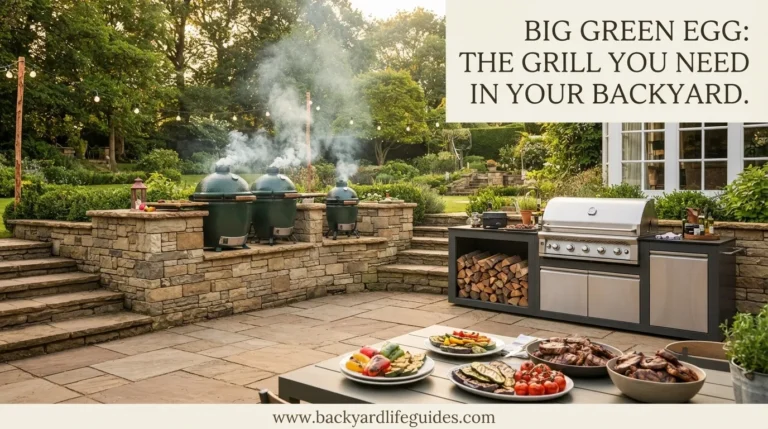
Kamado grills are known for their strong insulation and temperature control. Their design makes them useful when you need steady heat for longer cooks.
They can be particularly useful when maintaining a consistent cooking environment is more important than making rapid temperature changes.
Pellet Grills
Pellet grills use hardwood pellets and offer considerable versatility. They can be used for smoking, grilling, braising, and baking.
For competition grilling, their appeal comes from combining multiple cooking methods in one piece of equipment.
Offset Smokers
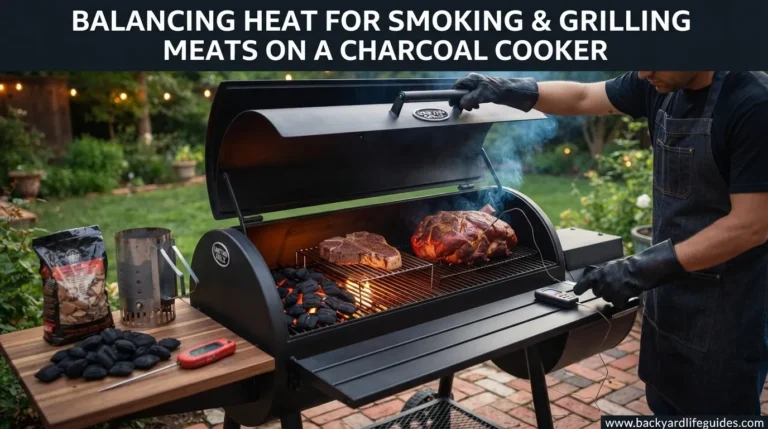
Offset smokers use wood chunks or charcoal while cooking with indirect heat. They are especially associated with traditional low-and-slow barbecue.
They require more attention to fire and temperature management, but that control can be valuable for experienced competition grillers.
Electric and Gas Grills
Electric grills provide consistent heat without the same fuel-management requirements as charcoal or wood equipment.
Gas grills, meanwhile, are useful when higher-temperature cooking and searing are priorities.
The best choice depends on your cooking style, competition requirements, and how much control you want over the fire.
2. Use Reliable Thermometers
A competition griller should never rely only on appearance or cooking time to determine whether food is ready. Accurate temperature measurement gives you a much clearer picture of what is happening inside the meat and inside the cooker.
There are four important thermometer categories to consider:
- Instant-read thermometers
- Probe thermometers
- Wireless or remote thermometers
- Automatic temperature controllers
An instant-read thermometer is useful when you need a quick temperature check. Food & Wine reported testing more than 30 instant-read thermometers and selected the Thermapen ONE, which produced readings in 1 second or less with approximately ±0.5°F accuracy.
For thicker cuts, a probe can remain inside the meat while it cooks. A wireless system can take this further by allowing you to monitor temperatures without repeatedly opening the grill or smoker.
One tested wireless system could monitor up to 60 probes, with each probe using 4 internal sensors. Its probes were also designed to withstand ambient temperatures up to 1,000°F.
For serious grilling, the important lesson is simple: temperature accuracy matters more than guessing.
3. Keep Essential Grilling Utensils Within Reach
Competition cooking involves constant movement, so your most-used utensils should be durable, comfortable, and easy to access.
A practical core collection includes:
- Tongs
- Spatula
- Basting brush
- Meat claws
- Meat forks
- Meat hooks
Tongs
Long-handled tongs give you better reach while keeping your hands farther from the heat. Stainless-steel construction is a strong choice when durability and gripping power are priorities.
One competition-oriented tool collection includes 12-inch food tongs, giving you useful reach without making the tool excessively difficult to control.
Spatula
A good spatula should have enough surface area to support the food and a comfortable handle for repeated use.
An offset handle can make handling food easier around a hot cooking surface. Dalstrong also recommends looking for a larger head, longer handle, and ergonomic grip. It considers more than 4 slots useful for an all-rounder spatula.
Basting Brush
Sauces and marinades need to be applied evenly. A long-handled basting brush helps you coat meat and vegetables while keeping your hands away from direct heat.
Silicone bristles are useful when heat resistance and easy cleaning are priorities.
Meat Claws and Forks
Meat claws can speed up shredding when working with larger cooked cuts.
Meat forks serve a different purpose. Two common types are broiler forks and carving forks. Broiler forks can help check tenderness, while carving forks work alongside carving knives when slicing cooked meat.
4. Prepare Rubs With Precision
Great barbecue is often built before the food reaches the grill. Consistent seasoning matters because competition cooking requires you to reproduce the same results rather than relying on rough estimates.
Useful preparation tools include:
- Measuring spoons
- Measuring cups
- Kitchen scales
- Mixing bowls
- Mixing spoons
- Spice shakers or mills
- Meat injectors
A kitchen scale can be particularly useful when creating repeatable rub recipes. If a seasoning blend works well, accurately measuring each ingredient makes it easier to reproduce the same flavor in another cook.
An injector is also useful when you want to distribute marinades or other liquids deeper into meat instead of applying everything only to the surface.
5. Add a Quality Grill Brush
Cleaning the cooking surface is an important part of maintaining a consistent grilling setup.
A grill brush should have a handle long enough to provide a comfortable distance from the hot grate while still allowing you to apply enough pressure.
Food & Wine reported testing 8 grill brushes before selecting its preferred option. The recommended brush had 3 rows of bristles, an 18-inch handle, and 360-degree cleaning coverage.
The specific brush is less important than choosing one that gives you effective grate coverage and comfortable control.
6. Consider a Grill Basket for Smaller Foods
Not every ingredient is easy to place directly on the grate.
A grill basket can be useful for smaller vegetables and other foods that could slip through the cooking grates.
It also makes it easier to move multiple small pieces at once rather than handling them individually with tongs.
For competition grilling, this can improve efficiency during busy preparation periods.
7. Use Grill Mats Carefully
A grill mat can provide a nonstick cooking surface while helping make cleanup easier. It can also distribute heat across the cooking area and reduce the need for additional oil.
Dalstrong’s guidance gives 600°F as a high-heat figure for a good grill mat.
Always check the manufacturer’s temperature rating for the specific mat you use rather than assuming every grill mat has the same heat tolerance.
8. Have the Right Knives and Cutting Boards
Once the food is cooked, presentation becomes increasingly important.
A dependable carving knife and chopping board make it easier to slice and prepare food cleanly. A carving fork can provide additional control while cutting larger pieces.
Dalstrong’s featured knife specifications include an 8-inch Shogun Pitmaster & Meat Knife and a 6-inch boning knife. Its boning knife is described as having 56+ Rockwell hardness and a 16°–18° edge angle.
These numbers show why knife specifications can matter, but comfort and control should still be considered when choosing equipment.
9. Don’t Ignore Serving and Presentation Tools
Competition grilling does not end when the food comes off the grill.
Presentation can matter because judges may evaluate how the finished food looks as well as how it tastes.
Useful serving equipment includes:
- Carving knives
- Chopping boards
- Platters
- Serving trays
Keeping presentation equipment clean and organized allows you to move from cooking to plating without unnecessary delays.
A well-organized serving area also helps prevent the final presentation from becoming rushed.
10. Keep Heat-Resistant Gloves Available
Hot grates, pans, handles, and cooking equipment can make hand protection essential.
Heat-resistant gloves provide protection when handling hot equipment, while cut-resistant gloves serve a different purpose during food preparation.
They should not be treated as interchangeable. Use the appropriate protection for the task you are performing.
11. Keep Fire and First-Aid Equipment Nearby
Safety equipment belongs in every serious grilling setup.
A basic safety collection should include:
- Fire extinguisher
- First-aid kit
- Heat-resistant gloves
- Cut-resistant gloves
A first-aid kit can include items such as burn ointment, bandages, and wound cleaners.
A fire extinguisher is particularly important because grease flare-ups can quickly become dangerous.
Safety equipment is not something to add after everything else. It should be part of your setup from the beginning.
12. Don’t Forget Fuel and Fire-Starting Equipment
Your grill is only useful if you have the correct fuel and a dependable way to start it.
Fuel requirements depend on the grill:
- Gas grills: propane or natural gas
- Charcoal grills: charcoal briquettes
- Electric grills: electrical power
For charcoal cooking, a chimney starter is a useful tool. Real Simple recommends a large chimney starter and notes that it can be started using a few sheets of newspaper and a match instead of lighter fluid.
Charcoal briquettes are affordable, widely available, and can provide longer, consistent burning, making them useful for different types of grilling.
13. Build a Simple Competition-Grilling Tool Kit
You do not need to carry dozens of gadgets to create an effective setup.
Start with the essentials:
- A suitable grill or smoker
- Instant-read thermometer
- Probe or wireless thermometer
- Long-handled tongs
- Spatula
- Basting brush
- Grill brush
- Measuring tools
- Mixing bowls
- Meat injector
- Carving knife
- Cutting board
- Serving platter or tray
- Grill gloves
- Fire extinguisher
- First-aid kit
From there, add specialized equipment only when it solves a real problem in your cooking process.
For example, a grill basket makes sense if you frequently cook smaller ingredients, while meat claws become more useful if pulled meat is a regular part of your competition menu.
14. Prioritize Accuracy Over Quantity
The biggest lesson across these grilling guides is that better control is more valuable than having more equipment.
A competition griller can benefit more from one reliable thermometer than several inexpensive thermometers that produce inconsistent readings.
The same principle applies to knives, tongs, spatulas, and other frequently used tools.
Choose equipment that is:
- Reliable
- Durable
- Comfortable
- Easy to clean
- Appropriate for high heat
- Simple to use
This approach keeps your setup organized while giving you the equipment needed for the parts of grilling that actually affect your results.
15. Organize Your Tools Before Cooking
Good organization can save time during a competition.
Keep your most frequently used tools close to the grill, while preparation and serving equipment should have designated areas.
A simple workflow is:
Prepare → Season → Cook → Monitor → Handle → Rest → Slice → Present
Your equipment should support that sequence rather than forcing you to constantly search for tools.
Keeping thermometers, tongs, spatulas, gloves, and brushes in predictable locations can make the entire cooking process smoother.
FAQs
What are the most important tools for competition grilling?
The most important tools are a suitable grill or smoker, reliable thermometer, tongs, spatula, basting brush, grill brush, preparation tools, knives, serving equipment, and safety gear.
How many types of thermometers are useful for grilling?
Four major categories are commonly useful: instant-read thermometers, probes, wireless thermometers, and automatic temperature controllers. Not every griller needs all four.
Is an instant-read thermometer worth having?
Yes. It provides a fast way to check internal food temperature without relying entirely on cooking time or appearance. One tested instant-read model produced readings in 1 second or less.
What size tongs are good for grilling?
Long-handled tongs are generally useful because they provide reach and keep your hands farther from heat. One competition-focused set includes 12-inch tongs.
How many tools should a basic grill set contain?
A basic grill set can contain 4 tools: tongs, spatula, fork, and silicone basting brush. You can expand the collection as your cooking style requires.
Do competition grillers need a grill brush?
Yes. A grill brush can help clean the cooking surface and prepare the grate for cooking. One tested grill brush featured 3 rows of bristles, an 18-inch handle, and 360-degree coverage.
What safety equipment should a competition griller have?
At minimum, keep heat-resistant gloves, cut-resistant gloves, a fire extinguisher, and a first-aid kit available. The first-aid kit should be prepared for common minor injuries, including burns and cuts.
Is a grill mat useful for competition grilling?
A grill mat can make cooking and cleanup easier, particularly for foods that benefit from a nonstick surface. One cited grilling guide gives 600°F as a high-heat figure for a suitable grill mat, but you should always follow the manufacturer’s rating.
What should I prioritize when buying grilling tools?
Prioritize temperature accuracy, durability, heat resistance, comfort, and ease of cleaning. A smaller collection of dependable tools is generally more useful than a large collection of gadgets you rarely use.
Final Thoughts
The best competition-grilling setup is not necessarily the one with the most equipment. It is the setup that gives you control, consistency, efficiency, and safety from preparation through presentation.
Start with reliable temperature tools, durable utensils, accurate measuring equipment, good knives, effective cleaning gear, and essential safety equipment. Then add specialized tools when they genuinely improve your cooking process.
When every cook needs to be repeatable, the right tools help turn grilling from guesswork into a more controlled and consistent process.
6 Comments